When Does a Dryer Vent Need to Be Rerouted?
Is your dryer vent taking the wrong route? Learn when rerouting is necessary, what makes an exhaust path restrictive, and how to plan a safer installation.
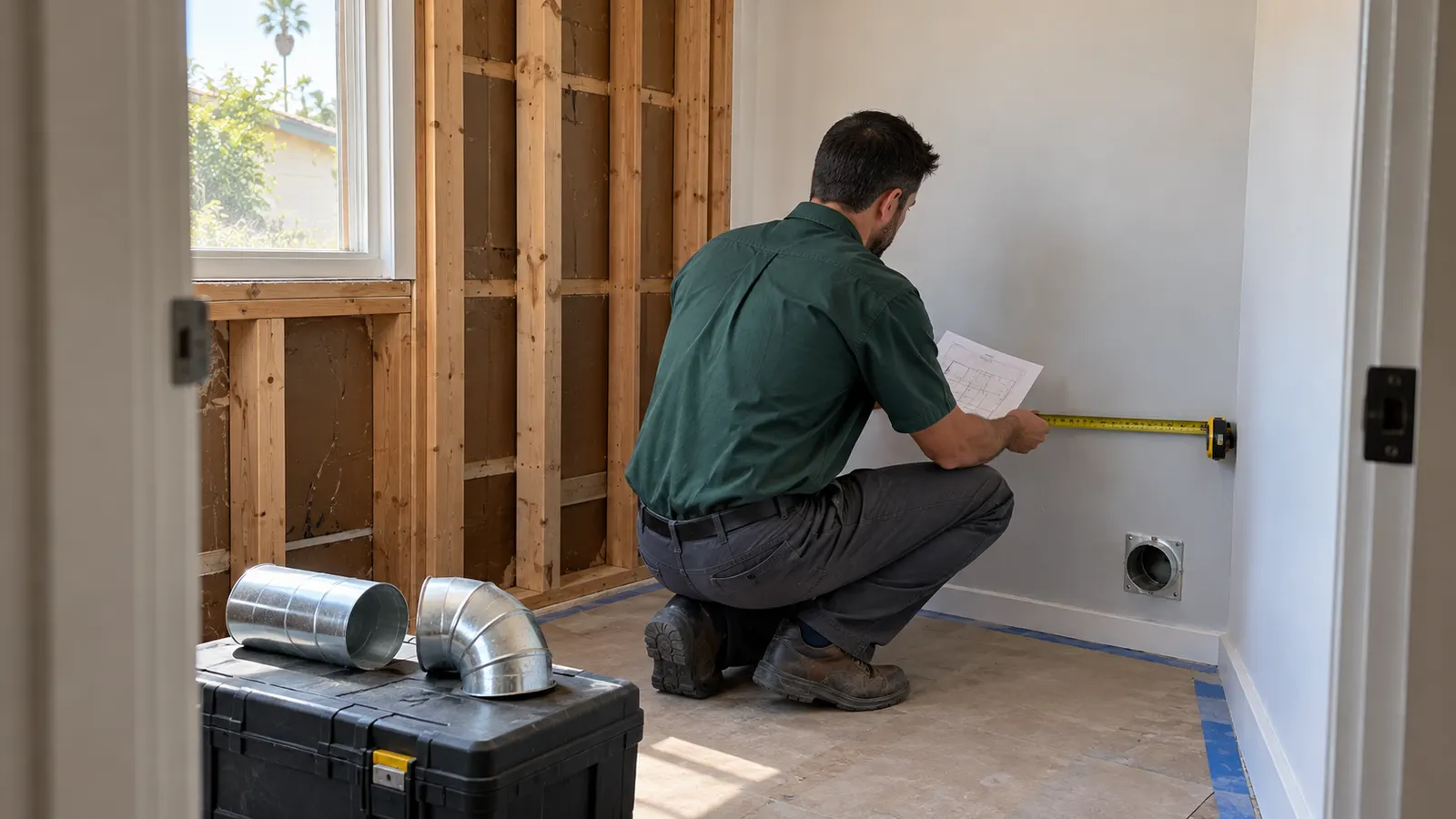
A laundry room renovation can create an unexpected problem. The dryer looks perfect in its new position, but the exhaust duct now needs to travel around several corners before reaching the outside wall.
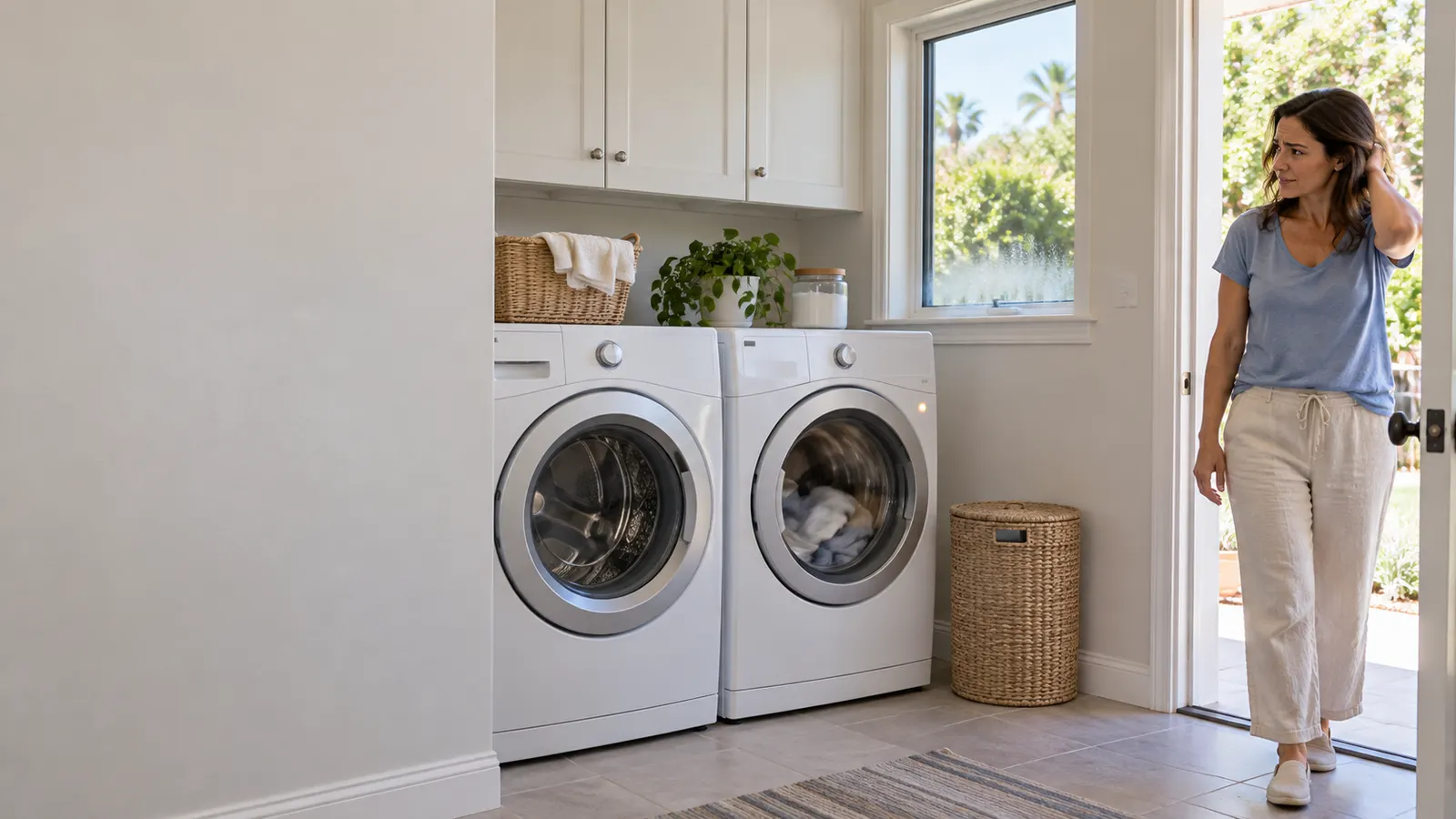
Everything appears connected, so the installation seems finished. Then drying times increase, airflow becomes weak, or lint starts collecting faster than expected.
The problem may be the route itself.
A dryer vent needs to be rerouted when its existing path is excessively long, unnecessarily restrictive, improperly terminated, or unsuitable for the dryer’s installation requirements. Rerouting may also be necessary when moving a laundry area or correcting an older installation.
However, a dryer vent doesn’t need a new route simply because it has several bends. The decision depends on the complete exhaust layout, appliance specifications, and applicable building requirements.
For Los Angeles homeowners, understanding these factors can prevent unnecessary construction while addressing exhaust problems that ordinary cleaning cannot solve.
The Shortest Route Isn’t Always the Best Route
A straight path to an exterior wall is generally desirable because it minimizes airflow resistance.
But the shortest physical distance isn’t the only consideration.
A proposed route must also avoid structural conflicts, maintain suitable clearances, use approved materials, and terminate in an appropriate outdoor location.
For example, an exterior wall may be close to the dryer but located beside a building opening or mechanical equipment. Another wall may offer a more suitable termination, even if the duct travels slightly farther.
The goal is a practical exhaust route that meets the dryer’s requirements, not simply the fewest feet of duct.
Six Situations That Make Rerouting Worth Considering
1. The Existing Duct Travels Too Far
Every dryer has limitations on how much exhaust resistance it can overcome.
A long duct creates friction as air moves toward the outdoor outlet. Additional fittings increase that resistance.
The U.S. Department of Energy’s Building America guidance describes a general residential approach using smooth metal ducting with a calculated length of up to 35 feet, subject to applicable code provisions and manufacturer instructions.
That number isn’t a universal allowance for every dryer or jurisdiction.
Some appliance manufacturers permit different equivalent lengths, while local requirements may be more restrictive.
If the existing route exceeds the applicable limit, cleaning won’t shorten it.
A different path may be necessary.
2. Too Many Turns Are Restricting Airflow
Imagine a dryer located in an interior laundry closet.
The exhaust rises behind the appliance, turns across the ceiling, bends around a framing obstruction, and then changes direction again before reaching the exterior.
Each turn adds resistance.
A common equivalent-length calculation assigns additional effective duct length to elbows, although the correct allowances depend on the governing requirements and fittings.
This means a duct can be physically short but behave like a much longer system.
Before proposing rerouting, a technician should document the actual path and calculate its equivalent length.
Sometimes removing one unnecessary turn makes a meaningful difference.
3. The Exhaust Ends Somewhere Other Than Outdoors
A conventional vented dryer must discharge its exhaust to an appropriate exterior location.
An attic, crawlspace, garage, or enclosed wall cavity is not an acceptable substitute.
Dryer exhaust carries moisture and lint. Releasing that air into concealed spaces can contribute to damp materials, lint accumulation, and other building problems.
A duct that terminates inside the building needs correction.
The solution may involve extending the exhaust through an approved route to the exterior rather than merely repairing the existing endpoint.
Ventless dryer systems operate differently and should be installed according to their specific instructions.
4. The Exterior Termination Is Poorly Located
A duct may reach the outdoors but still terminate in an unsuitable position.
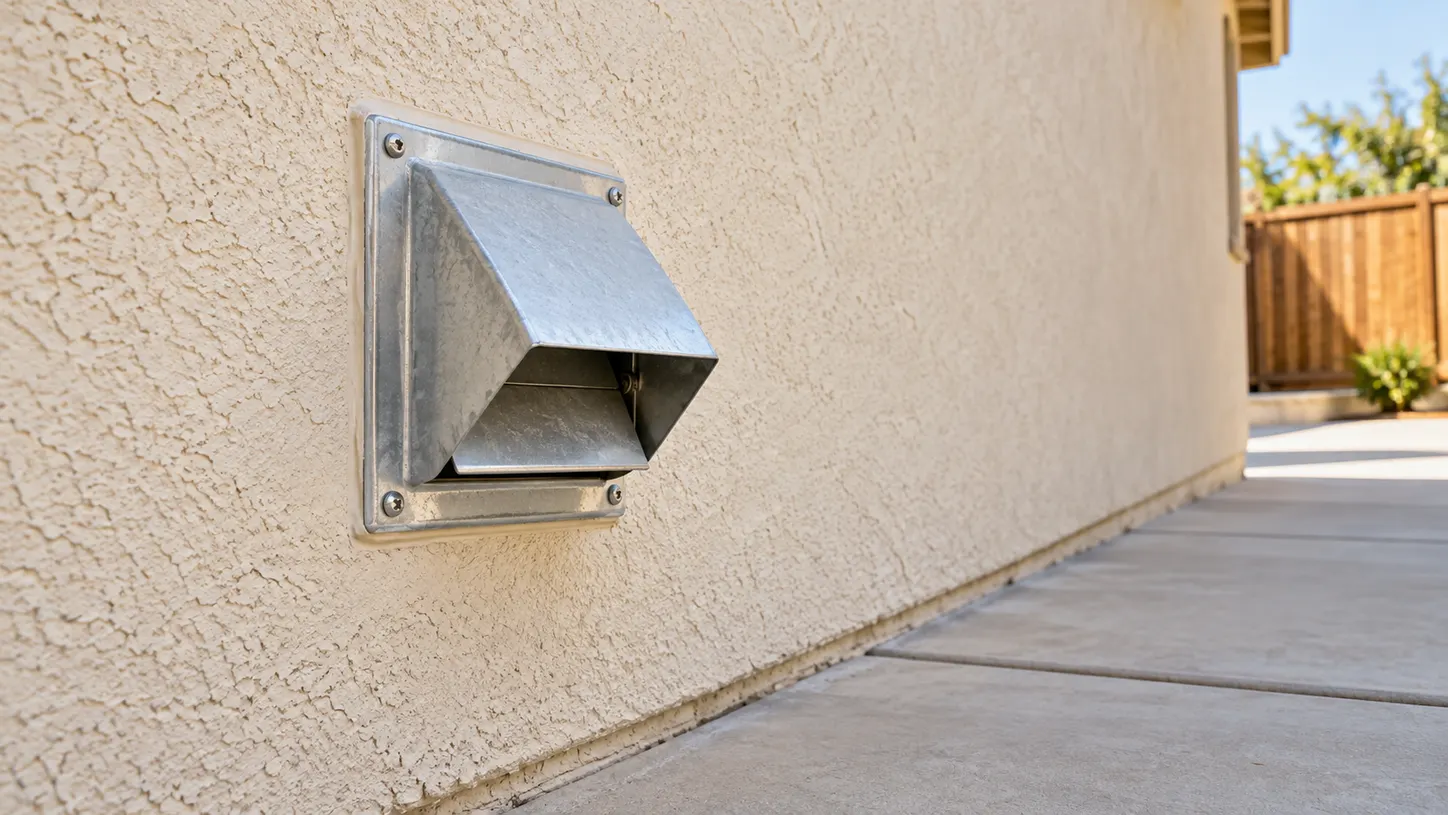
Potential concerns include nearby openings, air intakes, obstructed locations, or areas where the exterior damper cannot function properly.
A termination fitted with an inappropriate screen can also collect lint and restrict airflow.
Moving the outlet may require a new duct path.
However, the technician should first determine whether replacing the termination fitting or correcting an obstruction would solve the issue.
Relocating an exterior opening isn’t automatically necessary whenever the cover is damaged.
5. The Laundry Room Has Been Relocated
Moving a dryer changes the geometry of its exhaust system.
A route designed for an appliance against an exterior wall may no longer work when the laundry area moves into a hallway closet or interior room.
Connecting the new dryer location to the old duct may introduce excessive length, sharp turns, or inaccessible sections.
A renovation plan should address exhaust routing before cabinets, drywall, and flooring are finished.
Otherwise, homeowners may discover that their preferred appliance layout cannot accommodate a suitable exhaust connection.
6. The Existing Route Cannot Be Maintained Properly
Accessibility matters because dryer exhaust ducts require periodic inspection and cleaning.
A complicated route passing through multiple concealed spaces can make maintenance more difficult.
That doesn’t automatically make the installation unacceptable.
However, if the path is already restrictive, damaged, and difficult to service, rerouting may offer a more practical long-term solution than repeatedly addressing isolated problems.
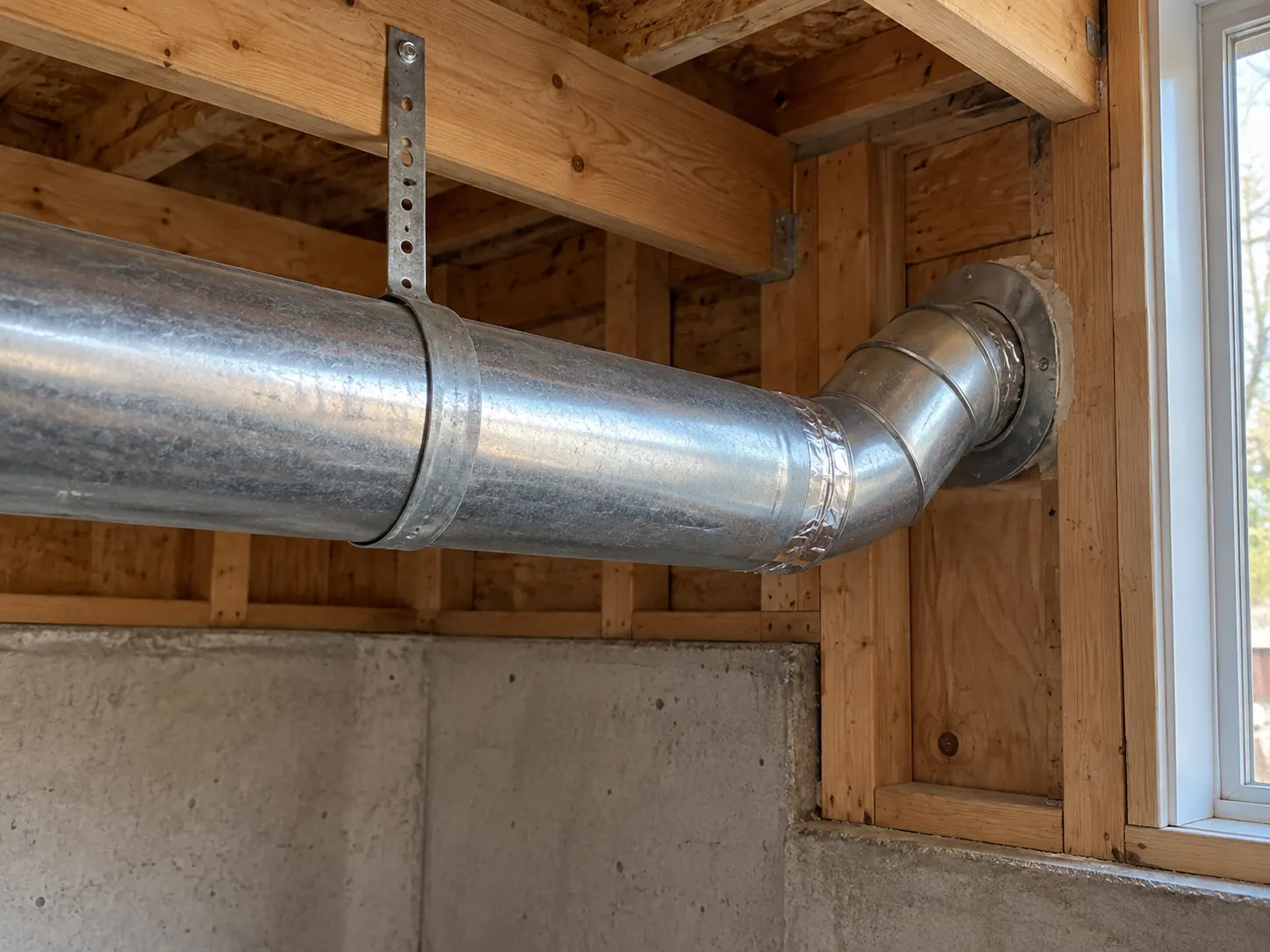
Wall, Roof, or Another Exterior Location?
Choosing an exit point is one of the most important parts of planning.
| Termination route | Potential advantage | Important consideration |
|---|---|---|
| Nearby exterior wall | Often permits a shorter path | Must meet termination and clearance requirements |
| More distant exterior wall | May avoid obstacles or unsuitable openings | Additional length and bends |
| Roof termination | Sometimes used when wall access is impractical | Weatherproofing, maintenance access, and vertical resistance |
| Existing exterior outlet | May reduce construction work | Only useful if the existing path remains suitable |
A roof termination isn’t automatically prohibited in every installation, but it can introduce additional maintenance and weatherproofing considerations.
A wall termination may be preferable when a compliant, practical route is available.
The final decision should reflect the specific building and appliance, not a blanket rule.
How Dryer Vent Length Is Calculated
One common source of confusion is the difference between actual duct length and equivalent duct length.
Actual length is the physical distance the duct travels.
Equivalent length accounts for the additional resistance created by fittings and turns.
Consider an illustrative exhaust layout with 18 feet of straight duct and three standard 90-degree elbows.
Using an example allowance of five additional feet per elbow, the calculated equivalent length becomes:
18 + 5 + 5 + 5 = 33 feet.
This example demonstrates the calculation method. It does not establish whether the installation complies with a particular code or dryer manufacturer’s requirements.
Different fittings and applicable standards may use different allowances.
A professional should check the actual components and installation instructions before deciding whether a route needs modification.
Could a Better Connection Solve the Problem Instead?
Not every routing problem requires opening walls.
Sometimes the issue is limited to the space immediately behind the appliance.
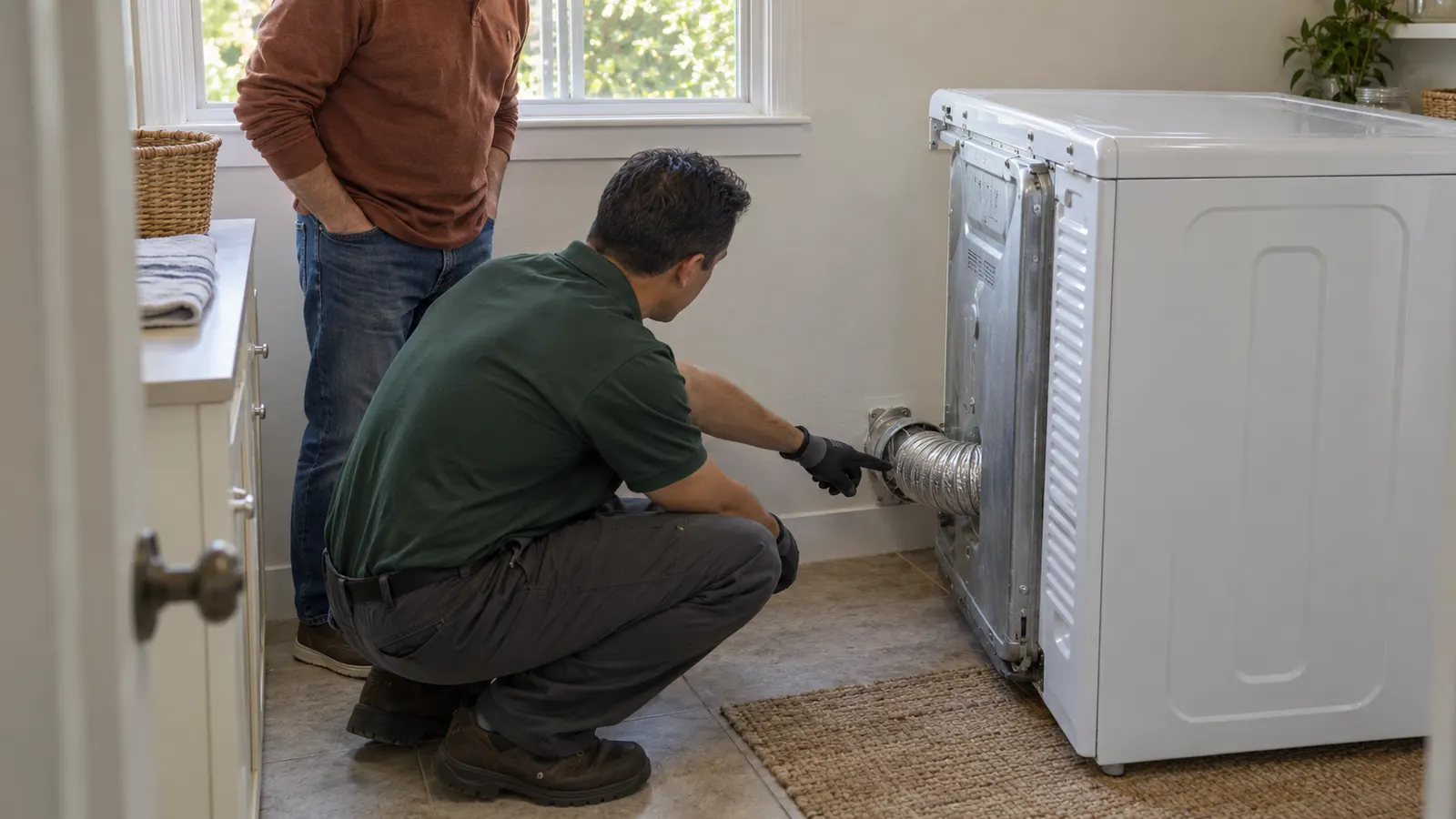
A dryer pushed too close to the wall can crush its transition connector, creating a severe restriction even when the permanent exhaust duct is otherwise suitable.
An approved recessed dryer vent box or appropriately selected connection fitting may help provide adequate clearance.
The solution must still use suitable materials and follow installation requirements.
Flexible transition connectors should not be extended through concealed walls or ceilings.
If correcting the appliance connection restores an appropriate exhaust path, rerouting the permanent duct may be unnecessary.
Planning a New Route Before Construction Begins
A successful rerouting project begins with measurements, not cutting a new hole through an exterior wall.
The installer needs to establish the appliance location, possible exterior exits, framing conditions, and accessible duct pathways.
Several questions should be resolved before construction:
- Where can the dryer exhaust terminate outdoors?
- What is the proposed duct’s calculated equivalent length?
- How many bends are required?
- Will the route pass through concealed or unconditioned spaces?
- Can the duct be supported and maintained appropriately?
- Are permits or building approvals required?
- What surfaces will need opening and restoration?
In some properties, a proposed route may conflict with structural members, utilities, or shared building components.
Those constraints should be identified before approving the work.
Material Selection Matters Along the Entire Path
A newly rerouted dryer vent should not recreate the material problems found in the original installation.
Permanent dryer exhaust ducts generally use smooth-interior metal construction of the required diameter.
Suitable joints, support, and installation details help maintain the exhaust path.
Fasteners that protrude into the duct interior can catch lint and should be avoided.
The short transition connector behind the dryer has separate requirements and must be approved for that application.
Plastic ducting and inappropriate flexible products are not acceptable substitutes for a properly installed permanent exhaust route.
Where the duct passes through an unconditioned space, insulation and condensation considerations may also need attention.
The technician should select materials according to the applicable code and dryer manufacturer’s instructions.
What About Installing a Dryer Vent Booster Fan?
Some longer exhaust routes may be designed with an appropriate dryer exhaust duct power ventilator.
However, a booster fan isn’t a universal solution for excessive length.
The device must be suitable for dryer exhaust, correctly installed, and permitted under the applicable requirements.
It also introduces another component that may need inspection and maintenance.
Before recommending a fan, the installer should determine whether a shorter, less restrictive passive route is feasible.
The homeowner should understand how the system will be maintained and what happens if the fan stops working.
How Can You Tell Whether the New Route Performs Better?
A completed rerouting project should be evaluated, not simply concealed behind finished surfaces.
The technician should verify that the duct is properly connected, supported, and terminated outdoors.
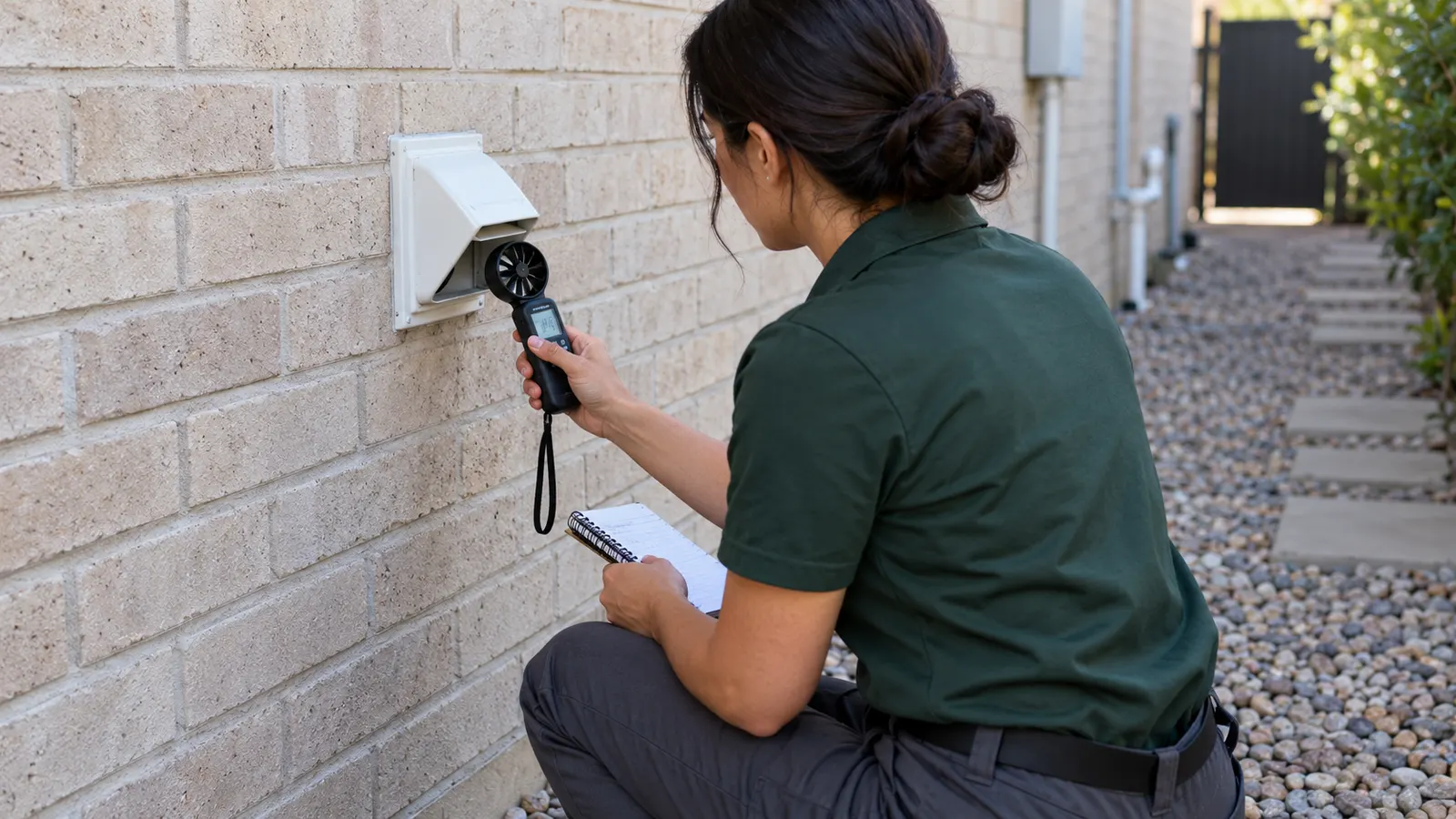
Airflow or exhaust pressure testing can provide additional evidence of performance.
When practical, comparing measurements before and after the work may help demonstrate the improvement.
However, testing conditions must be comparable, and the results should be interpreted against the applicable appliance specifications.
An airflow reading alone cannot confirm every installation detail.
The final review should include both physical inspection and appropriate performance checks.
What Changes the Cost of Dryer Vent Rerouting?
Rerouting can involve much more than purchasing new duct sections.
A straightforward route through an accessible exterior wall may require relatively limited work.
A concealed route through ceilings or finished rooms can involve opening surfaces, navigating framing, and restoring interior finishes.
Other cost factors include exterior termination access, duct length, required fittings, building approvals, and testing.
Ask for an estimate that separates exhaust installation from any drywall, painting, or exterior restoration.
That makes it easier to compare proposals and understand what is included.
A Los Angeles Homeowner’s Renovation Example
Consider a home where the laundry equipment originally sat against an exterior wall.
During remodeling, the homeowner decides to move the machines into a newly created interior laundry closet.
The original outlet remains in place, but reaching it now requires a long duct with several turns.
Rather than automatically extending the old installation, the contractor should evaluate alternative exterior termination locations.
A new route may reduce resistance and provide better maintenance access.
But if an appropriate connection to the original outlet remains within the applicable limits, rerouting may not be necessary.
The important decision happens during planning, before the new laundry room is finished.
When Cleaning Is Enough, and When It Isn’t
As our dryer vent repair vs. replacement guide explains, not every problem calls for new ductwork. Lint accumulation can restrict an otherwise correctly designed dryer vent.
In that situation, dryer vent cleaning may restore performance without changing the duct path.
A different response is needed when the route itself creates excessive resistance or terminates incorrectly.
Cleaning cannot eliminate unnecessary elbows, shorten a concealed run, or relocate an unsuitable exterior outlet.
SoCal Green Air & Chimney’s dryer vent repair and installation service includes evaluation of routing problems and rerouting where appropriate.
The inspection should determine which condition is actually affecting the system.
Frequently Asked Questions
Can a dryer vent be rerouted through another wall?
Yes, when the proposed route and exterior termination meet applicable installation requirements and building constraints.
Is it better to vent a dryer through the wall or roof?
A suitable exterior wall often allows a simpler route. Roof venting may be possible, but access, weatherproofing, and resistance require consideration.
Can a dryer vent have multiple elbows?
Yes, within the applicable equivalent-length and installation limits. Each fitting affects the overall design.
Do I need to reroute a dryer vent after moving my washer and dryer?
Not necessarily. The existing route may remain usable if it can be connected appropriately and meets the required limits.
Will rerouting fix a dryer that takes too long to dry?
It may help when the existing exhaust path is the cause. Appliance faults and ordinary lint blockages should also be considered.
Make the Exhaust Route Part of the Laundry Room Plan
A dryer vent shouldn’t be treated as an afterthought during remodeling or appliance installation.
The route determines how efficiently exhaust air can leave the dryer and how easily the system can be maintained.
If the current path is excessively long, poorly terminated, or difficult to correct through localized repairs, rerouting may be the right solution.
For help evaluating an existing dryer exhaust route, contact SoCal Green Air & Chimney. The team provides dryer vent repair and installation services for Los Angeles-area homes.
Ask for an inspection that considers the entire exhaust path before approving a new installation.