Professional Masonry Chimney Repair Service
Masonry Chimney Repair Service Los Angeles
Brick chimneys look solid from the outside, until they're not. Masonry deteriorates from the inside out: mortar joints recede before bricks loosen, bricks absorb water before they spall, and earthquake micro-fractures form before any crack is visible at ground level. By the time masonry chimney repair becomes obviously necessary, the structural deterioration has almost always been progressing for multiple seasons. Our CSIA-certified masonry technicians assess the full chimney structure, from firebox brick to exterior courses, identify the specific failure mode driving the deterioration, and provide a written repair plan before any mortar is mixed. Flat-rate pricing. Same-day scheduling across Los Angeles.
The Problem
Why Chimney Masonry Fails, and Why Los Angeles Conditions Accelerate It
Brick chimney masonry in Los Angeles faces a set of stressors that would not exist in most other regions simultaneously. Seismic activity, ranging from the imperceptible micro-tremors that occur continuously beneath the LA basin to the felt earthquakes that periodically affect areas from the San Fernando Valley through Pasadena and the Hollywood Hills, creates progressive fracturing in mortar joints and brick-to-mortar bonds that weakens the chimney structure incrementally with every event. The region's dry-wet-dry climate cycle, long hot summers followed by concentrated winter rainfall, subjects masonry to moisture cycling that standard mortar handles poorly over decades. And the prevalence of unreinforced masonry chimneys in homes built before 1960, which make up a substantial portion of the housing stock in Eagle Rock, Silver Lake, Pasadena, and many Eastside neighborhoods, means a large number of Los Angeles chimneys are structurally vulnerable to a seismic event without any visible surface symptom.
- ⚠ Mortar joint deterioration, recession, crumbling, and open joints admitting water and weakening brick bonds
- ⚠ Brick spalling, surface delamination and fracturing from moisture cycling and inferior original materials
- ⚠ Earthquake-induced diagonal step cracking, the characteristic failure pattern of seismic movement in brick masonry
- ⚠ Efflorescence, mineral salt deposits indicating sustained moisture absorption through the masonry face
- ⚠ Firebox brick deterioration, refractory brick damage from thermal cycling and acid combustion byproducts
- ⚠ Structural lean or displacement, advanced mortar failure combined with seismic movement
The Solution
Masonry Assessment First, Repair Method Matched to the Specific Failure Mode
Masonry chimney repair is not a single technique, it's a category covering tuckpointing, brick replacement, firebox refractory repair, structural rebuilding, and earthquake damage restoration. Each requires different materials, different preparation methods, and different skill sets. Our certified masonry technicians inspect the full chimney structure before recommending any repair, documenting the failure mode, the affected courses, the mortar joint condition throughout, and the structural integrity of the brick-to-mortar bond. The repair scope is confirmed in writing before any mortar is removed or brick is touched.
Get Free Estimate →Benefits
Why Homeowners Choose Professional Masonry Chimney Repair
Addresses the Structural Cause, Not Just the Surface
Masonry failure is a structural event, not a cosmetic one. Spalling bricks and receded mortar joints are symptoms of a deterioration process that continues until the underlying cause, moisture cycling, mortar failure, seismic movement, is addressed with the correct repair material and technique.
Mortar Matched to the Existing Masonry
Applying modern high-strength Portland cement mortar to historic brick masonry is one of the most damaging errors in chimney repair, it causes the surrounding bricks to spall. We match mortar composition to the existing masonry to ensure the repair is compatible with the material it bonds to.
LADBS-Compliant Earthquake Damage Repair
Los Angeles earthquake-damaged masonry chimneys have specific permit and repair requirements under LADBS Standard Plan Bulletin SP-2. We are familiar with these requirements and handle permit documentation where required.
Written Estimate Before Any Material Is Applied
Masonry and chimney repair scope varies significantly by extent and failure mode. You receive a written estimate, course by course for tuckpointing, brick by brick for replacement, before we remove a single joint of mortar.
Our Process
What to Expect, Step by Step
Full Masonry Assessment, Exterior Courses, Firebox, and Crown Junction
We inspect the complete chimney masonry: exterior brick courses from the roofline to the chimney cap base, the crown-to-masonry junction, the flashing counter-flashing mortar joint line, and the firebox interior brick and mortar condition. We probe mortar joints to assess bond depth and hardness, a joint that looks intact from the surface can have lost the inner half of its bond through acid erosion from combustion byproducts or moisture cycling. Every finding is photographed and documented.
Failure Mode Identification & Repair Plan
Based on the assessment, we identify the specific failure mode driving the deterioration, moisture cycling, acid erosion, seismic fracturing, or original mortar composition failure, and develop a repair plan matched to it. For tuckpointing, we specify the mortar composition required to match the existing masonry's compressive strength and porosity. For brick replacement, we identify matching brick or the closest available material. For earthquake damage, we assess whether repair under LADBS guidelines is appropriate or whether structural rebuilding is required.
Repair Execution, Tuckpointing, Brick Replacement, or Structural Work
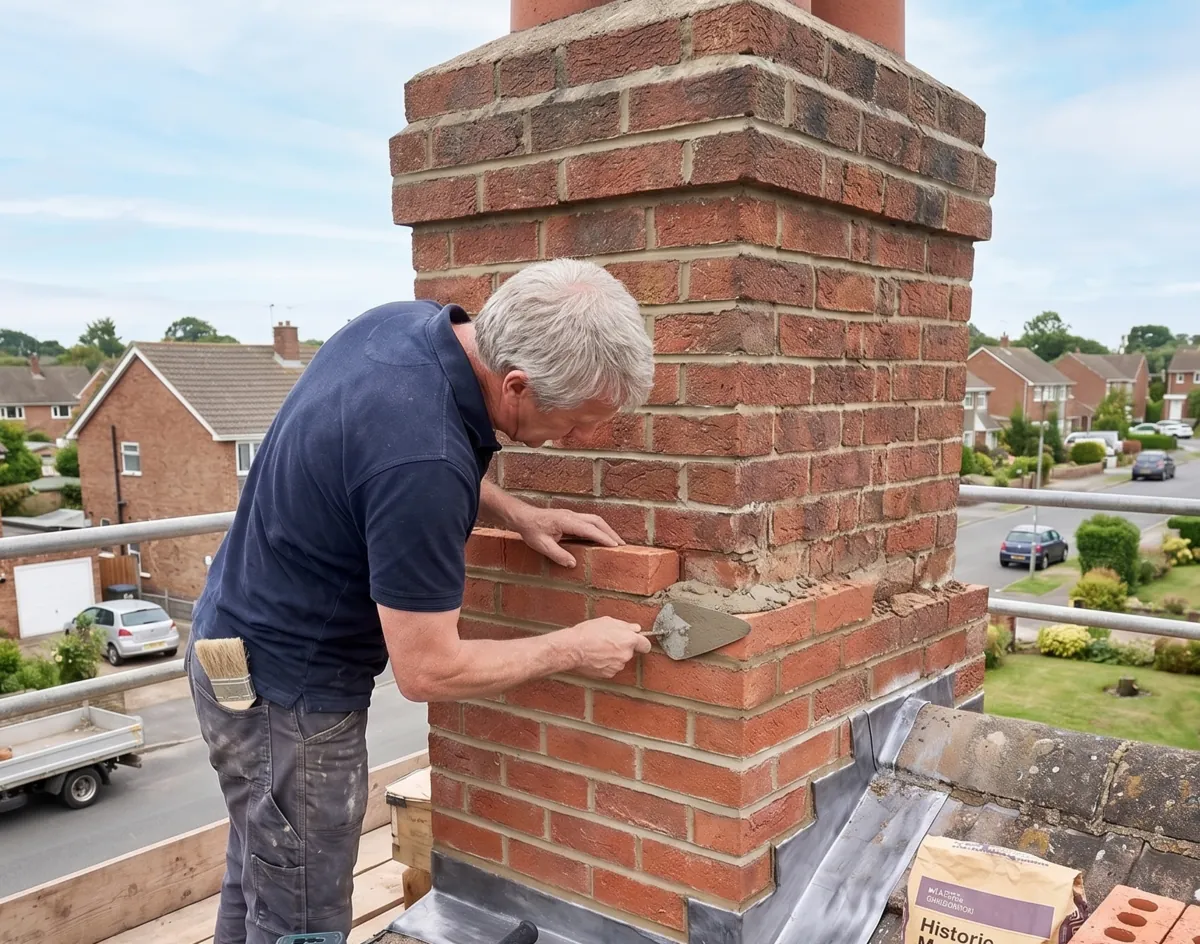
Tuckpointing: deteriorated mortar is ground out to a minimum depth of ¾ inch, joints are cleared of dust and debris, and new mortar is packed in stages to ensure full joint depth without air pockets. Brick replacement: damaged bricks are carefully removed without disturbing adjacent courses, new bricks are set in mortar matched to the original, and joints are finished to match surrounding coursework. Firebox refractory repair: damaged firebrick is removed and replaced with refractory-rated brick in refractory-rated mortar, not standard masonry mortar.
Cure Period, Final Inspection & Written Service Record
Tuckpointing and brick replacement mortar requires adequate cure time before the chimney is returned to service. We specify the cure period based on mortar composition and ambient temperature. A final inspection of every repaired section is performed after cure, and you receive a written service record documenting the repair scope, mortar specification, and cured condition.
What It Means
Masonry Chimney Repair, Understanding the Materials, the Failures, and the Fixes
A brick chimney is a composite structure: individual masonry units, brick, held together by a binding mortar that fills the joints between them. The structural integrity of the chimney depends not on the brick alone, but on the bond between brick and mortar throughout every course. That bond is what masonry chimney repair restores, and the specific technique required depends entirely on which component of the brick-mortar system has failed and why.
Tuckpointing, the process of removing deteriorated mortar from joints and replacing it with new mortar, is the most common masonry and chimney repair service performed on Los Angeles chimneys. The technique is straightforward in concept but demanding in execution. The old mortar must be removed to a minimum depth of ¾ inch to provide adequate mechanical bond for the new mortar, grinding only the surface produces a repair that looks complete but has no structural depth and fails within one to two seasons. The new mortar must be matched to the compressive strength of the existing brick: if the mortar is significantly stronger than the brick, thermal and moisture movement transfers stress to the brick face rather than the joint, causing the brick face to delaminate and spall. This is one of the most common errors in masonry chimney repair performed by contractors without specific masonry experience.
Brick spalling, the delamination and fracturing of brick faces, is the failure mode that follows unaddressed mortar joint deterioration. Once mortar joints recede below the brick face, water penetrates the joint cavity on every rainfall and is absorbed by the exposed brick edges. In Los Angeles, where summer heat drives rapid drying followed by winter rainfall that re-saturates the masonry, this moisture cycling causes the brick's outer layer to separate from the inner body, producing the characteristic flaking, pitting, and surface loss of spalling. Spalled bricks cannot be repaired, they must be replaced with matching brick set in mortar that will not repeat the same failure. Brick chimney repair in Los Angeles requires sourcing brick that matches the original in size, color, texture, and compressive strength, a process that requires knowledge of the regional brick types used in LA's construction eras.
Seismic damage to chimney masonry follows a specific and recognizable pattern. Earthquake forces move a chimney in multiple directions simultaneously, the characteristic result is diagonal step cracking that follows the mortar joints between courses in a staircase pattern, typically beginning at corners or at the point of maximum lateral movement. In unreinforced masonry chimneys, the type found in most Los Angeles homes built before the 1970s, this cracking indicates that the mortar bond has been compromised along the affected courses and the chimney's ability to resist further seismic movement is reduced. The Los Angeles Department of Building and Safety (LADBS) has specific requirements for earthquake-damaged chimney repair under Standard Plan Bulletin SP-2, including permit requirements and, in cases of significant damage, replacement of unreinforced masonry with a factory-built metal chimney and steel stud chase. We assess earthquake damage against these requirements and communicate clearly whether the damage qualifies for in-kind masonry repair or requires the LADBS rebuilding protocol.
Warning Signs
Signs Your Chimney Masonry Needs Professional Attention
Tap any sign to learn what it means and what to do next.
! Recessed or crumbling mortar joints ⌄
Mortar joints that are visibly recessed below the brick face, or that crumble when touched, have lost their structural bond depth. Water is entering these joints on every rainfall. Tuckpointing restores the joint depth and water resistance before the adjacent bricks begin absorbing the moisture that causes spalling.
! Brick faces flaking, pitting, or delaminating ⌄
Surface delamination of brick faces, spalling, indicates that moisture has been cycling through the brick long enough to cause internal separation. Spalled bricks cannot be sealed back together. They require replacement with matching brick. Continuing to use a fireplace with spalling bricks allows the deterioration to spread to adjacent courses.
! White mineral deposits (efflorescence) on the exterior masonry ⌄
Efflorescence forms when water moves through masonry, dissolves mineral salts from the brick or mortar, and deposits them on the surface as it evaporates. Visible efflorescence is evidence that water has been moving through the masonry in sufficient quantity to carry dissolved minerals to the surface, the masonry is actively absorbing water through its face, its joints, or both.
! Diagonal step cracking following the mortar joints ⌄
Diagonal cracking that follows the mortar joints in a staircase pattern, particularly if it appeared or worsened after a felt earthquake, is the characteristic masonry failure pattern of seismic movement. This type of cracking indicates structural bond failure along the affected courses and warrants immediate professional assessment against LADBS earthquake damage guidelines.
! Loose or displaced bricks in the chimney stack ⌄
Individual bricks that can be moved by hand or that are visibly displaced from their original position represent a structural failure, the mortar bond at those locations no longer has load-bearing capacity. A chimney with loose bricks above the roofline presents a falling hazard that worsens with wind events and seismic activity.
! Deteriorating firebox brick or open mortar joints inside the firebox ⌄
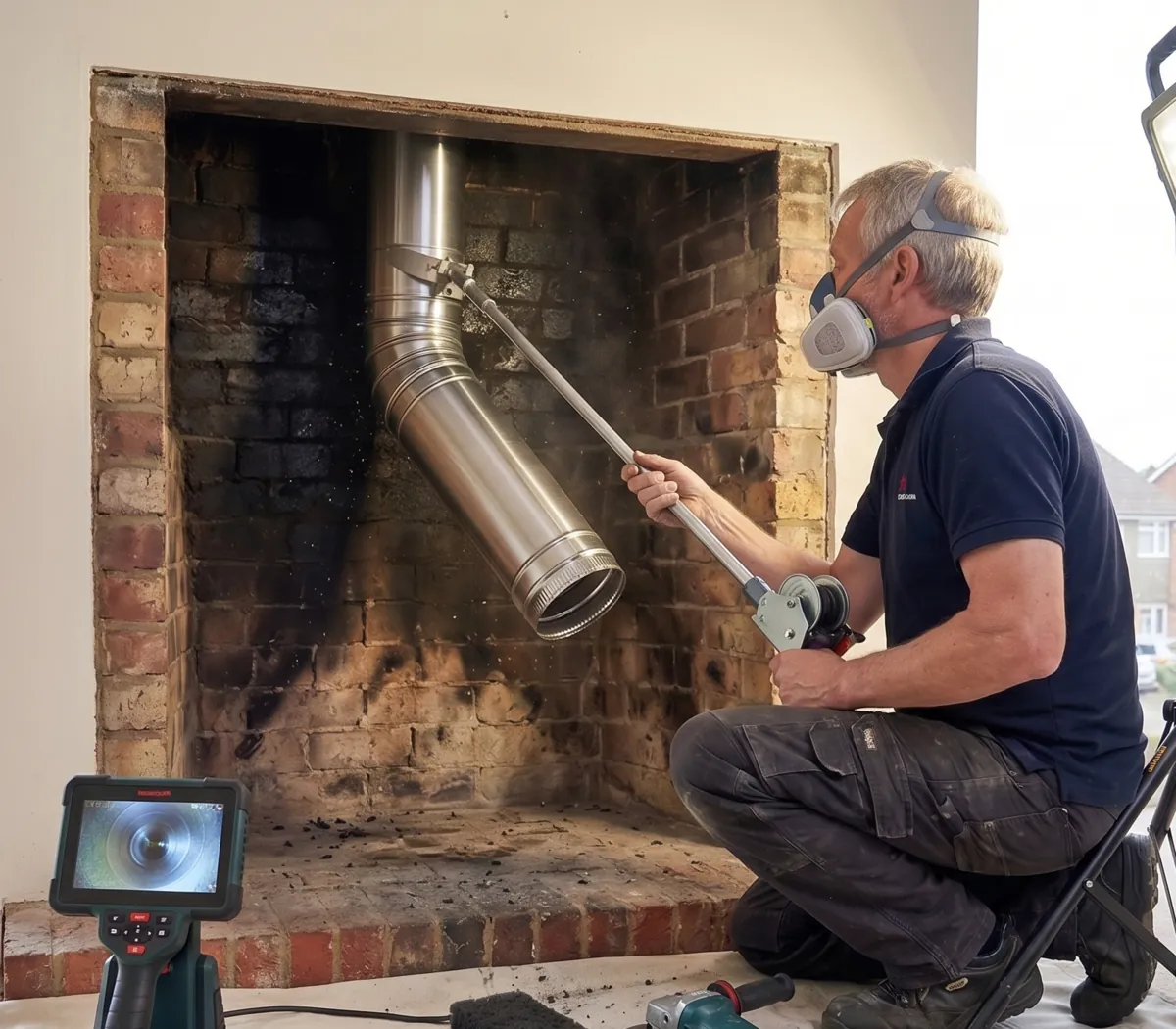
The firebox is lined with refractory brick rated for sustained high temperatures and acid combustion byproducts. When firebox brick faces crack, spall, or show open joints, the firebox is no longer providing the thermal separation it was designed for. Open refractory joints allow heat and combustion gases to reach the surrounding chimney structure, a fire risk that operates independently of flue liner condition.
Deep Dive
Everything You Should Know About Masonry Chimney Repair
Warning Signs
The Warning Signs That Mean Masonry Deterioration Has Reached a Structural Stage
Masonry chimney failure progresses through predictable stages, and the visible warning signs correspond to different points in that progression. Efflorescence and minor mortar recession are early-stage indicators, the bond is weakening, water is entering, but the structure is still intact. Brick spalling and visible crack patterns are mid-stage, structural bond loss has begun, water damage to adjacent bricks is in progress, and the repair scope has grown beyond tuckpointing to include brick replacement. Loose or displaced bricks and visible structural lean are late-stage, the chimney presents an active safety hazard and the repair scope may include partial or full rebuilding above the roofline. The difficulty in Los Angeles is that the mid-stage to late-stage transition can happen faster than in other regions because seismic activity adds structural stress to masonry that is already weakened by moisture cycling, compressing a deterioration timeline that might take decades in a stable-ground environment into a few seasons. Annual inspection catches most failures at the early or mid-stage, when tuckpointing and targeted brick replacement are sufficient.
Key Points
- ✓ Visibly recessed or crumbling mortar joints in any course
- ✓ Brick face spalling, flaking, pitting, or surface delamination on exterior courses
- ✓ Efflorescence (white mineral deposits) on exterior masonry face
- ✓ Diagonal step cracking following mortar joints, seismic damage pattern
- ✓ Loose or physically displaced bricks in the chimney stack
- ✓ Open or deteriorated mortar joints inside the firebox
Benefits
The Full Case for Addressing Masonry Deterioration Before It Becomes Structural
The economics of masonry chimney repair follow a consistent cost curve: tuckpointing costs a fraction of brick replacement, brick replacement costs a fraction of partial rebuilding, and partial rebuilding costs a fraction of full chimney reconstruction. Every stage of deferral multiplies the repair cost, not incrementally, but significantly. A chimney where mortar joints have receded to ¾ inch depth across ten courses can be tuckpointed in a single day for a few hundred dollars per course. The same chimney, after two more seasons of moisture cycling through those open joints, will have spalling brick in the affected courses that requires individual brick removal, matching brick sourcing, and full reset, a job that costs three to five times more per affected area. For brick chimney repair in Los Angeles, where the combination of seasonal rainfall and seismic movement accelerates the progression from early to mid-stage masonry failure, the financial argument for acting at first detection is particularly strong. Annual inspection is the mechanism that makes early-stage detection consistent rather than coincidental.
Key Points
- ✓ Tuckpointing at the mortar recession stage prevents brick spalling, prevents a significantly more expensive repair
- ✓ Brick replacement at the spalling stage prevents structural bond failure, prevents rebuilding
- ✓ Seismic damage addressed promptly meets LADBS repair guidelines before damage exceeds the in-kind repair threshold
- ✓ Firebox refractory repair prevents heat transfer to the surrounding chimney structure
- ✓ Mortar matched to existing brick prevents the secondary spalling caused by incompatible mortar strength
- ✓ Written repair documentation supports homeowner insurance claims and real estate disclosure
Maintenance
How to Extend the Life of Chimney Masonry Between Professional Services
The single most effective maintenance measure for chimney masonry in Los Angeles is a vapor-permeable masonry waterproofing sealant applied to the exterior face every five to seven years. Unlike film-forming sealants that trap moisture inside the masonry, penetrating vapor-permeable products allow the brick to breathe, releasing moisture outward, while blocking water absorption from rainfall. This significantly reduces the moisture cycling that drives both mortar recession and brick spalling. For older homes throughout Pasadena, Eagle Rock, Highland Park, and the other neighborhoods with pre-1960 brick chimneys, waterproofing is particularly valuable because the original mortar in many of these chimneys was mixed with lime rather than Portland cement, a softer, more water-soluble binder that erodes faster under sustained moisture exposure. Between professional services, a visual check of the exterior mortar joints after the first significant rainfall of each season is the most useful homeowner habit: mortar that is absorbing water will darken visibly in the joints before the bricks do, providing early visual evidence of recession before it reaches the depth where structural bond loss begins. Any felt earthquake warrants a professional assessment of the chimney masonry before the fireplace is returned to service, seismic micro-fractures in mortar joints are not visible from ground level and cannot be assessed without close inspection.
Key Points
- ✓ Apply vapor-permeable masonry waterproofing sealant every 5 to 7 years
- ✓ Inspect mortar joints visually after the first rainfall of each season for unusual darkening
- ✓ Schedule professional masonry assessment after any felt earthquake, regardless of visible symptoms
- ✓ Address mortar recession immediately, do not wait for spalling to appear
- ✓ Never apply standard Portland cement mortar to historic lime-mortar chimneys without professional assessment
- ✓ Schedule annual professional chimney inspection to catch masonry failure at the tuckpointing stage
What's Included
Honest Scope, Honest Pricing, Before Any Mortar Is Removed
Masonry chimney repair scope is determined by the extent and failure mode of the deterioration, assessed in person, documented in writing, and confirmed before any work begins. Every estimate specifies the affected courses, the repair technique, and the mortar composition to be used.
- ✓ Full masonry assessment, exterior courses, crown junction, flashing line, firebox
- ✓ Mortar joint probing, structural bond depth verification beyond surface appearance
- ✓ Tuckpointing, complete mortar removal to ¾ inch minimum depth and replacement with matched mortar
- ✓ Brick replacement, individual damaged brick removal and replacement with matched brick
- ✓ Firebox refractory brick and mortar repair, rated materials for high-temperature applications
- ✓ Earthquake damage assessment, LADBS compliance evaluation for seismic damage
- ✓ Masonry waterproofing application, vapor-permeable penetrating sealant
- ✓ Partial chimney rebuilding, above-roofline reconstruction where required
- ✓ Post-repair inspection and cure period documentation
- ✓ Written service record with repair scope, mortar specification, and photographed condition
15+ Years Serving Southern California Homeowners
Our Promise
You'll Always Know What You're Paying, Before We Start
No estimates based on a ground-level look at the chimney exterior. No mortar removed before you've seen the full repair scope in writing. You receive a written estimate after close-range assessment, specifying each affected course, the repair technique, and the mortar composition, with photographs of every finding. Every masonry repair is backed by our workmanship guarantee.
CSIA-Certified Masonry Technicians
Every masonry chimney repair is performed by certified, insured professionals with specific expertise in chimney masonry, including period-appropriate mortar matching and LADBS earthquake damage compliance assessment.
Written Estimates With Mortar Specifications
You see the full repair scope, the mortar composition to be used, and the cost before we remove any material. Masonry and chimney repair cost depends on extent and technique, your estimate reflects what your chimney actually needs.
Same-Day Scheduling
Assessment and repair appointments available across Los Angeles, Pasadena, Burbank, Glendale, Santa Monica, and the San Fernando Valley, with priority scheduling for seismic damage assessment and structural safety concerns.
Workmanship Guarantee
Every masonry repair is backed by our guarantee. If the repaired mortar joints or brick courses show premature failure within the warranty period, we return to address it at no additional charge.
FAQs
Quick answers from our techs.
Still have a question? Call us, we answer the phone, day or night.
Call (888) 280-2285 →What is the difference between tuckpointing and repointing?
Both terms describe the process of removing deteriorated mortar from joints and replacing it with new mortar. Repointing is the general term for the repair process. Tuckpointing technically refers to a two-color finish technique historically used to simulate fine joint work on older masonry, but the terms are widely used interchangeably in the chimney industry. In either case, the structural requirement is the same: mortar must be removed to a minimum depth of ¾ inch and replaced with mortar matched in composition to the existing masonry.
Can I use standard mortar for chimney masonry repair?
Not safely, in many cases. Modern Type S or Type N Portland cement mortar is significantly stronger in compression than the lime-based mortars used in chimneys built before 1960, which represent a large portion of the brick chimney stock in Los Angeles. Applying high-strength mortar to historic brick transfers stress to the brick face rather than the joint during thermal cycling, causing the brick to spall. Mortar composition must be assessed against the existing brick's compressive strength and porosity before any tuckpointing begins.
Does earthquake damage to a chimney require a permit in Los Angeles?
It depends on the extent of the damage. Under LADBS guidelines, a chimney may be repaired with in-kind masonry when the repair cost is less than 10% of the full chimney replacement value and the damage is limited to the upper portion of the above-roofline section. More extensive earthquake damage requires a permit and may require replacement of the unreinforced masonry chimney with a factory-built metal chimney and steel stud chase under LADBS Standard Plan Bulletin SP-2. We assess your specific damage against these thresholds and communicate which pathway applies before recommending any repair approach.
How do I know if my chimney needs tuckpointing or full brick replacement?
Tuckpointing is appropriate when the brick faces are intact and the mortar joints have deteriorated. Brick replacement is required when individual bricks have spalled, cracked through their full face, or are loose and displaced. In practice, many masonry chimney repair jobs involve both: tuckpointing the majority of affected courses and replacing specific bricks where spalling has progressed too far for the surrounding mortar repair to provide adequate structural support.
Is brick chimney repair in Los Angeles covered by homeowners insurance?
Most policies do not cover masonry deterioration from normal aging, moisture cycling, or deferred maintenance. They do cover sudden structural damage from a covered event, including earthquake damage in areas with earthquake insurance riders, and damage from fallen trees, fire, or lightning. If the damage occurred during a specific event, document it with photographs and dates before contacting your insurer. We provide written inspection reports and repair documentation suitable for insurance claims where the damage was event-related.
Service Areas
Air Duct & Chimney Services Across Los Angeles County
SoCal Green Air Duct & Chimney provides air duct cleaning, chimney sweeping, dryer vent cleaning, and indoor air quality services throughout Los Angeles County. Our certified technicians serve residential and commercial properties across these communities and beyond.
Ready to Find Out What Your Chimney Masonry Actually Needs?
Book a professional masonry chimney repair assessment today. Close-range inspection, photographed findings, and a written repair estimate, mortar specification included, before any work begins. Most appointments across Los Angeles and Southern California are available within 48 hours.