Dryer Vent Repair vs. Replacement: Which Does Your Home Need?
Should you repair or replace a damaged dryer vent? Learn which problems can be fixed, when new ductwork is needed, and what Los Angeles homeowners should check.
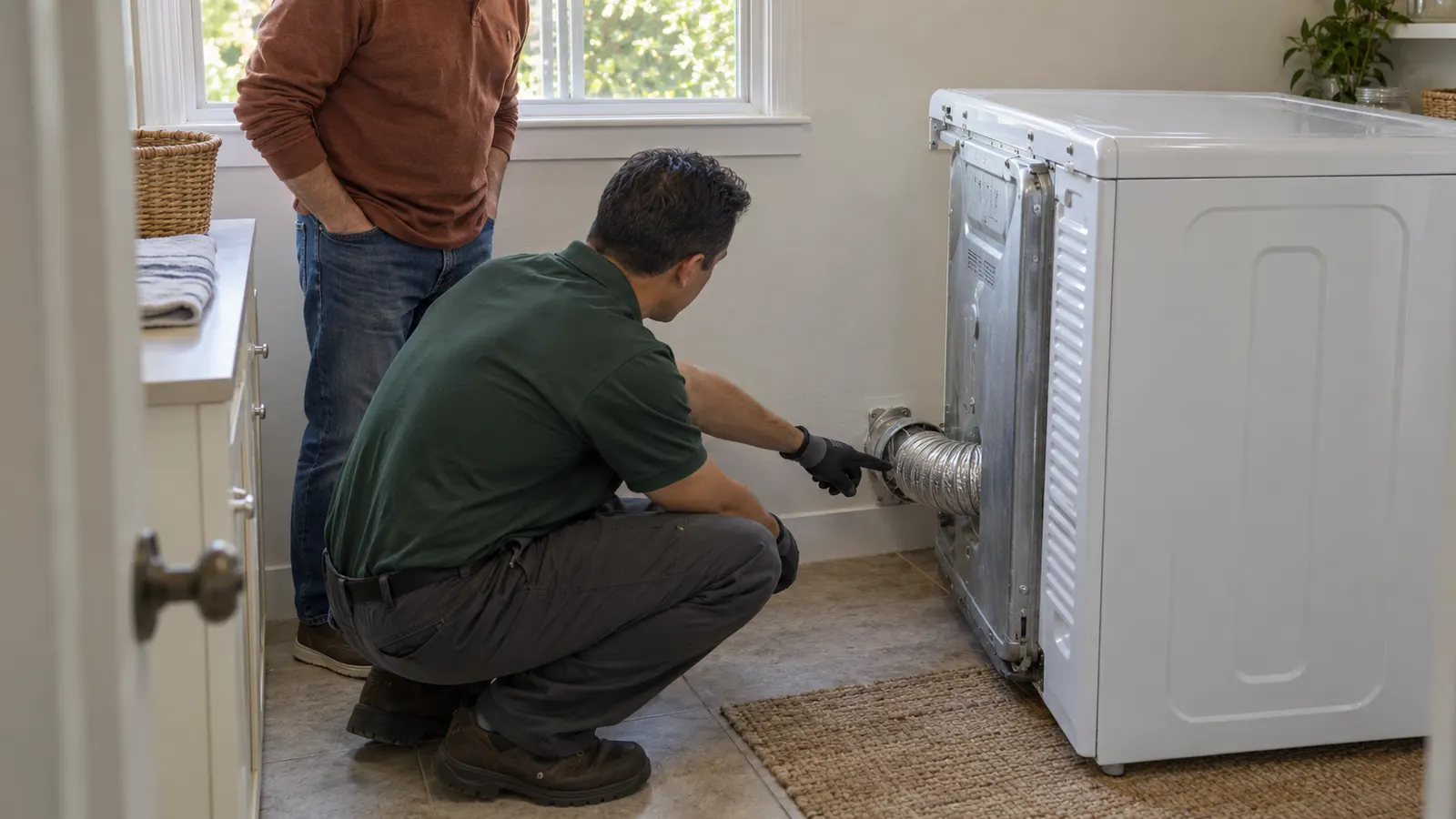
Your dryer takes longer to finish a load, and the technician finds a damaged exhaust duct behind the appliance. Now you have another decision to make: should the damaged section be repaired, or does the entire dryer vent need replacing?
The answer depends on where the damage is, what material the duct is made from, and whether the remaining exhaust system can safely carry air outdoors.
Dryer vent repair is generally appropriate for an isolated problem in an otherwise suitable system. Replacement is usually the better choice when the duct is severely damaged, made from unsuitable materials, or installed in a way that cannot be corrected with a localized repair.
You don’t necessarily need new ductwork because one connector has come loose. But repeatedly repairing a poorly installed exhaust route may leave the original problem unresolved.
For Los Angeles homeowners, understanding this distinction can help you evaluate a technician’s recommendation before approving work.
Start With the Problem, Not the Price
It’s tempting to compare repair and replacement prices immediately. However, the cheapest proposed service won’t necessarily solve the issue.
Consider two situations.
In the first, a relatively new metal exhaust duct is in good condition, but the short connector behind the dryer has become crushed. Replacing that connector may restore a suitable exhaust path without disturbing the rest of the installation.
In the second, the dryer exhaust travels through a long run of deteriorated, unsuitable duct material inside a concealed space. Fixing one visible connection won’t correct the problems throughout the route.
Both homeowners might report the same symptom: clothes taking too long to dry.
The underlying conditions require different solutions.
A useful inspection should establish what failed, how much of the system is affected, and whether the remaining ductwork is appropriate for continued use.
When a Dryer Vent Can Usually Be Repaired
A localized repair makes sense when the exhaust system is otherwise properly installed and the damaged component can be corrected without leaving an unsafe or ineffective connection.
Common examples include the following.
A Loose Connection Behind the Dryer
The transition connector may separate when an appliance is moved for cleaning or laundry room improvements.
If the connector is undamaged, appropriately rated, and can be securely reattached, replacing the entire exhaust system may be unnecessary.
The technician should also check why the connection separated.
If the dryer presses against the connector whenever it’s moved back into position, simply reconnecting it may not prevent another failure.
A Damaged Exterior Vent Cover
The outdoor termination can become cracked, loose, or unable to open properly.
When the duct behind it remains sound, replacing the termination assembly may be enough.
The new cover must be suitable for dryer exhaust and should not include a lint-catching screen that obstructs airflow.
An Accessible Joint That Needs Correction
A poorly secured joint may leak exhaust air into an accessible space.
Depending on the condition and design of the connection, a technician may be able to refasten and seal it using appropriate materials.
A repair should restore a durable connection, not merely conceal a gap with an unsuitable adhesive.
When Replacing Dryer Vent Ductwork Makes More Sense
Replacement becomes more appropriate when the duct itself is unsuitable or when the damage extends beyond a small, repairable area.
The Duct Is Crushed Beyond Recovery
A severely flattened metal connector or duct section may no longer provide an adequate opening for exhaust airflow.
Trying to reshape a badly damaged section can leave weak spots or persistent restrictions.
Replacing that section with an appropriate product is generally more reliable.
The Vent Uses Plastic or Unsuitable Foil Material
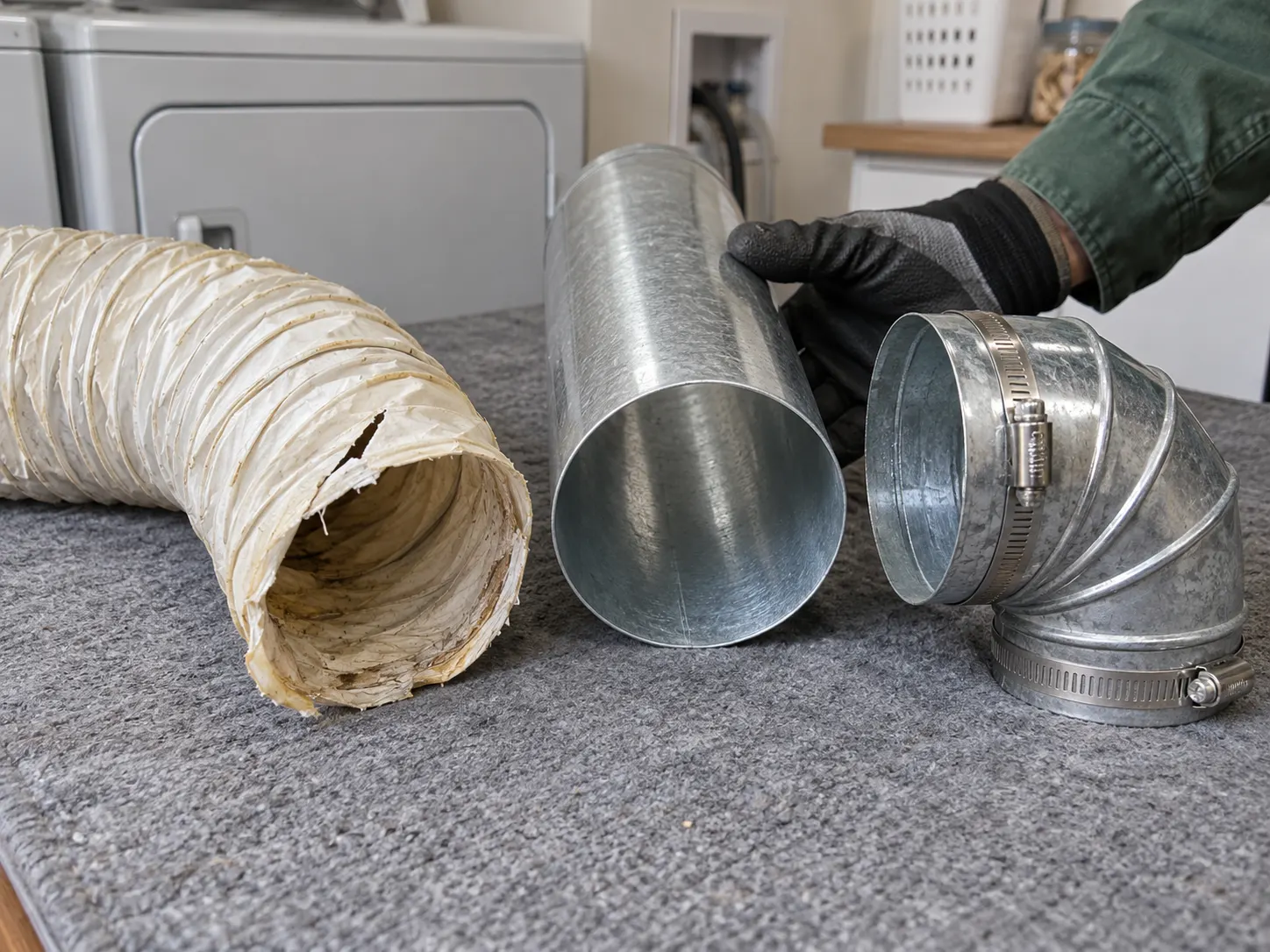
Some older installations use plastic ducting or thin, accordion-style foil products that are not appropriate for the main dryer exhaust route.
These materials may crush easily and create places where lint accumulates.
The replacement should follow the applicable requirements for the specific part of the system.
The main concealed exhaust duct generally requires smooth-interior metal construction. The short transition connection between the dryer and the permanent duct has separate requirements and may use an appropriately listed flexible metal product.
Damage Appears Throughout the Route
If multiple sections are corroded, separated, badly deformed, or improperly joined, individual patches may become impractical.
Widespread problems suggest that a larger replacement could provide a more dependable result.
The technician should explain which sections are defective rather than recommending complete replacement based only on the age of the house.
The Existing Route Is Fundamentally Poor
Sometimes the duct material is intact, but the installation has excessive bends, unnecessary length, or an unsuitable termination point.
Replacing a short connector won’t correct those design problems.
The solution may involve replacing and rerouting part or all of the exhaust duct.
That is a different decision from replacing material simply because it looks old.
Repair or Replace? Compare the Options
| Condition found | Likely approach | Reason |
|---|---|---|
| Loose, intact connection | Repair | Existing components may remain usable |
| Broken exterior termination | Replace termination | Main duct may still be sound |
| Crushed short connector | Replace connector | Restores the required opening |
| Unsuitable plastic exhaust duct | Replace affected ductwork | Material is not appropriate |
| Several deteriorated sections | Partial or larger replacement | Multiple defects need correction |
| Excessive bends and poor routing | Evaluate rerouting | New material alone may not solve resistance |
| Lint buildup in sound ductwork | Cleaning | Structural replacement may be unnecessary |
These are typical decisions, not substitutes for an inspection. Concealed damage, appliance instructions, and applicable code requirements can change the recommended scope.
Does the Whole Dryer Vent Need Replacing?
Not always.
A dryer exhaust system has several components, and they don’t necessarily wear out together.
The short connector behind the appliance might need replacement while the permanent metal duct remains in good condition.
Likewise, a damaged exterior cover may be replaced without disturbing the duct inside the wall.
Before approving a complete replacement, ask the technician to identify:
- Which sections are physically damaged.
- Which materials are unsuitable.
- Whether the current routing meets applicable requirements.
- Which components can remain in service.
- Whether the proposed work includes the exterior termination.
- How the completed installation will be checked.
This discussion helps distinguish necessary work from optional improvements.
What About a Dryer Vent That Keeps Clogging?
Recurring lint buildup doesn’t automatically mean the duct needs replacing.
A vent may require cleaning because lint has accumulated over time. However, frequent restrictions can also point to a crushed connector, poorly arranged bends, or an obstruction at the exterior outlet.
If the system repeatedly develops the same problem, the cause deserves investigation.
A technician should evaluate the exhaust route rather than simply removing lint again.
When the duct is structurally sound and appropriately installed, professional dryer vent cleaning may be the appropriate service.
If the inspection identifies physical defects, those should be addressed separately.
Cleaning removes obstructions. It doesn’t repair a collapsed duct or correct an unsuitable installation.
How Duct Material Changes the Decision
The material used in the exhaust system is one of the most important factors in deciding whether repair is reasonable.
Smooth-interior rigid metal duct is generally preferred for permanent dryer exhaust runs because it provides a durable pathway with fewer places for lint to collect.
Flexible transition connectors serve a different purpose. They accommodate the connection between the movable dryer and the fixed exhaust system.
A listed flexible transition duct must be used only where permitted and according to its installation instructions.
It should not extend through concealed walls, floors, or ceilings.
Plastic ducting and unsuitable foil-style products should not be retained simply because they appear undamaged.
A qualified installer should confirm the correct material, diameter, length, and connection details for the particular appliance and installation.
Could Rerouting Be Better Than Repair or Replacement?
Sometimes the problem isn’t the condition of the duct. It’s the path the duct follows.
A laundry room may have been relocated during a renovation, leaving the exhaust traveling around several corners before reaching outdoors.
A new dryer may also have different venting limitations from the previous appliance.
In these cases, replacing the duct along the same inefficient path may accomplish very little.
A better route could reduce unnecessary bends, improve accessibility, or provide a more suitable exterior termination.
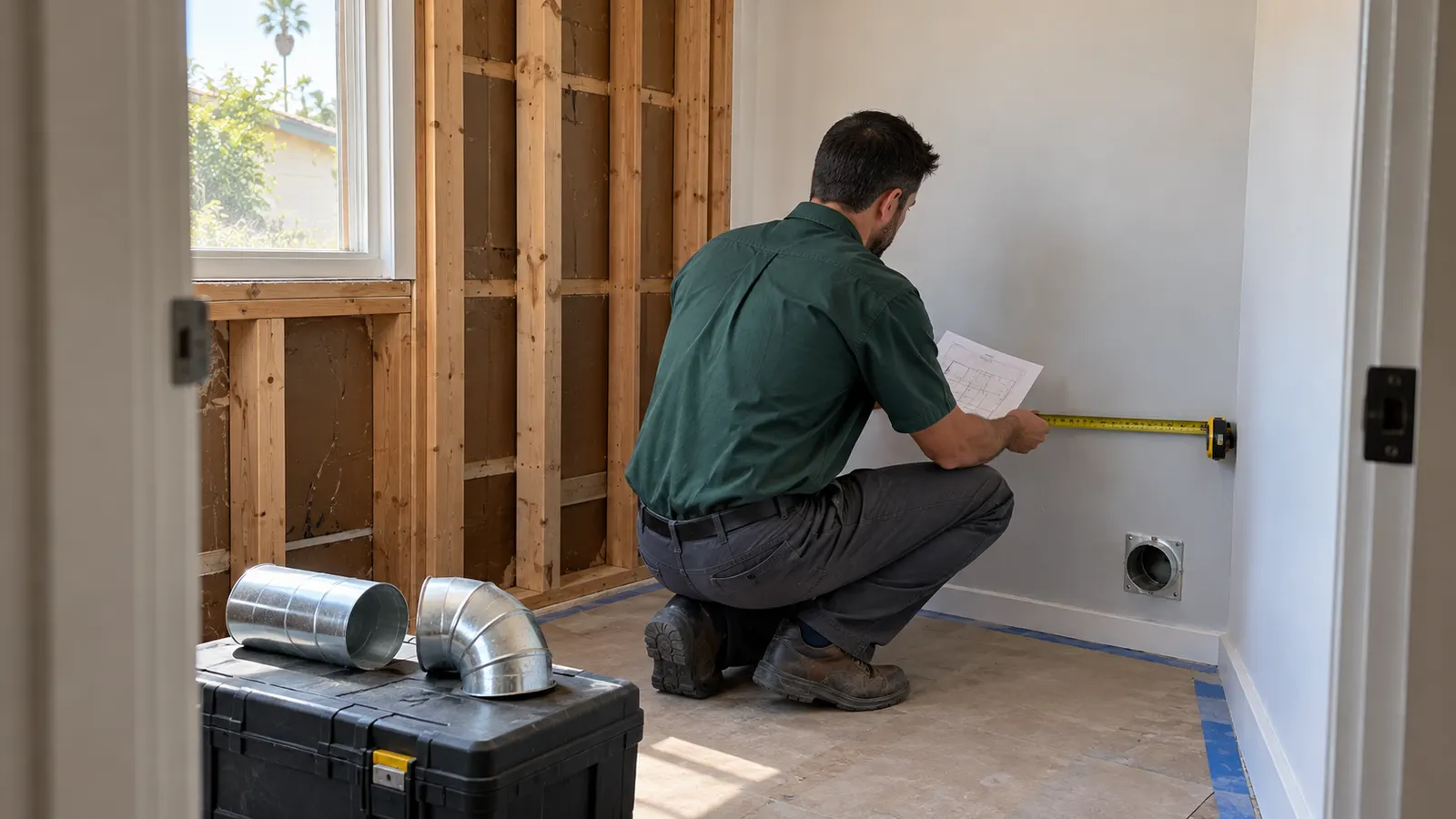
However, rerouting may require opening finished surfaces or coordinating work around framing and other building systems.
The proposed path must be checked against the dryer’s instructions and applicable local requirements.
For a more detailed discussion of routing decisions, see our guide When Does a Dryer Vent Need to Be Rerouted?
What Determines the Cost of Dryer Vent Work?
A short, accessible connector replacement is usually a different scope of work from installing new ductwork through a ceiling or wall.
The price should reflect what is actually required.
Factors that can affect the estimate include:
- Accessibility: Is the damaged section visible, or is it concealed?
- Length: How much ductwork needs replacement?
- Routing: Are new bends or a different termination location necessary?
- Materials: Which approved duct and connection components are required?
- Restoration: Will finished walls or ceilings need opening and repair?
- Testing: What inspection and performance verification are included?
A lower estimate may exclude work needed to make the complete system functional.
Ask for an itemized description before comparing proposals.
Avoid choosing solely by price without confirming whether both estimates address the same problem.
What Happens During a Professional Dryer Vent Evaluation?
A useful evaluation begins at the appliance and follows the exhaust path toward the outdoor termination.
The technician should examine accessible sections and determine whether the reported problem is caused by damage, blockage, unsuitable materials, or another issue.
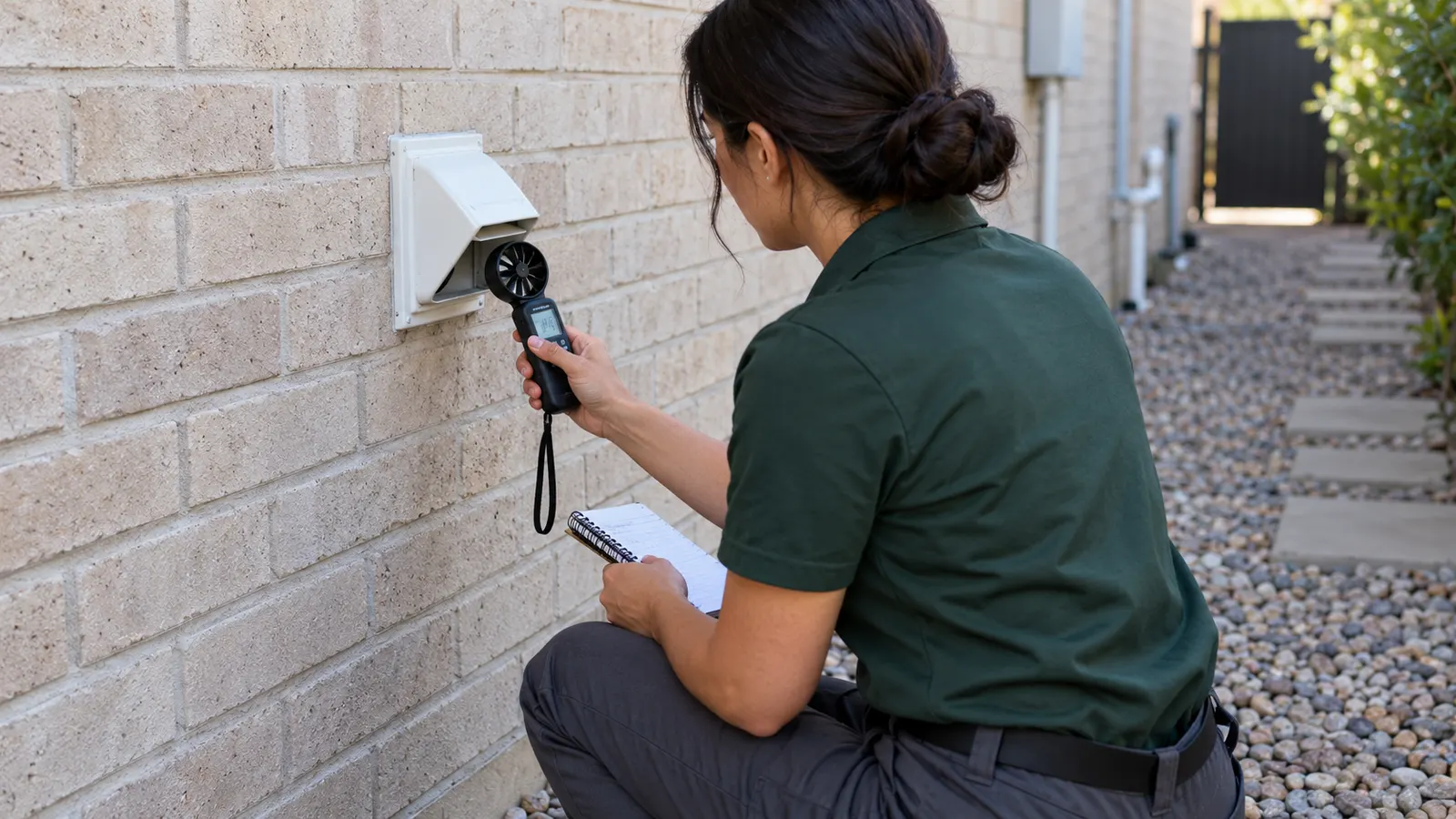
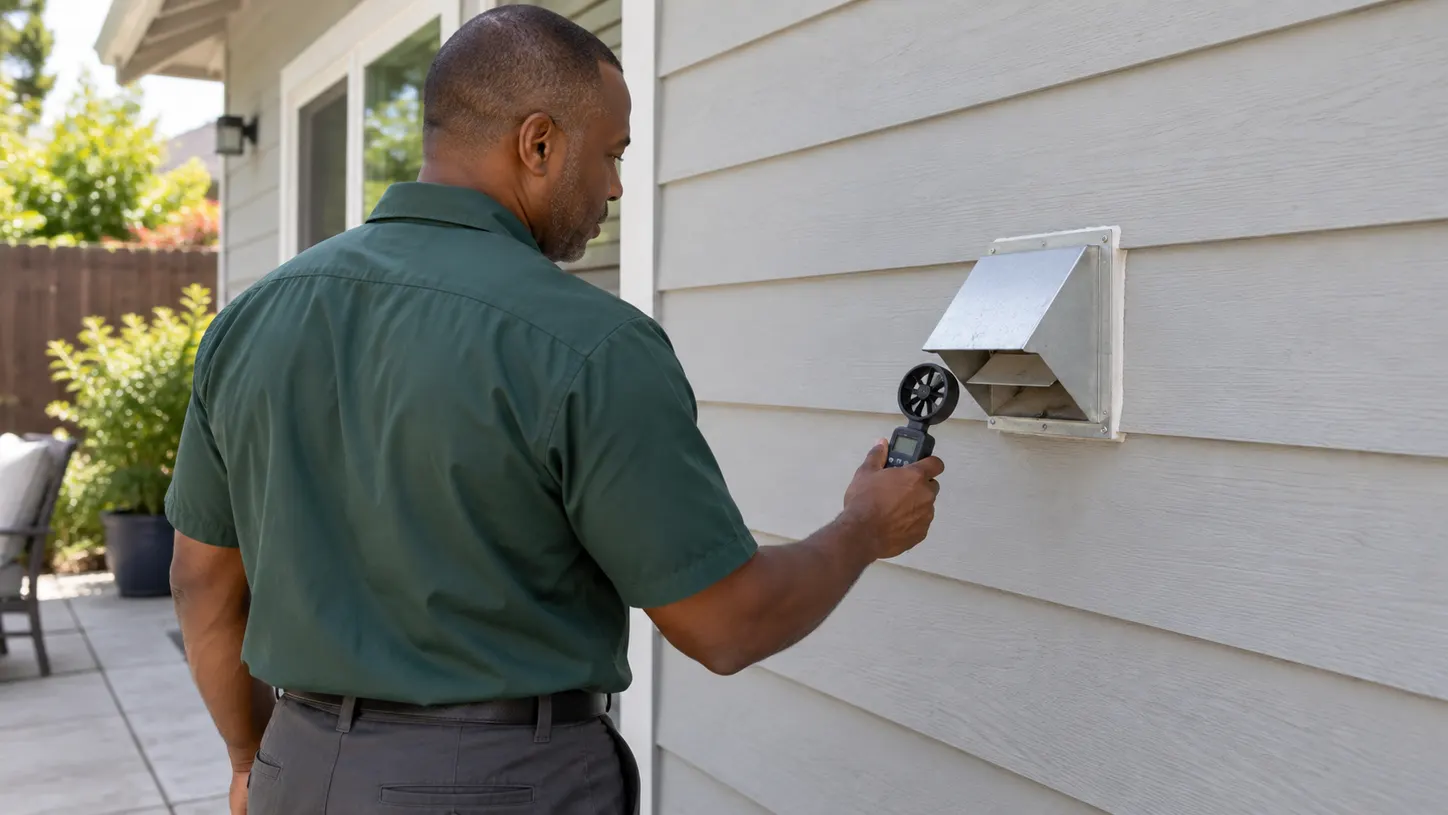
Depending on the layout, the process may include visual inspection, camera assessment, and airflow measurements.
The findings should support the recommended work.
For example, if a technician proposes replacing an entire concealed run, ask what evidence shows that the existing run is unsuitable.
If only one section needs replacement, confirm how it will connect to the remaining ductwork.
After the work, the technician should check that the exhaust discharges outdoors and that the dryer operates with an appropriate airflow path.
SoCal Green Air & Chimney’s dryer vent repair and installation service includes inspection, damaged-section replacement, connection repairs, rerouting, and airflow verification.
Safety Problems That Shouldn’t Wait
Some dryer problems call for prompt action rather than continued use while comparing repair options.
Stop operating the dryer if you notice a burning smell, smoke, unusual overheating, or a visibly disconnected exhaust connection that may release hot air and lint indoors.
If there is smoke or fire, leave the area and contact emergency services.
For a gas dryer, suspected gas leakage requires following gas-emergency procedures and contacting the gas utility or emergency services from a safe location.
Don’t repeatedly run the dryer to test whether a serious problem has disappeared.
The U.S. Fire Administration advises homeowners to inspect venting for damage, crushing, and restrictions, and to make sure the exterior vent opens during operation.
These precautions matter whether the final solution involves a small repair or a larger replacement.
Making the Decision in a Los Angeles Home
Dryer exhaust routes differ considerably across Los Angeles properties.
A single-story home with laundry facilities beside an exterior wall may have a relatively straightforward installation.
A condominium or multistory property may have a longer route through concealed building areas, making access and repair coordination more complicated.
In older properties, previous renovations may also have changed the laundry room layout without improving the original vent route.
None of these conditions automatically means replacement is necessary.
They simply affect what must be inspected before selecting a repair approach.
If you live in a condominium or managed property, confirm which parts of the exhaust system are your responsibility and whether building approval is required before altering concealed ductwork.
Questions to Ask Before Approving the Work
A clear recommendation should be understandable even if you’re unfamiliar with dryer exhaust systems.
Before agreeing to the service, ask:
- What exact defect did the inspection confirm?
- Can the damaged section be repaired or replaced independently?
- Why would a larger replacement be necessary?
- Will the existing route remain suitable after the work?
- What materials will be installed?
- Does the estimate include reconnection and testing?
- Will I receive photographs or a written description of the completed work?
If the explanation focuses only on the age of the dryer vent, ask for evidence of its actual condition.
The goal is to approve the work your home needs, not the largest available service.
Frequently Asked Questions
Is it better to repair or replace a dryer vent?
Repair is often suitable for isolated problems. Replacement is preferable when the duct is severely damaged, unsuitable, or poorly installed.
Can you replace only the hose behind the dryer?
Yes, if the permanent exhaust duct remains suitable. The replacement connector must be appropriate for dryer use and installed correctly.
Does an old dryer vent always need replacement?
No. Age alone doesn’t determine the condition of the ductwork. Material, damage, routing, and performance matter more.
Will a new dryer vent solve long drying times?
It may help when damaged or restrictive ductwork is the cause. Dryer faults and other airflow problems should also be considered.
Should a dryer vent be cleaned before replacement?
That depends on the condition and planned work. A technician should determine whether cleaning, replacement, or both are needed.
Choose the Repair That Solves the Actual Problem
A damaged dryer vent doesn’t always require a complete new installation. Sometimes replacing one crushed connector or correcting a loose joint is enough.
Other situations call for new ductwork because the existing material, condition, or route cannot provide a suitable exhaust path.
The best decision comes from understanding the confirmed problem and the work needed to correct it.
If you’re comparing dryer vent repair and replacement in Los Angeles, SoCal Green Air & Chimney can inspect the exhaust system and explain the available options.
Call (888) 280-2285 to discuss your dryer vent concerns and request an evaluation.