Professional Chimney Crown Repair Service
Chimney Crown Repair Service Los Angeles
The chimney crown is the only barrier between your chimney's masonry and direct rainfall, and most homeowners don't know it exists until it fails. A cracked crown allows water to enter the chimney structure on every rain event, quietly deteriorating mortar joints, spalling brick, and damaging the flue liner below. By the time a water stain appears on the ceiling near the fireplace, the damage is already months or years in progress. Our CSIA-certified technicians assess your crown's condition from the roof, determine whether sealing, resurfacing, or full replacement is the right approach, and provide a written estimate before any work begins. Flat-rate pricing. Same-day scheduling across Los Angeles.
The Problem
Why Chimney Crowns Fail, and What Happens When They Do
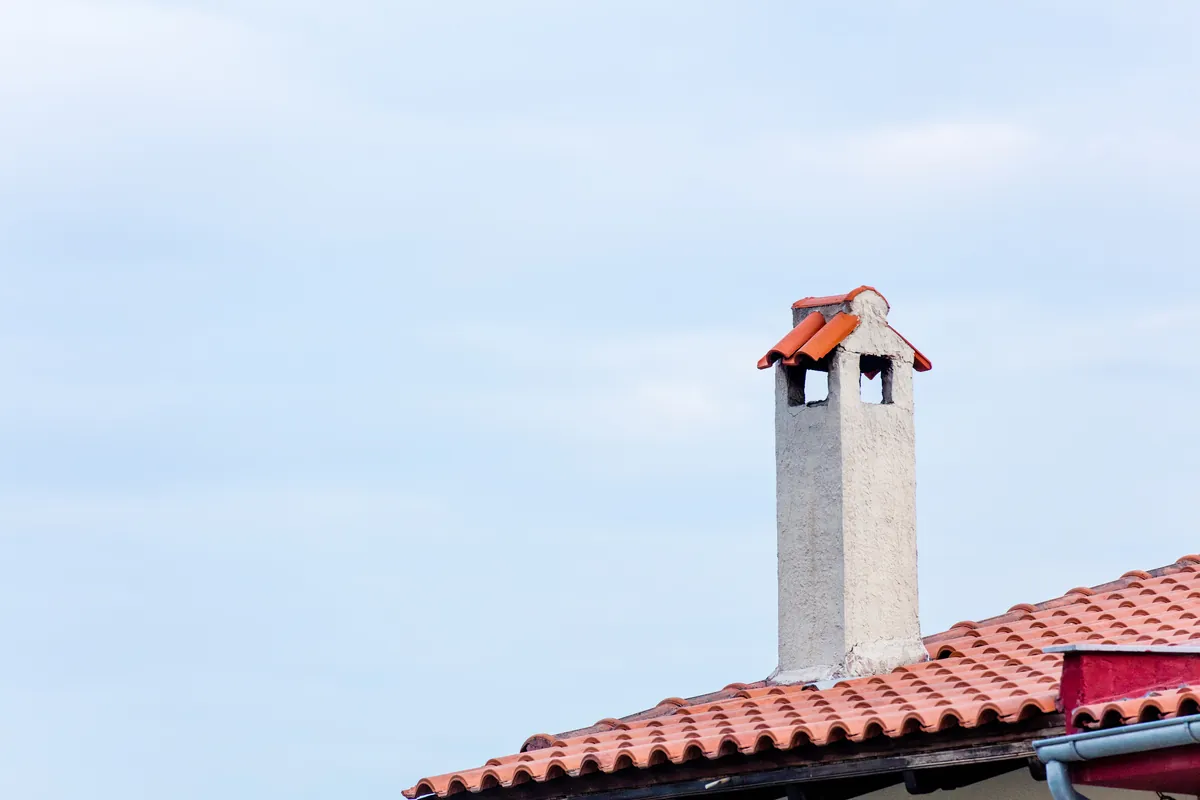
The chimney crown sits at the very top of your chimney structure, exposed to every weather condition Los Angeles produces, intense UV radiation through long dry summers, concentrated seasonal rainfall between November and March, and the expansion-contraction cycles of temperature swings between hot days and cool nights. Most crowns in the region are built from standard mortar mix rather than the Portland cement blend specified for crown construction, a common shortcut in older LA homes from Pasadena through the San Fernando Valley that produces a surface far less durable than what the exposure demands. Hairline cracks form first. They're invisible from ground level. Water enters them on every rainfall, expands as it dries, and widens the crack through successive wet-dry cycles. Within two to three seasons, what started as a hairline becomes a through-crack, and the masonry below it begins to absorb water it was never designed to hold.
- ⚠ Hairline crown cracks from UV exposure and seasonal temperature cycling
- ⚠ Improper original construction, standard mortar instead of Portland cement blend
- ⚠ Earthquake micro-fractures from seismic movement common across Los Angeles County
- ⚠ Crown edge separation, where the crown overhangs the masonry and the drip edge cracks
- ⚠ Standing water pooling on flat or insufficiently sloped crown surfaces
- ⚠ Full crown deterioration, spalling, missing sections, or structural collapse of the crown itself
The Solution
Condition-Matched Crown Repair, Assessed From the Roof Before Any Work Begins
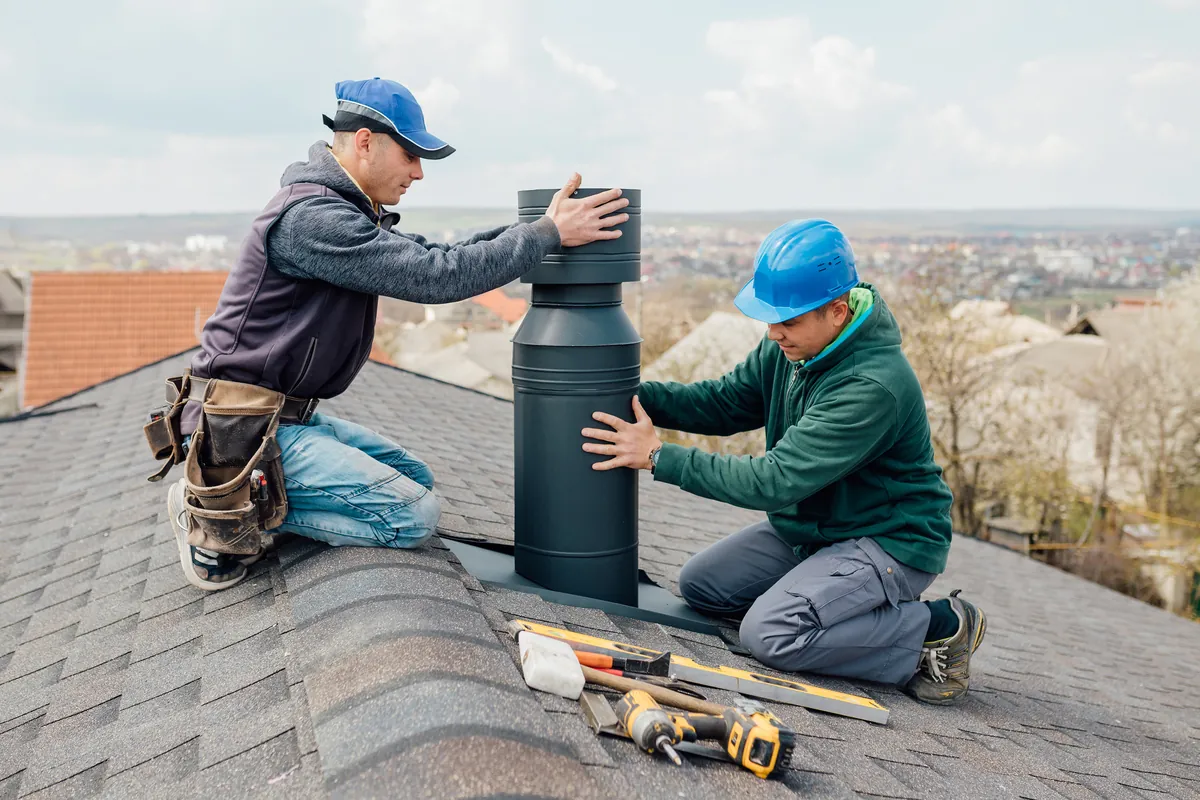
Chimney crown repair is not a one-size service. A crown with hairline cracks in otherwise sound material requires elastomeric crown coating, a flexible, waterproof membrane sealant that bridges the existing cracks and prevents new ones from forming. A crown with widespread cracking, surface spalling, or edge separation requires full resurfacing with a proper Portland cement mortar mix. A structurally failed crown, one that's crumbling, missing sections, or no longer sealing the gap between flue and masonry, requires complete removal and replacement. Our technicians assess the crown directly from the roof, photograph the findings, and explain which approach applies to your specific condition before any repair begins.
Get Free Estimate →Benefits
Why Homeowners Prioritize Chimney Crown Repair
Stops Water Damage at the Source
A sealed, intact crown prevents rainfall from entering the chimney structure at all. Every other chimney repair type addresses damage that has already occurred, crown repair prevents the water intrusion that causes it.
Protects the Entire Chimney System Below
The masonry, mortar joints, flue liner, damper, and firebox all depend on the crown above them staying watertight. One intact crown protects every component beneath it from moisture damage.
Honest Cost to Repair Chimney Crown, Before Work Starts
The cost to repair a chimney crown varies significantly by condition and repair type. You receive a written estimate based on what we actually find on the roof, not a standard package price applied before inspection.
Prevents the Most Expensive Downstream Repairs
A $200 to $400 crown crack seal prevents the mortar joint deterioration, spalling masonry, and liner damage that collectively cost many times more. Crown repair has one of the highest returns of any chimney maintenance investment.
Our Process
What to Expect, Step by Step
Roof-Level Crown Inspection & Photography
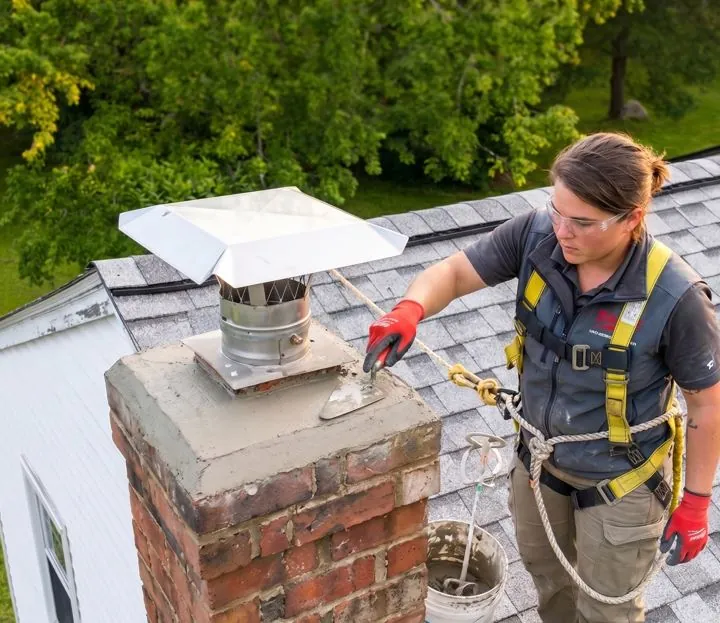
We access the roof and inspect the crown directly, not from a ladder at the eaves, not from ground level with binoculars. We photograph every crack, spall, edge separation, and deteriorated section. This visual record is included in your written estimate so you can see exactly what we found and why we're recommending the repair approach we propose.
Repair Method Determination, Coating, Resurfacing, or Replacement
Based on the inspection findings, we determine which repair approach is appropriate. Hairline cracks in structurally sound material: elastomeric crown coating applied in two coats, bridging existing cracks and forming a flexible waterproof membrane. Widespread surface deterioration: full crown resurfacing with a Portland cement mortar mix, formed with the correct crown slope and overhang. Structural failure: complete crown removal, surface preparation, and new crown construction.
Repair Execution, Correct Materials for Each Method
Crown coating is applied by brush in two full coats, ensuring complete coverage of the crown surface and all crack edges. Resurfacing uses purpose-mixed Portland cement mortar, not standard masonry mortar, applied in the correct thickness with proper drip-edge geometry. New crown construction uses the same material mix with steel mesh reinforcement where the crown span warrants it. Every repair is allowed to cure fully before the area is cleared.
Post-Repair Inspection & Written Service Record
After the repair is complete and cured, we inspect the finished crown surface, photograph the completed work, and document the repair type, materials used, and condition at the time of service. You receive a written service record before we leave, suitable for homeowner insurance documentation and annual maintenance tracking.
What It Means
Chimney Crown Repair, Understanding the Component, the Failure, and the Fix
The chimney crown is the concrete or mortar slab that covers the entire top of the chimney structure, from the outer edge of the masonry to the flue liner opening at the center. Its function is twofold: it seals the gap between the flue liner and the surrounding masonry so water cannot enter that joint, and it sheds rainfall away from the masonry below by extending slightly beyond the chimney's edge with a downward drip slope. When the crown is intact, it performs both functions on every rainfall. When it cracks, it fails at both simultaneously.
Most homeowners searching for chimney crown repair near me are responding to an interior symptom, typically a water stain on the ceiling near the fireplace, or efflorescence (white mineral deposits) appearing on the exterior chimney masonry. Both symptoms confirm that water has already been entering the chimney structure through a crown failure. The stain on the ceiling means water has traveled from the crown, through deteriorating mortar joints in the masonry, and into the ceiling cavity below the chimney. By the time the stain is visible, the water has been traveling that path for at least one full rain season, and the mortar joint deterioration that allowed it to travel that far is now an additional repair need alongside the crown itself.
The cost to repair a chimney crown depends entirely on which of three conditions exists. Stage 1 is hairline cracking in an otherwise intact crown, the surface is sound, the structure is solid, and the cracks are narrow enough to be bridged by an elastomeric coating without removing any material. This is the least expensive repair and the one with the longest prevention window. Stage 2 is widespread surface cracking, spalling, or edge separation, the crown surface has deteriorated beyond what a coating can effectively seal, and full resurfacing with a proper Portland cement mortar mix is required. This takes longer and costs more, but preserves the existing crown structure. Stage 3 is structural failure, the crown is crumbling, has missing sections, or is no longer forming a continuous seal between flue and masonry. This requires complete removal and replacement, which is the most significant chimney crown repair cost.
In Los Angeles, the chimney crown faces a specific combination of stressors that accelerates deterioration compared to many other regions. The region's dry-wet-dry cycle, long dry summers followed by concentrated seasonal rainfall, subjects crown masonry to rapid moisture cycling that standard mortar handles poorly. UV radiation from Southern California's long sun hours degrades unprotected mortar surfaces over time. And seismic activity, which is continuous and often imperceptible, creates micro-fractures in crown mortar through repeated small-amplitude movement. Homes throughout the Hollywood Hills, Eagle Rock, Pasadena, and the Eastside neighborhoods with brick chimneys built in the 1940s through 1970s frequently have crowns that were never built to current standards, and that are well past the point where coating alone is sufficient.
Warning Signs
Signs Your Chimney Crown Needs Professional Attention
Tap any sign to learn what it means and what to do next.
! Water stains on the ceiling or walls near the fireplace ⌄
This is the most common reason homeowners search for chimney crown repair near me, and it almost always means the crown failure has been progressing for at least one full rain season before the stain appeared. The stain is an interior indicator of water that entered at the top and traveled down. Crown repair addresses the entry point. The masonry below the crown may need attention as well.
! White mineral deposits (efflorescence) on the chimney exterior ⌄
Efflorescence forms when water moves through masonry and carries dissolved minerals to the surface as it evaporates. Visible white staining on exterior chimney brick is reliable evidence that water is actively penetrating the masonry, almost always from above, through a failed crown or crown joint.
! Visible cracks on the crown surface from the roof or upper roofline ⌄
Cracks visible from a roofline vantage point are already past the hairline stage. Crown cracks that can be seen without a close-up inspection are wide enough to admit significant water volume on every rainfall. The repair scope at this stage is almost always resurfacing or replacement rather than coating.
! Spalling or crumbling material at the crown edges ⌄
The crown's outer edge, where it overhangs the masonry, is the first section to deteriorate because it experiences the most direct rain impact and temperature cycling. Spalling or crumbling at the edge indicates advanced surface deterioration that has moved beyond what coating can address. Resurfacing or replacement is the appropriate repair.
! Deteriorating mortar joints in the masonry below the crown ⌄
When the mortar joints in the upper courses of chimney masonry are visibly recessed, crumbling, or missing material, the water causing that deterioration almost always entered through the crown above. Repairing the mortar joints without first repairing the crown restores the masonry temporarily and reloads it with moisture on the next rainfall.
! No record of crown inspection or repair in the past 5 to 10 years ⌄
A properly built Portland cement crown in good condition has a long service life, but even well-constructed crowns develop hairline cracks from seismic movement and thermal cycling over time. If the crown has never been inspected or has not been assessed in the past 5 to 10 years, the probability of undiscovered cracking is high, particularly in older Los Angeles homes.
Deep Dive
Everything You Should Know About Chimney Crown Repair
Warning Signs
The Warning Signs That Mean Crown Damage Has Already Created Downstream Problems
Chimney crown damage is almost always discovered late, not because the warning signs are subtle, but because the crown is out of sight. Homeowners rarely go on their roof to inspect it, and the early stages of crown cracking produce no interior symptoms at all. The damage chain works as follows: the crown cracks, water enters on the next rainfall, the water saturates the masonry below the crown, the mortar joints soften and begin to recede, and eventually the water travels far enough through the chimney structure to produce an interior stain or visible exterior efflorescence. Each step in that chain takes time, typically one to three rain seasons, which means that by the time any interior or exterior symptom is visible, the crown has been failing for a substantial period. At that point, the repair scope almost always extends beyond the crown itself to include tuckpointing of deteriorated mortar joints and sometimes flashing inspection as well. Early crown inspection, before any interior symptom appears, is the only approach that catches the failure at the stage where coating alone is sufficient.
Key Points
- ✓ Water stains on ceilings or walls adjacent to the chimney
- ✓ Efflorescence (white mineral deposits) on exterior chimney masonry
- ✓ Visible cracks or spalling at the crown surface or edges
- ✓ Deteriorating mortar joints in the upper chimney masonry courses
- ✓ Rust staining from the chimney cap down through the crown surface
- ✓ No crown inspection in the past 5 to 10 years, particularly in pre-1980 LA homes
Benefits
Why Chimney Crown Repair Delivers the Highest Prevention Value in Chimney Maintenance
The chimney crown sits above every other component in the system, which means a failed crown exposes every component below it to moisture damage simultaneously. Masonry mortar joints deteriorate when repeatedly saturated. Clay flue tiles develop moisture-related cracking when water reaches the flue interior. The damper rusts when water pools in the smoke chamber. The firebox masonry spalls when water cycles through it seasonally. All of these failure modes originate from a single source, water entering at the top of the chimney, and all of them are prevented by a watertight crown. The cost to repair a chimney crown at the coating stage is a fraction of what tuckpointing, liner repair, and damper replacement collectively cost if the water intrusion is allowed to progress. A $200 to $400 crown coating applied at the hairline crack stage eliminates the pathway that leads to $2,000 to $5,000 in combined downstream repairs. No other single chimney maintenance service prevents as broad a range of repair costs as addressing the crown at the first sign of failure.
Key Points
- ✓ Seals the single water entry point that causes the majority of chimney structural damage
- ✓ Prevents mortar joint deterioration that requires tuckpointing, a significantly more expensive repair
- ✓ Stops moisture from reaching the flue liner, preventing hairline tile cracks and CO pathway formation
- ✓ Eliminates the water source for damper rust and smoke chamber deterioration
- ✓ Protects firebox masonry from the seasonal saturation that causes brick spalling
- ✓ Delivers the highest prevention-to-cost ratio of any single chimney maintenance service
Maintenance
How to Protect Your Chimney Crown Between Professional Services
A properly repaired chimney crown, whether coated, resurfaced, or replaced, requires relatively low ongoing maintenance. The most important between-service habit is a visual inspection from the roofline after Los Angeles's first significant rainfall each season and after any felt earthquake. Crown cracks that form between annual professional inspections are almost always hairline at first, catching them at that stage keeps the repair cost at the coating level rather than progressing to resurfacing. For homeowners who had their crown coated or resurfaced, a chimney waterproofing sealant application to the masonry below the crown every five to seven years provides complementary protection, reducing the moisture the masonry absorbs on the occasions when rainfall is heavy enough to run down the chimney's exterior face. Homes throughout coastal areas of Los Angeles, from Santa Monica through the South Bay, where marine layer humidity keeps masonry surfaces damp for extended periods during winter months, benefit most from this combined approach. The crown and the masonry waterproofing together form a complete moisture barrier for the chimney structure above the roofline, the zone where the majority of chimney water damage originates.
Key Points
- ✓ Inspect the crown visually from the roofline after the first significant rainfall each season
- ✓ Inspect after any felt earthquake, seismic micro-fractures are not visible from ground level
- ✓ Apply vapor-permeable masonry waterproofing sealant to chimney exterior every 5 to 7 years
- ✓ Ensure the chimney cap is present and in good condition, it protects the crown from direct rain impact
- ✓ Report any new interior water stains near the fireplace immediately, do not wait for the next annual service
- ✓ Schedule professional crown inspection every 2 to 3 years minimum, annually for pre-1980 LA homes
What's Included
Honest Scope, Honest Pricing, Before Any Work Begins
Chimney crown repair cost in Los Angeles varies by crown condition and repair type. Every estimate we provide is based on what we find on your roof, not a standard package price applied before inspection. You see the findings, the recommended repair approach, and the cost before we begin.
- ✓ Roof-level crown inspection with photography
- ✓ Crown crack assessment, hairline, through-crack, or structural failure
- ✓ Elastomeric crown coating, two-coat waterproof membrane application for hairline cracks
- ✓ Full crown resurfacing, Portland cement mortar mix for widespread deterioration
- ✓ Crown removal and replacement, complete new crown construction for structural failure
- ✓ Crown edge repair, drip edge reconstruction and overhang restoration
- ✓ Chimney cap condition check, included with every crown service
- ✓ Upper masonry mortar joint assessment, identifies tuckpointing need alongside crown repair
- ✓ Post-repair photography and condition documentation
- ✓ Written service record with repair type, materials used, and findings
15+ Years Serving Southern California Homeowners
Our Promise
You'll Always Know What You're Paying, Before We Start
No verbal estimates from the ground. No repair scope that expands after we're on the roof. You receive a written estimate based on documented inspection findings, photographs included, before any repair begins. Chimney crown repair cost is determined by what your crown actually needs, not a standard package applied to every job. Every repair is backed by our workmanship guarantee.
CSIA-Certified Technicians
Every crown repair is performed by a certified, insured chimney professional, not a roofer who occasionally patches chimney crowns. Crown repair requires the correct masonry materials, the correct application technique, and knowledge of how the crown integrates with the flue and masonry below it.
Written Estimates With Photographs
You see what we found on your roof, photographed, and the full repair cost before we apply a single material. What we quote is what you pay. No scope changes after work begins.
Same-Day Scheduling
Crown inspection and repair appointments available across Los Angeles, Pasadena, Burbank, Glendale, Santa Monica, and the San Fernando Valley, with priority scheduling after rainfall events when new water stains have appeared.
Workmanship Guarantee
Every crown repair is backed by our guarantee. If the same crown failure returns within the warranty period after our repair, we return to address it at no additional charge.
FAQs
Quick answers from our techs.
Still have a question? Call us, we answer the phone, day or night.
Call (888) 280-2285 →What is the cost to repair a chimney crown in Los Angeles?
The cost to repair a chimney crown depends on the type of repair required. Minor issues such as hairline cracks can often be addressed with an elastomeric crown coating. For more widespread deterioration, full crown resurfacing may be necessary. In cases of severe damage, complete crown removal and replacement might be recommended. Every estimate we provide is written and based on a thorough roof-level inspection, not a phone estimate or a standard package price.
How do I know if my chimney crown needs repair or full replacement?
The repair approach depends on the crown's structural condition. A crown that is structurally intact with hairline or narrow cracks is a candidate for elastomeric coating. A crown with widespread surface cracking, spalling, or edge separation requires resurfacing. A crown that is crumbling, missing sections, or no longer sealing the flue-to-masonry gap requires full replacement. We determine which applies through a direct roof-level inspection, this cannot be assessed accurately from ground level.
Can I repair a chimney crown myself?
Minor crack sealing with a consumer-grade chimney crown sealant can be attempted by homeowners comfortable on a roof with the correct fall protection. However, consumer sealant products are typically not rated for the flexibility and UV resistance that elastomeric professional-grade coatings provide, and they do not address structural deterioration. Full resurfacing and crown replacement require masonry materials and application techniques that produce poor results without professional experience. Improperly repaired crowns typically fail faster than the original, and make the eventual professional repair more complex.
Does chimney crown repair require a permit in Los Angeles?
Crown crack sealing and resurfacing do not typically require a permit. Full crown replacement may require a permit in some Los Angeles jurisdictions, we verify permit requirements for your specific address before beginning any replacement work and handle the documentation where required.
How long does a chimney crown repair last?
A properly applied elastomeric crown coating on a structurally sound crown lasts 5 to 10 years with normal exposure. A correctly constructed Portland cement crown resurfacing has a similar or longer service life depending on how well the original substrate was prepared. A new crown built with the correct material mix and proper slope geometry can last 20 to 30 years before requiring attention. Annual inspection allows coating or minor touch-up to be applied well before full resurfacing becomes necessary.
Service Areas
Air Duct & Chimney Services Across Los Angeles County
SoCal Green Air Duct & Chimney provides air duct cleaning, chimney sweeping, dryer vent cleaning, and indoor air quality services throughout Los Angeles County. Our certified technicians serve residential and commercial properties across these communities and beyond.
Concerned About Your Chimney Crown? Find Out What It Actually Needs.
Book a professional chimney crown repair inspection today. Roof-level assessment, photographic findings, and a written estimate, all before any work begins. Most appointments across Los Angeles and Southern California are available within 48 hours.