Professional Indoor Air Quality Testing Services
Indoor Air Quality Testing Los Angeles
The EPA estimates that indoor air can be two to five times more contaminated than outdoor air, even in a city with Los Angeles's outdoor air quality challenges. The pollutants responsible are invisible: VOCs off-gassing from building materials and furniture, mold spores from hidden moisture, PM2.5 from wildfire smoke infiltration, and combustion gases from improperly vented appliances. You cannot smell most of them, see any of them, or assess their concentration without measurement. Our certified technicians provide complete indoor air quality testing in Los Angeles, sampling, certified laboratory analysis, and a written report that identifies what's in your air, at what levels, and what to do about it. Flat-rate pricing. Same-day scheduling.
The Problem
Why Los Angeles Homes Face Specific Indoor Air Quality Challenges
Los Angeles presents a combination of indoor air quality risk factors that few other metropolitan areas match simultaneously. The basin's geography creates temperature inversions that trap outdoor pollutants at ground level, where they enter buildings through HVAC intakes, gaps in window seals, and ventilation openings. California's Title 24 energy efficiency requirements have produced a generation of tightly sealed residential and commercial buildings that conserve energy effectively and trap indoor-generated pollutants just as effectively. Wildfire smoke season, which now runs nearly year-round across greater Los Angeles County, pushes ultrafine PM2.5 particles and toxic VOCs including benzene and formaldehyde into building interiors even when windows and doors are closed. And the region's older housing stock, including the large number of pre-1980 homes in Pasadena, Eagle Rock, Silver Lake, and the San Fernando Valley, contains building materials that off-gas compounds no longer permitted in construction: formaldehyde-laden adhesives, asbestos insulation, and lead-based paints that deteriorate into inhalable particulate.
- ⚠ VOCs (volatile organic compounds) off-gassing from flooring, furniture, adhesives, paints, and cleaning products
- ⚠ Mold spores from hidden moisture intrusion, often undetectable without air sampling
- ⚠ PM2.5 and ultrafine particles from wildfire smoke, traffic emissions, and combustion appliances
- ⚠ Formaldehyde from engineered wood products, laminate flooring, and cabinetry adhesives
- ⚠ Carbon monoxide from improperly vented gas appliances, fireplaces, and attached garages
- ⚠ Allergens including dust mite debris, pet dander, and pollen circulating through HVAC systems
The Solution
Measurement Before Remediation, Certified Testing That Tells You Exactly What's There
Indoor air quality improvement starts with knowing what is actually present, at what concentrations, from which sources, and in which areas of the home. Without testing, air quality improvements are guesses: a new air purifier that filters the wrong particle size, a HEPA vacuum that doesn't address the VOC source, a duct cleaning that improves particulate levels without identifying the mold growth driving them. Our certified indoor air quality testing uses calibrated air sampling equipment, accredited laboratory analysis, and a written report that identifies every detected contaminant, its measured concentration, its comparison to EPA and CARB reference levels, and specific corrective actions matched to the findings.
Get Free Estimate →Benefits
Why Homeowners and Property Managers Choose Professional IAQ Testing
Identifies What No Symptom Can Confirm
Headaches, fatigue, respiratory irritation, and recurring allergy symptoms in the home are consistent with dozens of possible causes. IAQ testing identifies the specific contaminant responsible, so the remediation addresses the actual source rather than the most commonly assumed one.
Certified Laboratory Results You Can Act On
Air samples are analyzed by an accredited independent laboratory, not assessed in the field with a consumer-grade device. The resulting report specifies contaminant identities, measured concentrations, and comparison to established health reference levels.
Guides Targeted, Cost-Effective Remediation
A written IAQ test report tells you which contaminants are present at actionable concentrations and which are within normal range. This prevents spending money on remediation for contaminants that don't exist at concerning levels in your specific environment.
Documents Baseline and Post-Remediation Results
Testing before and after remediation, duct cleaning, mold remediation, or ventilation improvement, provides documented evidence that the intervention worked. A post-remediation clearance test is the professional standard for confirming effective results.
Our Process
What to Expect, Step by Step
Pre-Sampling Visual Assessment & Questionnaire
We walk the property first checking HVAC, moisture signs, ventilation, gas appliances, recent renovations, and reported symptoms. This shapes the sampling plan: what to test, where, and how many samples.
Calibrated Air Sampling
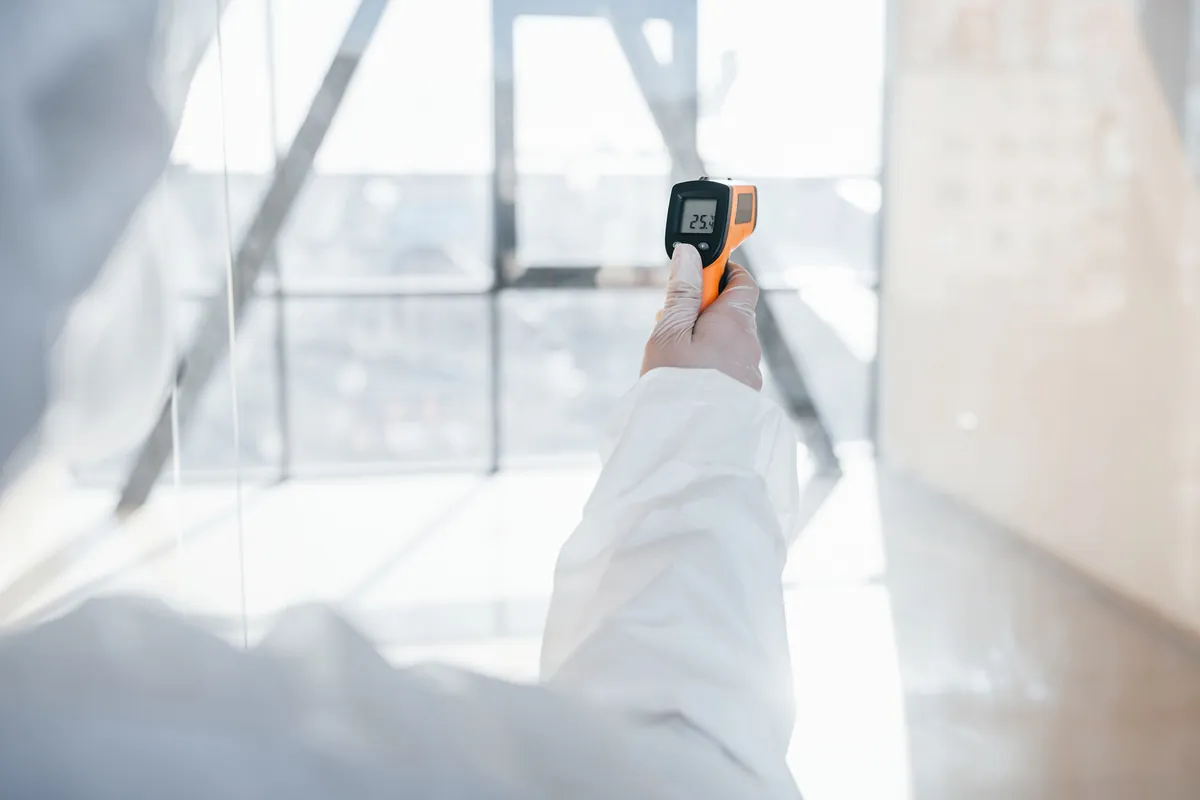
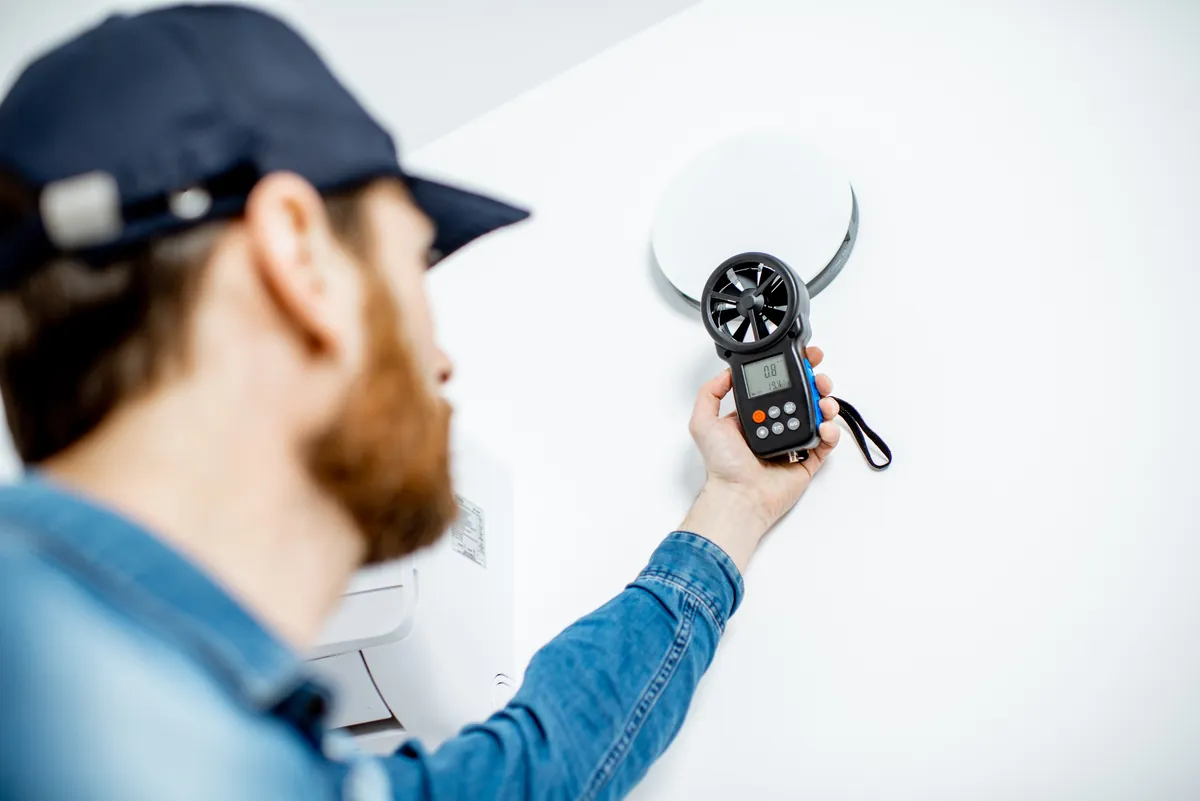
Each contaminant gets the right equipment direct-read instruments for particulates, sorbent tubes for VOCs and formaldehyde, spore traps for mold. Outdoor samples are taken too, for comparison.
Accredited Laboratory Analysis
Samples go to an independent, California ELAP-accredited lab. It identifies the compounds and measures concentrations under chain-of-custody standards no stake in the findings.
Written Report Actions
You get a written report: every contaminant found, its concentration, the EPA or CARB reference level, and recommended actions. We walk you through it in plain language.
What It Means
Indoor Air Quality Testing, What It Actually Measures and Why It Matters in Los Angeles
Indoor air quality testing samples and analyzes the air inside your home to identify and measure the contaminants present. It isn't one reading, it covers several pollutant types at once, because air quality problems rarely involve just one. Mold and odor control starts here: mold raises spore counts and VOCs together. Wildfire smoke raises PM2.5 and benzene. A poorly vented gas appliance raises carbon monoxide. Seeing the full profile is what makes a report something you can act on.
VOCs, volatile organic compounds, are the category homeowners underestimate most, and the one most often elevated in newly renovated or furnished LA homes. They off-gas from flooring adhesives, engineered wood, new furniture, and paint. Formaldehyde, one of the most health-relevant VOCs, comes from the resins in particleboard and MDF cabinets, materials in nearly every kitchen and bath remodel of the last two decades. Older materials and non-compliant products still off-gas at levels a certified lab can detect.
Wildfire smoke is the challenge most specific to Southern California. When regional fires burn, fine particles and toxic VOCs get inside even with windows closed, indoor PM2.5 typically reaches 50 to 80% of outdoor levels during active events. Foothill communities like Pasadena and Altadena face the heaviest exposure, and children, older residents, and those with respiratory conditions are most sensitive to it.
Carbon monoxide testing carries the most immediate safety relevance. CO is a colorless, odorless byproduct of any gas appliance with inadequate combustion air or restricted venting. Home CO detectors alarm only at acute-poisoning levels, they miss the chronic low-level exposure that causes ongoing headaches and fatigue. Professional measurement finds the CO a household detector never flags. And when testing confirms elevated allergen and dust reduction solutions are needed, the report gives you the specific concentrations to act on.
Warning Signs
Signs Your Home May Have an Indoor Air Quality Problem
Tap any sign to learn what it means and what to do next.
! Persistent headaches, fatigue, or dizziness that improve when you leave home ⌄
Symptoms that are consistently worse indoors than outdoors, and that improve after leaving the home for a day or more, are a recognized pattern of sick building syndrome associated with elevated VOCs, CO, or mold exposure. The pattern doesn't confirm the contaminant. Testing does.
! Allergy or respiratory symptoms that are worse indoors than outdoors ⌄
When household members have more congestion, sneezing, eye irritation, or asthma symptoms inside than outside, the HVAC system, ductwork, or building materials are likely adding to the indoor allergen load. Air sampling pinpoints which allergens or irritants are elevated and our allergen and dust reduction solutions target those contaminants once testing confirms the cause.
! Musty or chemical odor that you can't locate or eliminate ⌄
A persistent musty smell with no visible mold usually means hidden growth inside walls, above ceilings, or within HVAC ductwork. A chemical odor that doesn't match any obvious product use often points to VOC off-gassing from building materials or furnishings. Odors confirm something is there; testing identifies what it is and at what level. When the results point to hidden mold, our mold and odor control service addresses the source directly.
! Recent renovation, new furniture, or flooring installation ⌄
New construction materials and furniture are typically at their highest VOC off-gassing rate in the first 6 to 12 months after installation. Formaldehyde from engineered wood cabinets, benzene from new carpet adhesives, and isocyanates from certain paints and coatings reach their peak indoor concentrations during this period. Post-renovation IAQ testing establishes whether concentrations are within safe ranges or whether additional ventilation or material replacement is needed.
! Wildfire smoke event affecting your area ⌄
During and after regional wildfire smoke events, outdoor PM2.5 and toxic VOC levels infiltrate building interiors regardless of window and door status. Post-wildfire IAQ testing quantifies the indoor contamination that occurred and confirms whether the building interior has returned to pre-event air quality after smoke clears or whether residual contamination on surfaces continues to off-gas into the indoor environment.
! Unexplained CO detector alarm or repeated low-battery alerts ⌄
A CO detector that has alarmed, even briefly, even attributed to a false alarm, should be followed by professional CO measurement using calibrated instrumentation. Consumer CO detectors have broad tolerance ranges and are not calibrated for the precision needed to assess chronic low-level exposure. A professional measurement confirms whether a CO source is present in the home and at what concentration.
Deep Dive
Everything You Should Know About Indoor Air Quality Testing
Warning Signs
The Symptoms and Situations That Mean Testing Is Warranted, Not Optional
Indoor air quality problems share an important characteristic with many of the other hazards in this service category: they are invisible, they build gradually, and their health effects are frequently attributed to other causes for months or years before anyone connects them to the indoor environment. A household where two or three members experience recurring headaches, chronic fatigue, or persistent respiratory symptoms, particularly when those symptoms improve on weekends, during vacations, or after extended time away from the home, is experiencing a textbook pattern of indoor air pollution exposure. The challenge is that this pattern is consistent with dozens of specific contaminants at dozens of concentration levels, none of which can be distinguished from each other by symptom pattern alone. Testing converts a symptomatic pattern into a specific finding: VOC concentration X from source Y, at a level that exceeds reference level Z. That specificity is what makes remediation targeted, cost-effective, and documentably successful.
Key Points
- ✓ Persistent headaches, fatigue, or dizziness consistently worse indoors than outdoors
- ✓ Allergy or respiratory symptoms that improve significantly away from home
- ✓ Musty or chemical odors without an identifiable visible source
- ✓ Recent renovation, new flooring, or new furniture installation, peak off-gassing period
- ✓ Wildfire smoke event affecting the property, post-event air quality confirmation
- ✓ CO detector alarm, professional measurement required to assess chronic low-level exposure
Benefits
The Full Case for Certified Indoor Air Quality Testing Over Consumer Devices
Consumer air quality monitors, the devices that display real-time PM2.5 readings or CO concentrations on a phone app, serve a useful awareness function but cannot replace certified laboratory-based IAQ testing for several reasons. Consumer particulate monitors measure total particle count by optical scattering, they cannot distinguish between dust, pollen, mold spores, wildfire smoke particles, and combustion byproducts, all of which appear as the same "PM2.5" reading. They cannot detect VOCs at all, and they cannot identify specific compounds, the difference between formaldehyde (a probable human carcinogen) and a food cooking odor may produce similar VOC sensor responses. Certified IAQ testing using sorbent tube sampling and accredited laboratory analysis identifies specific compounds by molecular identity and measures their concentrations with precision that consumer sensors cannot approach. For homeowners making remediation decisions, whether to replace flooring, install ventilation, or pursue mold remediation, certified results are the only basis for a decision that is both defensible and likely to be correct.
Key Points
- ✓ Identifies specific VOC compounds by molecular identity, not just total VOC concentration
- ✓ Distinguishes mold spores from other biological particles, and identifies genus where relevant
- ✓ Quantifies CO at sub-alarm concentrations that consumer detectors do not trigger on
- ✓ Produces accredited laboratory documentation suitable for medical consultation and real estate disclosure
- ✓ Establishes a documented baseline for pre- and post-remediation comparison
- ✓ Meets California ELAP accreditation standards for environmental testing documentation
Maintenance
How to Maintain Good Indoor Air Quality Between Testing Cycles
Professional IAQ testing gives you a baseline, but indoor air changes with the seasons, renovations, and the condition of your appliances. Two habits matter most between tests: filter replacement and ventilation management. A MERV 13 filter captures PM2.5, pollen, and larger mold spores, but only when it's replaced on schedule. A clogged filter just recirculates what it already caught. In Los Angeles, where wildfire smoke and high pollen overlap for much of the year, quarterly replacement makes more sense than the standard annual recommendation. During wildfire smoke events, keep windows closed, run your HVAC on recirculation, and use a portable HEPA air purifier in occupied rooms, together these can cut indoor PM2.5 by 50 to 80%. For homes that deal with smoke and pollen every season, a built-in whole-home air purification system does the same job continuously, without managing portable units room by room. Service combustion appliances, furnace, water heater, fireplace, dryer, once a year so they vent correctly before heavy use. And retest every two to three years, or after any major renovation or change in household health, to confirm your air quality hasn't shifted.
Key Points
- ✓ Replace HVAC filters with MERV 13 rating quarterly, more frequently during wildfire season
- ✓ Keep windows closed and run HVAC on recirculation during regional wildfire smoke events
- ✓ Use a portable HEPA air purifier in primary occupied rooms during high-pollution periods
- ✓ Service all combustion appliances annually, furnace, water heater, gas fireplace, dryer
- ✓ Test post-renovation when new flooring, cabinets, or furniture are installed
- ✓ Retest every 2 to 3 years to confirm air quality profile hasn't changed as building materials age
What's Included
A Complete Testing Service, Certified Results, Written Report, Actionable Findings
Every indoor air quality testing service includes pre-sampling assessment, calibrated air sampling across all relevant contaminant categories, accredited laboratory analysis, and a written report delivered with a plain-language walkthrough of findings. One flat rate, confirmed before sampling begins.
- ✓ Pre-sampling visual assessment and occupant symptom review
- ✓ Particulate matter (PM2.5 and PM10), direct-read instrumentation
- ✓ VOC sampling, sorbent tube collection, laboratory identification and quantification
- ✓ Formaldehyde testing, specific compound identification and concentration measurement
- ✓ Mold spore air sampling, spore trap cassette collection, laboratory species identification
- ✓ Carbon monoxide measurement, calibrated direct-read instrumentation
- ✓ Carbon dioxide measurement, ventilation adequacy indicator
- ✓ Allergen sampling, dust mite, pet dander, and pollen identification where indicated
- ✓ Outdoor comparison sampling, indoor-to-outdoor ratio calculation for all contaminants
- ✓ Accredited laboratory analysis, California ELAP-compliant results
- ✓ Written IAQ report, contaminant findings, reference level comparisons, corrective actions
15+ Years Serving Southern California Homeowners
Our Promise
You'll Always Know What You're Paying, Before We Start
No upselling remediation services based on testing results we influenced. Our testing is independent, we identify what's there and report it accurately, whether the findings are concerning or not. You receive a flat-rate testing estimate before sampling begins, accredited laboratory results, and a written report with plain-language findings. If the results recommend services we provide, duct cleaning, dryer vent service, or chimney inspection, we document that recommendation and let you decide independently whether to proceed.
Certified Technicians
Every IAQ test is performed by a certified technician trained in IAQ sampling protocols, chain-of-custody documentation, and California ELAP-compliant procedures.
Accredited Independent Laboratory
All samples are analyzed by an accredited independent laboratory, not processed in-house. The laboratory has no stake in the findings, ensuring results you can trust and documentation that meets California standards.
Same-Day Scheduling
Testing appointments available across Los Angeles, Pasadena, Burbank, Glendale, Santa Monica, and the San Fernando Valley, including expedited scheduling for post-wildfire smoke events and real estate transaction timelines.
Written Report With Actionable Findings
Every test produces a written report documenting all findings, their measured concentrations, the reference levels they are compared against, and specific corrective actions where concentrations exceed thresholds. Not a raw data printout, a report you can act on.
FAQs
Quick answers from our techs.
Still have a question? Call us, we answer the phone, day or night.
Call (888) 280-2285 →What does indoor air quality testing in Los Angeles actually measure?
A comprehensive IAQ test measures multiple contaminant categories simultaneously: VOCs (including formaldehyde and benzene), particulate matter (PM2.5 and PM10), mold spore concentrations, carbon monoxide, carbon dioxide (as a ventilation adequacy indicator), and allergens including dust mite debris and pet dander where relevant. The specific contaminants sampled are selected based on the pre-sampling assessment of the home's conditions, occupant symptoms, and known risk factors.
How is professional IAQ testing different from a consumer air quality monitor?
Consumer air quality monitors measure total particle count and broad VOC presence using optical and electrochemical sensors, they cannot identify specific compounds, distinguish between contaminant types at the same particle size, or quantify concentrations at the precision needed for health risk assessment. Professional testing uses contaminant-specific sampling media analyzed by an accredited laboratory, producing results that identify specific compounds by molecular identity and quantify their concentrations against established health reference levels.
How long does indoor air quality testing take?
A standard residential IAQ assessment, including the pre-sampling walkthrough, all air sample collection, and outdoor comparison sampling, typically takes two to three hours. Larger homes or properties with multiple zones requiring separate sampling may take longer. Laboratory analysis typically returns results within five to ten business days, after which the written report is prepared and delivered.
When should I test after a wildfire smoke event in Los Angeles?
Testing should occur after outdoor air quality has returned to normal AQI levels, typically three to five days after the smoke clears, to assess whether the indoor environment has recovered proportionally or whether residual contamination remains. Smoke particles and VOCs that have deposited on surfaces inside the building can continue to off-gas into the indoor air after outdoor conditions have normalized. Post-wildfire testing confirms whether remediation is needed or whether the building's air quality has recovered without intervention.
Is indoor air quality testing required for real estate transactions in California?
California does not mandate IAQ testing as a universal real estate disclosure requirement. However, disclosure of known material defects, including known mold, asbestos, or lead paint, is required. Increasingly, buyers in Los Angeles real estate transactions are requesting pre-purchase IAQ testing as a contingency, particularly for pre-1980 homes where asbestos-containing materials and lead paint are statistically prevalent. A pre-purchase IAQ test provides documented baseline air quality data that protects both parties.
Service Areas
Air Duct & Chimney Services Across Los Angeles County
SoCal Green Air Duct & Chimney provides air duct cleaning, chimney sweeping, dryer vent cleaning, and indoor air quality services throughout Los Angeles County. Our certified technicians serve residential and commercial properties across these communities and beyond.
Ready to Know What's Actually in Your Home's Air?
Book a certified indoor air quality testing assessment in Los Angeles today. Accredited laboratory analysis, written findings, and plain-language recommendations, all in one service visit. Most appointments across Los Angeles and Southern California are available within 48 hours.