Professional Dryer Vent Repair & Installation Services
Dryer Vent Repair Service Los Angeles
A damaged dryer vent doesn't just make your dryer run poorly, it creates a fire risk. Lint accumulates in crushed, disconnected, or improperly routed venting at a rate your lint trap can't prevent. Our certified technicians provide complete dryer vent repair and installation in Los Angeles, fixing damaged ducts, replacing unsafe hose materials, reconnecting loose joints, and rerouting vents that don't meet current code. One visit. Flat-rate pricing. Zero mess.
The Problem
What Goes Wrong With Dryer Vents, and Why It Matters
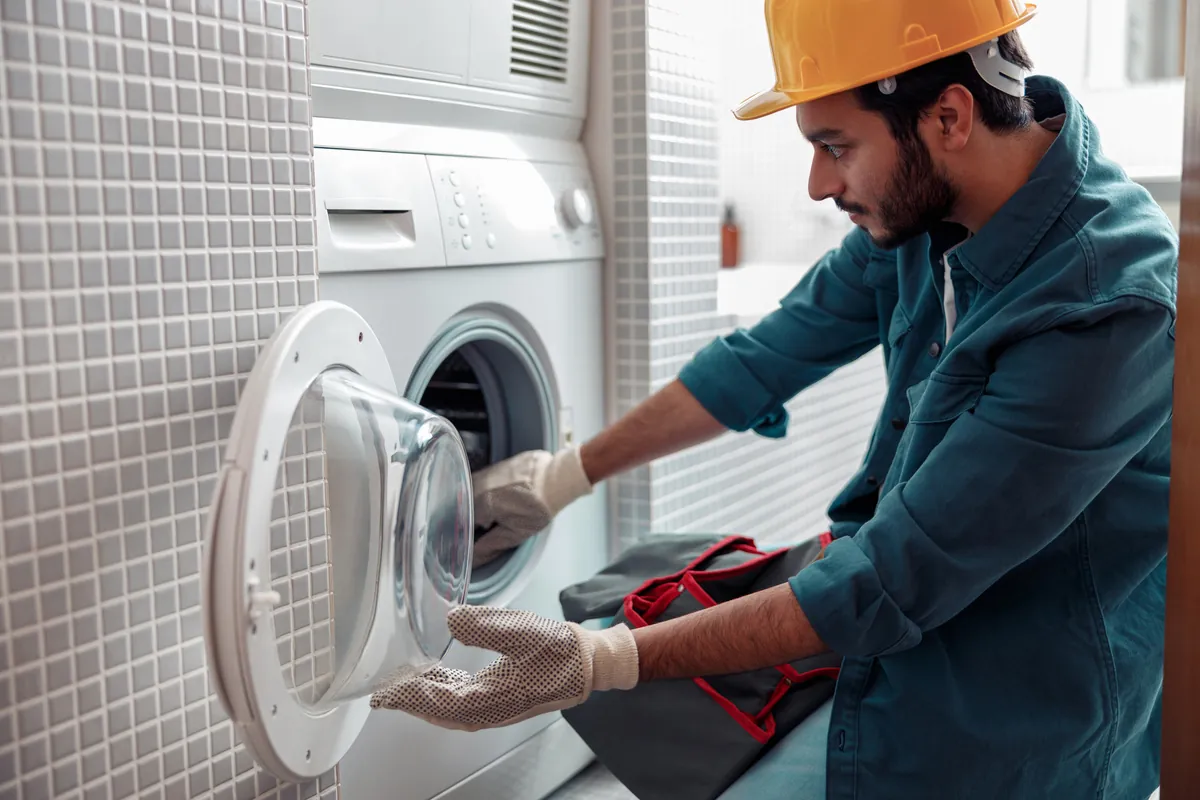
Dryer vents fail in ways that aren't visible from the laundry room. A transition hose made of plastic or foil accordion material, common in older homes across Pasadena, Burbank, and the San Fernando Valley, collapses under pressure and traps lint inside. Joints that were never secured with proper clamps separate over time, venting hot, lint-laden air into wall cavities, attics, or crawlspaces instead of outside. Long vent runs with multiple bends slow airflow below safe operating levels. Each of these conditions forces your dryer to run hotter and longer, accelerating lint accumulation that the NFPA identifies as the leading cause of dryer fires in the United States.
- ⚠ Crushed or kinked flexible duct reducing airflow below safe thresholds
- ⚠ Plastic or foil accordion transition hose, a documented fire hazard material
- ⚠ Disconnected joints venting lint and moisture into wall or attic cavities
- ⚠ Vent runs that exceed code-maximum length, trapping heat and debris
- ⚠ Damaged or missing exterior vent cover allowing pest entry and backdraft
- ⚠ Improper rerouting, venting into a garage, crawlspace, or interior room
The Solution
Code-Compliant Repair and Installation, Diagnosed Before Any Work Begins
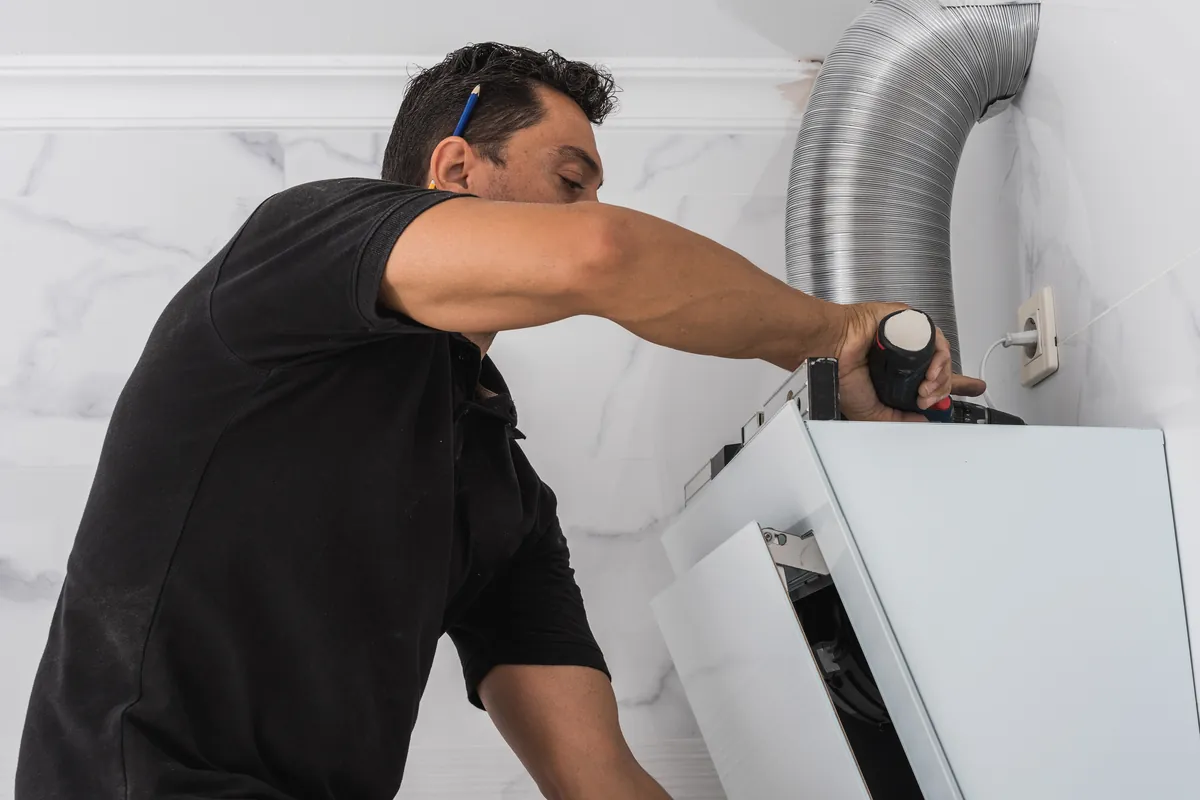
Our technicians inspect the complete dryer vent system before recommending any repair. We use a camera and airflow measurement to identify exactly where the problem is, crushed hose, disconnected joint, blocked exterior cap, or a routing path that simply doesn't meet IRC Section M1502 requirements. Every repair uses rigid or semi-rigid aluminum duct, the only code-compliant material for dryer exhaust systems. Every installation is measured, routed, and tested for correct airflow before we leave.
Get Free Estimate →Benefits
Why Homeowners Choose This Service
Eliminates a Hidden Fire Risk
Lint trapped in a damaged or improperly installed vent is extremely flammable. Repairing the duct removes the accumulation point and the ignition risk that builds with it. High-use households can keep that risk managed with scheduled fire-prevention vent cleaning.Repair does.
Faster, More Efficient Drying
A properly routed, fully sealed vent exhausts hot, humid air completely on every cycle. Clothes dry in one load, not two or three, and the dryer runs cooler and longer.
Protects Your Home's Structure
Disconnected venting releases moisture and lint into wall cavities, attic spaces, and crawlspaces, creating conditions for mold growth and structural damage. Proper repair stops it at the source.
Meets Current Building Code
Every repair and installation follows IRC Section M1502 dryer exhaust requirements, correct material, correct length, correct termination point. No callbacks from home inspectors.
Our Process
What to Expect, Step by Step
Full Vent System Inspection
We trace the dryer vent from the appliance connection through to the exterior termination point. Using a camera and airflow measurement tool, we document the exact condition of every section, hose material, joint connections, duct length, bend count, and exterior cap function. This tells us precisely what needs repair and what doesn't.
Damaged Section Removal & Material Assessment
Unsafe materials, plastic flex duct, foil accordion hose, or improperly connected segments, are removed entirely. We measure the correct replacement run, confirm the routing path meets code length limits, and select the appropriate rigid or semi-rigid aluminum duct for the installation.
Repair or Full Installation
New duct sections are cut to length, connected with proper metal clamps, and secured. If rerouting is required to bring the system into compliance or improve airflow, we plan and execute the new path during the same visit where possible. The exterior vent cover is inspected and replaced if damaged.
Airflow Verification & Final Check
After repair or installation is complete, we measure exhaust airflow at the exterior termination point to confirm the system is moving air within the dryer manufacturer's required range. We run the dryer, confirm correct operation, and walk you through what was done before packing up.
What It Means
Dryer Vent Repair and Installation, What It Actually Covers
Dryer vent repair is not a single task, it's a diagnostic service that addresses the specific failure point within your vent system. The problem might be a crushed transition hose behind the dryer, a disconnected joint inside the wall, a vent run that's too long for the dryer's exhaust capacity, or an exterior cap that's been blocked by bird nesting or debris. Proper repair starts with identifying the actual failure, not applying a patch to the most visible symptom.
The transition hose, the flexible connector between the dryer and the wall duct, is the most commonly repaired component. Many Los Angeles homes still have plastic or foil accordion-style hoses installed during original construction. These materials are prohibited under IRC Section M1502 because they collapse easily, trap lint in their corrugated interior walls, and are not rated for dryer exhaust temperatures. Replacing them with listed semi-rigid or solid aluminum duct resolves both the fire hazard and the airflow restriction in a single service visit.
Dryer vent installation and repair also covers rerouting, a service needed when a vent's path creates unavoidable airflow problems. Every 90-degree bend in a dryer vent reduces its effective exhaust capacity. A vent with four or five bends and a long horizontal run may simply never perform correctly regardless of how clean it is. In older homes in Glendale, Silver Lake, and the Hollywood Hills, where laundry rooms were added as renovations and ductwork was run wherever space allowed, rerouting to a shorter, more direct exterior path is often the most effective long-term solution.
Whether the issue is a damaged hose, a disconnected joint, a non-compliant vent material, or a routing path that needs to be corrected, every dryer vent repair service we perform uses code-compliant materials, meets IRC requirements, and is tested for correct airflow before the job is closed.
Warning Signs
Is Your Dryer Vent Telling You Something?
Tap any sign to learn what it means and what to do next.
! Clothes taking more than one cycle to dry ⌄
When a single load requires two or three drying cycles, the vent isn't exhausting humid air efficiently. This is almost always a restriction problem, a crushed hose, blocked exterior cap, or a vent run that's too long for the dryer's output capacity.
! Burning smell during a drying cycle ⌄
A burning odor, especially one that smells like hot lint or scorched fabric, means lint is accumulating in a section of the vent that's getting too hot. This is a fire warning, not a minor inconvenience. Stop using the dryer and call for a vent inspection immediately.
! Dryer exterior feels unusually hot to the touch ⌄
A dryer that's too hot to touch comfortably on the side or top is retaining heat it should be exhausting. Restricted or damaged venting traps heat inside the appliance, shortening its lifespan and significantly increasing the risk of ignition.
! Visible lint accumulating behind the dryer ⌄
Lint collecting on the floor or wall behind the dryer, beyond what falls from the lint trap, indicates the transition hose is either disconnected, poorly connected, or has developed a hole. The lint going to the floor is the lint that should be going outside.
! Moisture, mold, or musty smell in the laundry room ⌄
A disconnected vent joint inside the wall or ceiling vents humid dryer exhaust directly into the building structure. The first sign is often condensation on nearby walls or a musty odor, long before any mold becomes visible.
! Little or no airflow at the exterior vent opening ⌄
If you can hold your hand near the exterior vent termination while the dryer is running and feel only weak or no airflow, the vent system has a significant blockage or structural failure between the dryer and the outside. This needs immediate professional diagnosis.
Deep Dive
Everything You Should Know
Warning Signs
The Warning Signs That Mean Your Dryer Vent Needs Immediate Attention
Dryer vent failures follow a predictable pattern. First, drying times get longer. Then the dryer starts running hot. Then lint begins collecting somewhere it shouldn't. By the time a burning smell appears, the system has typically been building toward an ignition condition for months. The NFPA reports that failure to clean dryer vents is the leading factor in home dryer fires, but many of those fires aren't a cleaning failure at all. They're a repair failure: a hose that was never the right material, a joint that disconnected behind the wall years ago, or a vent run that was installed with too many bends to ever exhaust correctly. Cleaning a damaged or improperly installed vent doesn't fix the underlying structural problem. Repair does.
Key Points
- ✓ Clothes taking more than one full cycle to dry completely
- ✓ Burning smell or unusually high heat during a drying cycle
- ✓ Dryer exterior too hot to touch comfortably
- ✓ Lint accumulating behind or around the dryer
- ✓ Moisture, condensation, or mold near the laundry area
- ✓ Weak or no airflow at the exterior vent termination
Benefits
The Full Case for Professional Dryer Vent Repair
A properly functioning dryer vent system does three things: it exhausts hot, humid air completely on every cycle; it prevents lint from accumulating in the duct interior; and it terminates correctly outside the building envelope with no opportunity for backdraft, pest entry, or moisture intrusion. When any one of these functions is compromised by a damaged hose, disconnected joint, or incorrect routing, all three degrade simultaneously. Professional dryer vent repair services restore all three functions at once, not by masking the symptom with a cleaning, but by correcting the structural failure that's causing it. The downstream benefits are measurable: drying times return to a single cycle, energy consumption drops proportionally, and the dryer's heating element and motor run at designed temperatures instead of the elevated temperatures that shorten their service life. For homeowners in Los Angeles who use their dryer multiple times per week, the energy savings alone often offset the repair cost within a single year.
Key Points
- ✓ Restores full exhaust capacity, clothes dry in one cycle again
- ✓ Removes the lint accumulation point that creates fire risk
- ✓ Stops moisture and lint from entering wall or attic cavities
- ✓ Reduces dryer energy consumption on every load
- ✓ Extends the service life of heating elements and motor components
- ✓ Brings the system into compliance with current IRC requirements
Maintenance
How to Keep Your Dryer Vent in Safe Working Condition Between Services
Once your dryer vent system has been properly repaired or installed, the maintenance requirements are straightforward. The most important daily habit is clearing the lint trap before every load, not after, before. A full lint screen from the previous load reduces airflow from the first minute of the next cycle, contributing to the heat buildup and extended drying times that indicate a system under stress. Beyond the lint trap, the exterior vent cover should be checked every few months, particularly in areas like the San Fernando Valley and Pasadena where birds are known to nest in uncapped or louvered vent openings during spring and early summer. A pest-resistant exterior cap with a flap that closes when the dryer isn't running is one of the most cost-effective upgrades available for any dryer vent system. Annual professional dryer vent cleaning removes lint that has built up inside the duct itself, which no lint trap captures, and gives a technician the opportunity to spot any new damage to the hose or connections before it develops into a repair need.
Key Points
- ✓ Clear the lint trap before every drying load, not after
- ✓ Check the exterior vent cover every few months for blockages or nesting
- ✓ Install a pest-resistant exterior cap if you don't already have one
- ✓ Never use plastic or foil accordion hose as a transition duct
- ✓ Schedule annual professional vent cleaning regardless of apparent performance
- ✓ Call for repair inspection if drying times increase or heat output changes
What's Included
A Complete Service, No Add-On Surprises
Every dryer vent repair visit starts with a full system diagnosis, so you know exactly what needs to be fixed and why before any work begins. One flat rate, confirmed upfront. No fees added for components we find once we're already on-site.
- ✓ Full dryer vent system inspection, connection to exterior cap
- ✓ Camera assessment of duct interior condition
- ✓ Airflow measurement at exterior termination
- ✓ Removal of unsafe or damaged hose materials
- ✓ Code-compliant rigid or semi-rigid aluminum duct installation
- ✓ Joint sealing and clamp securing at all connections
- ✓ Exterior vent cover inspection and replacement if needed
- ✓ Dryer reconnection and operational test
- ✓ Post-repair airflow verification at exterior termination
- ✓ Written findings and service record
15+ Years Serving Southern California Homeowners
Our Promise
You'll Always Know What You're Paying, Before We Start
No guesswork. No surprise charges once we've accessed the vent system. You receive a written estimate based on a real diagnostic inspection, not a phone estimate that changes on-site. Every repair is backed by our workmanship guarantee. If the same issue returns, we return to resolve it at no additional charge.
Certified Technicians
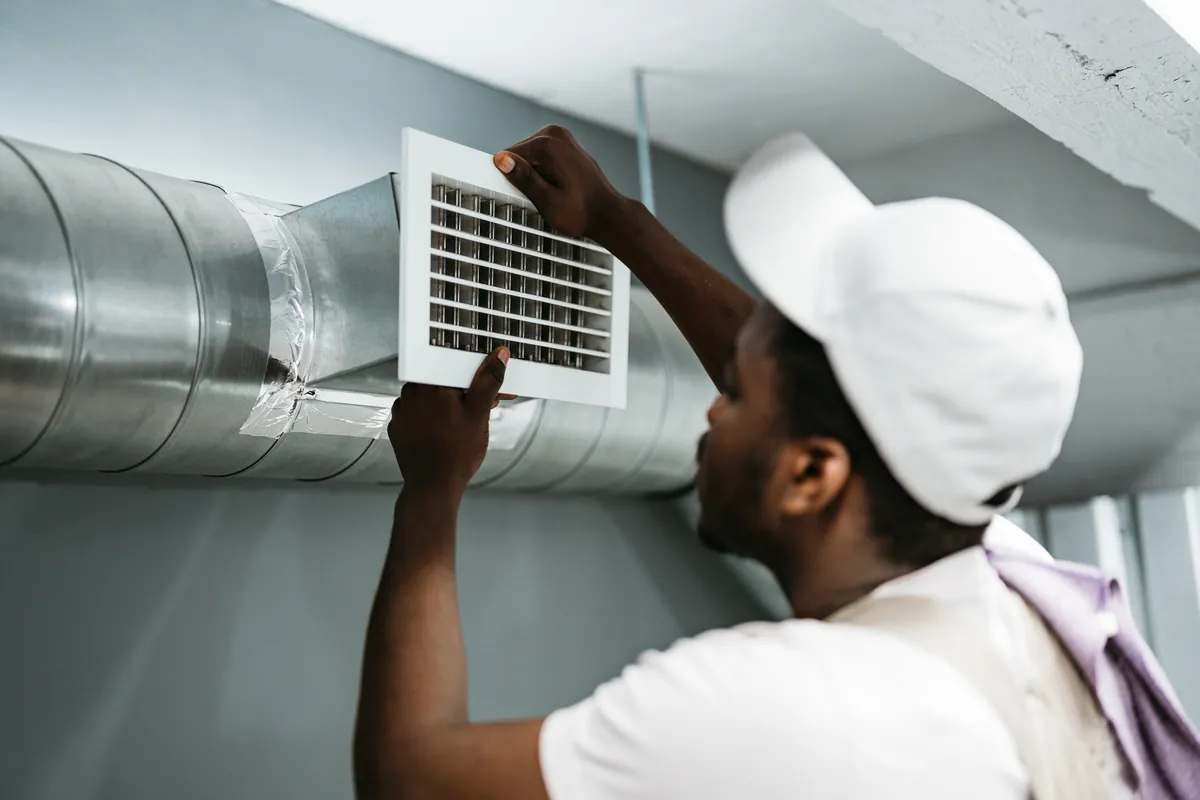
Every dryer vent repair and installation is performed by a trained, certified professional with hands-on experience across all vent configurations, rigid, semi-rigid, and rerouted systems.
Written Estimates
Diagnosis first, price second. You see exactly what was found and what the repair costs before we touch anything. What we quote is what you pay.
Same-Day Scheduling
Appointments available across Los Angeles, Burbank, Glendale, Pasadena, Santa Monica, and the San Fernando Valley, with same-day availability for urgent situations.
Workmanship Guarantee
Every repair is backed by our service guarantee. If the same failure returns after our work, we come back to correct it, at no charge.
FAQs
Quick answers from our techs.
Still have a question? Call us, we answer the phone, day or night.
Call (888) 280-2285 →What's the difference between dryer vent repair and dryer vent cleaning?
Dryer vent cleaning removes lint buildup from inside an intact duct system. Repair addresses structural problems a damaged hose, a disconnected joint, an incorrectly routed vent, or a prohibited material like plastic or foil flex duct. If the vent system has a structural failure, cleaning it doesn't fix the underlying problem.
What type of duct is used in a code-compliant dryer vent installation?
IRC Section M1502 requires rigid metal duct or listed semi-rigid metal duct for dryer exhaust systems. Plastic flex duct and foil accordion hose, both common in older Los Angeles homes, are prohibited materials for dryer venting. They collapse easily, trap lint in corrugated interior walls, and are not rated for dryer exhaust temperatures.
How do I know if my dryer vent hose needs repair or full replacement?
If your transition hose is made of plastic or foil accordion material, it needs to be replaced regardless of its apparent condition, these materials are not code-compliant. If it's a semi-rigid aluminum hose that has been crushed, kinked, or disconnected, repair or replacement depends on the extent of the damage. Our inspection determines which is appropriate before any work begins.
Can a dryer vent be rerouted during the same service visit?
In most cases, yes. Simple reroutes, shortening an excessively long run or correcting a poorly angled path, are typically completed in a single visit. More complex reroutes that require opening walls or running new duct through finished spaces may require additional scheduling. We assess and communicate this during the initial inspection.
Is dryer vent repair something I can do myself?
Minor repairs, like reconnecting a hose clamp that's come loose, can be a DIY task if the vent is fully accessible. However, diagnosing why a vent is underperforming, identifying code violations in the routing, or replacing sections inside walls requires professional tools and knowledge of local building requirements. Improper DIY dryer vent repairs are a documented cause of house fires.
Service Areas
Air Duct & Chimney Services Across Los Angeles County
SoCal Green Air Duct & Chimney provides air duct cleaning, chimney sweeping, dryer vent cleaning, and indoor air quality services throughout Los Angeles County. Our certified technicians serve residential and commercial properties across these communities and beyond.
Ready to Fix Your Dryer Vent the Right Way?
Book a professional dryer vent repair service today. Inspection, diagnosis, and written estimate, before any work begins. Most appointments across Los Angeles and Southern California are available within 48 hours.