What Is Dryer Vent Airflow Testing and What Can It Reveal?
What does dryer vent airflow testing measure? Learn how technicians check airflow, identify restrictions, and interpret results before recommending cleaning or repair.
Your dryer heats up, tumbles normally, and finishes its cycle. Yet the towels still feel damp when you open the door.
You clean the lint screen, run another cycle, and wonder whether the appliance is getting old. But the dryer itself may not be the problem. The exhaust duct carrying warm, moist air outside could be restricting airflow.
This is where dryer vent airflow testing becomes useful.
Dryer vent airflow testing checks how effectively air moves through the dryer exhaust system. Depending on the equipment and testing method, a technician may measure airflow at the exterior outlet, measure resistance inside the exhaust duct, or compare readings before and after cleaning.
The results can help identify restrictions, evaluate cleaning effectiveness, and determine whether additional inspection is necessary.
For Los Angeles homeowners, the value of testing is simple: it provides evidence about exhaust performance instead of relying entirely on how long clothes take to dry.
What Does a Dryer Vent Airflow Test Actually Measure?
A dryer needs a continuous path for moist exhaust air to leave the appliance and discharge outdoors.
When that path becomes restricted, the dryer may struggle to remove moisture efficiently.
Airflow testing helps evaluate how well the exhaust system performs while the dryer operates.
Technicians may use different measurements depending on the situation.
Air Velocity
Air velocity describes how quickly air moves through a particular area.
It’s commonly expressed in feet per minute (FPM).
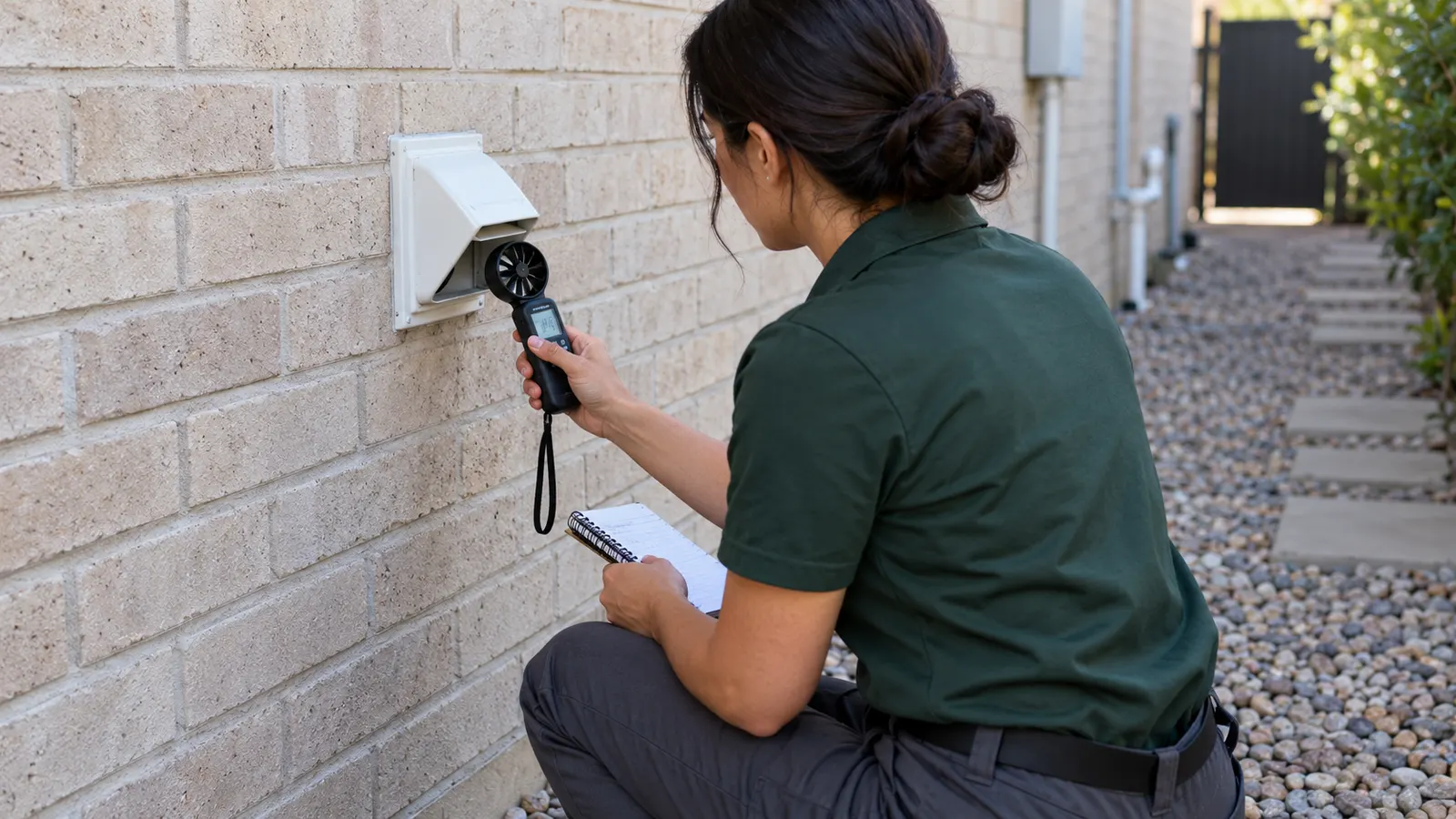
A technician may use an appropriate instrument to check air movement at an accessible exhaust opening.
However, velocity alone doesn’t describe the complete system. Outlet dimensions, measurement position, and airflow distribution can affect the reading.
Airflow Volume
Airflow volume describes how much air moves through a system over time.
It’s commonly expressed in cubic feet per minute (CFM).
A properly obtained airflow measurement can help compare exhaust performance under consistent testing conditions.
Exhaust Back Pressure
Back pressure measures the resistance the dryer encounters while pushing air through its exhaust duct.
It’s commonly expressed in inches of water column.
Excessive back pressure may indicate that the vent is too restrictive for the appliance.
These measurements are related, but they aren’t interchangeable. A technician must use the correct method and interpret the result against the relevant appliance specifications.
Why Does Dryer Exhaust Airflow Matter?
Drying clothes involves more than producing heat.
The dryer also needs to remove moisture released from wet fabric.
As the drum rotates, air passes through the laundry, collects moisture, and travels through the exhaust system.
If that air cannot escape efficiently, drying performance may suffer.
You might notice longer cycles, clothes remaining damp, or the dryer becoming unusually warm.
Restricted airflow can also contribute to heat buildup and lint accumulation.
However, poor drying performance isn’t proof that the vent is blocked. A damaged heating component, appliance sensor issue, overloaded drum, or other mechanical problem may produce similar symptoms.
Airflow testing helps narrow the possibilities.
When Should You Consider Dryer Vent Airflow Testing?
Not every dryer needs a separate diagnostic appointment simply because one heavy blanket takes longer to dry.
Testing becomes more useful when a performance problem persists or when the exhaust route is difficult to evaluate visually.
Consider an airflow assessment when:
- Normal laundry loads regularly require additional drying cycles.
- The dryer displays a restricted-airflow warning.
- Drying performance has worsened despite cleaning the lint screen.
- The exhaust route runs through a ceiling, wall, or other concealed space.
- The same airflow problem returns after vent cleaning.
- You want to verify whether cleaning improved exhaust performance.
Testing can also be helpful after replacing a damaged vent section or modifying the exhaust route.
The purpose is to confirm the condition of the system, not simply generate a number.
How Is a Dryer Vent Airflow Test Performed?
A professional evaluation usually combines measurements with an inspection of the exhaust path.
The exact procedure depends on the appliance, the available access points, and the equipment used.
Step 1: Review the Dryer’s Symptoms
The technician should first ask what you’ve noticed.
For example, does every load take longer, or only bulky items? Did the problem begin after installing a new dryer? Has the vent been cleaned recently?
These details help identify whether the concern is consistent with restricted exhaust.
Step 2: Inspect Accessible Components
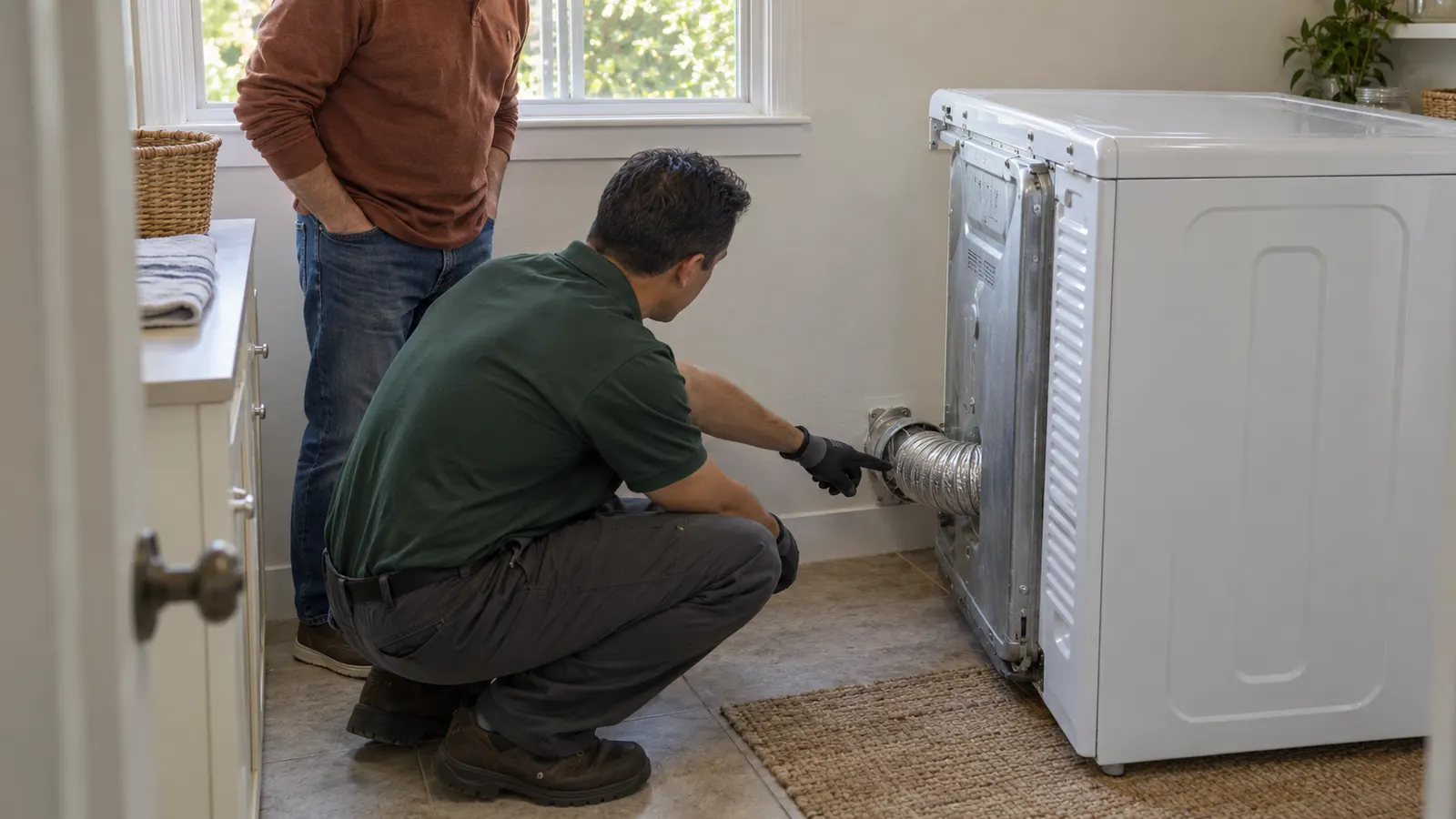
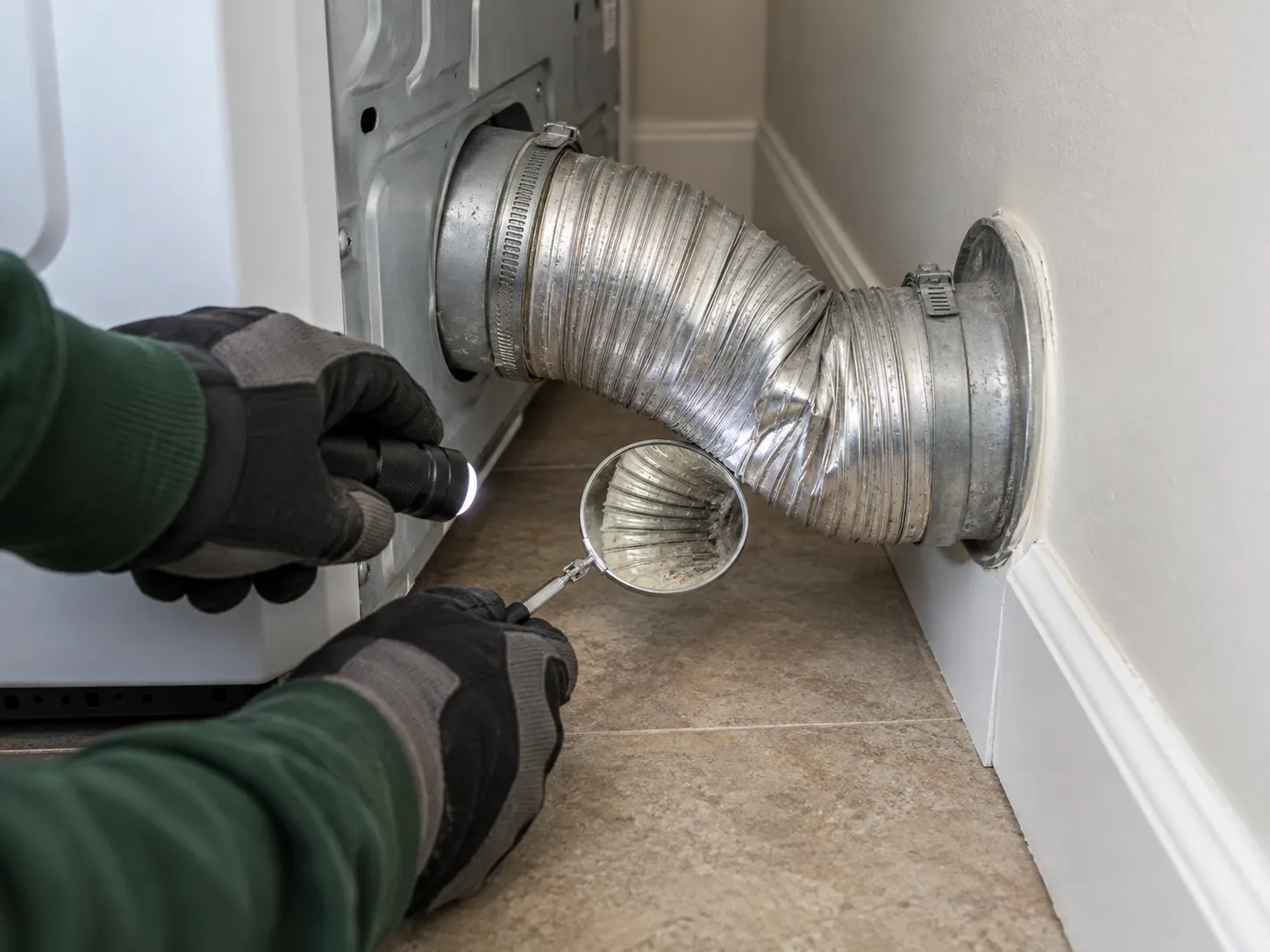
Before measuring airflow, the technician may inspect the lint screen, visible transition duct, and exterior termination.
A crushed connector behind the dryer or a blocked exterior damper may already explain part of the problem.
Step 3: Take an Initial Measurement
The technician measures airflow or exhaust resistance using an appropriate instrument and procedure.
The dryer’s operating mode, test location, and equipment setup should be documented.
Step 4: Investigate an Abnormal Result
If the reading suggests a restriction, the technician may inspect additional sections of the exhaust system.
Depending on the circumstances, this could involve checking concealed ductwork, examining the termination, or using other diagnostic equipment.
Step 5: Repeat Testing After Corrective Work
When cleaning or repair is performed, a follow-up measurement can help evaluate the result.
For a meaningful comparison, the testing conditions should remain as consistent as possible.
What Can Airflow Testing Reveal About Your Dryer Vent?
A useful airflow test may reveal that the exhaust system is performing differently than expected.
But the measurement itself doesn’t always identify the exact cause.
Consider these possible findings.
| Testing result | What it may suggest | Recommended next step |
|---|---|---|
| Low airflow at exterior outlet | Restriction, leakage, or appliance airflow issue | Inspect exhaust route and dryer |
| Excessive back pressure | Too much resistance in exhaust system | Locate blockage or restrictive routing |
| Improved airflow after cleaning | Removed debris was affecting performance | Document results and inspect remaining system |
| Little improvement after cleaning | Possible damage, routing issue, or other fault | Perform further diagnosis |
| Acceptable exhaust measurement | No major restriction under test conditions | Investigate other causes of poor drying |
A single measurement should not be used to declare every component of the system problem-free.
Can Testing Tell Whether Your Dryer Vent Is Clogged?
Testing can provide evidence of a restriction, but it doesn’t automatically prove that lint is the cause.
A low airflow reading might result from lint buildup, a crushed transition duct, an obstructed exterior cover, or excessive bends.
In some cases, the dryer itself may not be producing the expected airflow.
To identify the cause, the technician must combine the reading with inspection findings.
For example, if the exterior termination is visibly blocked with lint and airflow improves after cleaning, the evidence supports a blockage-related problem.
If the duct is clean but airflow remains poor, further investigation is needed.
This distinction helps avoid repeatedly cleaning a vent when the underlying issue hasn’t been corrected.
What Is a Dryer Vent Back Pressure Test?
A back pressure test measures resistance inside the dryer exhaust system.
A technician typically uses a manometer, an instrument designed to measure small pressure differences.
The measurement procedure and acceptable limit depend on the specific dryer and manufacturer instructions.
For example, certain LG dryer manuals specify a maximum exhaust static pressure of 0.6 inches of water column under stated testing conditions.
Other appliances may have different limits.
There is no single pressure reading that should be treated as a universal pass-or-fail threshold for every residential dryer.
The technician should identify the appliance model and compare the result with the correct manufacturer guidance.
A pressure reading above the applicable limit may indicate an overly restrictive exhaust system requiring further evaluation.
Does a Higher Airflow Reading Always Mean the Vent Is Safe?
Not necessarily.
A higher reading after cleaning can show that exhaust performance improved under the testing conditions.
However, airflow alone cannot confirm that every connection is secure, every duct material is suitable, or every concealed section is undamaged.
For instance, a disconnected duct could release exhaust into a concealed space while still allowing air to move through part of the system.
Similarly, a vent might produce measurable airflow despite having an unsuitable transition connector.
That’s why visual inspection and installation review remain important.
A complete evaluation considers the duct’s condition, routing, connections, exterior termination, and measured performance together.
Why Before-and-After Measurements Are Useful
Imagine a technician measures airflow at the exterior termination before cleaning and repeats the measurement afterward.
If the second reading shows improved airflow under comparable conditions, the result provides useful evidence that the service changed exhaust performance.
This is more informative than simply showing you a container of removed lint.
However, comparisons have limitations.
A different dryer operating mode, instrument position, or measurement technique can affect the result.
The technician should explain what was measured, where the measurement was taken, and whether the conditions were consistent.
A written service record makes that information easier to understand later.
What if Airflow Remains Poor After Cleaning?
Cleaning removes lint and debris, but it doesn’t correct every exhaust problem.
If measurements remain abnormal, the next step is to investigate why.
Possible causes include:
- A crushed or sharply bent transition connector.
- A damaged or disconnected duct section.
- An exterior termination that doesn’t open properly.
- Excessive duct length or restrictive routing.
- An appliance-related airflow problem.
The correct solution depends on the confirmed defect.
A damaged connector may require replacement, while an unsuitable exhaust route may need a more extensive correction.
SoCal Green Air & Chimney’s dryer vent repair service is relevant when inspection identifies physical duct damage or installation problems rather than ordinary lint accumulation.
Is Airflow Testing Included With Dryer Vent Cleaning?
Service packages vary between companies, so homeowners should ask what’s included before booking.
On its dryer vent cleaning service page, SoCal Green Air & Chimney describes pre-clean and post-clean airflow measurements at the exterior termination, along with a written service record.
That makes it useful to ask about both the cleaning process and the documented results.
Before scheduling, confirm:
- Whether airflow is measured before and after cleaning.
- Which testing method is used.
- Whether the exterior termination is inspected.
- Whether accessible duct damage is checked.
- How abnormal readings are investigated.
- Whether measurements are included in the service record.
A clear explanation of the results is more valuable than an unexplained number.
Dryer Vent Testing in Los Angeles Homes
Dryer exhaust systems vary considerably between properties.
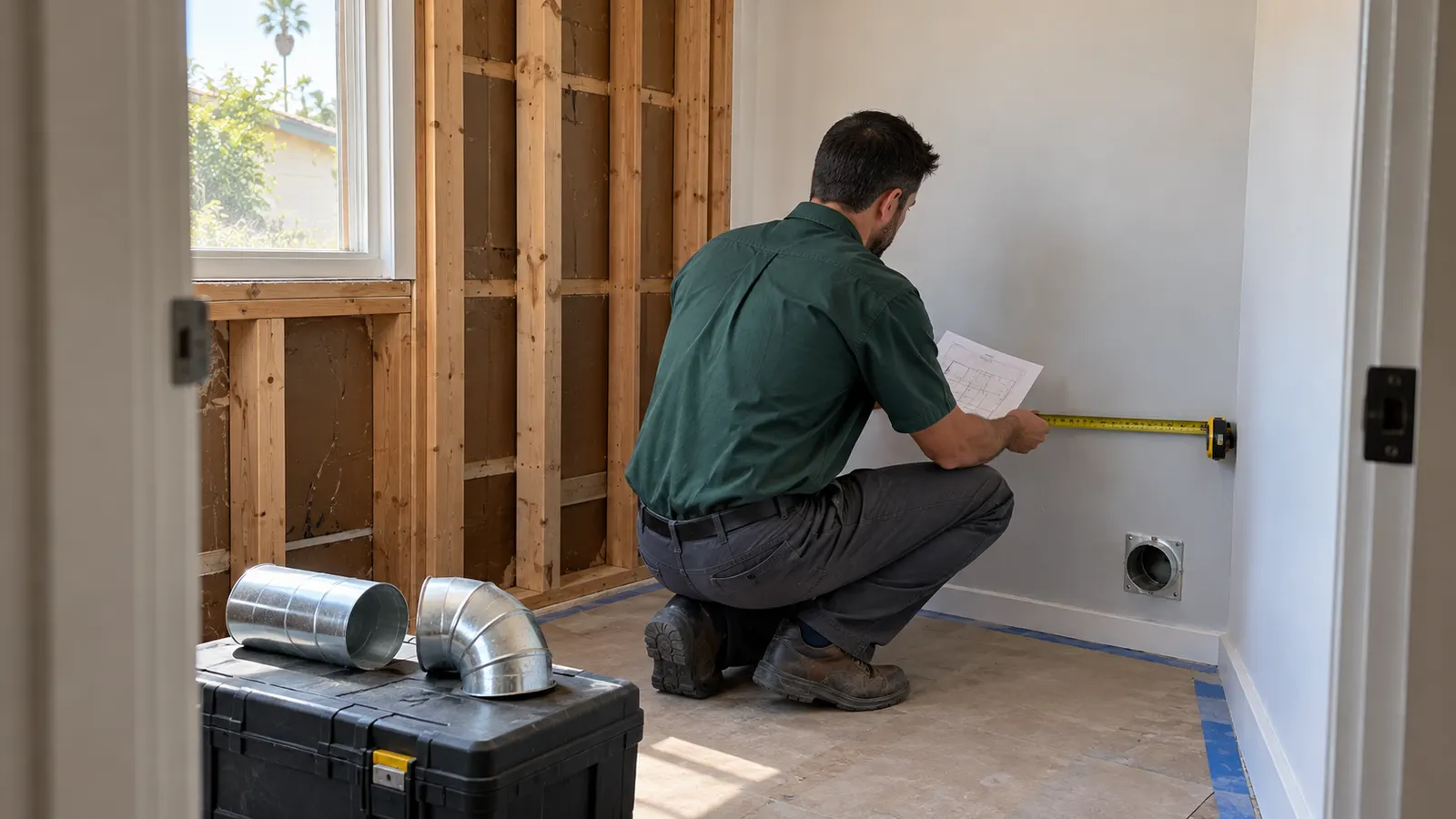
A laundry room next to an exterior wall may have a relatively short exhaust route.
In other homes, the duct may pass through a ceiling, travel across a concealed space, or terminate farther from the appliance.
Longer routes and multiple bends can increase resistance, making proper installation and maintenance particularly important.
Some Los Angeles condominiums and multistory buildings also have access restrictions that complicate inspection.
The technician should understand the actual vent configuration before interpreting measurements or recommending changes.
A reading that seems unusual cannot be evaluated properly without considering the dryer model and exhaust layout.
Can Homeowners Test Dryer Vent Airflow Themselves?
You can observe certain warning signs without specialized equipment.
Check whether the lint screen is clean and whether the accessible exterior damper opens during dryer operation.
If safely visible, look for a crushed transition connector behind the appliance.
Some dryers also display airflow warnings or offer manufacturer-specific vent checks.
These features can help identify a possible problem, but they don’t replace a complete professional evaluation when symptoms persist.
Avoid disconnecting gas appliances, drilling into exhaust ducts, or attempting pressure measurements without the proper equipment and instructions.
If the dryer overheats, produces a burning smell, or shows signs of smoke, stop using it and seek appropriate professional assistance. In a fire emergency, leave the area and contact emergency services.
Questions Worth Asking After the Test
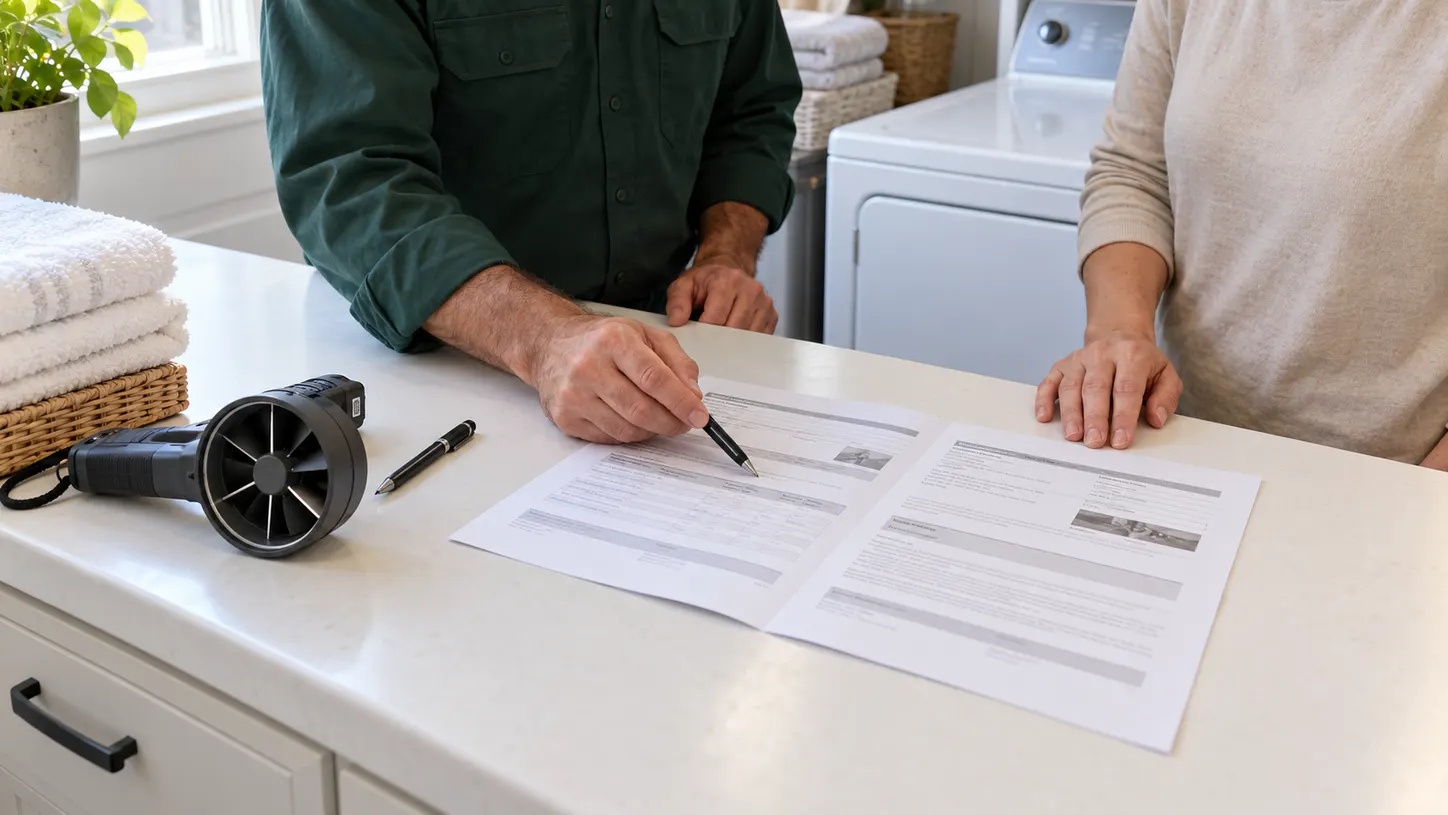
A useful service report should help you understand the findings and the next step.
Ask the technician:
- What measurement was taken, and where?
- What operating conditions were used?
- What does the reading mean for my dryer model?
- Was a restriction confirmed or only suspected?
- Did the result improve after cleaning or repair?
- Is further inspection necessary?
- What maintenance should I plan next?
If additional work is recommended, ask how the measurements and inspection findings support that recommendation.
Frequently Asked Questions
What does dryer vent airflow testing measure?
It evaluates exhaust airflow or resistance using an appropriate instrument. The method determines whether the result is reported as velocity, airflow volume, or pressure.
Can an airflow test find a clogged dryer vent?
It can indicate a restriction, but inspection is needed to determine whether lint, damaged ductwork, or another issue is responsible.
Is dryer vent airflow testing necessary after cleaning?
Not always, but before-and-after measurements can help document whether exhaust performance improved.
What does high dryer vent back pressure mean?
It indicates resistance to exhaust airflow. Whether the reading is excessive depends on the dryer manufacturer’s specifications and testing conditions.
Can my dryer have poor airflow with a clean lint screen?
Yes. Restrictions can occur elsewhere in the exhaust route, including the transition duct and exterior termination.
Understand the Results Before Choosing a Service
Long drying times don’t automatically mean your dryer is failing, and a clean lint screen doesn’t guarantee that the exhaust system is working properly.
Dryer vent airflow testing provides measurable information about exhaust performance. When combined with a careful inspection, it can help distinguish restrictions from other problems and show whether cleaning or repairs made a difference.
If your dryer isn’t performing as expected, SoCal Green Air & Chimney provides dryer vent cleaning services in Los Angeles with documented airflow measurements.
Ask about an inspection and airflow evaluation before deciding what work your exhaust system needs.