Signs to Look for in Your Chimney Crown Before the Rain
Learn the signs of chimney crown damage, how rain affects cracks, and when Los Angeles homeowners should have the crown inspected.
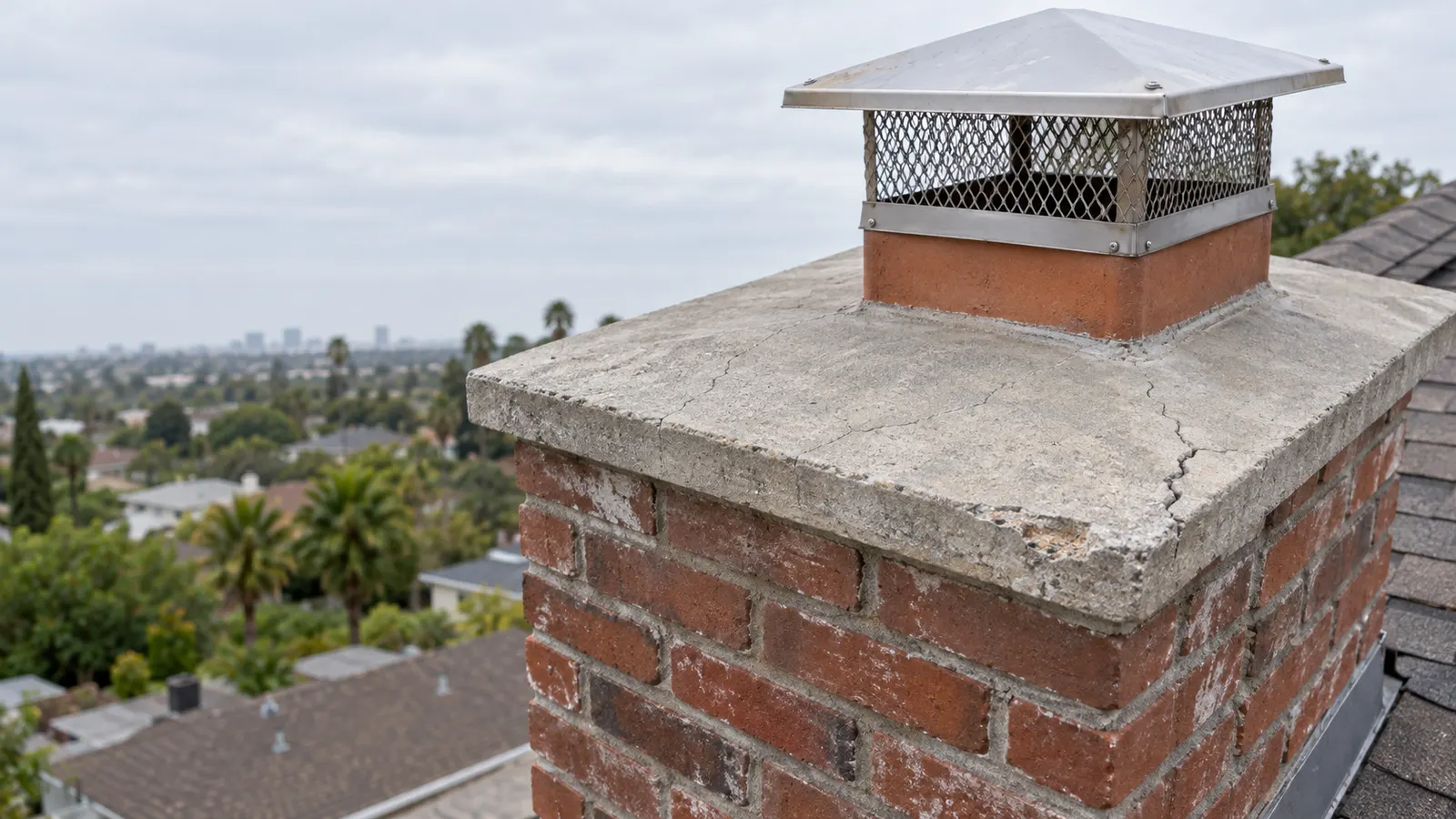
Most people don’t see their chimney crowns because they are on top of their chimney. Crowns are an important part of chimney construction because they are an exposed surface that guide rain away from the brick and flue.
Damaged crowns create gaps and allow water to get where it shouldn’t. The first signs of damage can be found in unexpected locations. You may have noticed signs of damage, including stained brick, weakened mortar, dampness found around your fireplace, and moisture after a rainstorm.
Homeowners in the Los Angeles and San Fernando Valleys may want to check their crowns for damage before the rain to address the problem before moisture seeps into the construction of their chimneys.
Not every crown that has damage requires replacing the crown. Most people notice the signs of damage and call for a closer inspection.
What Is the Purpose of a Chimney Crown?
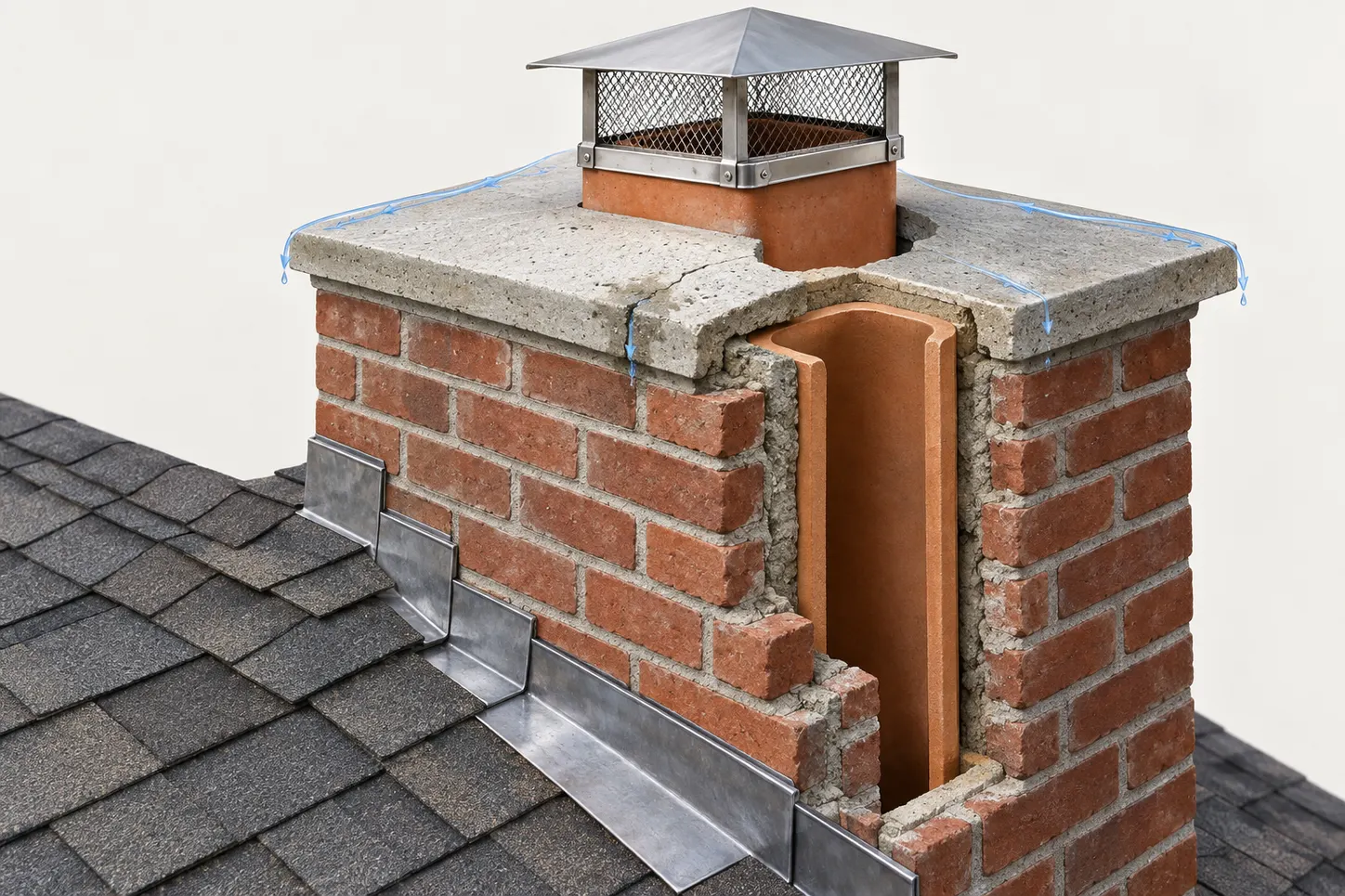
The chimney crown sits at the very top of a chimney. It forms a barrier around the flue and helps to guide water away from the entire structure of the chimney.
The chimney crown has a different purpose from a chimney cap. A chimney cap helps guide and block water, animals, and debris from entering the flue.
The crown remains intact and properly forms so moisture and water do not seep down the structure of the chimney.
This is why there is a need to examine the deterioration of the chimney crowns before rainfall starts to fall.
Why Check the Chimney Crown Before It Rains?
As Southern California experiences these long stretches of dry weather, it becomes easy to ignore the problems that may exist on the exterior of the chimney. The fireplace remains dry and appears to be in perfect working condition. However, rain can inflict a lot of damage very quickly, and problems that were once difficult to see can begin to become apparent.
After a long, dry winter with little to no rainfall, moisture can start to seep in through the areas of porosity and start to damage the joints and cracks that already exist.
If the chimney is older or has had prior masonry work performed, if it has moisture damage that was present the previous winter, or has not been looked at by a professional in several years, the damage that is caused by moisture can begin to seriously weaken the integrity of the chimney.
Sign 1: Obvious Cracks on Chimney Crown
Cracking that is present in the crown of the chimney can be very obvious.
It may be only hairline fractures in the crown. It may present as larger cracks that span the entire surface, or as separations that occur along the outside edges of the crown.
Many times these cracks present themselves in different stages of repair, and can’t be fully diagnosed based only on appearance.
The location of a crack is important, as is the depth, appearance of the material that surrounds it, and the presence of moisture below it.
Cracks can be easily seen from the ground, but since they are useful to inspect from the roof along the crown, people should not climb to the roof to look since it is very dangerous.
Sign 2: Crumbling or Breaking Crown Material
Cracking is not the only evidence of rotten crowns.
Also, look for missing edges, pieces with flaking material, crumbling sections, or detached pieces.
The design of the crown controls how it interacts with water. Erosion of edges or breakaway pieces will affect how water runs off the top of the chimney.
Don’t assume missing masonry material on the roof or the ground came from the crown. Other crown materials, such as brick and mortar, erode also.
An inspection can tell the source and if it is the crown, the masonry surrounding the crown, or both.
Sign 3: Gaps Develop Around the Flue
Another area to check is the point where the flue passes through the crown.
Separation or deterioration of this area will create a gap that will allow water to enter. Gaps can be hidden from view, even if the rest of the crown is intact.
A quality inspection of the crown will check around the flue for gaps and provide protection for the transition.
Sign 4: Water Seen Near the Fireplace After a Rain
The best clue may sometimes be inside the house.
Dampness in or around the firebox, water stains, a new damp smoke odor, or moisture that only shows after rain might indicate water damage in the crown.
These issues warrant further investigation; however, they don’t assign blame to the crown.
Leaks from a chimney can occur at the crown, but they can also be caused by deteriorating chimney flashings, chimney caps, or deteriorating masonry.
It is important to note that repairing any area that may not be the source of the leak may become an expensive, though necessary, repair.
If the primary symptom is water intrusion, not deterioration of the crown, then check out our guide on Why Is My Chimney Leaking?
Sign 5: White Staining on the Chimney
The staining is most likely efflorescence.
This occurs when moisture within masonry absorbs salts and migrates to the surface.
This stain does not correlate to crown damage; however, it suggests that moisture is present.
In the event that staining is visible beneath a damaged crown and is prominent after precipitation, then a chimney inspection is implied.
Staining removal does not address the source of the moisture.
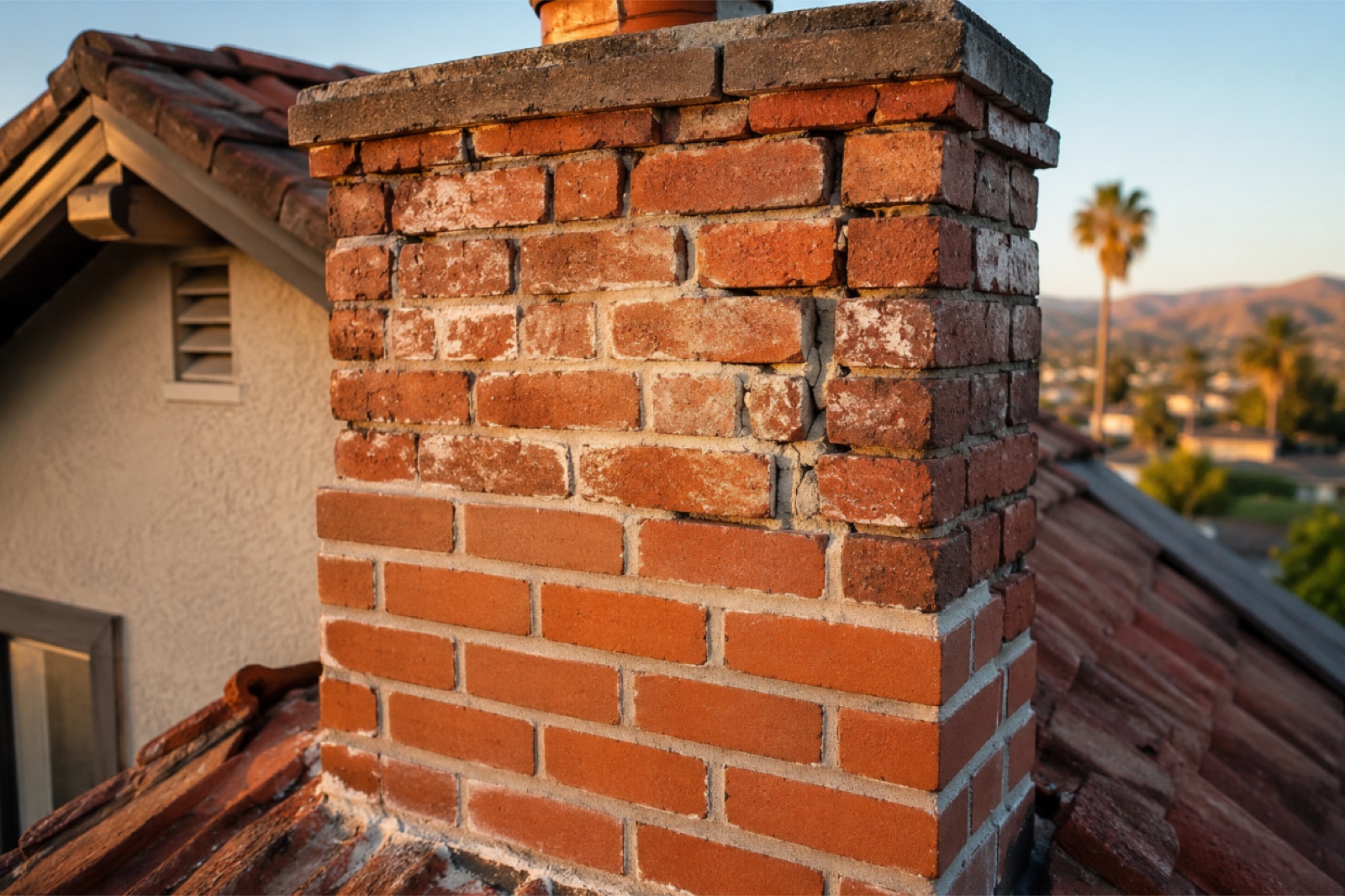
Sign 6: Crown Deterioration
An important area of focus should be the upper section of the chimney and the crown.
Some telltale signs may include:
- Recessed mortar joints or mortar that is crumbling.
- Flaking brick or loose masonry material.
- Cracking among the uppermost bricks.
- Decaying bricks directly beneath the crown.
These phenomena do not always signify crown damage; they should not be treated as such.
The presence of crown cracking and deterioration of upper masonry may also warrant further investigation of the exposure of the masonry to moisture.
It is important to understand the relationship between the damage, rather than treating each of the symptoms that can be observed.
Sign 7: The Crown Does Not Shed Water
The purpose of a crown is to help sheet water away and direct it to safe areas.
Once a crown is damaged and has created low spots, irregular surfaces, and large areas of surface damage, water has the tendency to pond in areas that should help drain it away.
This would be extremely dangerous for a homeowner to find out by attempting to go on a wet roof.
It would be safe and much more effective for a professional to inspect the crown and determine the shape and check surface areas for evidence of ponding.
A crown, even with most of the sections and surface damaged, is still expected to function and perform the job it is designed to do.
Sign 8: Previous Repairs Have Failed
If your chimney crown has been previously fixed, look for new damage next to or in the previously fixed areas.
A fixed patch or resurfaced section may have begun to separate, crack, or deteriorate.
This does not necessarily mean the previous work was done incorrectly. The underlying crown may have continued to age, new movement may have occurred, or deterioration may have occurred elsewhere.
A diagnostic approach that covers the same cracks repeatedly, hoping they will not return, is ineffective.
If a repaired area begins to return to its original state, the crown should be fixed before any other surface treatments are done.
Sign 9: New Damage Appears After Seismic Movement
Homeowners in the Los Angeles area also need to take seismic movement into account.
A chimney is a tall masonry structure. Significant movement will affect a crown, masonry, mortar joints, and the internal components of the chimney.
Look from a safe place after the earthquake that may have affected the property for any new cracks or changes in the appearance of the chimney.
If there is any reason to suspect damage, then a chimney professional can do more than an inspection of the crown. The flue and the surrounding masonry may also need to be addressed in order to restore use of the fireplace.
Hairline Crack or Serious Crown Damage?
It’s a common concern among homeowners: should I be worried about a small crack in my chimney crown?
A crack’s width is not an indicator of seriousness.
A shallow crack may be a serious issue if it is in a problematic location, surrounded by signs of decay or showing signs of moisture intrusion. A large defect may be localized.
It is not enough to ask, “How big is the crack?” It is important to ask, “Is the crown intact, and is there any sign of moisture intrusion below?”
Crown Damage Is Not the Only Cause of a Chimney Leak
This observation is critical for homeowners.
A water stain in your fireplace does not necessarily indicate crown failure.
Many other issues can contribute to moisture infiltration before crown damage.
Broken flashing, damaged chimney caps, deteriorated mortar, porous brick and other openings in the exterior wall can all contribute to moisture infiltration of a chimney before serious crown damage.
Older Chimneys May Have Both Crown Damage and Deteriorated Flashing
This is why a thorough inspection is warranted to determine the path of moisture to inform the repair.
What Happens if a Crown Is Damaged?
The main worry is that the chimney crown will continue to allow water to penetrate the crown and moisture will reach the bricks of the crown structure.
Water entering through damaged areas can reach masonry and mortar below the crown. Continued absorption of water may cause further deterioration.
How quickly this occurs depends on many factors, such as the condition of the chimney, the length of time it is exposed, the extent of the damage, and the amount of each factor.
It is not necessary to make sensational claims and state that every small crack causes a large and serious failure.
The larger problem is that if there is an opening and it rains, then the opening will almost certainly deteriorate.
An early inspection is important to determine if the damage is being contained.
Should You Seal a Chimney Crown Yourself?
There are products that seal cracks in masonry and concrete, but a visible crack will not dictate which of these products should be used.
There are two significant problems with doing your own crown work.
First of all, there is a serious risk of a fall when you get to the roof.
Second, covering a crack allows a symptom to be addressed, but it is possible that the cause remains the same.
If the crown has a large amount of deterioration, separates around the flue, or allows water to contact the surrounding masonry, then a simple surface application is not adequate.
Homeowners should record the visible symptoms from the ground. Roof level inspection and repair should be performed by a professional.
What Should a Chimney Crown Inspection Include?
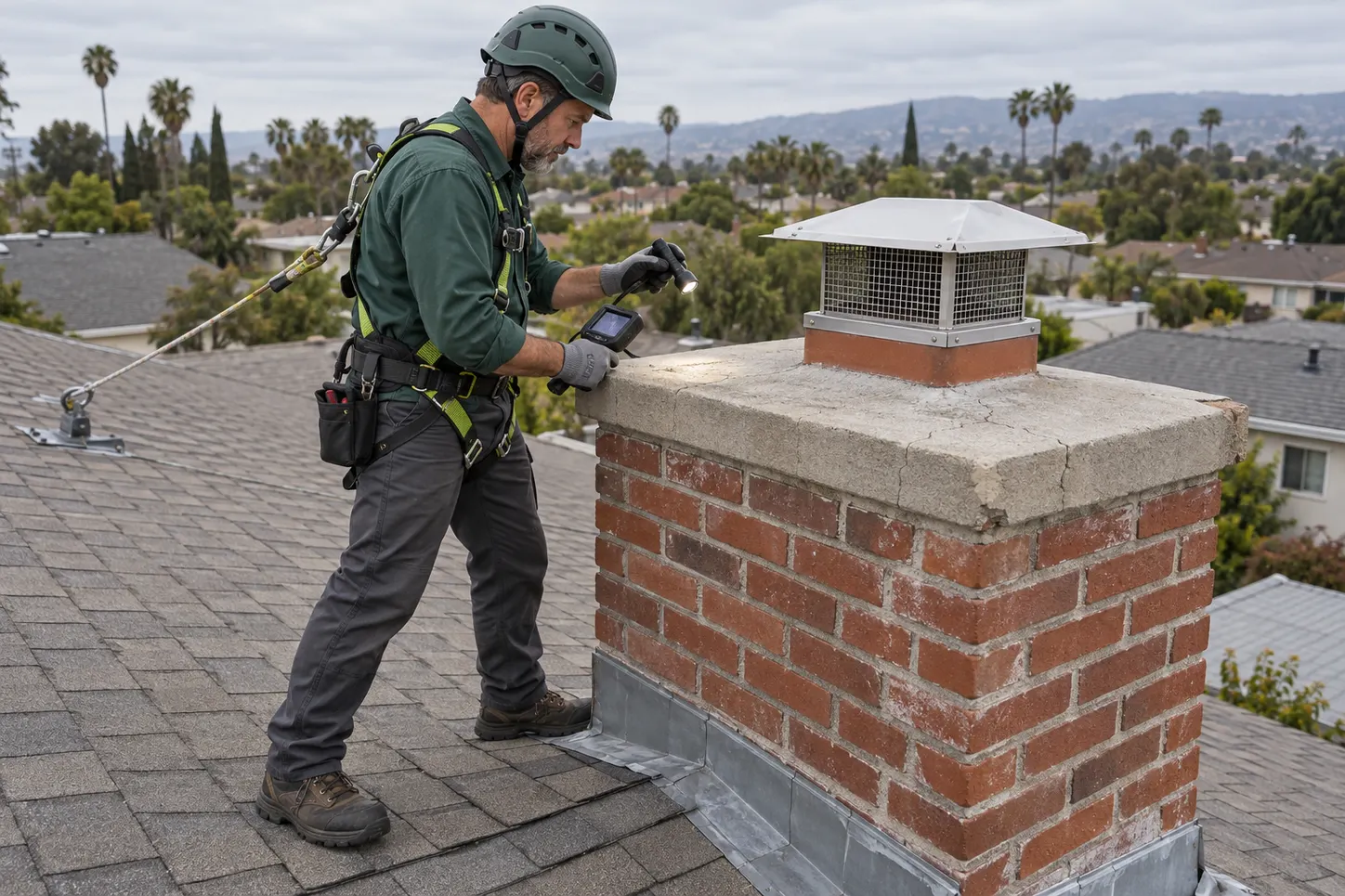
An inspection should go beyond the presence of cracks in the crown.
To determine the extent of the issue a technician may inspect the following areas, based on the observed symptoms:
- Crown material, cracks, and deterioration.
- Areas around the flue.
- Crown shape and the degree to which the crown facilitates drainage.
- Upper masonry and mortar.
- Chimney cap.
- Evidence of movement of water.
- Flashing and potential leak areas.
Compromised chimney components may also be assessed by technicians should significant water intrusion occur in the space adjacent to the chimney.
The focus is on diagnosis of the issue and subsequently the formulation of an effective plan of action.
A homeowner should not be concerned about the easiest to see chimney component. In order to find the cause of water intrusion in a given area, you should be concerned with where the water has penetrated the structure of the home.
When Should Los Angeles Homeowners Check Their Chimney Crown?
If your crown has been subjected to the elements for any extended period of time, before the rainy season would be a good time for a thorough inspection.
The crown should be inspected if you have noted cracking, deterioration in crown material, a history of crown leakage, visible water staining at the crown, crown damage, previous repairs to the crown, it has been a number of years since the crown was last evaluated or if the chimney has been subjected to recent seismic activity.
Inspecting the crown should not be a remedy to the passage of time and lack of evaluations. An inspection may provide valuable information that may help avoid exposure of the crown to moisture by demonstrating that the crown is intact or it may provide valuable information relating to localized maintenance.
Each of the above scenarios would provide you with greater information than remaining idle and waiting for a rainstorm to diagnose the issue.
What to Do When You Notice Chimney Crown Damage
The first step is to document carefully the damage that you can safely access.
When possible, take photos from the ground and track the occurrence of any symptoms attributed to moisture. Observe what happens when there is water found inside. Does it happen with every instance of precipitation or only certain instances?
Evaluate the chimney, as opposed to selecting a repair based on the observed symptom.
If crown damage is identified, the most appropriate solution is based on the diagnosed condition. A localized crack, deteriorated surface, and an extremely compromised crown are not the same.
To learn more about the differences mentioned, see our chimney crown repair guide. You can also view our chimney crown repair services for the Los Angeles area.
Check the Chimney Before the Next Rain
If you have observed cracking of the crown, masonry deterioration, leakage, or any of the other indicators, you do not need to speculate on whether or not the chimney is ready for the coming moisture.
SoCal Green Air Duct & Chimney can evaluate the crown and the surrounding components, explain what (if anything) is of concern, and determine the present condition.
Schedule a Chimney Inspection →
Frequently Asked Questions
What are some of the common signs of chimney crown damage?
Cracking, crumbling or missing material, deterioration around the flue, masonry damage, evidence of moisture below the crown, and water found near the fireplace are some of the more common signs. Missing or damaged crown deterioration can also be seen. While water around a fireplace justifies an inspection, it may be due to the failings of other components of the chimney.
Can I see a crack in a chimney crown from the ground?
With certain defects, you may be able to see something from the ground, or in a picture you’ve zoomed in on. Most small cracks and deterioration around the flue require getting closer to the crown to see.
Does a cracked chimney crown always cause a leak?
No. A visible crack does not always create an immediate inside leak. However, it does provide a path for moisture to enter, and should be investigated before it rains consecutively.
What can cause the white stains on my chimney?
A common cause is something called efflorescence. This is when moisture travels through the masonry and then evaporates, leaving white stains because of the minerals that were present in the masonry. This does not give an indication as to where the moisture is entering from.
Is a chimney crown the same as a chimney cap?
No. The crown is the protective surface around the flue of a masonry chimney. The cap is the flue top cover and helps to keep rain and debris out as well as many other animals.
Does damage to a chimney crown affect the bricks below it?
Damage to a chimney crown is not the only cause of deterioration to the masonry and mortar. It is possible to have multiple causes, so the symptom should not be repaired first.
Does chimney crown damage need to be remedied before rain?
If it is confirmed that there is a moisture entry concern, then it should be resolved before it rains again. The damages should be assessed to determine the appropriate repair.
How do I find out if the leak is caused by the crown or the flashing?
Water stains on the inside may not help determine where water is entering. Crown damage, flashing issues, missing caps, and deteriorated masonry will all show similar symptoms. The entry point can be determined by an exterior inspection of the chimney.
Final Thoughts
Unfortunately, after water starts to enter the chimney, determining what is wrong with the crown and what is wrong with the flashing of the chimney gets complicated.
Deterioration of the crown, gaps around the flue, water stains, masonry damage above the flue opening, and leaking after it rains are signs that the crown should be checked.
Do not assume every leak is a crown leak when other components may also be involved. Check whether the flue passage, the cap, or the flashing is letting water in.
Notice the symptom. Identify the source. Then choose the appropriate repair.
This approach will ensure that the chimney will not be repaired more extensively than is necessary.