Brick & Masonry Chimney Repair in Los Angeles: What Homeowners Need to Know
Spalling bricks or crumbling mortar? Learn what causes chimney masonry damage in LA and when to repair vs. rebuild. Serving Tarzana & the San Fernando Valley.
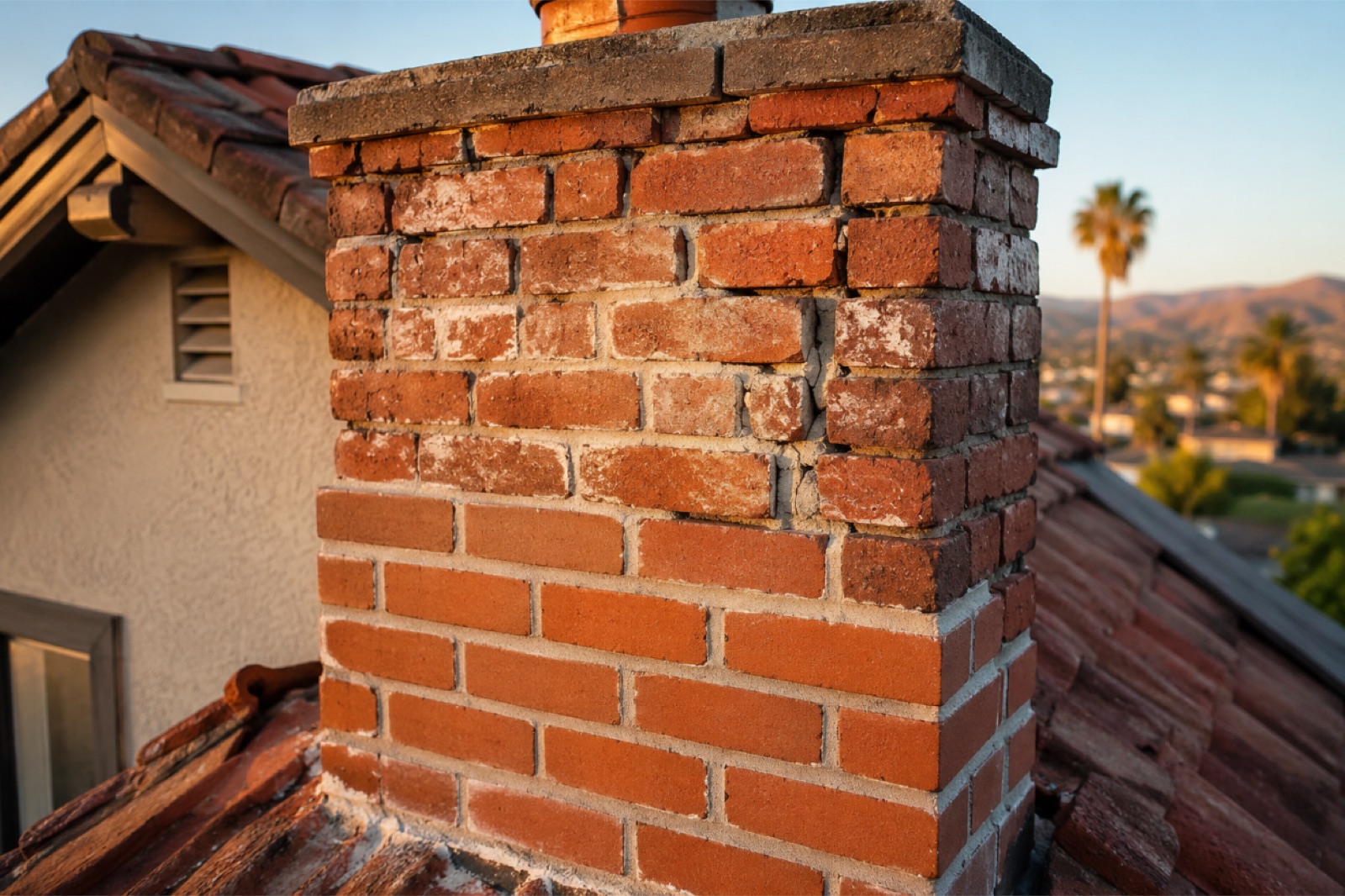
Most homeowners don’t think about their chimney until something goes wrong. A crack shows up after a warm stretch of weather. A few bricks look off. White staining appears on the exterior that wasn’t there before. These aren’t cosmetic issues you can ignorethey’re early signs that your chimney’s masonry is breaking down, and in Los Angeles, that process tends to move faster than people expect.
This guide covers what causes brick and mortar deterioration in Southern California, what the warning signs actually look like, and how to decide whether you need a targeted repair or a more significant rebuild.
Why LA’s Climate Is Harder on Chimneys Than People Realize
The common assumption is that masonry chimneys struggle in cold, wet climates. Freeze-thaw cycles damage brickeveryone knows that. But here in Los Angeles, the damage mechanism is different, and it’s just as destructive over time.
Thermal expansion is the main culprit. Southern California summers push exterior chimney surfaces to very high temperatures. When brick and mortar heat up, they expand. When temperatures drop at nightwhich they do, even in summer, especially in areas like Tarzana, Northridge, and the San Fernando Valleythat material contracts. Do that cycle repeatedly over years and decades, and the mortar joints start to fail. Hairline cracks form. Water finds its way in.
Water is still the real enemy. Even in a dry climate, LA gets meaningful rainfall between November and March. When water enters through compromised mortar joints or a cracked chimney crown, it soaks into the porous brick material. During the next heat cycle, that trapped moisture expands. Bricks start to flake and chip. That’s spallingand once it starts, it doesn’t stop on its own.
Seismic activity adds another layer of risk. This is LA, after all. Ground movementeven minor tremors that barely register on the newsputs lateral stress on masonry structures. Unreinforced brick chimneys are particularly vulnerable. Mortar joints that were already weakened by thermal cycling can crack or shift after even a moderate seismic event. Homes built before the mid-1990s are especially worth watching, as older chimneys were often constructed without modern seismic reinforcement.
Homeowners in Orange County deal with similar conditionscoastal salt air adds to the mix, accelerating mortar deterioration on exterior chimney brickwork near the coast.
What Are the Warning Signs of Masonry Chimney Damage?
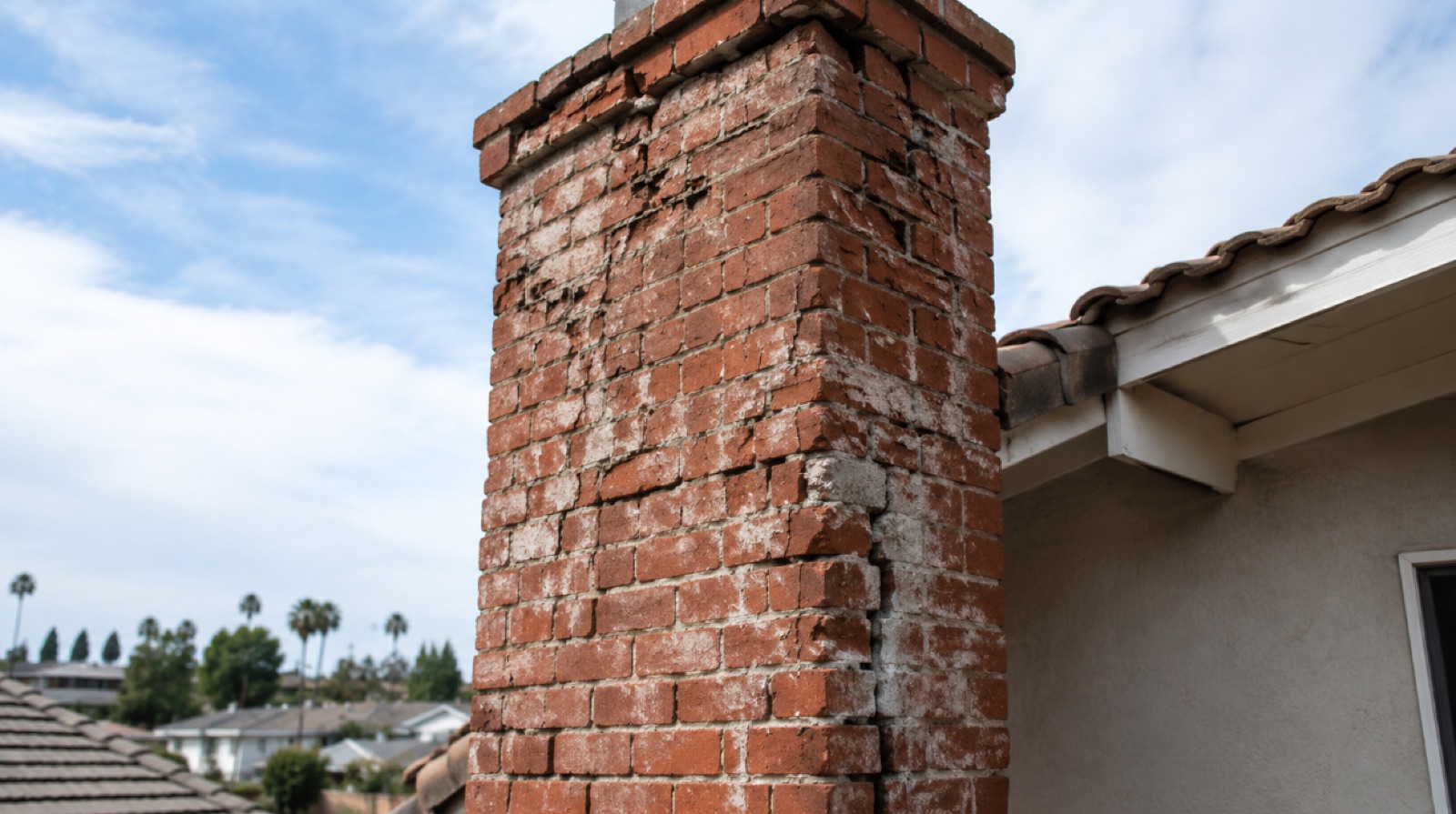
Some of these are visible from the ground. Others require getting up close or having a professional inspection. Either way, knowing what to look for helps you act before a small repair becomes a major rebuild.
Spalling bricks. This is when bricks begin to flake, chip, or break apart on the surface. You might notice small fragments of brick on the roof or around the base of the chimney. Spalling means the brick face is separatingand that exposed inner material absorbs water even faster than the original surface did.
Crumbling or missing mortar joints. Run your finger along the mortar between the bricks. If it powders or crumbles easily, that joint isn’t doing its job. Missing mortar is an open channel for water. This is exactly the kind of damage that tuckpointing is designed to address.
Efflorescence. That white, chalky staining on the exterior of brick chimneys is called efflorescence. It’s caused by water moving through the masonry and depositing mineral salts on the surface as it evaporates. The staining itself isn’t the problemit’s evidence that water is already moving through your brickwork regularly.
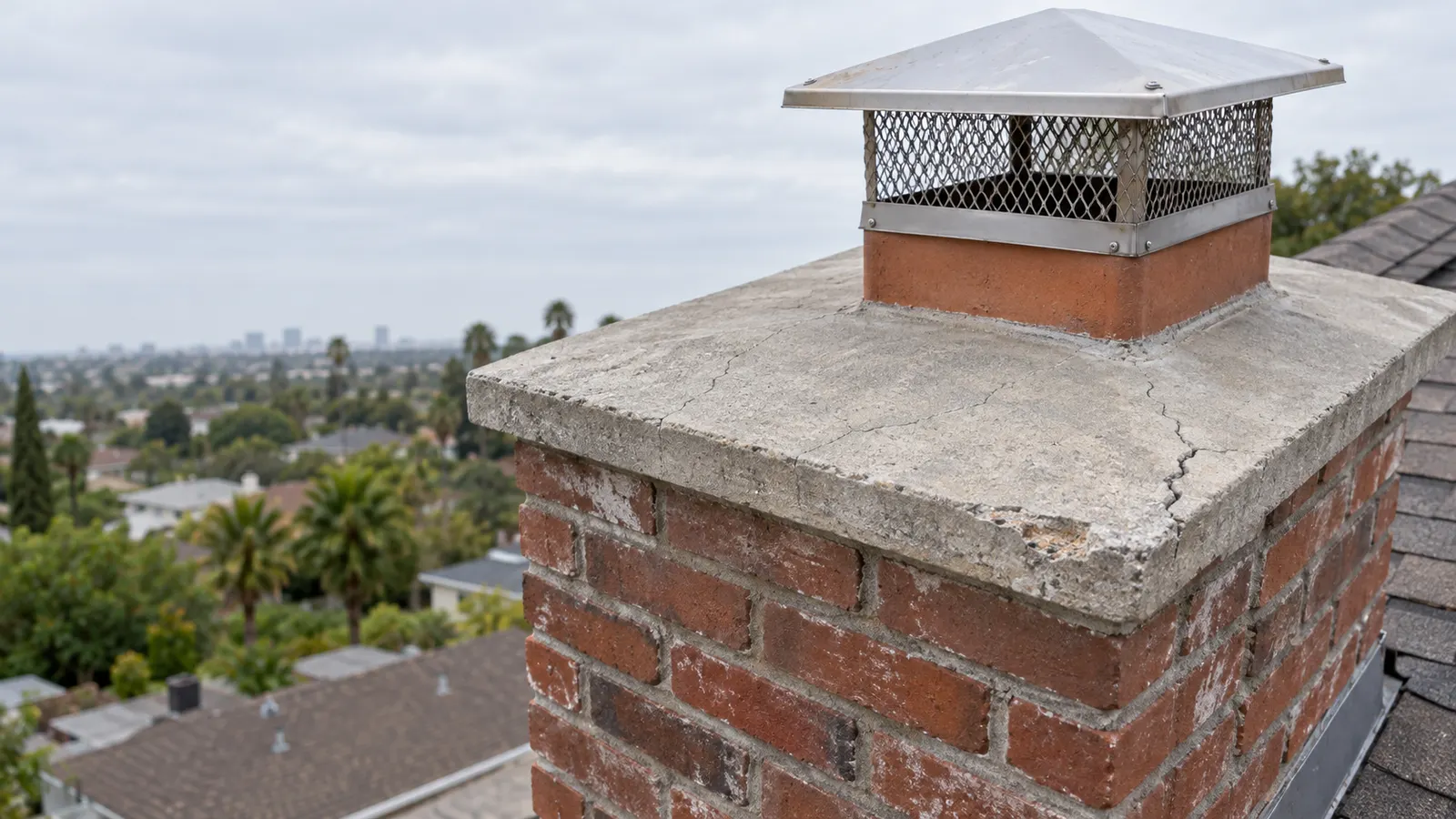
Cracks in the chimney crown. The crown is the concrete or mortar cap that sits at the very top of the chimney, directing water away from the flue and the brick. A cracked crown is one of the fastest paths to interior water damage. You may be able to spot larger crown cracks from the ground, but a proper inspection catches the smaller ones before they widen.
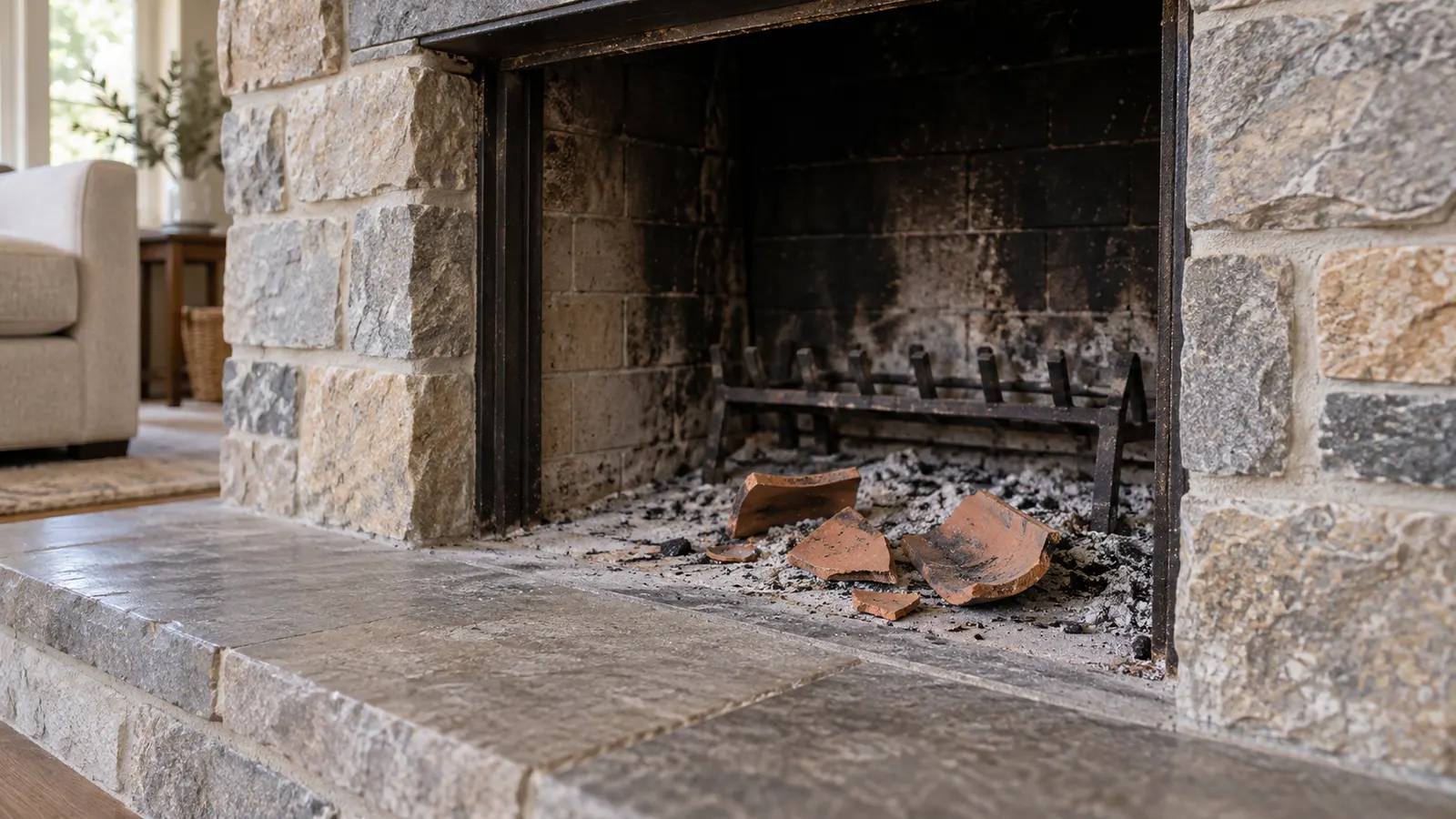
Water in the firebox. If you’re finding water inside the fireplace after rain, there’s a breach somewhere in the system. Could be the crown, the flashing, the chimney capor compromised exterior masonry letting water migrate inward. A chimney leak repair assessment will trace the source and determine what’s actually failing.
A smoky smell when the fireplace isn’t in use. This one surprises people. If masonry has cracked internally, gases can migrate through the structure rather than staying contained in the flue. That’s both a comfort issue and a safety concern worth addressing promptly.
What Is Tuckpointing and When Do You Need It?
Tuckpointing is the most common masonry chimney repair performed on LA homes, and it’s frequently misunderstood.
Here’s what it actually involves: a mason carefully removes the damaged or deteriorated mortar from between the brickstypically to a depth of about three-quarters of an inchand replaces it with fresh mortar that’s properly matched to the existing chimney in color and composition. Done correctly, the repair is nearly invisible and restores the structural integrity of the joint.
Tuckpointing is appropriate when the bricks themselves are still in good condition but the mortar is failing. It’s one of the more cost-effective masonry repairs available, and it can add decades to a chimney’s functional life if caught at the right stage.
What it doesn’t fix: cracked or spalling bricks, structural shifts, or crown damage. Those require separate attention. And if mortar deterioration has been left long enough that bricks have become loose or are missing entirely, tuckpointing alone won’t be sufficient.
Brick Replacement vs. Tuckpointing: What’s the Difference?
These two repairs often happen together, but they address different things.
Tuckpointing deals with the mortar. Brick replacement deals with the brick itself. When a brick has cracked through, spalled significantly, or become structurally compromised, it gets individually removedmasons call this a “spot cut”and replaced with a new brick that’s sized and colored to match the surrounding chimney as closely as possible.
The goal is always to match the replacement brick to the original. This matters for both structural continuity and appearance. A competent mason will source brick that complements the existing material rather than creating a patchwork look across your chimney exterior.
For chimneys where spalling or brick damage is widespread rather than isolated, partial or full chimney rebuilding may be the more practical path. This is a bigger undertakingbut sometimes repair costs more in the long run than doing it right once.
When Does a Chimney Need to Be Rebuilt Instead of Repaired?
This is the question homeowners ask most often, and the honest answer is: it depends on what the inspection reveals.
Repairs make sense when damage is limitedisolated mortar deterioration, a few spalled bricks, a cracked crown. These are targeted problems with targeted solutions.
A partial or full rebuild becomes the appropriate recommendation when:
- Structural shifting has moved the chimney out of plumb
- Earthquake damage has compromised the brick-to-mortar bond at multiple levels
- Spalling is widespread across large sections of the chimney exterior
- Water infiltration has been occurring long enough to damage the interior flue structure
- The chimney was built before current seismic codes and no longer meets safety standards
Beware of any contractor who immediately recommends a full rebuild without a proper inspection. That’s not how legitimate chimney masonry professionals operate. A good technician will document what they find, show you the damage, and explain specifically why repair is or isn’t sufficient for your situation.
Does Exterior Chimney Repair Require Permits in Los Angeles?
Not alwaysbut sometimes.
Cosmetic repairs like tuckpointing and minor brick replacement typically don’t require permits in most LA jurisdictions. But structural work does. If you’re talking about rebuilding a section of chimney, addressing seismic damage, or making changes that affect the flue, expect permits to be involved.
The City of Los Angeles Department of Building and Safety (LADBS) has specific requirements around masonry chimney reconstructionparticularly for earthquake-damaged structures. A licensed contractor who knows the local code will handle this correctly from the start. Unpermitted structural chimney work can create insurance complications and problems at resale.
What Happens During a Professional Masonry Chimney Inspection?
A proper inspection does more than a visual scan from the ground. Here’s what it typically involves:
- Close examination of all exterior brickwork for spalling, cracking, and missing mortar
- Assessment of the chimney crown condition
- Check of the chimney cap and flashing for gaps or deterioration
- Interior flue inspection, often with a camera, to look for cracked liner sections or internal masonry damage
- Evaluation of any water staining or efflorescence patterns to trace moisture entry points
This is also where the repair vs. rebuild decision gets madebased on what’s actually documented, not what someone guessed from the driveway.
If your chimney has visible exterior damage or you haven’t had it inspected in several years, a professional assessment is the right starting point. You may also want to check whether a failing chimney liner is contributing to draft problems or interior damageliner issues often accompany advanced masonry deterioration and are worth evaluating at the same time.
Waterproofing After Masonry RepairIs It Worth It?
After tuckpointing or brick replacement, applying a breathable water-repellent sealant is standard practice and genuinely worth doing.
The key word is breathable. Chimney masonry needs to allow moisture vapor to escape from inside the structurea non-breathable sealant traps that moisture and can accelerate the very damage you just paid to repair. A vapor-permeable, water-repellent coating lets the masonry breathe while blocking liquid water from penetrating the surface.
In a climate like Los Angeleswhere winter rain follows long dry periodsthis added layer of protection helps the repair last significantly longer.
Serving Los Angeles, Tarzana, Orange County, and the San Fernando Valley
Masonry chimney problems don’t look the same in every neighborhood. A chimney in Tarzana that’s been through years of San Fernando Valley heat cycles has different wear patterns than one in a coastal Orange County community where salt air has been attacking the mortar for decades. The repair approach should reflect that.
At SoCal Green Air & Chimney, we work with homeowners across Los Angeles and Orange County on brick chimney repair, exterior chimney brickwork restoration, and full masonry assessments. We use industry-approved materials and methods designed to perform in Southern California conditionsnot generic approaches built for a different climate.
Ready to Have Your Chimney’s Masonry Assessed?
If you’ve noticed crumbling mortar, chipping bricks, white staining, or any of the warning signs covered here, don’t put it off until the next rain season. Masonry damage that’s minor today can become a structural problem within a single wet winter.
Our masonry chimney repair service starts with an honest inspectionwe’ll tell you exactly what we find, what needs attention now, and what can wait. No unnecessary upsells. Clear recommendations you can actually plan around.
Contact SoCal Green Air & Chimney today to schedule your inspection. We serve homeowners throughout Los Angeles, Tarzana, Northridge, the San Fernando Valley, and Orange County.