Air Duct Repair vs. Cleaning: Is a Leak or Buildup Affecting Your Airflow?
Weak airflow can come from leaking or dirty ducts. Learn the signs, how the problems differ, and whether your ducts need repair or cleaning.
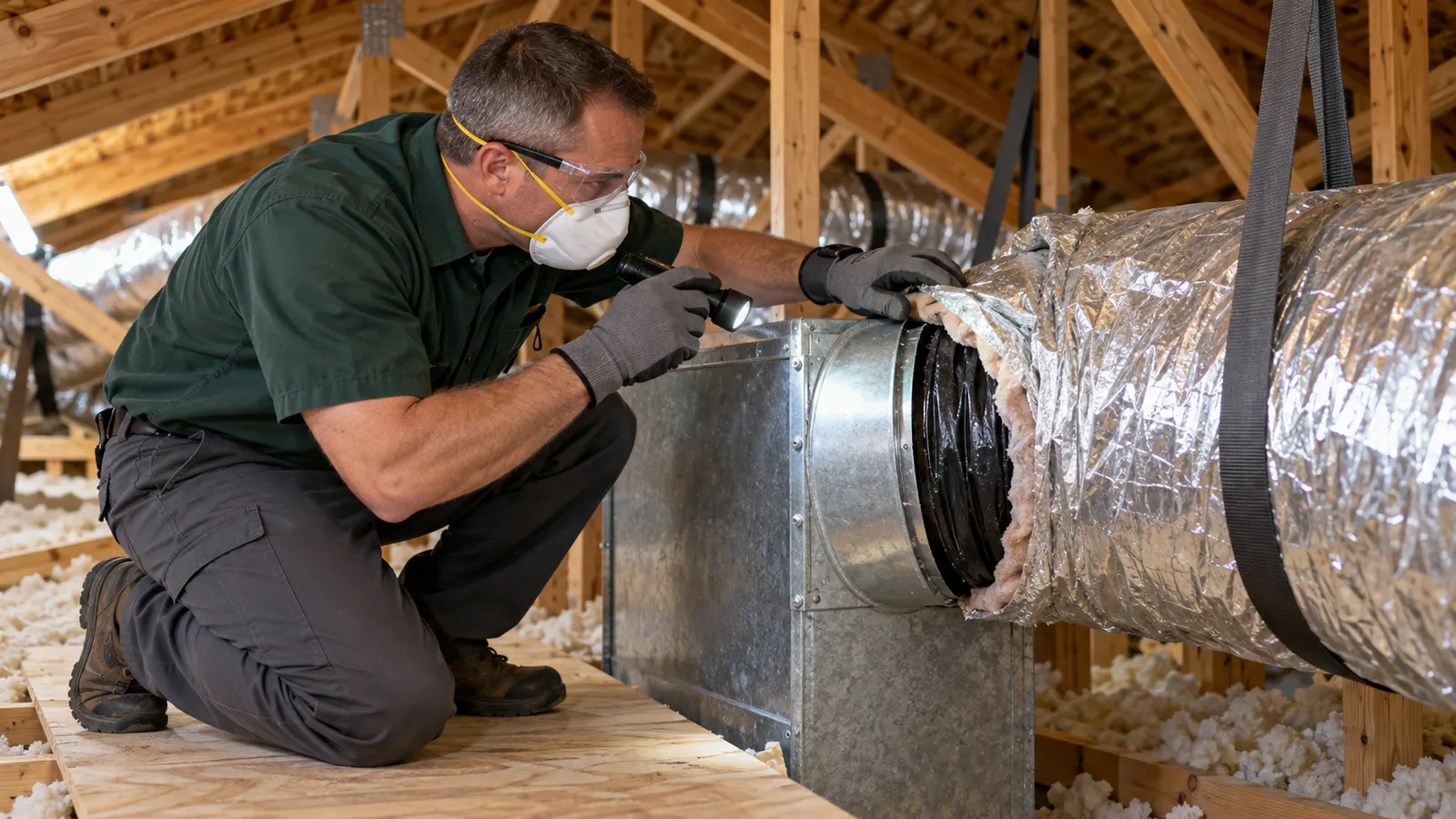
Weak airflow from a vent does not automatically mean your air ducts are dirty.
Sometimes the problem is buildup or an obstruction. Other times, conditioned air is escaping through disconnected, torn, or poorly sealed ductwork before it reaches the room.
That is the key distinction in air duct repair vs cleaning: cleaning addresses material inside the duct system, while repair addresses physical problems that allow air to escape or prevent the duct from carrying air correctly.
Some Los Angeles homes have both problems.
Before paying for either service, it makes sense to identify which condition is actually affecting your airflow.
Air Duct Leaks and Dirty Ducts Are Two Different Problems
The symptoms can overlap, but the mechanics are different.
A duct leak loses air.
A dirty or obstructed duct can restrict airflow or contain material that may circulate through the system.
That difference determines the service.
If a duct connection has separated in an attic, cleaning the inside will not reconnect it.
If the ductwork is intact but contains substantial debris that warrants removal, sealing the outside will not clean it.
ENERGY STAR notes that leaks, holes, and poorly connected ducts can lose a meaningful share of the air moving through a typical duct system and can contribute to comfort and energy problems.
Diagnosis matters because weak airflow alone does not tell you which problem you have.
Signs Your Air Ducts May Be Leaking
Leaking ductwork can affect comfort even when the inside of the duct looks relatively clean.
One or More Rooms Are Hard to Keep Comfortable
A common clue is uneven comfort.
The thermostat may be set correctly, but a particular room remains warmer during cooling season or cooler when heating is running.
If conditioned air is escaping before reaching that room, the supply vent may deliver less air than intended.
ENERGY STAR identifies rooms that are difficult to heat or cool as one possible sign of poorly performing ducts.
That does not prove a leak, but it gives you a reason to investigate the duct route serving the affected area.
Airflow Feels Weak at Certain Vents
Weak airflow from one or several registers can occur when a duct is disconnected, damaged, crushed, or leaking significantly.
But airflow is affected by more than duct leakage.
A closed damper, dirty filter, blower issue, poor system design, crushed flexible duct, or another restriction can create similar symptoms.
So the useful observation is not simply “this vent feels weak.”
It is whether the airflow pattern points to one branch, several rooms, or the whole house.
You Can See a Disconnected or Damaged Duct
Sometimes the problem is visible.
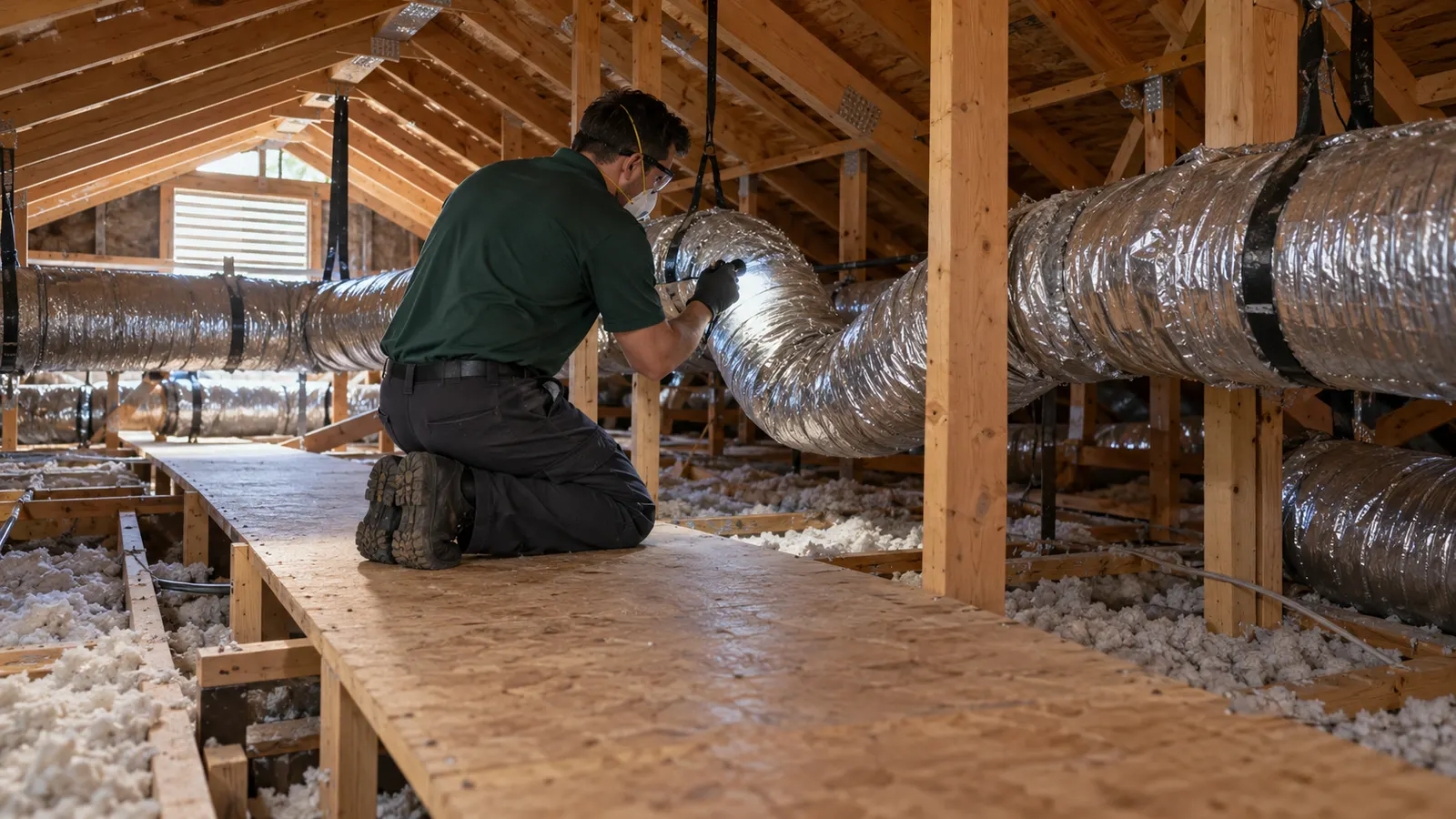
In an accessible attic, garage, or other unfinished area, a duct may appear separated at a connection, torn, crushed, or poorly supported.
Do not crawl through unsafe attic areas just to inspect it.
If the problem is readily visible from a safe access point, however, it provides stronger evidence that air duct repair may be relevant.
Energy Use Has Changed Without an Obvious Reason
Leaky ducts can waste conditioned air, particularly when they pass through attics, crawlspaces, garages, or other unconditioned areas.
ENERGY STAR states that poorly performing duct systems can contribute to higher utility costs and difficulty maintaining comfort.
A higher bill alone does not diagnose a duct leak. Weather, thermostat settings, HVAC condition, rates, and occupancy all affect energy use.
But increased energy use combined with uneven comfort and weak airflow can strengthen the case for a duct-system evaluation.
Signs Your Ducts May Need Cleaning Instead
Dirty ducts present a different set of clues.
The important word here is may.
Visible household dust by itself does not prove the duct system needs professional cleaning.
Visible Buildup Inside Accessible Duct Areas
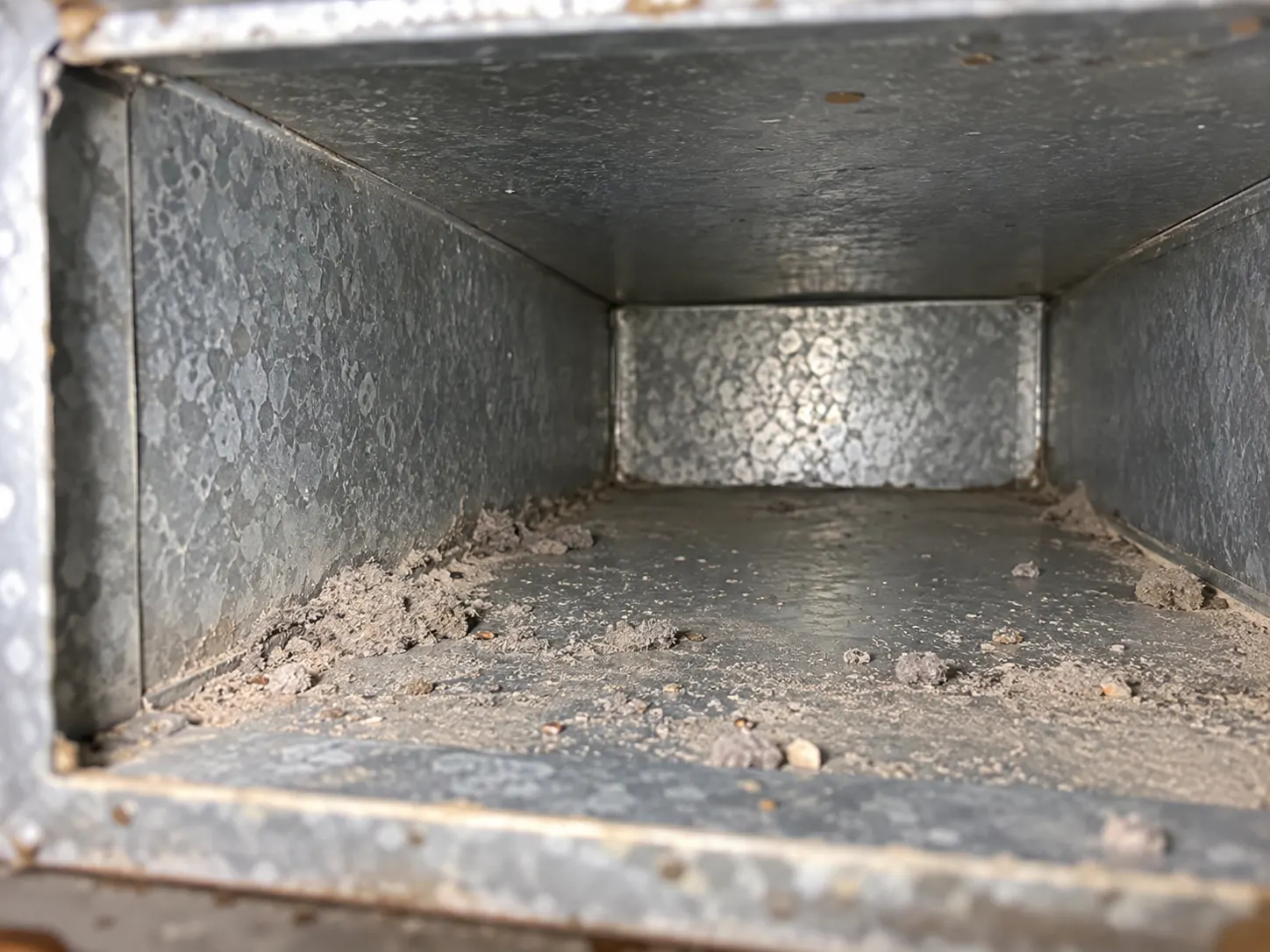
If you can safely look through an accessible register and see substantial debris inside the duct, that gives you more useful information than dust sitting on the register face.
Register surfaces naturally collect household dust.
The question is what is happening farther inside the system.
Our guide to signs your ducts need cleaning goes deeper into the indicators that can justify professional cleaning.
Debris or Dust Is Being Released From a Register
If visible material is repeatedly being discharged from a vent while the HVAC system operates, the source deserves investigation.
The material may be coming from the duct, register area, nearby construction debris, damaged insulation, or another source.
The correct response is not automatically whole-home duct cleaning.
First determine what the material is and where it is coming from.
There Has Been a Contamination Event
Remodeling, construction dust, pest activity, water intrusion, or another unusual event can change the condition inside ductwork.
That is different from ordinary household dust settling on furniture.
When a specific event has introduced substantial debris into the system, inspection can determine whether cleaning is appropriate and how much of the duct system is affected.
Duct Leaks vs. Dirty Ducts: A Quick Comparison
| Symptom | Leak more likely | Cleaning issue more likely | Could be either/another cause |
|---|---|---|---|
| One room has weak airflow | Yes | Possible | Yes |
| Room difficult to heat/cool | Yes | Possible | Yes |
| Visible disconnected duct | Strong sign | No | Not applicable |
| Significant debris inside duct | No | Stronger cleaning clue | Yes |
| Dust on vent grille only | Not enough evidence | Not enough evidence | Yes |
| Conditioned air felt escaping at accessible joint | Strong sign | No | Not applicable |
| Debris blowing from register | Less typical | Possible | Yes |
| Whole house has weak airflow | Possible | Possible | Filter/equipment issues also possible |
This table is a starting point, not a substitute for diagnosis.
The same homeowner complaint can have several causes.
How to Tell Whether You Need Air Duct Repair or Cleaning
Start with the pattern of the problem.
Step 1: Check Whether the Problem Is Local or Whole-House
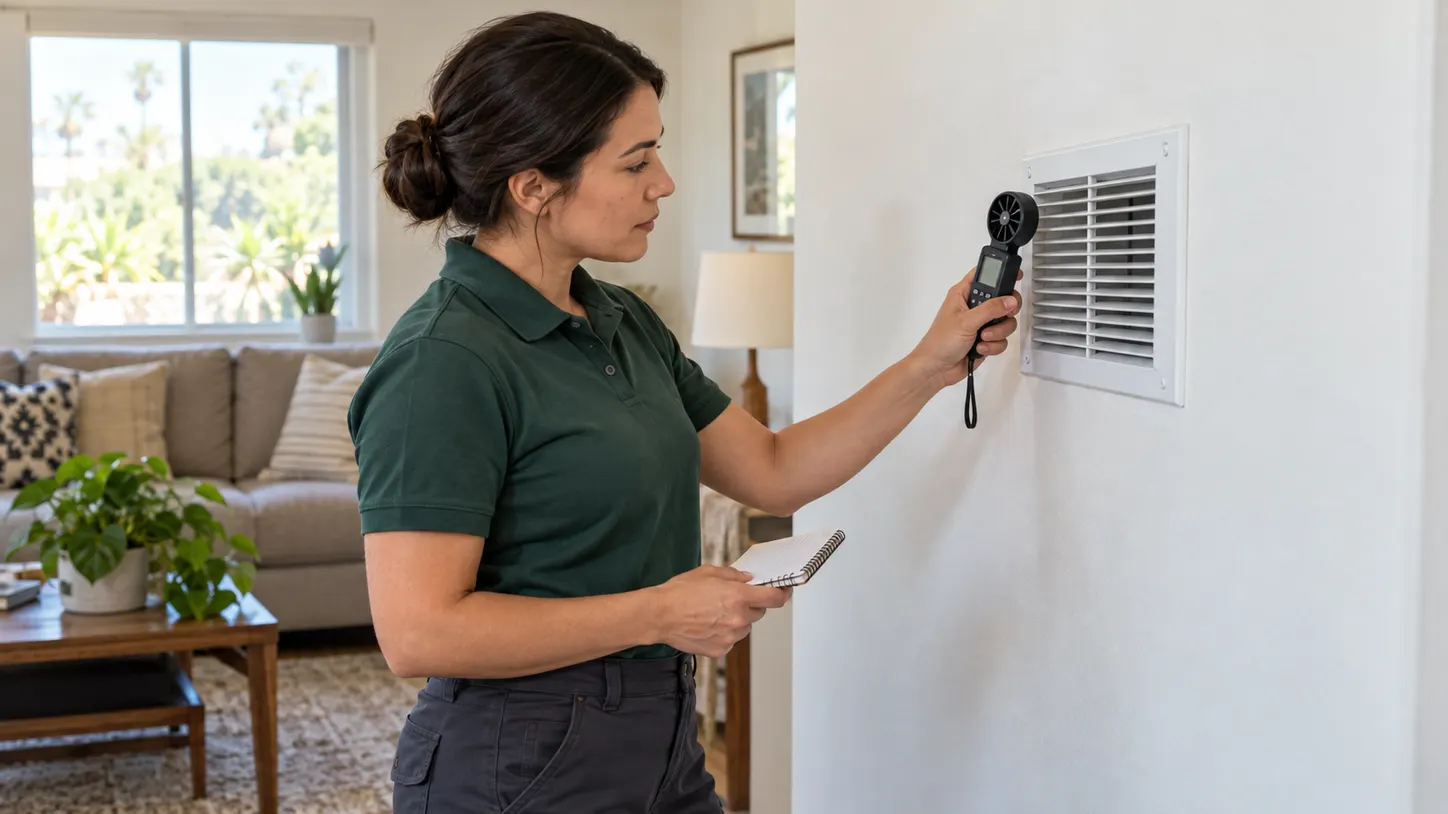
If only one room has weak airflow, focus first on the branch serving that room.
If every vent is weak, the problem may involve the filter, blower, return-air system, main duct, or another HVAC condition rather than a single dirty branch.
This prevents you from treating a system-wide performance issue as a cleaning problem.
Step 2: Check the Air Filter
A loaded filter can restrict airflow through the HVAC system.
Check it according to the equipment manufacturer’s instructions.
If replacing an overdue filter improves airflow significantly, that information matters.
If nothing changes, keep investigating rather than assuming the ducts need cleaning.
Step 3: Look for Accessible Physical Problems
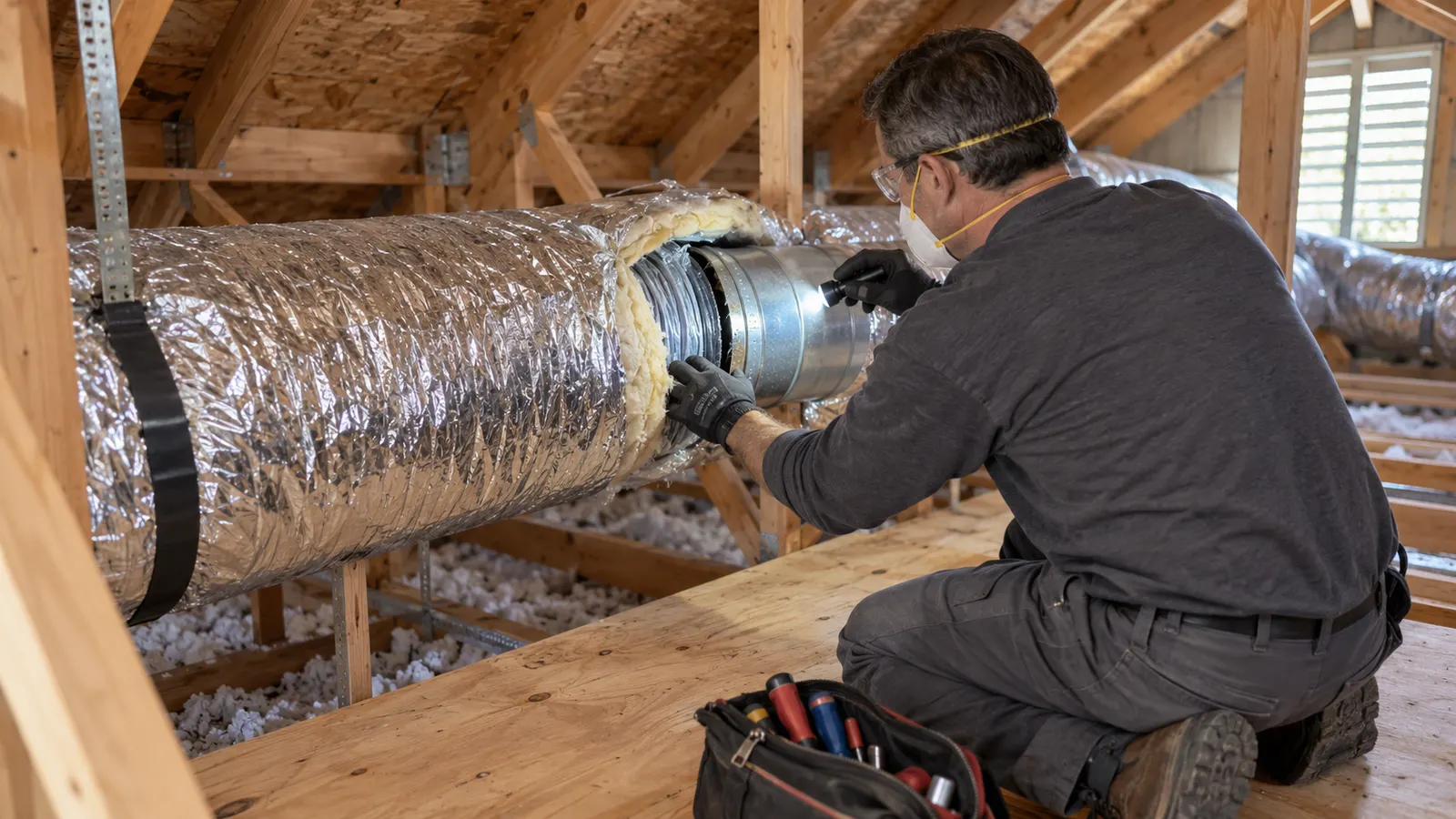
From safe, accessible areas, look for disconnected sections, crushed flexible ductwork, torn material, or obvious gaps.
ENERGY STAR recommends whole-system inspection when addressing duct performance and specifically identifies damaged, disconnected, tangled, and crushed ducts as conditions contractors should evaluate.
Step 4: Look for Actual Contamination Evidence
Dust on furniture is not enough.
Look for significant buildup or debris within accessible duct areas, material being discharged from registers, or a known event that could have contaminated the ductwork.
This is where air duct cleaning becomes a more evidence-based recommendation.
Step 5: Have Airflow Tested When the Cause Is Unclear
Airflow problems cannot always be diagnosed visually.
A technician may need to assess supply and return performance, duct condition, and pressure to determine where the system is losing or restricting air.
The objective is to diagnose before selling a service.
What Air Duct Repair Actually Fixes
Air duct repair addresses physical defects in the distribution system.
Depending on what is found, that can include reconnecting separated sections, repairing damaged ductwork, correcting crushed sections, or sealing leakage at appropriate joints and connections.
The purpose is to keep conditioned air inside the intended duct path until it reaches the rooms it serves.
ENERGY STAR recommends appropriate sealing methods such as mastic or metal-backed tape for duct connections and notes that ordinary household “duct tape” is not a durable duct-sealing solution.
Repair should still be targeted.
There is little value in sealing random accessible joints without determining where meaningful leakage or physical damage actually exists.
What Air Duct Cleaning Actually Fixes
Cleaning addresses unwanted material inside the duct system.
Professional cleaning may be appropriate when inspection identifies significant accumulated debris, contamination associated with a particular event, or another condition where removal is justified.
It does not repair torn ducts.
It does not reconnect separated branches.
And it does not correct an HVAC blower or balancing problem.
This is an important boundary because homeowners asking does air duct cleaning really work are often really asking whether cleaning will solve their particular comfort or dust problem.
It can solve a contamination problem when contamination is actually present.
It cannot solve every airflow complaint simply because the home has ducts.
When You May Need Both Repair and Cleaning
Sometimes the answer to air duct repair vs cleaning is both, but in the right order.
Imagine a return duct with a significant leak in a dusty attic.
The physical opening can allow unwanted material to enter the duct system. If contamination has already occurred, simply cleaning the duct without correcting the leak can leave the pathway open.
Conversely, sealing the leak addresses the defect but does not automatically remove debris already inside.
In that situation, the sequence may involve repairing the source and then addressing contamination if cleaning is warranted.
This is why a system-level diagnosis is more useful than selecting a service from one symptom.
Could the Problem Be Something Other Than the Ducts?
Absolutely.
Weak airflow can also be associated with a dirty HVAC filter, blower or equipment problems, closed or improperly adjusted dampers, undersized return-air pathways, poor duct design, or other system conditions.
A dusty room may be affected by windows, flooring, bedding, pets, foot traffic, outdoor dust, pressure differences, or filtration rather than contaminated ducts.
A trustworthy assessment should be able to tell you when cleaning or repair is not the appropriate first step.
What About Static Pressure?
Static pressure is one of the diagnostic concepts technicians may use when investigating airflow.
In simple terms, it reflects resistance to airflow within the HVAC system.
Too much resistance can affect how effectively the system moves air, but the number by itself does not tell a homeowner, “your ducts are dirty.”
Filter condition, duct design, restrictions, equipment setup, and other factors can all influence system pressure.
That is why airflow measurements are most useful when interpreted with a physical inspection rather than treated as a single yes-or-no test for duct cleaning.
Why Duct Location Matters in Los Angeles Homes
Ductwork often runs through spaces that homeowners rarely see.
In Los Angeles and San Fernando Valley properties, that may include attics, crawlspaces, garages, ceiling cavities, or other concealed areas.
A leak in conditioned space and a leak into a hot attic can have different effects on comfort and efficiency.
ENERGY STAR specifically notes that ducts located in attics, crawlspaces, and garages deserve attention because leakage in unconditioned areas can waste conditioned air.
The location of the duct problem therefore matters just as much as its size.
What Should a Professional Duct Inspection Include?
A useful evaluation should answer a practical question:
Where is the airflow problem coming from?
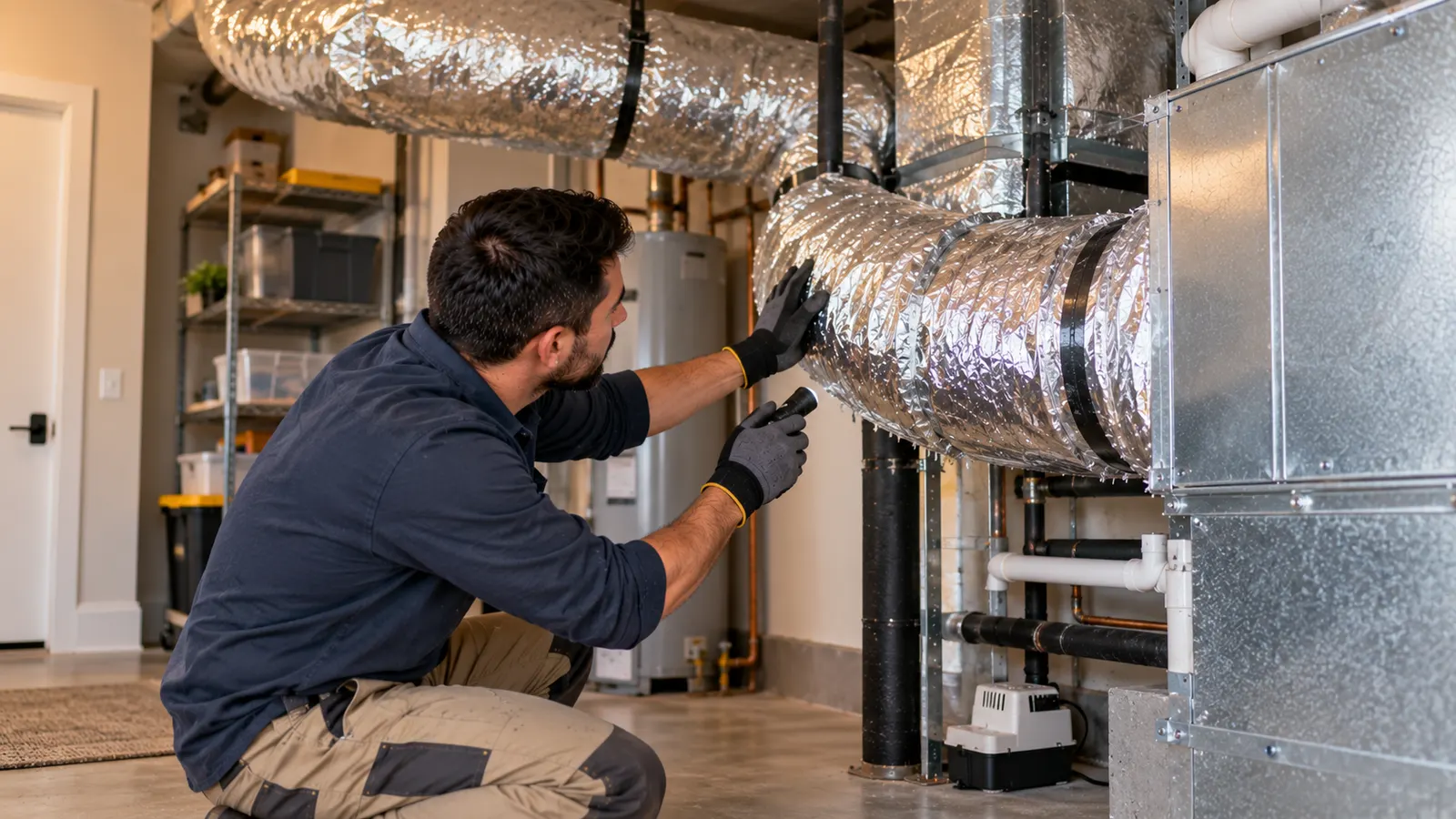
Depending on the home and symptoms, that can involve examining accessible supply and return ductwork, looking for disconnected or damaged sections, checking accessible joints and registers, evaluating the filter, and assessing airflow or pressure where needed.
ENERGY STAR recommends evaluating the whole duct system and supply/return balance when undertaking duct improvements.
Only after that should the recommendation move toward cleaning, repair, both, or another HVAC correction.
Choose the Fix Based on the Cause
If airflow is weak, do not assume “dirty ducts.”
If the home is dusty, do not assume “leaking ducts.”
Start with evidence.
A disconnected duct calls for repair. Significant removable contamination may call for cleaning. A system with both conditions may need both services. And sometimes the cause is elsewhere in the HVAC system.
SoCal Green Air Duct & Chimney can inspect the duct system and help determine whether air duct repair, air duct cleaning, or another next step fits the condition found.
Schedule an Air Duct Inspection →
Frequently Asked Questions
How do I know if my ducts are leaking or just dirty?
Leaks are more likely when you have visible disconnected or damaged ductwork, uneven room comfort, or conditioned air escaping at accessible joints. Cleaning becomes more relevant when there is meaningful debris or contamination inside the ducts. Because symptoms overlap, inspection may be needed.
Do duct leaks reduce airflow?
Yes. If conditioned air escapes through a leak before reaching the intended register, delivered airflow can decrease. The effect depends on the leak’s size, location, and the rest of the duct system.
Should I seal my ducts or clean them?
Seal or repair ducts when the problem is physical leakage, damage, or disconnection. Clean them when inspection shows contamination or debris that warrants removal. Some systems require both.
Can dirty ducts raise my energy bill?
A dirty or restricted system component can affect airflow, but a higher energy bill does not prove the ducts need cleaning. Duct leakage, filters, HVAC condition, weather, thermostat settings, and other factors can also affect energy use.
Can duct cleaning fix weak airflow?
It can help when removable material is genuinely restricting the duct. It will not repair disconnected ducts, crushed sections, blower problems, or poor system design.
Can leaking ducts make one room uncomfortable?
Yes. A leak in the branch serving one room can reduce the conditioned air reaching that space. Other causes are also possible, so the branch and overall airflow should be evaluated.
Can I check for duct leaks myself?
You can look at safely accessible ductwork for obvious disconnections, tears, or crushed sections. Avoid entering unsafe attic or crawlspace areas. Less obvious leakage may require professional testing.
What if I need both duct repair and cleaning?
The underlying source should generally be addressed as part of the plan so contamination or airflow problems do not immediately recur. A professional can determine the appropriate sequence based on the duct system’s condition.
Final Thoughts
Air duct repair and cleaning solve different problems.
Repair keeps air inside the duct path by addressing leaks, damage, disconnections, or other physical defects.
Cleaning removes material from inside the system when there is a valid reason to remove it.
Weak airflow, dust, or uneven comfort can point toward either problem, or something else entirely.
The most useful first step is therefore not choosing a service. It is finding the cause.