Common Attic Ductwork Problems in Los Angeles Homes
Hot rooms, weak airflow, or damaged attic ducts? Learn the common attic ductwork problems in Los Angeles homes, what causes them, and when repairs are needed.
Your air conditioner runs for hours, but the bedroom at the end of the hallway barely cools down. The living room feels comfortable, the thermostat shows the right temperature, and you’ve already replaced the air filter. So why is one part of your house still hot?
The problem could be above your ceiling.
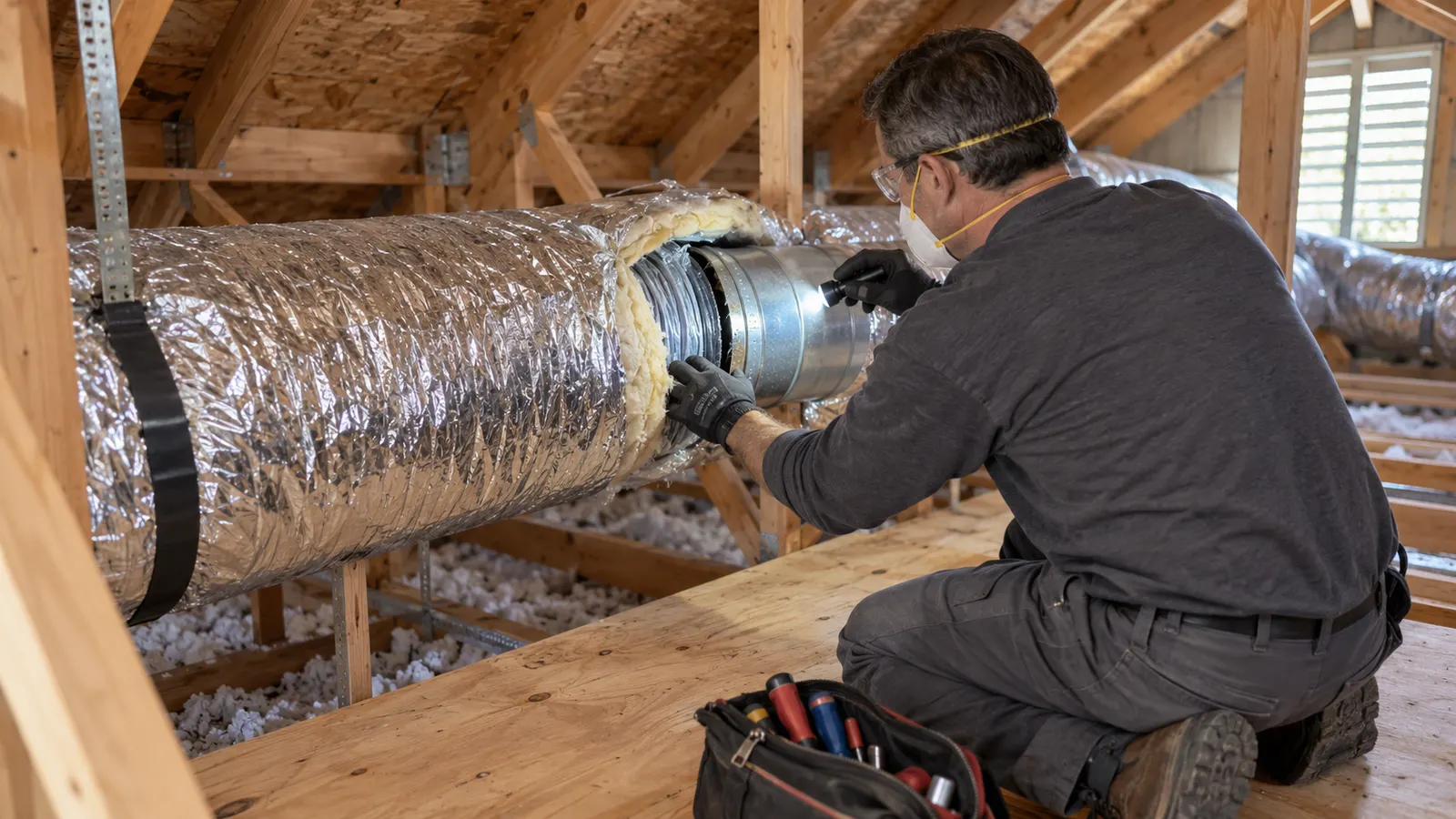
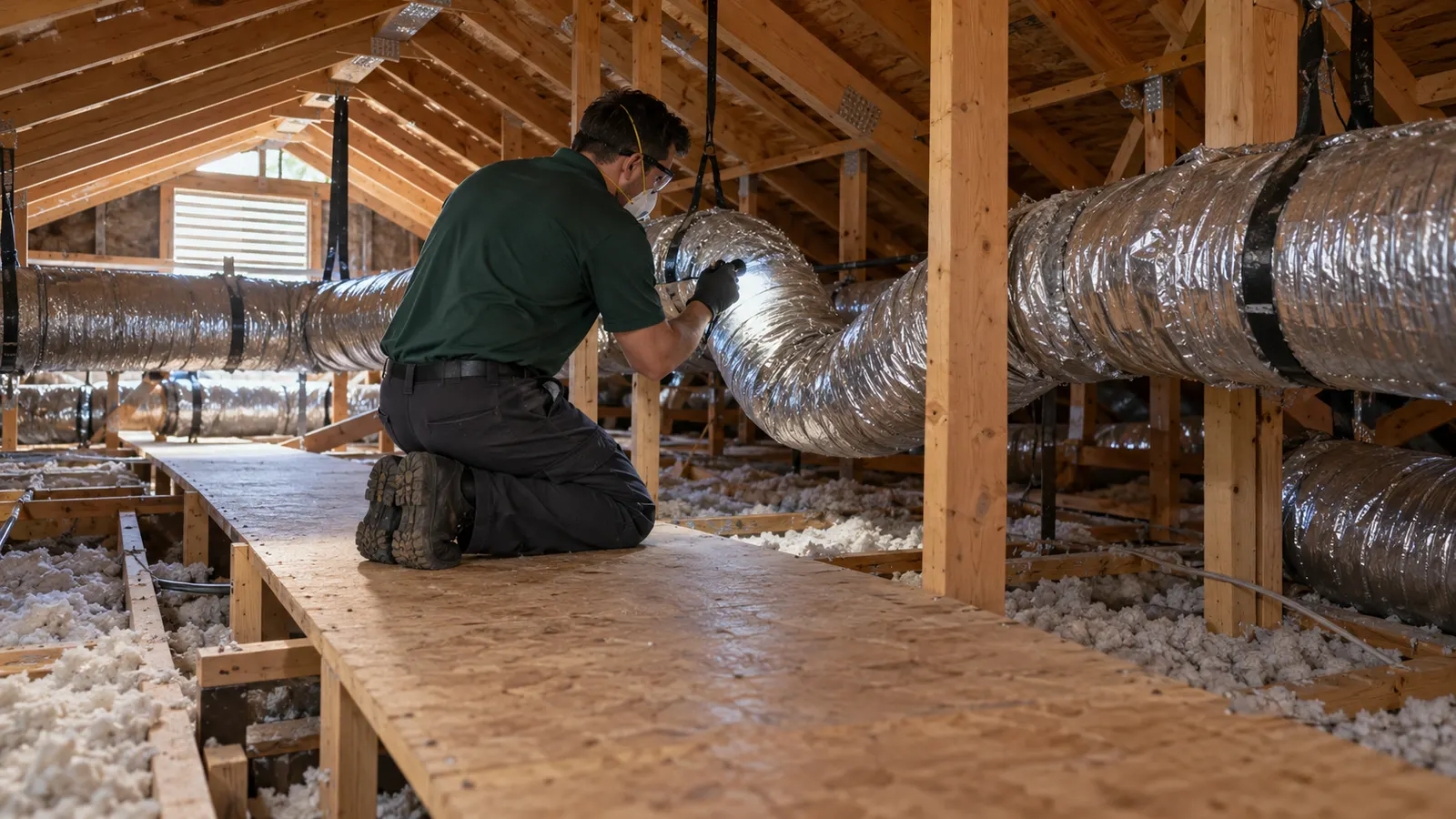
Many Los Angeles homes have air ducts running through the attic, where they carry cooled or heated air from the HVAC system to individual rooms. When those ducts develop leaks, lose insulation, or become crushed, the air reaching your rooms may be reduced or gain heat along the way.
Attic ductwork problems aren’t always visible from inside the house. Understanding what can go wrong helps you recognize when the issue needs more than another thermostat adjustment or air duct cleaning.
What Usually Goes Wrong With Attic Ductwork?
The most common attic ductwork problems include leaking connections, crushed flexible ducts, damaged insulation, disconnected sections, and poorly supported duct runs.
These conditions can allow conditioned air to escape into the attic, restrict airflow, or increase heat transfer before air reaches your living spaces.
A damaged duct doesn’t automatically mean your entire system needs replacement. Some problems can be corrected by sealing connections, restoring support, or replacing an individual section.
The right repair depends on the duct material, location, extent of damage, and condition of the remaining system.
1. Loose Connections That Let Conditioned Air Escape
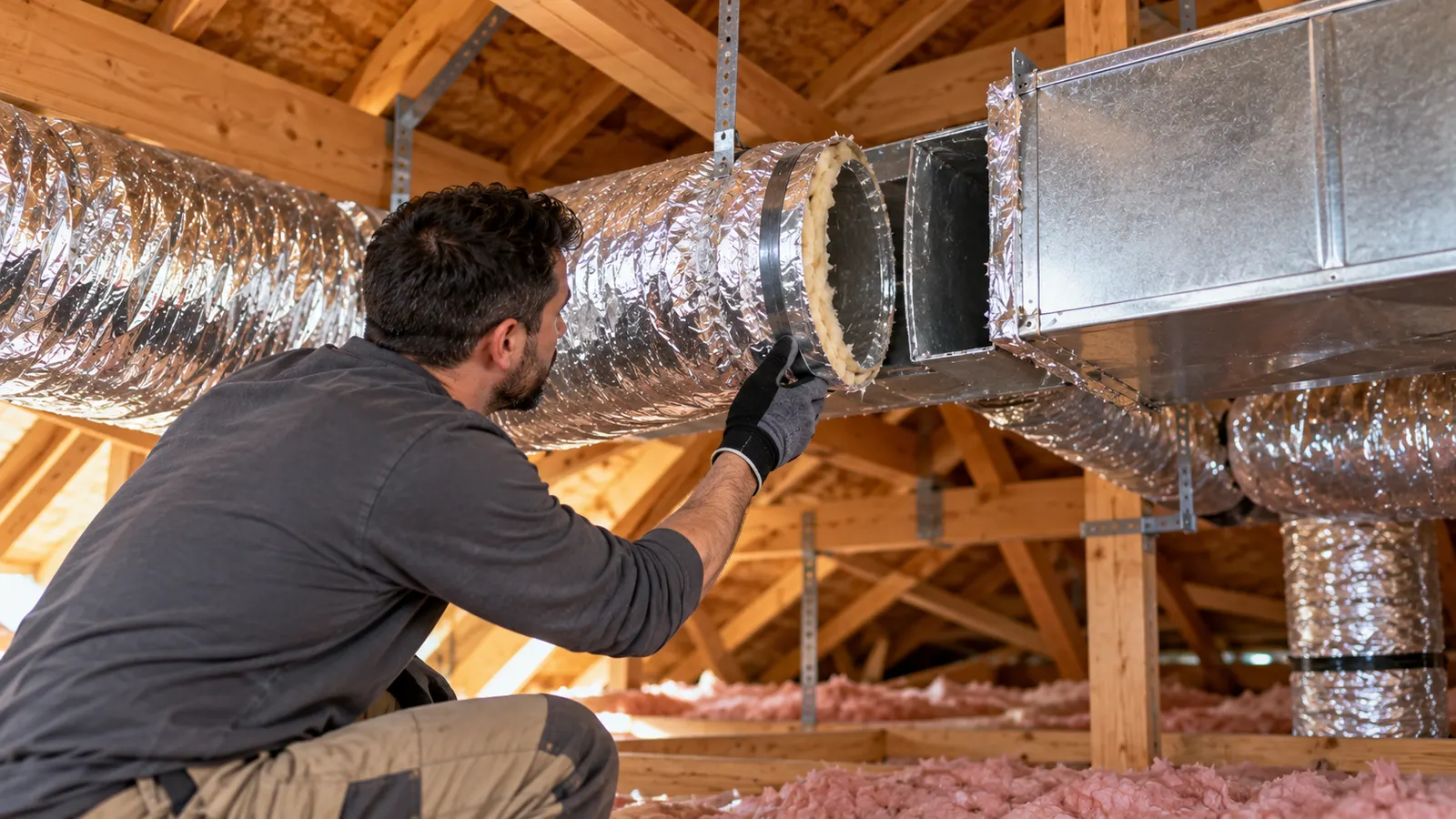
Air ducts are connected through joints, collars, fittings, and branch connections. Over time, some of these connections may loosen or develop gaps.
When a supply duct leaks into the attic, part of the cooled air intended for your bedroom or living room escapes before reaching the vent.
You may notice:
- One room cooling more slowly than others.
- Weak airflow from an otherwise unobstructed register.
- Longer cooling cycles during hot weather.
- Unusual air movement or noise near an accessible duct connection.
A leaking return duct creates a different concern. Depending on its location and operating pressure, it may draw dusty attic air into the return system.
Neither problem can be confirmed from room temperature alone.
A technician can inspect accessible joints and use duct leakage testing when appropriate to identify where air is escaping.
2. Flexible Ducts That Are Crushed or Bent Too Sharply
Flexible ductwork is common in residential attics because it can be routed around framing and other building components.
However, flexible ducts need proper support and gentle bends to maintain their internal opening.
A duct squeezed between framing members or compressed beneath stored items may restrict airflow significantly.
Sharp bends can also create resistance, particularly when the duct’s internal liner is pulled tight around a corner.
Imagine a garden hose with a tight kink. Water can still enter the hose, but much less reaches the other end.
Airflow through a badly kinked duct can behave similarly.
The solution isn’t always replacing the entire duct system. Sometimes the affected run can be repositioned or properly supported. Severely crushed sections may need replacement.
3. Attic Heat Reaching Poorly Insulated Ducts
Los Angeles summers can place substantial thermal demands on attic ductwork.
In a vented attic, the air surrounding the ducts may become much hotter than the conditioned air traveling inside them.
If duct insulation is missing, compressed, torn, or poorly installed, the cooled air can gain heat before reaching the room.
This doesn’t necessarily reduce the volume of air delivered. Instead, it may reduce how effectively that air cools the space.
For example, a bedroom vent may produce noticeable airflow while the room remains uncomfortable because the delivered air is warmer than expected.
Proper duct insulation helps limit this heat transfer.
The U.S. Department of Energy recommends sealing and insulating ducts located in unconditioned spaces, including attics.
4. Disconnected Duct Runs Hidden Above the Ceiling
A completely disconnected duct can cause a dramatic change in room comfort.
If a branch duct separates from its connection, conditioned air may discharge directly into the attic rather than entering the intended room.
Homeowners sometimes discover this after noticing that one vent produces little or no airflow.
A disconnected return duct may also draw air from the attic instead of the intended living space.
These conditions deserve prompt attention because they can affect HVAC performance and, in some situations, indoor air quality.
Repair typically involves restoring the connection with appropriate mechanical fastening and sealing methods.
Simply pushing two duct sections together without securing them is not a durable repair.
5. Sagging Ductwork and Inadequate Support
Flexible ducts should not hang in deep loops or rest in arrangements that distort their shape.
Improper support can cause sagging, compression, and unnecessary airflow resistance.
This sometimes happens when duct runs are installed with too much length or when supporting straps become loose.
A long flexible duct that winds through the attic may also have more resistance than a properly designed, shorter route.
During inspection, the technician should consider whether the duct is adequately supported and whether its routing creates unnecessary restrictions.
Correcting support and routing can sometimes improve airflow without replacing the complete distribution system.
6. Torn Outer Jackets and Exposed Duct Insulation
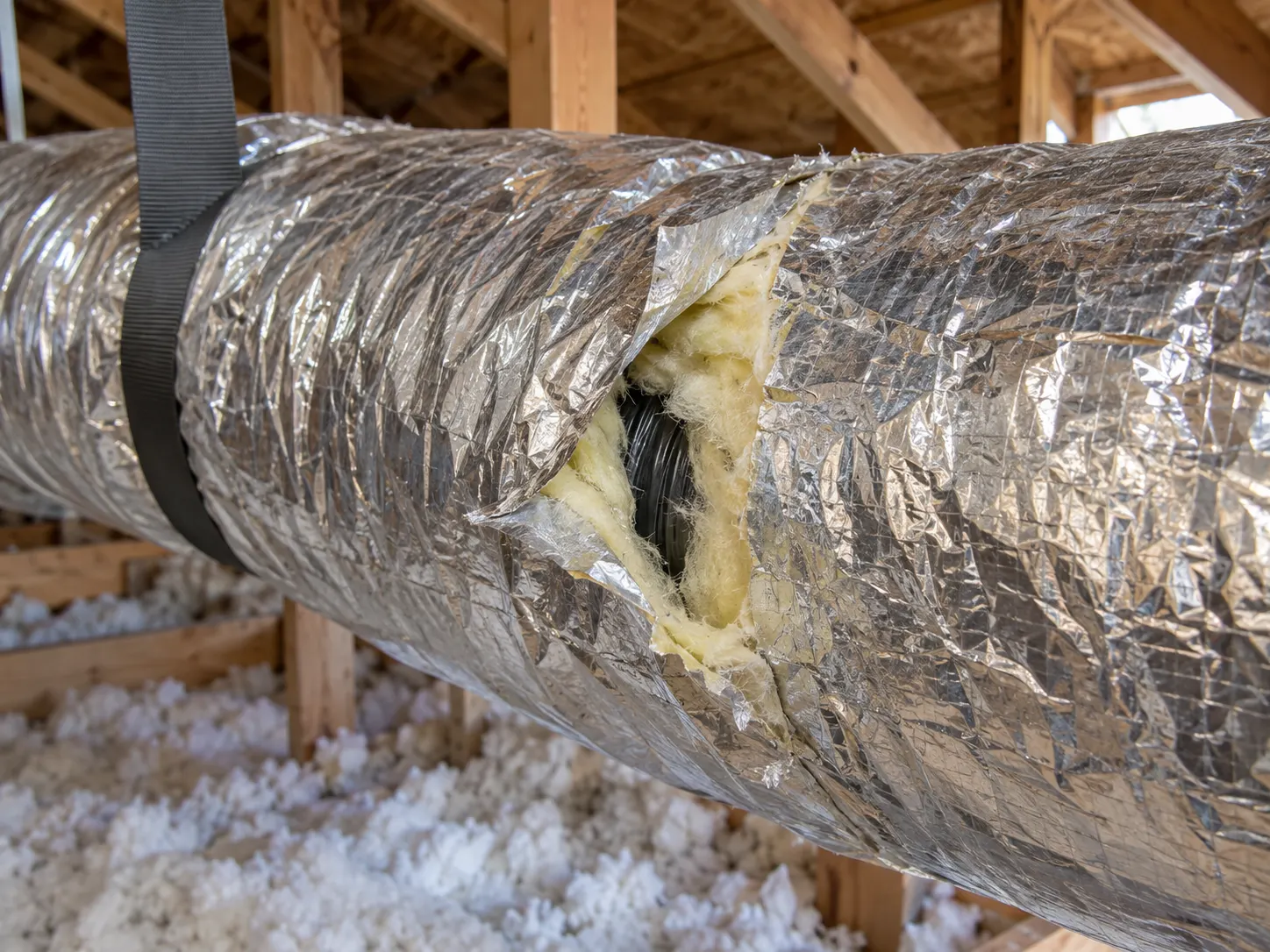
Many flexible ducts have an inner air-carrying liner, surrounding insulation, and an outer protective jacket.
Damage to the outer jacket can expose insulation and reduce protection against moisture or physical disturbance.
However, a torn outer jacket doesn’t always mean the inner air duct is leaking.
The technician needs to determine which layer is damaged.
If only the protective jacket is affected, the appropriate repair may differ from a tear through the inner liner.
This distinction matters because homeowners may otherwise pay for unnecessary replacement.
7. Moisture and Condensation Around Attic Ducts
Moisture around ductwork should never be ignored.
Condensation can develop when humid air contacts a sufficiently cold surface, particularly where insulation or vapor-retarding protection is inadequate.
Water may also come from a roof leak, plumbing problem, or HVAC condensate issue rather than the duct itself.
Possible warning signs include damp insulation, staining, water droplets, or deteriorated surrounding materials.
The source must be identified before repairs begin.
Replacing wet insulation without correcting the moisture problem may allow the damage to return.
If suspected microbial growth is present, avoid disturbing the material and arrange an appropriate professional assessment.
8. Poorly Sized Ducts That Never Delivered Enough Air
Not every attic airflow problem develops because something broke.
Some duct systems were poorly sized or routed when installed.
A branch duct may be too small for the room it serves. A return system may also be undersized, affecting airflow throughout the house.
These problems can become more noticeable after HVAC equipment changes or room additions.
Sealing a duct won’t correct a fundamentally inadequate duct size.
A qualified professional may need to evaluate the system’s airflow requirements, duct dimensions, static pressure, and overall design.
That evaluation helps distinguish installation problems from damage that occurred later.
Why Attic Duct Problems Matter More During Los Angeles Summers
Attic ducts operate in an environment very different from the conditioned rooms below.
During hot weather, an attic can expose duct surfaces to substantial heat gain. If the insulation is inadequate, cooled air can warm while traveling toward the supply registers.
Air leaks create an additional loss because some of the conditioned air never reaches the living space.
Homes in the San Fernando Valley and other warmer inland parts of Los Angeles County may experience particularly demanding summer cooling conditions.
Still, climate alone doesn’t prove that the ductwork is damaged.
A room that won’t cool may also have inadequate insulation, solar heat gain through windows, equipment problems, or an airflow balancing issue.
The correct diagnosis considers those possibilities rather than blaming every hot room on the attic ducts.
Is It a Duct Problem or an Air Conditioner Problem?
Several symptoms overlap, which makes guessing unreliable.
| What you notice | Possible duct issue | Other possible cause |
|---|---|---|
| One bedroom stays hot | Crushed or disconnected branch | Window heat gain or poor room insulation |
| Weak airflow at several vents | Leaks or restrictive duct layout | Dirty filter or blower problem |
| Airflow feels normal but air isn’t cool enough | Insulation damage or heat gain | Cooling equipment issue |
| Dust near supply registers | Duct leakage or dirty components | Household dust or filtration problems |
| High cooling bills | Duct leakage or heat transfer | Thermostat settings, equipment, or building envelope |
A technician should investigate the pattern rather than recommending duct replacement from one symptom.
Can Attic Ductwork Be Repaired Without Replacing Everything?
Often, yes.
A localized leak, loose connection, or damaged flexible duct section may be repairable without replacing the entire system.
Typical corrective work can include:
- Reconnecting and securing detached ducts.
- Sealing appropriate joints with HVAC-rated materials.
- Replacing crushed or torn duct sections.
- Restoring damaged insulation or protective jackets.
- Correcting support straps and excessive bends.
- Evaluating airflow after the work is completed.
Extensive deterioration, widespread installation defects, or significant sizing problems may justify a larger replacement project.
The decision should follow an inspection rather than the age of the home alone.
SoCal Green Air & Chimney offers air duct repair in Los Angeles, including inspection of leaking, disconnected, and damaged ductwork.
Why Air Duct Cleaning Won’t Fix Every Attic Problem
It’s easy to assume weak airflow means the ducts are dirty.
But cleaning and repairing ductwork address different conditions.
Air duct cleaning removes accessible dust and debris from the interior of the system when cleaning is warranted.
It does not reconnect a detached duct, repair a torn inner liner, restore damaged insulation, or correct a severely kinked run.
If the duct structure is damaged, cleaning alone won’t solve the underlying problem.
Likewise, a physically sound duct system doesn’t automatically require cleaning because one room is warmer than another.
Homeowners considering professional air duct cleaning should first determine whether the concern involves contamination, airflow restriction, structural damage, or HVAC equipment performance.
What Should a Professional Attic Duct Inspection Include?
A useful inspection should explain what’s wrong and how the findings relate to the symptoms inside your home.
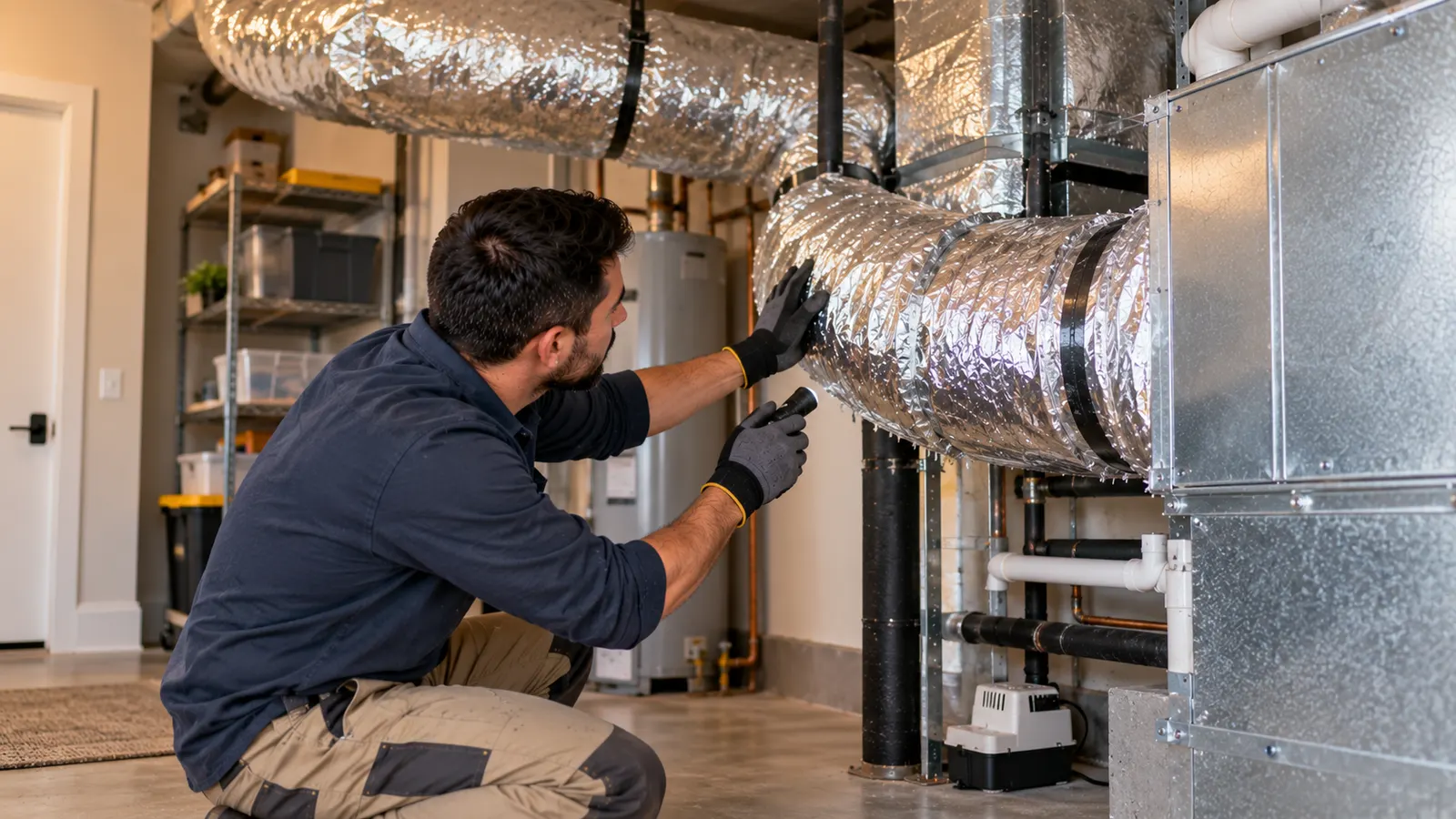
Depending on the system and access conditions, the technician may:
- Inspect accessible supply and return duct runs.
- Check connections for visible separation or leakage.
- Look for crushed, kinked, or unsupported flexible ducts.
- Examine insulation and protective jackets.
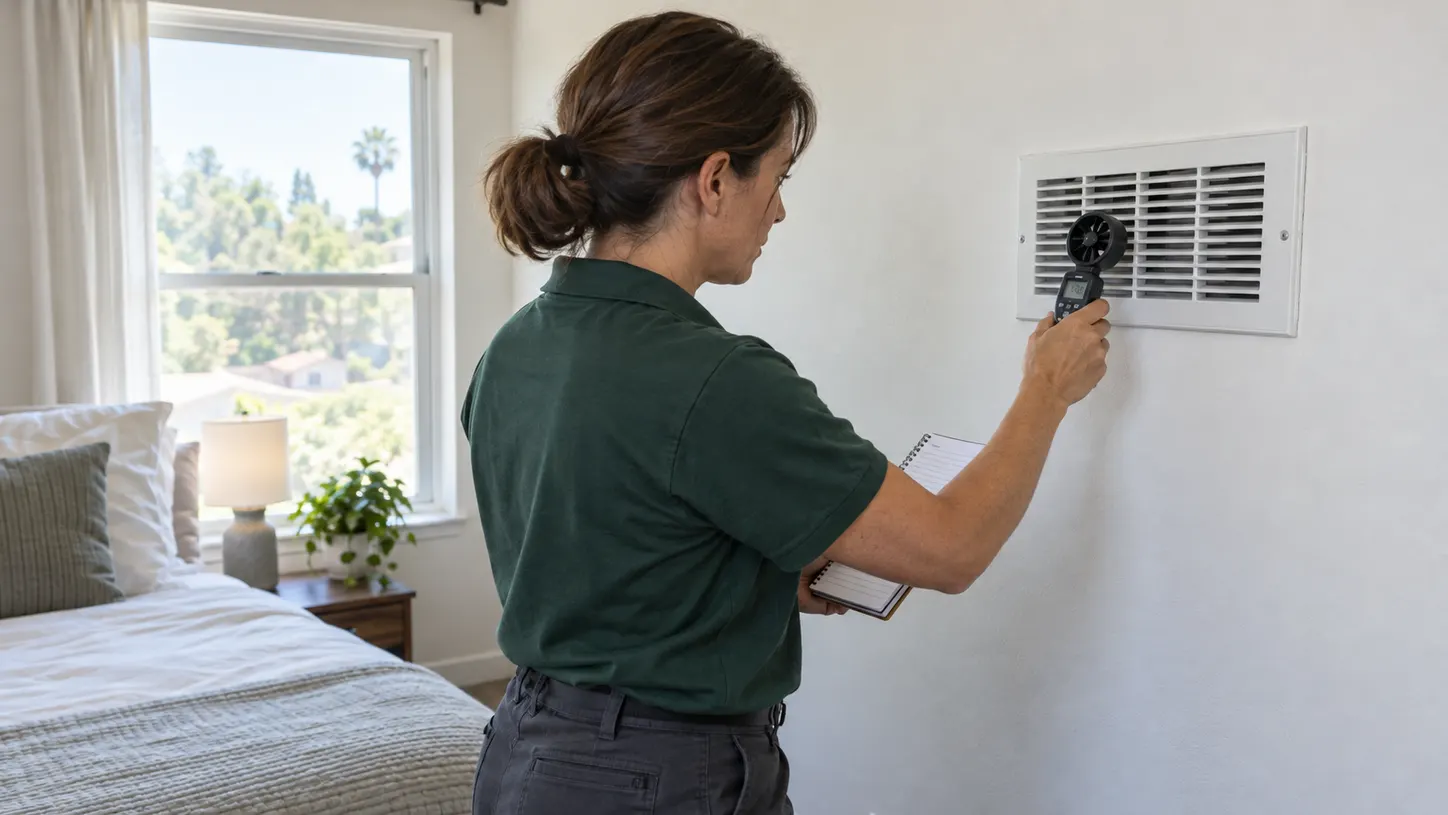
- Evaluate airflow at affected registers.
- Perform duct leakage or pressure testing when appropriate.
- Identify sections that need repair or replacement.
Ask for photographs of damaged areas whenever practical.
A written explanation should distinguish confirmed defects from suspected causes.
If the recommendation involves extensive replacement, request the reasons why smaller repairs would not adequately address the problem.
What Homeowners Should Avoid Doing in the Attic
Attic inspections can involve risks that aren’t obvious from the access opening.
Ceiling drywall between framing members generally isn’t designed to support a person’s weight. Attics may also contain exposed electrical wiring, sharp fasteners, hot equipment, and difficult-to-see obstacles.
Avoid walking through unfamiliar attic spaces or moving ducts without knowing what supports them.
Don’t attempt to seal HVAC ducts with ordinary cloth-backed duct tape. It is not a reliable long-term duct sealing material.
Also avoid compressing duct insulation, blocking attic ventilation, or disturbing suspected contaminated materials.
A qualified technician can assess the ductwork while taking appropriate precautions around building components and HVAC equipment.
When Should You Schedule an Attic Duct Inspection?
Consider an inspection when a comfort problem persists after basic HVAC maintenance or when there’s reason to suspect physical duct damage.
Particularly useful triggers include:
- A room suddenly loses most of its airflow.
- Visible ductwork appears disconnected or crushed.
- Insulation around an accessible duct is wet or damaged.
- Cooling performance changed after attic construction work.
- The system runs normally, but several rooms remain uncomfortable.
An inspection is also reasonable before replacing HVAC equipment if existing duct performance is uncertain.
There’s little benefit in installing new equipment while leaving major duct restrictions or leaks unaddressed.
Frequently Asked Questions
Why is my bedroom hot even when the AC is running?
A leaking, crushed, or poorly insulated attic duct may be involved. Window heat gain, insulation, and HVAC equipment problems can produce similar symptoms, so testing is needed.
Can attic heat damage flexible air ducts?
Prolonged heat exposure can contribute to material deterioration, but damage depends on the duct’s construction, rating, installation, and condition.
Will cleaning my air ducts fix weak airflow?
Not if the restriction comes from a crushed duct, disconnected section, or poor duct design. Those problems require repair or system evaluation.
Can I repair a torn attic duct with regular duct tape?
Regular cloth-backed duct tape is not recommended. Appropriate HVAC-rated sealing materials and repair methods depend on the duct type and damage.
Do all old attic ducts need replacement?
No. Age alone doesn’t determine whether replacement is necessary. Physical condition, leakage, insulation, airflow, and system design are more useful factors.
Get the Cause of Uneven Cooling Checked
When one room stays hot or airflow changes unexpectedly, the problem may be hidden in the attic rather than inside the air conditioner.
Leaking connections, damaged insulation, crushed flexible ducts, and disconnected runs can affect how effectively conditioned air reaches your rooms.
If you suspect damaged attic ductwork, SoCal Green Air & Chimney provides air duct repair services throughout Los Angeles and surrounding communities. Call (888) 280-2285 to discuss the symptoms and request an inspection before deciding whether repair or replacement is necessary.