What is an Indoor Air Quality Test? What Can Results Show You?
Learn what a professional indoor air quality test measures: mold, VOCs, PM2.5, CO and more, plus what the results can and cannot tell you.
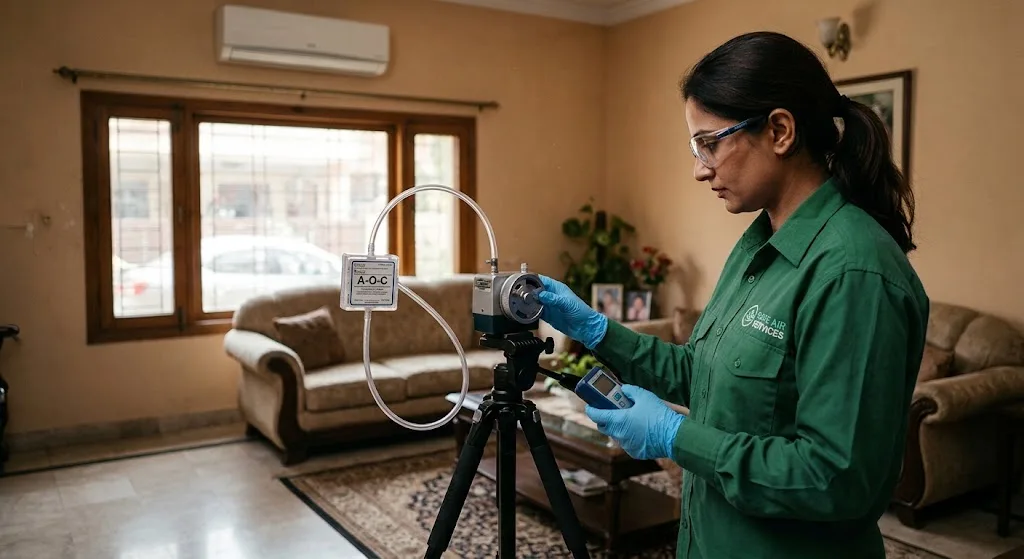
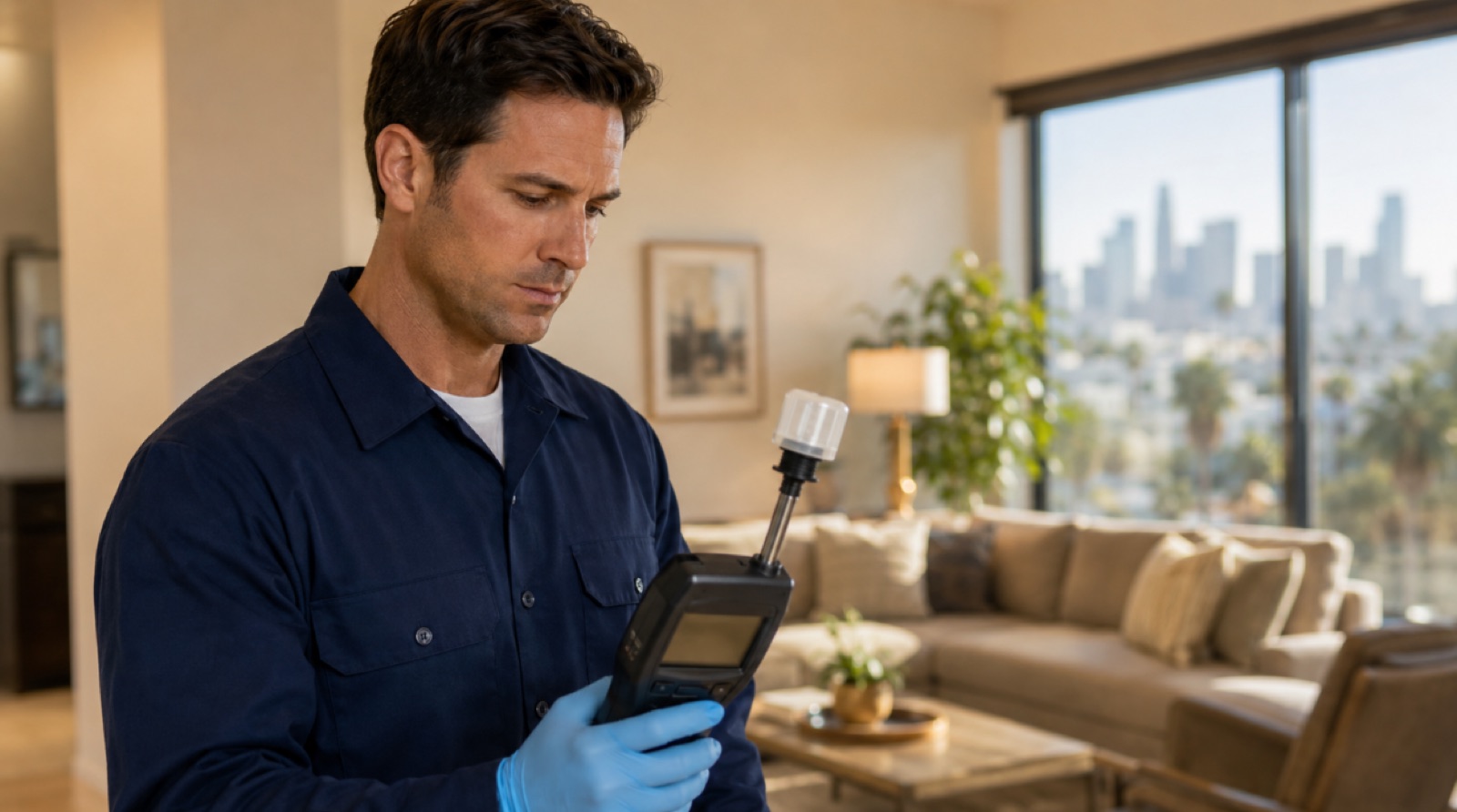
Air quality tests measure pollutants hidden in the air, including mold, VOCs, PM2.5, carbon monoxide, carbon dioxide, and even the humidity in the air you breathe. The test is done by a professional indoor air quality testing company using real lab equipment. A test can show you what’s present in your air, how much of each pollutant is there and where most of the pollutants are coming from. This information will help you address the air quality in your home. A cheap plug-in air quality monitor won’t give you any of this information.
If you have constant odors or you are experiencing allergy symptoms, or you just moved to a new home, then you should look into an indoor air quality test. This guide compares a professional indoor air quality test to a do-it-yourself air quality test. More importantly, it explains the important information and what it might mean to have a certain pollutant present in your home, as well as the raw numbers from the test. We hope you are able to determine if an indoor air quality test makes sense for your home and how to use and interpret the raw numbers.
Why Indoor Air Quality Matters More Than You Think
Indoor air quality is very important and affects us more than we realize. Even though we are often outside, indoor air can have more pollutants than the air we breathe outside. When a house is sealed because of the weather and generates heat and particles from cooking and cleaning and releases VOCs (volatile organic compounds) from the furnishings, this pollutes the air too. Homes in southern California also have to contend with smoke from wildfires and seasonal dust. Because the pollutants are either invisible or have no scent, the only way to determine what you are breathing is to actually measure it.
A test provides a measurement in place of a concern. Rather than having to determine if your cough is from the house or if it’s just the allergies, you can measure it and compare it to the measurements that other people have done.
What a Professional Indoor Air Quality Test Actually Measures
Measurements are done to build a picture of what is in the air your family breathes. You can’t just chase a low number and that is why a complete test measures a variety of things, including:
- Fungal spores: Airborne spores that can be a sign of a moisture, leak, or a humidity problem affecting a surface behind the wall or beneath the floor.
- VOCs: Gas emissions that can cause headaches and irritation from paints, new furnishings, cleaning products, adhesives, and flooring.
- PM2.5: Microscopic particles from cooking, smoke from wildfires, dust, and automobile traffic that are small enough to penetrate deep into the lungs.
- Carbon monoxide (CO): If CO accumulates, the result can be deadly. CO is colorless and odorless. It comes from burning gas and fossil fuels.
- Carbon dioxide (CO2): High levels of CO2 indicate stagnant air and poor airflow.
- Humidity and Moisture: High levels of humidity in a space can encourage mold and dust mites.
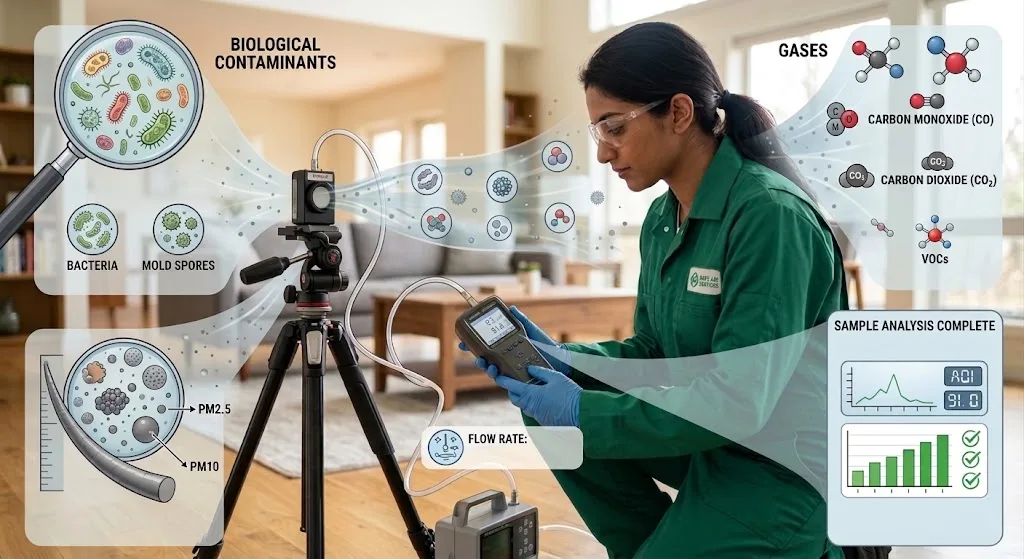
Particulates and mold
Sniffling and sneezing are signs of poor indoor air quality, and air tests can measure the levels of the particulates that are causing allergenic reactions. As air tests measure mold spores, a high level of mold spores indoors compared to outdoors can signal that there is an issue of mold that has to be remediated. It’s important to know that some amount of mold is present everywhere, therefore a high level of mold indoors compared to outdoors must be investigated.
Gases: VOCs, CO and CO2
Gases are pollutants which are invisible and odorless until they reach hazardous levels. Dedicated sensors and sampling are used in some tests. CO is considered a type of pollutant for which the test result is safety-critical. As indicated by the U.S. Consumer Product Safety Commission (CPSC), CO is the leading cause of deaths by poisoning in homes. Because of that, it is important to have a working CO alarm in addition to doing a test at least once. Although less dangerous CO2 and VOCs indicate issues which are worth solving regarding the ventilation and materials in your home.
How Professional Testing Differs From DIY Monitors
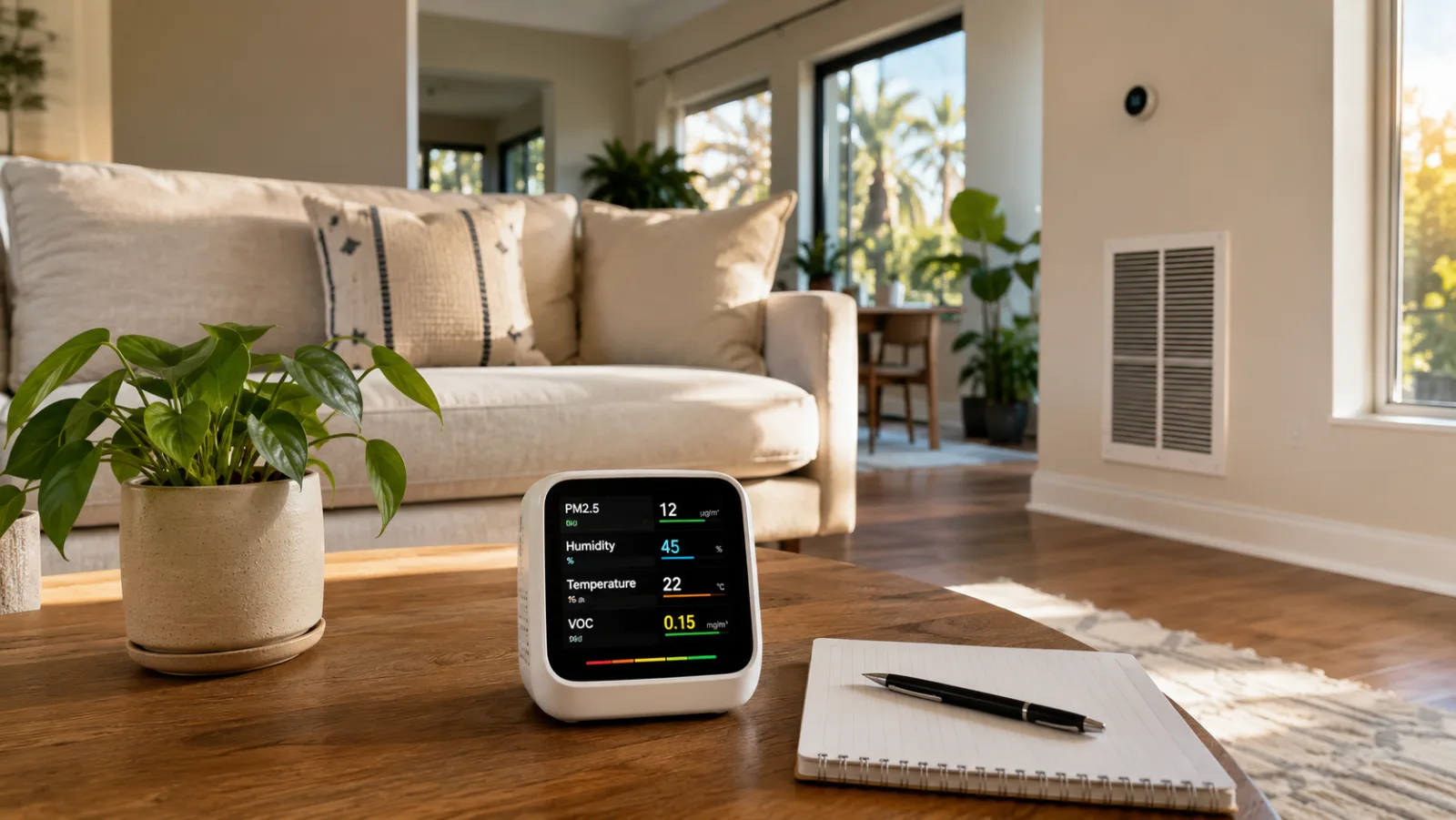
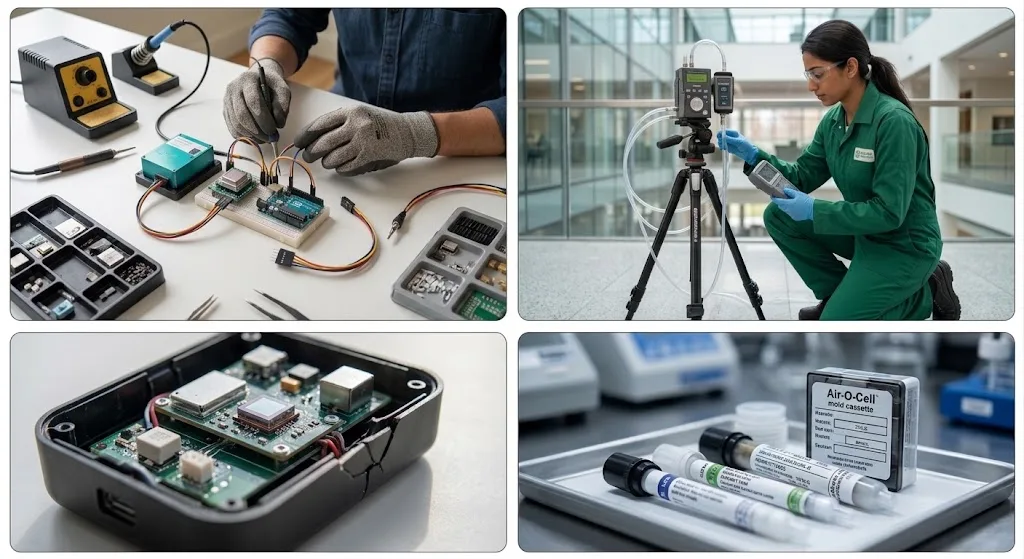
Although a $40 plug-in monitor can function as an early warning device, it is not the same as a professional test. The difference is calibration, range and interpretation.
Professional IAQ Test
- Lab-grade, calibrated sampling
- Detection: Mold spores, VOCs, PM2.5, CO, and CO2
- Identifies potential causes
- Evidence you can act on
- Suggests a course of action
DIY Consumer Monitor
- Low cost, uncalibrated sensors
- Generally only PM2.5, CO2 or a single gas
- Tells you a number, not a cause
- Live readings which drift over time
- No analysis and no guidance
The short version: a DIY monitor tells you “is a number high right now?” A professional test tells you “what is wrong, how bad is it, and what do I do about it?” Consumer sensors also drift over time and can be fooled easily by nearby candles or open windows which can create false alarms or false comfort.
AI Image Prompt: Split editorial concept showing a small consumer plug-in air monitor on one side and professional testing equipment with a laptop report on the other, clean studio lighting, photorealistic, no readable text, no watermark.
What Your Results Can Tell You
Well done tests can provide relief from anxiety. A good report should be able to provide the following:
- a) Confirmation if a pollutant of interest is above the background levels of outdoor and indoor air.
- b) Identify potential sources of a pollutant (for example, deposition of VOCs from new furniture or from the bathroom or laundry mold).
- c) Assess the effectiveness of the ventilation system by measuring the CO2 concentration and room humidity.
- d) Provide a baseline so the course of action that was previously taken to resolve the air quality issue can be evaluated.
- e) Confirm if the air quality has improved from taking corrective or preventive measures.
What Testing Cannot Tell You
Being truthful about the limits of technology is also part of the professional ethos. A single test has its limitations:
- a) A test cannot provide a diagnosis of a medical condition, nor can it substitute a consultation with a physician.
- It often misses intermittent problems. Volatile organic compounds that are only present during cooking, or even after a particular activity, might not show up in one sample.
- A number by itself doesn’t give you much information.You should also consider the season, activity, and outdoor conditions as you interpret results.
- There’s nothing else like a CO alarm. A CO monitor can’t replace a CO alarm.
That’s why we stress testing is a starting point, never an endpoint. Testing helps you determine problems and can help you direct fixes. You should never be guessing and wasting money.
When Is An IAQ Test Worth It?
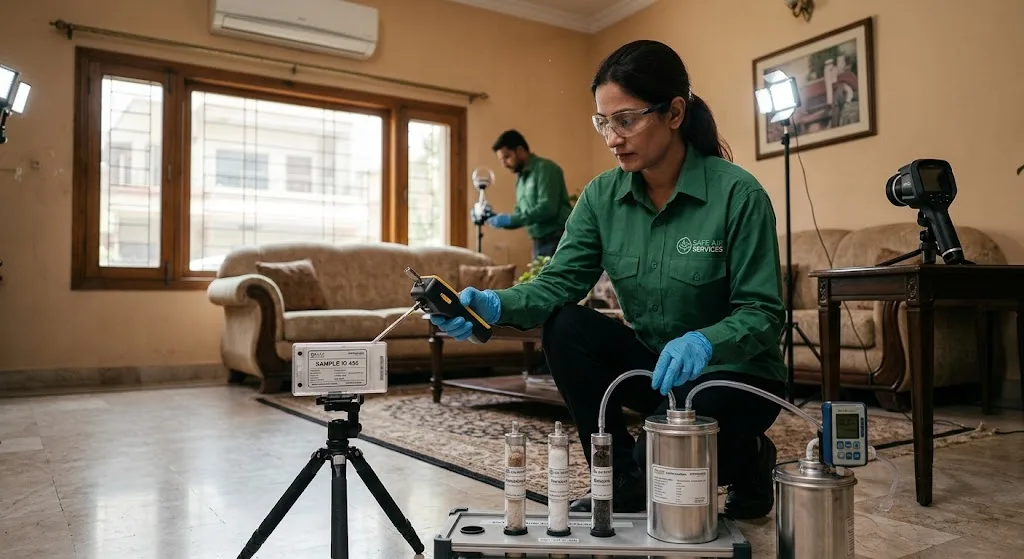
You don’t necessarily need to have one done every year. While the cost of a test might seem high, it can be justified in the following instances.
- You have persistent allergy or respiratory symptoms that you think may be related to your indoor air quality when you are at home.
- You have a musty smell or visible mold you want to confirm, and locate.
- You have recently been affected by wildfire smoke.
- You just moved into a new (or newly remodeled) home.
- You have a fuel-burning appliance you are worried about and are missing a CO alarm.
- You have an unpleasant odor or dust that keeps coming back even after cleaning.
None of these apply and your home feels good and fresh? Then testing is probably irrelevant. Conversely, if one or more of the above apply, testing is a good idea in order to help stop the cycle of speculation.
What to Expect After You Receive Your Results
Results only matter if they change something. At a high level, if the evaluation reveals that there is:
- A source that needs to be eliminated, this could mean that mold is. If that is the case, moisture needs to be removed as well as the off-gassing material that can be replaced.
- An issue that can be fixed by using our air circulation system. This could mean that there is a high level of CO2 or VOCs in the air.
- A potential solution that can include the use of better air filters or a whole-house air purification system to remove pollen and other allergens.
- It could mean that there is a mold issue and that the ducts and the HVAC system needs to be cleaned.
A trusted service will explain to you which of these situations applies to you rather than selling everything as a potential service.
Get the Answers Regarding Your Home
If you are speculating on the air inside your home, testing brings fact-based answers to your speculation. Our team provides indoor air quality testing to Los Angeles and the San Fernando Valley. We also provide additional information on the report itself and the next steps that are needed. If you do not know whether to get a test or a monitor, our how to test IAQ at home guide will help. Homeowners living close to LA will also find our LA homeowners IAQ testing guide helpful for the local context.
Have specific concerns about smoke? Check out our resources on wildfire smoke inside. To resolve contaminated ducts or weak airflow issues, we offer duct cleaning and ventilation system upgrades. We’ll set an appointment when you’re ready to get a trustworthy, baseline evaluation done by a professional.
FAQs
1. What does an indoor air quality test assess?
Professional testing of indoor air quality assesses levels of mold spores, Volatile Organic Compounds (VOCs), PM2.5, CO, CO2 and humidity, all of which impact the comfort, odor and health of occupants of a home.
2. Is a professional indoor air quality test better than a DIY air quality monitor?
For sure. A DIY air quality monitor measures air quality in real time using low-cost sensors. A professional air quality test uses calibrated equipment to measure a broader range of pollutants and may actually identify the issues.
3. What are the limitations of an air quality test?
It may not reveal all potentially unhealthy pollutants and does not test your health.
4. When should I consider air quality testing at my home?
Testing your home air is recommended with persistent or new health symptoms, new home odors, after a wildfire, or when you move into a home that was recently built or underwent a significant renovation.
5. Does an IAQ test check for mold?
Yes. This test takes samples of air and compares those samples to outdoor mold spore levels. It identifies mold in indoor air that may not be noticeable to the untrained eye.
6. How long does a professional air quality test take?
Home air tests usually take between an hour and an hour and a half, though it can be longer, depending on sample count and size of the home.
7. What should I do if my results come back high?
Focus on eliminating the source. This can be done by sealing leaks, removing off-gassing materials, and increasing ventilation. After that, consider adding air filters, and get your ducts cleaned. Lastly, you can do a follow up test to see if you were successful.