
Two Dryer Cycles Required to Dry Clothes? Check if Restricted Vent Is Limiting Airflow
Dryer needs two cycles to dry? A restricted vent is the likely cause. Learn the signs, risks and fixes from SoCal Green

If it takes you two cycles to dry your clothes and you’ve ruled out that the dryer is slow, restricted airflow through the vent is the likely cause. If the clothes come out damp after a full dryer cycle, hot and moist air is trapped in the cavity of the dryer and is unable to escape quickly. The air is contained due to a blocked dryer vent, and the good news is that it can be corrected without any replacement of any of the appliances.
A dryer pumps hot, wet air out of the machine (through the laundry) and needs an outlet for that air. An outlet for the air is a duct that leads outside of the house. Block the duct, and the dryer will keep cycling the damp air. A duct that is blocked by too much lint, a collapsed hose, or even a long, winding duct can increase the cycle time of the dryer and increase the cost of your energy bill, leave the clothes still damp, and create a fire hazard. This is how you can determine what is causing the dryer to stop working and the solutions to that problem.
The Most Common Cause: Restricted Airflow
A dryer that takes two cycles to dry clothes in the front load/top load laundry machines causes homeowners to believe the dryer needs to be replaced. We find that, more often than not, the dryer works perfectly and the vent needs to be cleared to work properly.
I’ll show you how it works. A dryer removes moisture from clothes. When moisture evaporates, it leaves the dryer with warm, moist air. This air has to travel the length of the vent and exits through the exterior hood. Restrictions anywhere along that path slow airflow, and the dryer spends more time fighting trapped moisture, which causes the clothes to come out still damp. Replacing the dryer won’t help, because it’s not a broken dryer; it’s a suffocated dryer.
So, before you go and buy a new dryer, check the airflow. Here’s a quick test you can do yourself: put the dryer on and go outside. Then, hold your hand near the exterior vent hood. You should feel a nice, steady, strong and warm gust of air. If the flow is weak, intermittent, or non-existent, air isn’t leaving the way it should, and that restriction is probably why you dryer is taking longer and longer.
How a Restricted Dryer Vent Happens
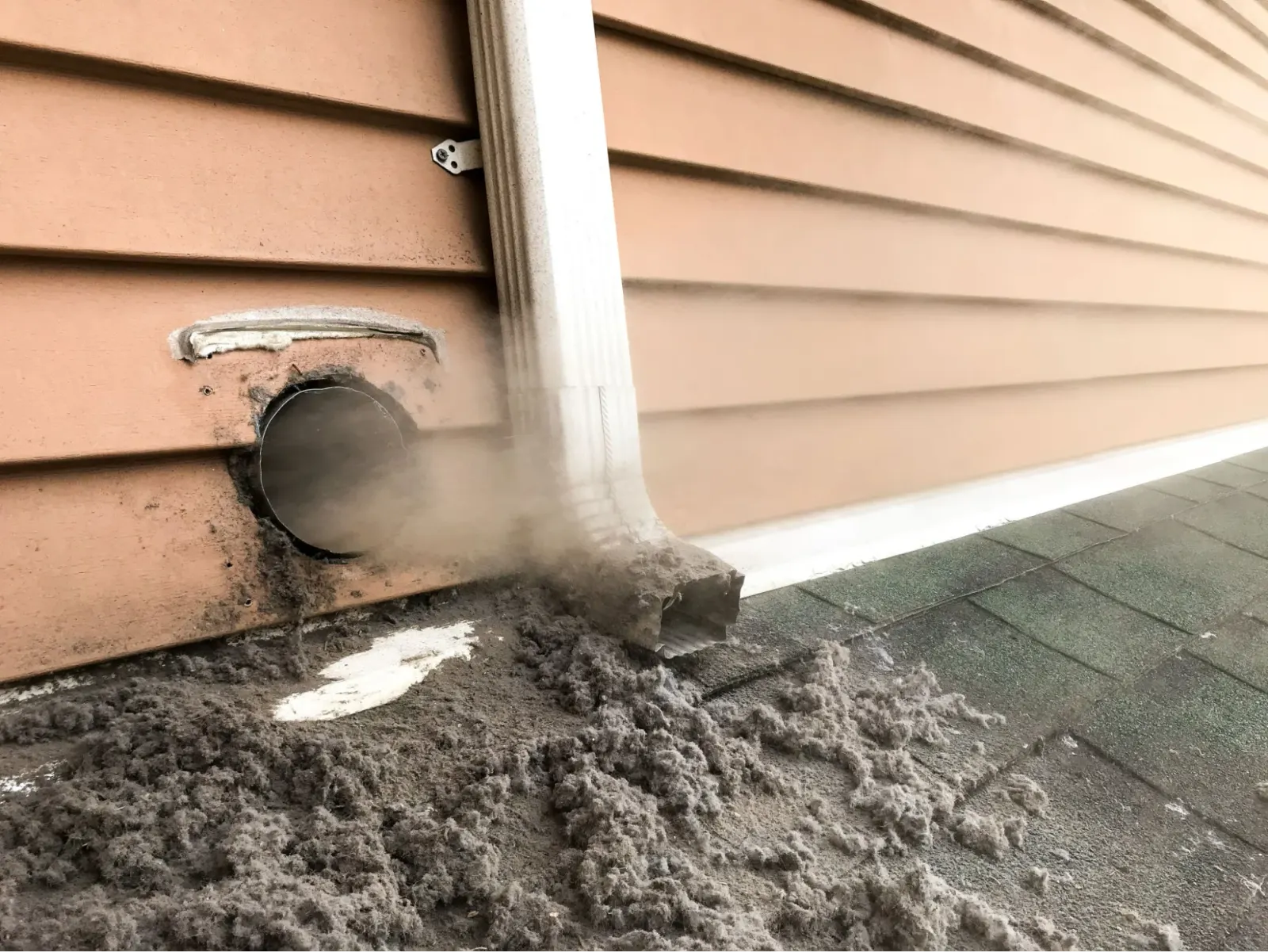
Restricted airflow may be the result of many factors that build up slowly and gradually over time. Some of these factors include buildup in the lint trap, obstructions in the lint trap, (unplugged) blockages in the vent, or twists and kinks in the vent. Figuring out what the cause of the obstruction is will give you an idea of how serious the issue is.
Lint and Blockage
Lint traps can leave lint buildup behind. The lint that passes through rests on the duct walls, especially on bends and joints. This event occurs after the washing machine is used many times. The buildup of lint narrows the duct, and it obstructs the flow of air. Additionally, lint can get stuck behind flaps on the exterior vent hood that are either stuck or sticky. The vent hood can also have a bird’s nest or debris inside. All of these things create a worst-case scenario obstruction, and a dryer vent blockage removal is designed to clear these obstructions. This is the most frequent reason for dryers not drying completely.
Hose and Vent-Run Issues
The route of the air can be important, as well as what obstructs the air. An air passage can be choked even by clean vents, due to poor routing.
The transition hose is a flexible hose that connects the back of the dryer to the wall duct. If a dryer is pushed too far against the wall, the transition hose gets crushed. A transition hose that is crushed or kinked can restrict airflow. If you have recently moved the dryer, this is the first obstruction that should be checked.
Vent runs that are longer and have multiple twists and turns require more ductwork and therefore create more surface area for lint to collect on and slow the movement of airflow. More turns mean the ducts need more frequent cleanings. Longer runs that are more direct mean fewer surfaces for lint to collect on; therefore, less frequent cleanings are necessary.
Sagging flexible ductwork, the ribbed foil of plastic hose, may look more cost-effective and provide ease of installation, but sagging ductwork traps lint. Vent ducts are designed to move air and reduce lint collection. Rigid metal ducts provide the required performance.
Longer runs, relocation of the laundry area, changes to the layout of the room and longer hoses create a clear case of routing issues.
Other Issues of a Restricted Vent
Slow dry time is the most recognized symptom of a blocked vent, but restricted vents rarely appear on their own.
If you see one of the following symptoms, you may have a restricted vent.
More Hot or Humid Laundry Room
If the laundry room has an uncomfortable or stuffy feeling accompanied by an increase in room temperature, air that should be exiting the home is instead creating a humid and stuffy environment. Please see our article on a hot and humid laundry room for more information on this issue.
Burning or Musty Odor
This smell is often accompanied by a dry, dusty or even hot odor. As ducts that have not been properly cleaned collect lint and become blocked, a burned, irritated odor is emitted. This odor is usually indicative of a buildup of heat where it shouldn’t be.
The clothes or dryer are too hot to touch..
With nowhere to escape, heat gets stuck in the drum. When the dryer cabinet or clothes are too hot to touch, there could be heat trapped in the dryer.
There is barely any movement on the vent flap outside.
No movement on the exterior hood while the dryer is running is a sure sign of restricted airflow.
Lint showing up on the dryer or your clothes
Lint showing up on the dryer or your clothes is another sign of a blocked vent. When the vent can’t do its job, lint builds up and clings to the machine and the laundry.
If you notice any of these signs, they should be investigated. If you notice several of these signs, they should be addressed immediately.
Why This is a Fire Safety Issue
Lint may be flammable, but when it builds up in a restricted vent, the dryer heat has nowhere to go. That’s when an ordinary slow-drying dryer becomes a real fire hazard. The dryer gets hotter and hotter, and the surroundings are made of the most flammable materials.
This is not a unique issue. According to the U.S. Fire Administration, dryers cause thousands of home fires each year, and the main cause is lack of cleaning. It’s a dryer vent problem, and an extra-long dry cycle is not an inconvenience or a cost to add to your power bill. That extra dry time is a signal to check the vent. Airflow with a clean vent will mean faster drying with less work (and risk) on the dryer.
Checks vs. Cleanings
There are things that you can do and others that you shouldn’t attempt. Here’s the honest breakdown.
Things to do yourself:
- Empty the lint trap after every single load. It’s easy and makes the most impact.
- Pull your dryer away from the wall and check the transition hose.
- Go outside and confirm the flap on your exterior vent hood opens and that there is airflow when your dryer is in use.
- Vacuum behind and around your dryer so loose lint isn’t collecting there.
Things to avoid:
- Hiring any professional company that clears deep built-up lint from the ducts is risky.
- Anyone who says they can remove a nest or a blockage should be avoided.
- Diagnosing and addressing inefficiently long and poorly routed dryer vent construction or construction using inferior materials.
DIY checks address approximately 20% of the causes of slow drying. The real culprits behind most two-cycle issues are beyond what you can access with a vacuum or brush and are lodged deep within the duct. That’s the part that requires professional dryer vent cleaning. The tools employed in the cleaning extend the full length of the vent run.
How Professional Dryer Vent Cleaning Fixes It
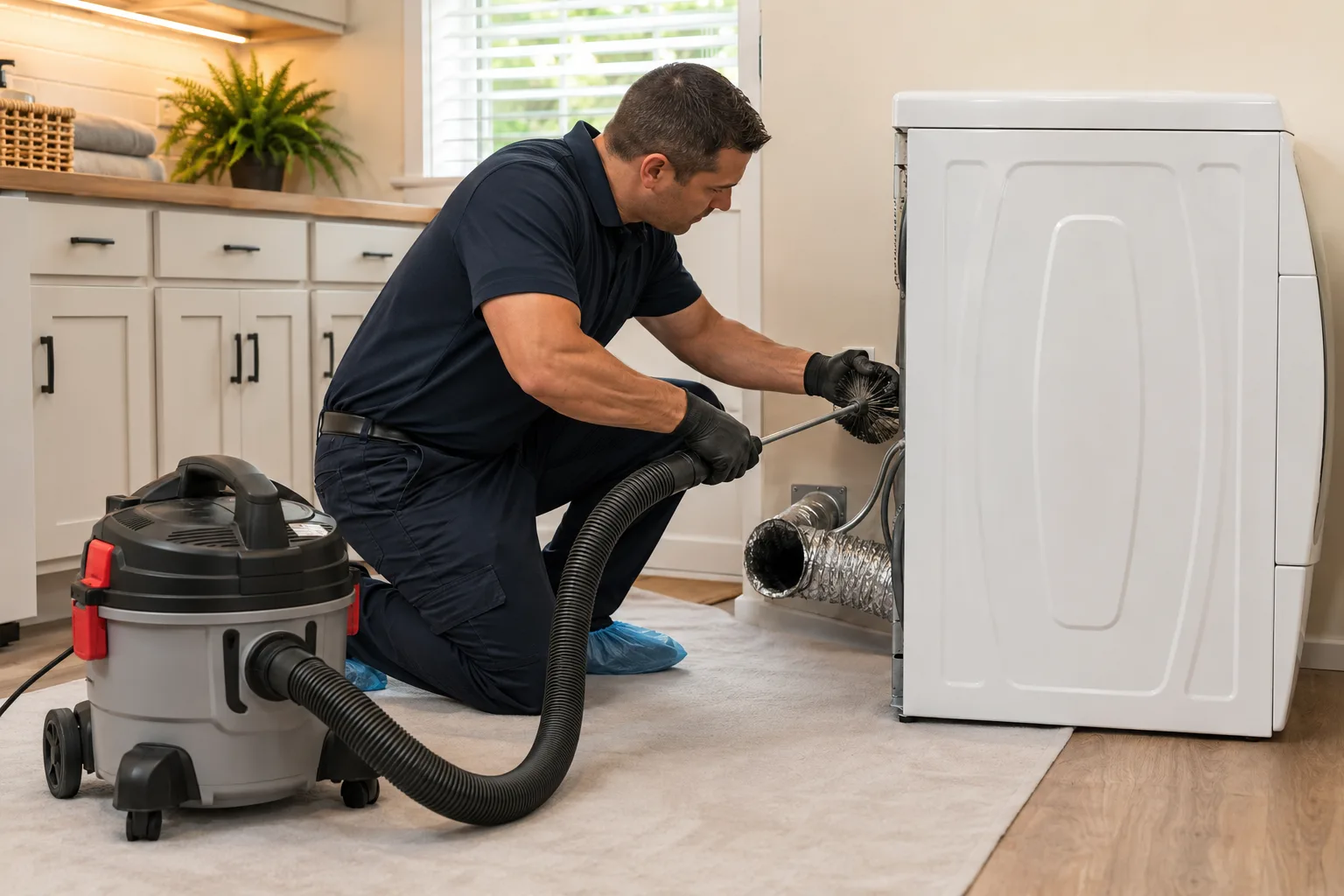
A professional cleaning of the vent from the connection on the dryer to the exterior hood is performed. The dryer technician inserts a brush in combination with a high-powered vacuum cleaner through the entire length of the duct. This brush loosens and vacuums off the lint that is beyond the capacity of a regular vacuum and lint trap. The technician checks the transition hose, the exterior hood and flaps, the routing and confirms the exit has good airflow.
You get a dryer that needs one cycle to dry a normal load, runs cooler, draws less energy, and is much less of a fire hazard. For most SoCal residences, clearing the vents once a year is sufficient, especially for larger households, households that own pets, or households with long and complicated vent runs. Our guide determines the correct cleaning frequency, and if you are looking into the price of a dryer vent, we identify all of the factors so you know what you are getting into with no surprises.
For the residents of Los Angeles and the surrounding communities of the San Fernando Valley (Tarzana, Calabasas, Glendale), Santa Clarita Valley, Simi Valley, and anywhere in between, the SoCal Green Air Duct & Chimney team can inspect your vent, clear limitations to airflow, and bring airflow back to the way it was. Schedule a dryer vent cleaning, and stop wasting time by running loads twice.

Frequently Asked Questions
Why does my dryer take two cycles to dry my clothes?
Usually, this is due to inadequate airflow in the vent. A buildup of lint, a crushed transition hose or a long and twisted vent path causes the dryer to trap humid air, resulting in damp clothes that require a second cycle. Typically, cleaning the vent restores drying to a single cycle.
Can a clogged dryer vent make drying take longer?
Yes, it can. A clogged vent For a dryer, airflow is essential for moisture to escape, and a clogged vent drastically affects the length of time it takes to dry.
Is a blocked dryer vent a fire hazard?
It can definitely be a safety concern. Lint does catch fire and with an obstructed vent, retained heat and lint will be in contact. The US Fire Administration reports that failure to clean dryers most often results in a fire, making it not just an efficiency concern to clear a dryer vent.
How do I know if my dryer vent is blocked?
Some indicators include:
- damp and hot clothes that take two cycles,
- a laundry room that is damp and hot,
- a smell of burning or mustiness,
- heat on the dryer cabinet,
- weak airflow at the exterior vent,
- and lint accumulation on the dryer.
How frequently should a dryer vent be cleaned?
Most homes need this done once a year. A common sign of needing this done is slow drying. Large families, homes with pets, and homes with long vent runs are several examples of homes that probably need to clean their vents much more than once a year.
Does cleaning the dryer vent help my energy bill?
It generally does. If there is a blockage, the dryer is unable to run a single load efficiently and needs to run a second load. The vent needs to be cleared in order for the dryer to run efficiently with less energy being used.
Can a blocked dryer vent ruin my dryer?
It can. A blocked vent causes the dryer to heat and run longer, stressing or breaking the heating element. The best way to ensure the dryer runs longer is by maintaining the vent.
SoCal Green Air Duct & Chimney services the San Fernando Valley and Los Angeles by providing dryer vent cleaning, repairing, and removing cleanout vent blockages. This article is meant to provide general suggestions, and it is recommended to have a technician on site to evaluate your situation.