How to Test Indoor Air Quality at Home: DIY Steps vs. Professional Testing
How to test your home's air quality: visual checks, DIY monitors, mold kits, and when to call a pro. A plain-English guide for Los Angeles homes.
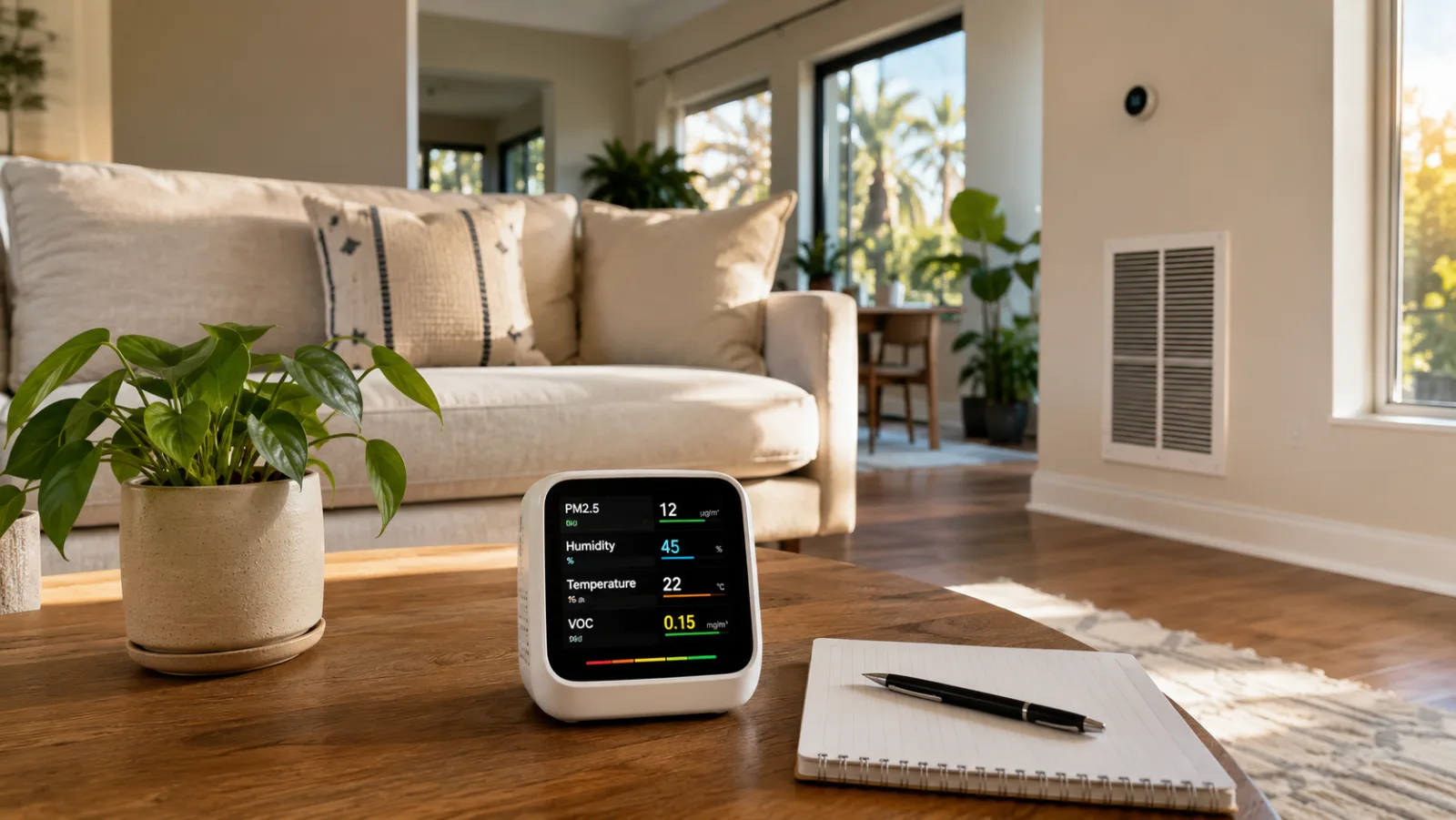
You can test your home’s air quality in two ways: do it yourself, or hire a professional. DIY tools like air quality monitors and test kits give you quick, low-cost readings on things like dust, humidity, and some gases. Professional testing uses calibrated equipment and lab analysis to find hidden problems like mold and chemicals with far more accuracy. This guide walks you through both approaches: the steps, what each method finds, and when to call a pro.
Understanding Indoor Air Quality Testing: What Are You Measuring?
Indoor air quality testing measures the pollutants floating in the air inside your home. These pollutants fall into three main groups: chemicals, biological growth, and particles. Knowing which group you’re worried about tells you which test to use.
Chemical Pollutants (VOCs & Formaldehyde)
VOCs are chemical gases released into your air by everyday products. VOC stands for “volatile organic compounds.” Common sources include fresh paint, cleaning sprays, new furniture, glues, and new flooring. You often smell them as that “new” or chemical smell in a room.
Formaldehyde is one of the most common VOCs in homes. It comes from pressed-wood furniture, cabinets, and some fabrics. High levels can irritate your eyes, nose, and throat. VOCs matter most in newer or recently remodeled homes, where fresh materials release the most gas.
Biological Contaminants (Mold Spores & Microbials)
Biological contaminants are living things that grow and float in your air. The big one is mold. Mold releases tiny spores that spread through the air and settle on damp surfaces. Other biological pollutants include bacteria, dust mites, and pollen.
Mold needs moisture to grow. So a leaky roof, a damp basement, or a humid bathroom feeds it. If mold is growing inside your air system, it spreads through every room. Our guide on how to remove mold from your air ducts explains how that happens and how to stop it.
Particulate Matter (PM2.5 & Dust)
Particulate matter is the tiny solid particles floating in your air. PM2.5 means particles smaller than 2.5 microns, about 30 times thinner than a human hair. These come from smoke, cooking, dust, and pet dander.
Small particles are the most harmful. Because PM2.5 is so tiny, it slips deep into your lungs and even your blood. Larger dust settles on your furniture, but the fine particles stay in the air you breathe. Dirty ductwork adds to the load, which is why a professional air duct cleaning helps lower the particles in your home.
How to Test Indoor Air Quality in Your Home (Step-by-Step)
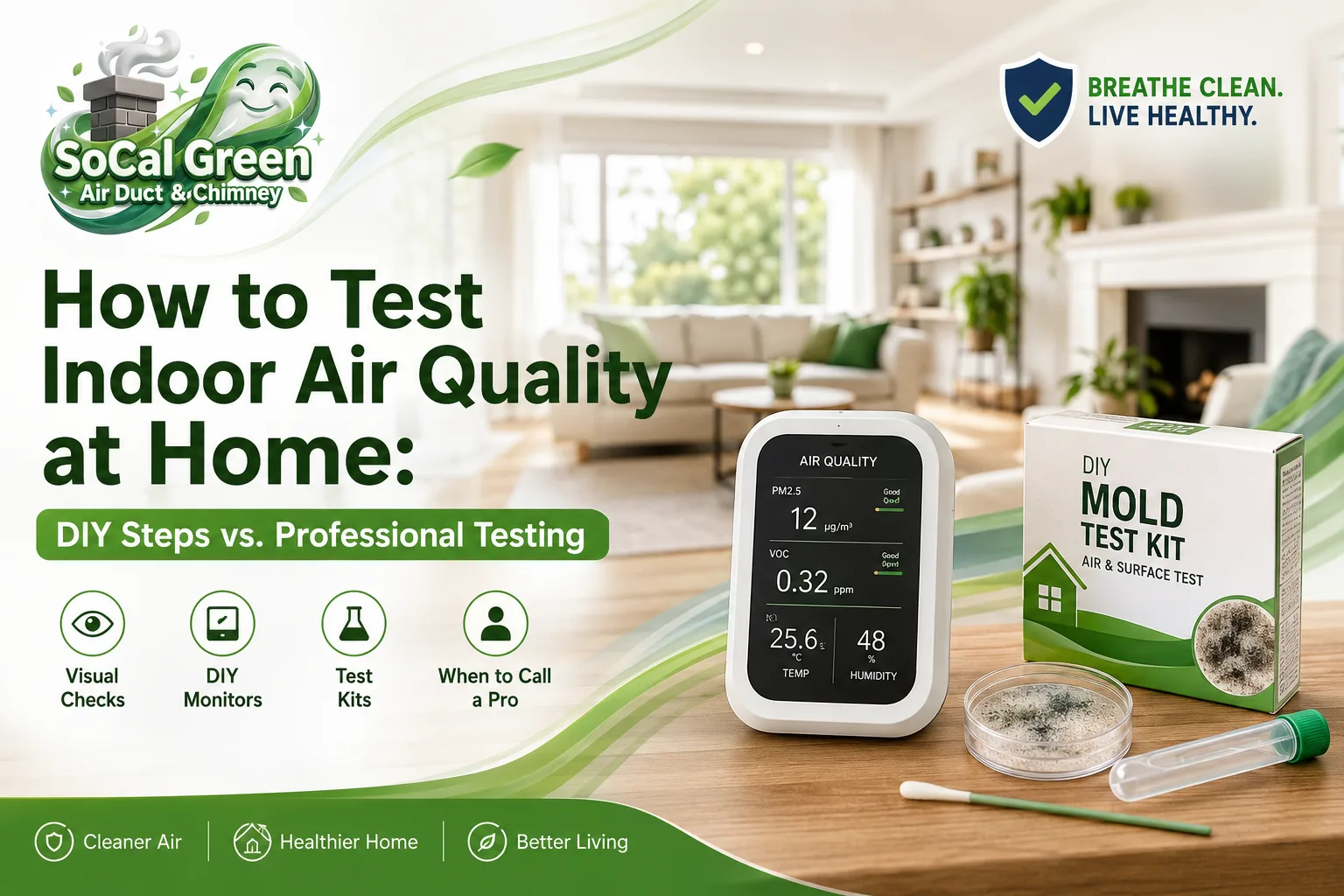
You test your home’s air in three simple steps: look and smell, measure with a monitor, then use test kits for specific problems. Start with the free step and add tools as needed.
Step 1: Conduct a Visual & Odor Assessment
The first step costs nothing, since you use your own eyes and nose. Walk through each room and look for warning signs. Check for these clues:
- Visible mold or dark spots on walls, ceilings, or near windows
- Water stains or past leaks
- Heavy dust on surfaces and around vents
- A musty, damp smell
- A strong chemical or “new” smell that doesn’t fade
Also notice how you feel. Symptoms like headaches, a stuffy nose, or itchy eyes that improve when you leave the house often point to an air problem inside.
Step 2: Use Consumer DIY Air Quality Monitors
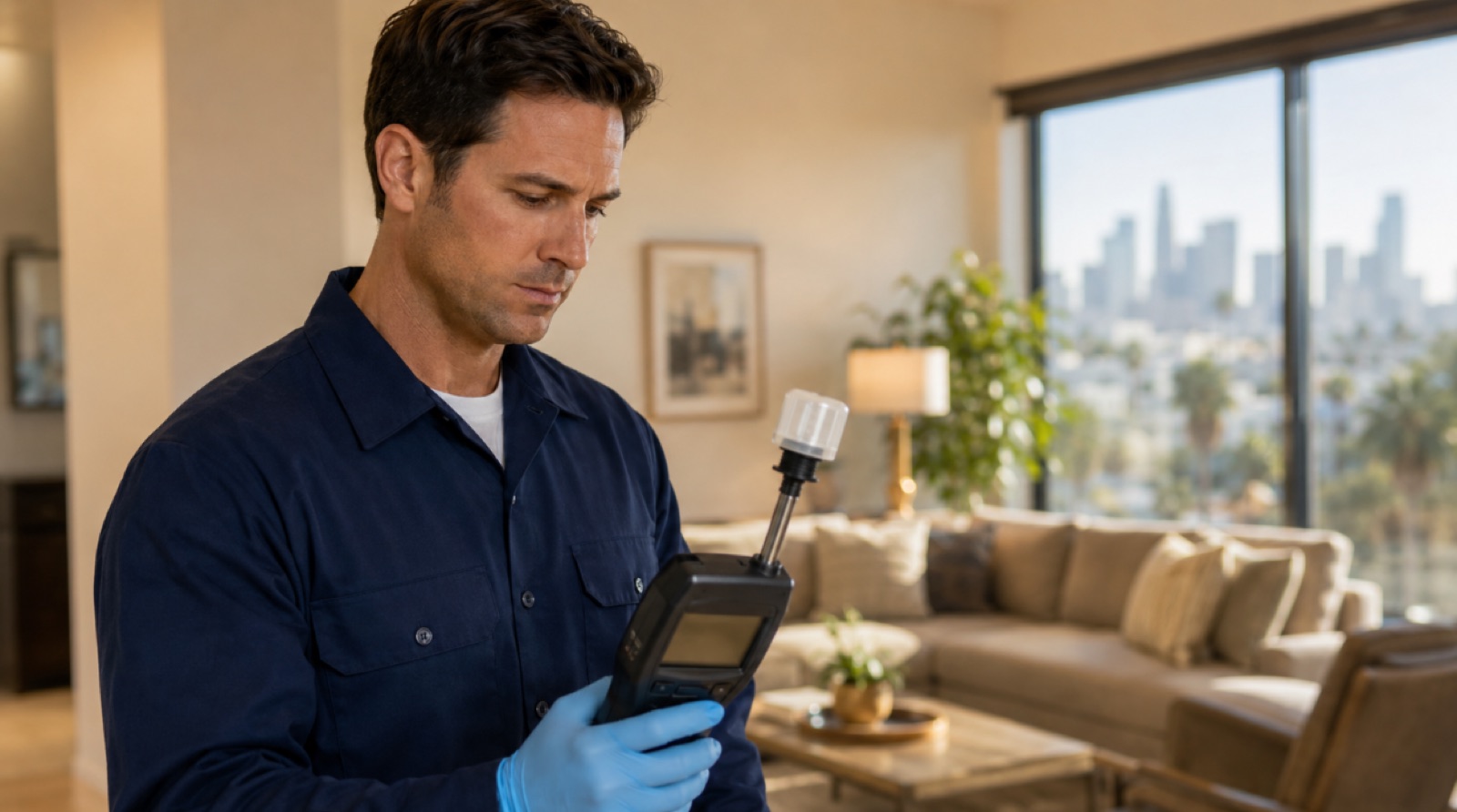
A DIY air quality monitor gives you live readings of your air. These small devices sit on a shelf and measure things like PM2.5, total VOCs, humidity, and carbon dioxide. They show the numbers on a screen or a phone app.
Monitors are great for spotting trends. You see how cooking, cleaning, or opening a window changes your air. Place one in the rooms where your family spends the most time, like the bedroom and living room. Keep in mind that these monitors track changes well but are not as exact as lab testing.
Step 3: Deploy Home Mold & Chemical Test Kits
Test kits check for one specific pollutant at a time. A mold kit collects a sample from the air or a surface. A formaldehyde or VOC kit captures a sample you mail to a lab. The lab then sends back a report.
Kits give more detail than a monitor for a single problem. Follow the instructions closely, because a rushed sample gives a false result. Test kits work best when you already suspect one issue, such as mold after a leak.
How to Test Indoor Air Quality Specifically for Mold
Mold testing checks whether mold spores in your home are at a harmful level. Two main methods exist, and each answers a different question. Choosing the right one saves you time and money.
Air Sampling vs. Surface Swab Kits
Air sampling and surface swabs test for mold in different ways. An air sample uses a device to capture the spores floating in the air. A professional counts those spores and compares the indoor level to the outdoor level. This shows whether your indoor air has a hidden mold problem.
A surface swab or tape sample tests a spot you can already see. You press the swab onto the stain, and a lab identifies the type of mold. Surface testing confirms what a visible patch is, while air testing finds mold you cannot see.
Why DIY Mold Kits Can Be Misleading
DIY mold kits often give misleading results. The most common kind is a petri-dish kit that you leave open in a room. The problem is simple: mold spores exist everywhere, in every home, all the time. So the dish almost always grows something, which makes the test look positive even when your home is fine.
These kits also skip the key step, an outdoor comparison. Without an outdoor baseline, a spore count means little. The EPA notes that if you can see or smell mold, testing usually isn’t needed. You already have your answer, and the real fix is removing the mold and stopping the moisture. For lingering musty smells, our mold and odor control service targets the source. When results are unclear, a professional mold test gives the reliable answer.
How Much Does Indoor Air Quality Testing Cost?
Indoor air quality testing costs depend on the method you choose. DIY tools sit at the low, budget-friendly end. Professional lab testing costs more because it delivers calibrated accuracy and expert answers. Here is how the two compare.
What DIY Monitors and Test Kits Cost
DIY testing is the affordable, entry-level option. A home air quality monitor is a one-time purchase that keeps giving readings for years. Test kits cost less upfront, but each mailed sample adds a lab fee, so several kits add up over time. For a homeowner who wants general awareness, DIY tools fit most budgets.
What Professional Lab Testing Costs
Professional testing is a larger investment, and the price reflects what you get. A certified technician uses calibrated instruments, tests for several pollutants at once, sends samples to an accredited lab, and reads the results for you. You pay for accuracy and a clear plan, not just a number on a screen. SoCal Green gives every homeowner an upfront quote, so you know the cost before any work begins. Explore our indoor air quality testing service to see what a full assessment covers.
Is Indoor Air Quality Testing Worth It?
Indoor air quality testing is worth it when the results lead to a clear action. The right choice, DIY or professional, depends on your situation. Match the method to your need.
When DIY Testing Is Enough
DIY testing is enough for everyday awareness. A monitor works well when you simply want to track your home’s air and build healthier habits. It fits these situations:
- No one in the home has ongoing symptoms
- You want to watch humidity and dust levels
- You want to see how cooking or cleaning affects your air
- You have no visible mold or water damage
In these cases, a monitor plus good habits, ventilating, changing filters, and cleaning, keeps your air healthy.
When You Need Certified Professional IAQ Testing
You need professional testing when the stakes are high or the answer must be exact. Call a certified pro in these cases:
- Someone has ongoing allergies, asthma, or unexplained symptoms
- You see or smell mold but can’t find the source
- Your home had a flood, leak, or water damage
- You’re buying or selling a home
- Young children, older adults, or sick family members live there
- Your DIY results are confusing or alarming
A professional finds the source, not just the symptom. Our team explains the full process in our overview of indoor air quality testing services in Los Angeles.
Why Los Angeles Homes Face Unique Air Quality Challenges
Los Angeles homes face air quality challenges that many other cities do not. The local climate and geography push more pollutants into your home. Four factors stand out:
- Wildfire smoke. Smoke from nearby fires fills the air with fine PM2.5 particles that slip indoors through gaps and vents.
- Smog and ozone. Los Angeles has some of the highest smog levels in the country, and that outdoor pollution follows you inside.
- Santa Ana winds. These dry winds carry dust, pollen, and ash into homes across the region.
- Marine-layer humidity. Coastal moisture near the ocean feeds mold growth in homes and ductwork.
These conditions raise the pollutant load in local homes. Cleaner ducts, better airflow, and moisture control all help. Our ventilation improvement and allergen and dust reduction services are built for these exact challenges.
Next Steps for Healthier Indoor Air
Start with the free visual and odor check, add a DIY monitor to track your air, and call a professional when you find a real problem or someone has ongoing symptoms. Testing is only the first step; the goal is cleaner air.
Once you know your air, you can act on it. Ventilate your home often, change your filters on time, control moisture, and keep your ducts clean. For homes that need stronger help, whole-home air purification removes pollutants around the clock. You can also review all of our indoor air quality solutions in one place.
Ready for exact answers about your home’s air? SoCal Green’s certified team tests, explains, and fixes, with an upfront quote every time. Schedule professional air quality testing.
Frequently Asked Questions
Can I test my home’s air quality myself?
Yes. You can start with a free visual and odor check, then add a DIY air quality monitor to track dust, humidity, and gases. Test kits check for specific problems like mold. For hidden issues or health concerns, professional testing gives more accurate, reliable answers.
Are DIY mold test kits accurate?
Not very. Petri-dish kits almost always grow something, because mold spores exist in every home. Without an outdoor comparison, the result means little. If you can see or smell mold, skip the kit, since you already know. Professional mold testing gives a far more reliable answer.
What is the best way to test for mold?
The best method depends on your goal. Air sampling finds hidden mold by comparing indoor and outdoor spore levels. A surface swab identifies mold you can already see. For an unclear or serious problem, a certified professional gives the most accurate result and finds the source.
How do I know if I need professional air quality testing?
Call a professional if someone has ongoing allergies or asthma, you see or smell mold, your home had water damage, or your DIY results are confusing. Professional testing also helps when buying or selling a home, or when vulnerable family members live there.
Should I test my air after water damage?
Yes. Water damage is the top cause of hidden mold, which can start growing within one to two days. Even after things dry, mold can spread inside walls and ducts. A professional inspection and test confirm whether your air is safe.