Why Is My Furnace Making Noise? (Causes, Solutions & Safety Risks)
Furnace buzzing, humming, screeching, banging, or roaring like a jet engine? What each noise means, which are dangerous, and how to fix them.
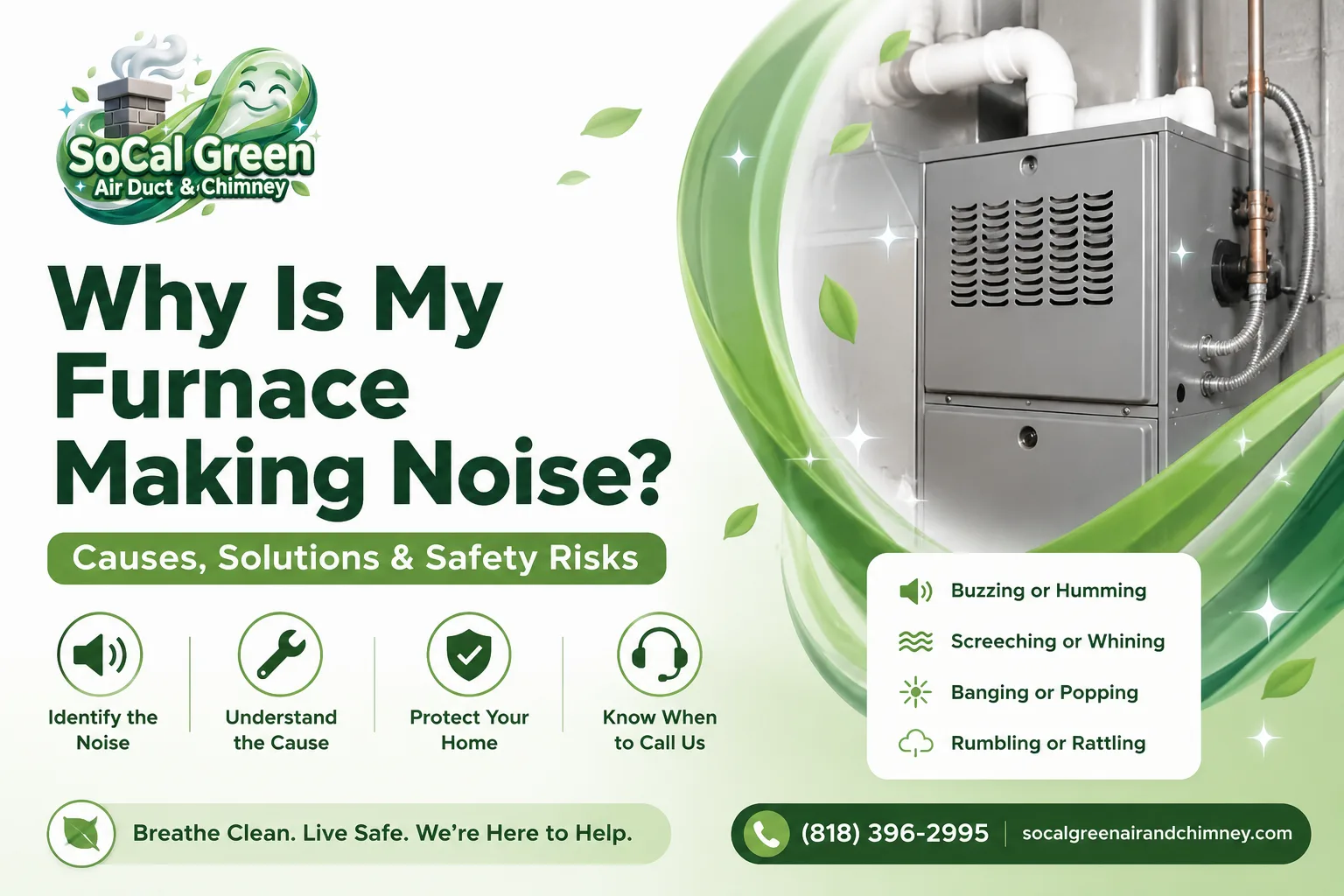
Some furnace noise is completely normal. A faint click at startup, a low airflow hum, and soft metallic pops as the ducts warm up are all routine. What is not routine is loud buzzing, screeching, banging, or a roar like a jet engine. Those sounds point to specific mechanical or electrical problems, and a few of them are genuine safety risks. This guide decodes every common furnace noise, tells you which ones are dangerous, and shows you what to fix yourself versus when to call a professional.
Is a Noisy Furnace Dangerous? When to Turn It Off Immediately
Most furnace noises are not dangerous, but a few demand that you shut the system off right away. Knowing the difference prevents both a panicked emergency call over a harmless pop and a costly delay over a real hazard. Here is the simple rule of thumb.
Safe to monitor:
- A faint clicking during startup as the system begins its ignition sequence.
- A low, steady humming during normal operation.
- Subtle sheet-metal pops and ticks as the ducts warm up and cool down.
Turn it off and call a professional:
- Electrical buzzing that continues even when the furnace is off.
- A loud boom or bang at ignition.
- Metal-on-metal screeching or grinding.
- Any noise paired with a burning smell.
- Any noise paired with a gas (“rotten egg”) smell.
The last one is the emergency. If you smell gas, do not touch switches or the thermostat. Leave the home and call your gas utility and 911 from outside. Because a furnace burns fuel and produces carbon monoxide, the U.S. Consumer Product Safety Commission advises leaving fuel-burning heating repairs to a qualified professional. When a noise falls into the “call a professional” column, a furnace inspection is the safe next step.
Normal Furnace Noises vs. Abnormal Sounds
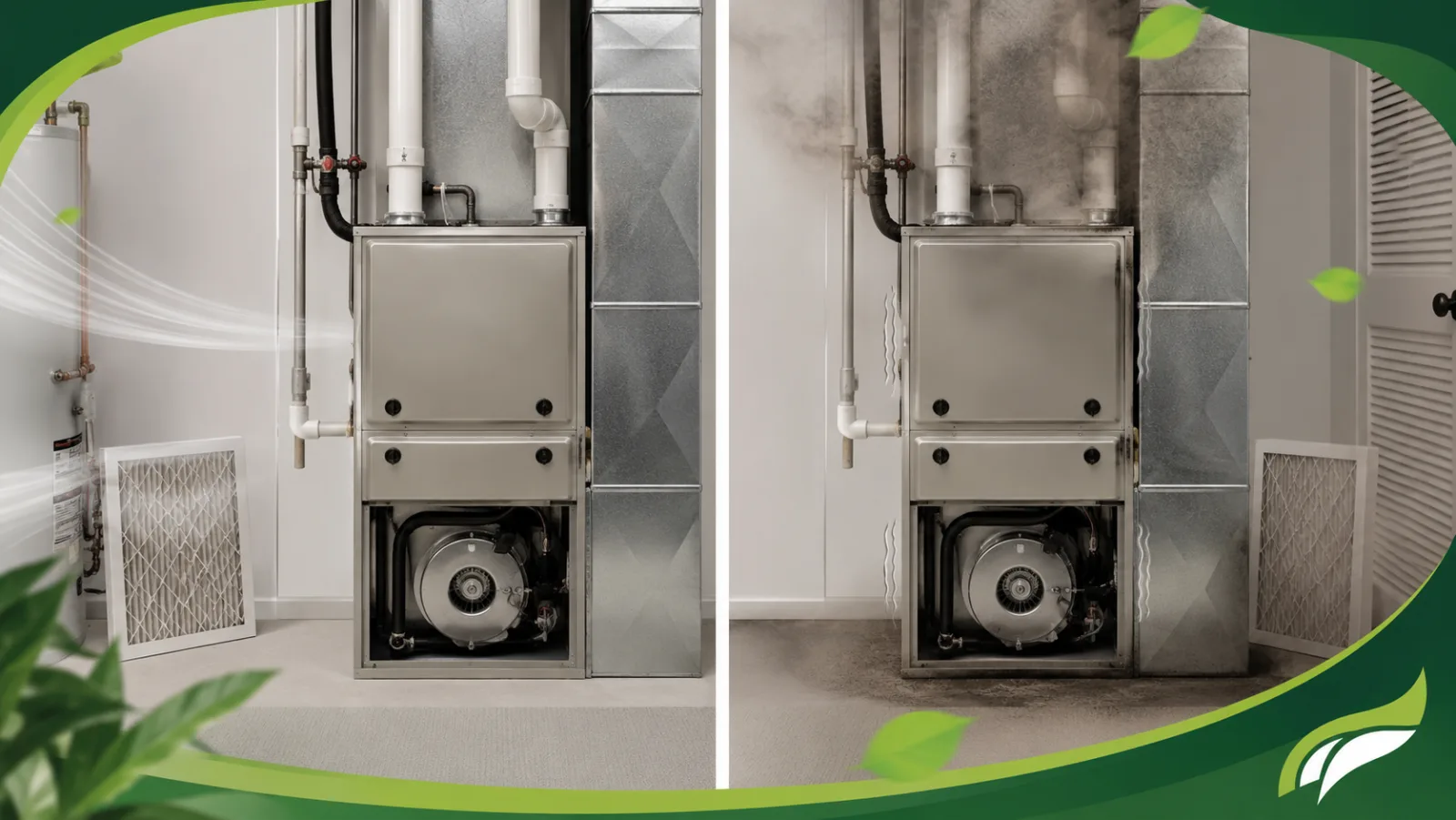
Before you assume the worst, rule out the sounds every furnace makes. A normal furnace produces a predictable set of operating noises, and mistaking these for a problem leads to unnecessary emergency repairs.
Standard, harmless sounds include the soft airflow hum of the blower moving air through your vents, a single click as the gas valve opens at the start of a heating cycle, another click as it closes at the end, and light popping as the metal ductwork expands with the warm air. These are the sounds of a system working correctly. The noises that signal trouble are the loud, sharp, or continuous ones, and those are what the rest of this guide covers.
Furnace Buzzing or Humming Noises (The Most Common Issue)
A buzzing or humming furnace is the single most common noise complaint, and the cause is almost always electrical or a strained blower motor. Because “buzzing” and “humming” describe a range of problems, work through the three causes below to pin down yours.
Electrical Transformer or Capacitor Failure
A continuous, loud buzzing usually comes from a failing transformer or a weak capacitor. The transformer steps household voltage down to the low voltage your furnace controls need, and the capacitor gives the blower motor the jolt of energy it needs to start. As either component ages, it struggles to hold and deliver that voltage steadily, and the strain produces a constant electrical buzz.
A failing capacitor also leaves the blower motor straining to start, which shortens its life. Because a transformer or capacitor problem is an electrical fault, and a possible sign of an electrical short, it belongs to a technician, not a homeowner. If the buzzing is loud and continuous, schedule a professional furnace inspection before the part fails completely.
Why Is My Furnace Buzzing When Off?
If your furnace buzzes even when it is not heating, the cause is a component that stays energized between cycles. The low-voltage transformer draws power continuously, so a failing transformer hums around the clock, not just during a heating cycle. A stuck relay switch does the same. Instead of clicking fully open or closed, it sits in a partial state and buzzes.
A furnace that buzzes while off is telling you a live electrical component is failing. It will not fix itself, and the constant electrical strain is worth addressing quickly. Turn the system off at the breaker if the noise is loud, and have the transformer and relays tested.
Blower Motor Strain and Loose Components
A heavy, laboring hum usually means the blower motor is working too hard. The most common reason is a clogged air filter. When the filter chokes the airflow, the blower motor strains to pull enough air through, and that effort produces a deep humming sound. Loose panels and mounting hardware add a rattling buzz on top of it.
The first fix is free and simple. Change or clean the air filter to restore airflow and ease the load on the blower motor, using our guide on how to clean a reusable furnace filter. If the heavy humming continues with a clean filter, the blower motor or its bearings are wearing out and need a professional.
High-Pitched Screeching, Whining, or Whistling Sounds
High-pitched furnace noises come from two very different sources: worn moving parts inside the blower, or air forcing its way through a restriction. The pitch tells you which.
Screeching and Whining: Worn Fan Belts and Unlubricated Bearings
A loud screech or a rising whine points to motor wear. Older furnaces use a fan belt to drive the blower, and a loose, cracked, or frayed fan belt produces a sharp screech, especially at startup. Newer direct-drive blowers do not have a belt, but their motor shaft rides on bearings, and when those bearings run dry, they create a high-pitched whine that gets louder as the heating cycle runs.
A slipping belt is an inexpensive replacement. Dry or failing bearings, however, mean the blower motor is on its way out, and running it in that state can seize the motor. Metal-on-metal screeching is one of the “shut it off” sounds, so stop the system and have it serviced.
Whistling: Severe Airflow Restrictions and Return Vent Leaks
A high-pitched whistle is almost always air squeezing through a gap it should not have to. When your system cannot pull in enough air, it finds the path of least resistance and whistles through it: a clogged filter, closed or blocked room registers, or an undersized, leaky return air duct.
Start with the easy fixes. Replace a dirty filter and open every supply register in the house. If the whistle continues, the return air duct is likely too small or leaking at the seams, pulling air through gaps under pressure. Sealing and correcting the return ducts with professional air duct repair resolves the airflow shortage at its source.
Loud Rumbling, Banging, or Popping When Starting
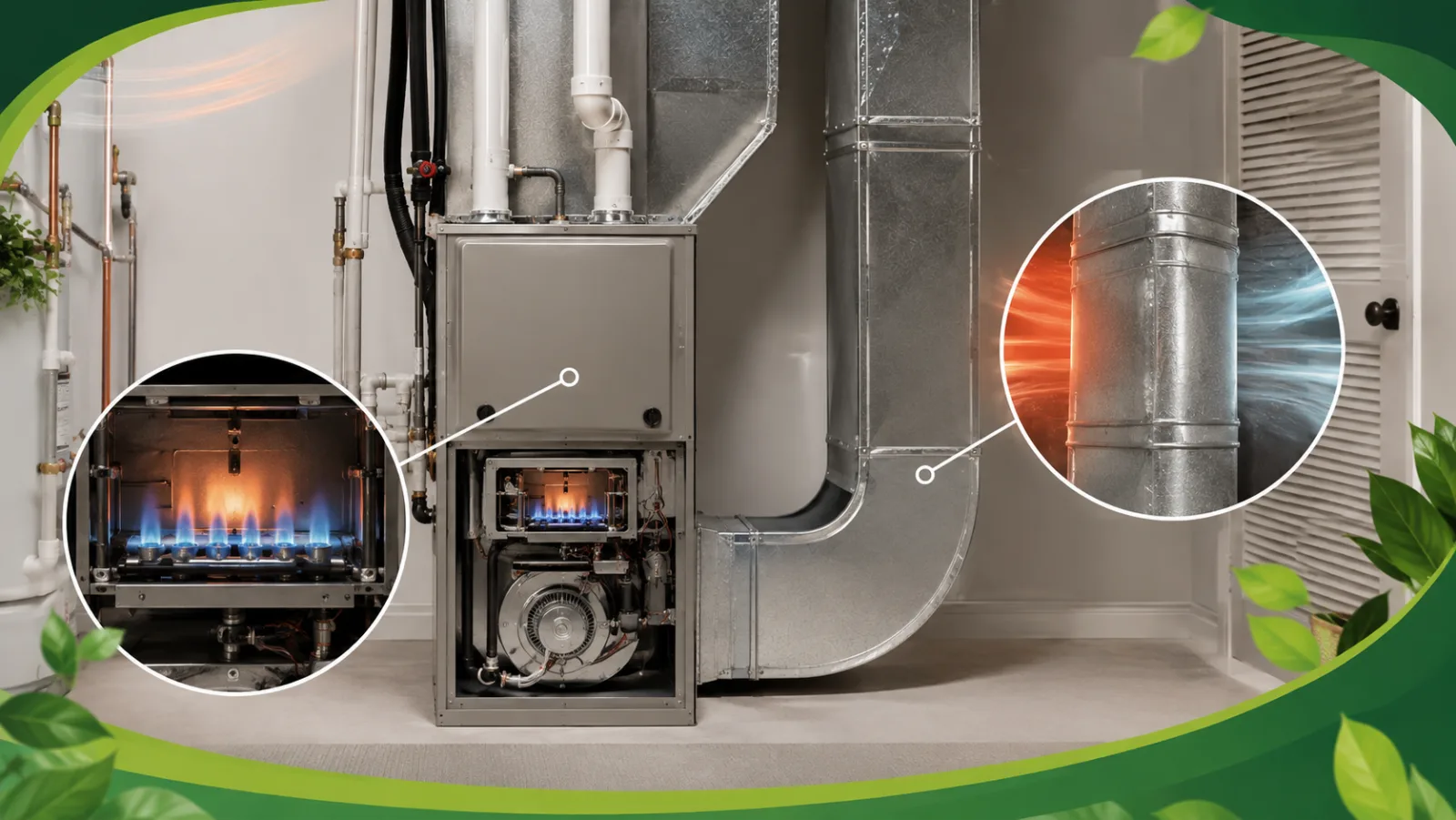
A loud noise at startup falls into one of two categories: a dangerous combustion problem, or harmless metal movement. Telling them apart matters, because one can crack your heat exchanger and the other is nothing to worry about.
Delayed Ignition (Loud Bang or Boom at Startup)
A loud bang or boom when the furnace fires is a warning sign called delayed ignition. It happens when the burners are coated in soot or dirt and fail to light the instant the gas valve opens. Gas keeps flowing and accumulates in the combustion chamber, then ignites all at once in a small explosion, the bang you hear.
This is not cosmetic. Repeated delayed-ignition booms stress and can crack the heat exchanger, the component that keeps carbon monoxide out of your home’s air. If your furnace bangs at startup, treat it seriously. The same soot and ignition faults also cause a furnace to run cold, which we cover in our guide to why a furnace blows cold air. Have the burners cleaned and the heat exchanger checked during a furnace inspection promptly.
Thermal Expansion in Ductwork (Popping Sounds)
Softer popping or banging that comes from the walls and vents, not the furnace itself, is usually harmless thermal expansion. When warm air rushes into cold sheet-metal ducts, the metal expands rapidly and pops back into shape; it contracts and pops again when the cycle ends. This is normal, though oversized or thin ductwork makes it louder. Unlike a delayed-ignition boom, thermal-expansion popping comes from the duct runs around the house, not a single loud blast from the furnace cabinet.
Fan, Blower, and Loud Vibrating Noises
A loud vibrating or rattling furnace usually traces back to the blower assembly or loose hardware. These noises are mechanical rather than electrical, and several have simple fixes.
The most common cause is the blower wheel. Over time, dust collects unevenly on the wheel’s blades, throwing it out of balance so it vibrates as it spins, much like an unbalanced tire. A cleaning restores the balance. The second common cause is loose hardware. Access panels, screws, and even the transformer’s mounting bracket can work loose and vibrate against the furnace cabinet, the floor, or the wall. Tightening the exterior access-panel screws often silences a rattle in seconds. If the vibration is heavy and rhythmic, the blower motor may be failing or its mounts may be worn, which calls for a technician.
Extreme Symptoms: Why Your Furnace Sounds Like a Jet Engine
A furnace that roars like a jet engine has a serious airflow or combustion problem and should be inspected quickly. The dramatic sound comes from one of two failures, both of which need professional attention.
The first is a failing draft inducer motor, the small motor that pulls combustion gases through the system and out the flue. As its bearings wear, it can spin loud and rough at high rpm, producing a roaring, whirring howl. The second is severe dirty combustion. When the burners are starving for oxygen or the gas pressure is set incorrectly, the flames burn hard and turbulent, creating a loud rushing roar. Because incorrect combustion also raises carbon monoxide output, a jet-engine roar is not a noise to live with. Shut the furnace down and have the inducer motor and combustion checked.
DIY Troubleshooting vs. Professional HVAC Service
A handful of furnace noises have safe do-it-yourself fixes; the rest require a certified professional. Knowing which is which saves you money on the simple ones and protects your home on the dangerous ones.
You can safely handle these yourself:
- Change the air filter. This fixes most whistling and the heavy humming caused by blower strain.
- Tighten loose access-panel screws. This stops most vibrating and rattling.
- Open every room register. This clears the airflow restriction behind a whistle.
Call a professional for everything else: electrical buzzing from a transformer or capacitor, delayed-ignition banging, metal-on-metal screeching from worn bearings, a jet-engine roar, or any noise with a burning or gas smell. These involve gas, high-voltage components, and the heat exchanger, systems that carry fire and carbon monoxide risks.
SoCal Green’s certified technicians diagnose the exact source of the noise and fix it safely. If the simple steps above did not quiet your system, book a professional furnace duct cleaning and diagnostic, and if you are not sure how often your system needs attention, see our guide on how often a furnace should be cleaned.
Schedule a furnace noise diagnosis
Frequently Asked Questions
Why is my furnace making a buzzing noise?
A buzzing furnace usually has an electrical cause: a failing transformer or a weak capacitor straining to send voltage to the blower motor, or a blower laboring against a clogged filter. Start by changing the filter; if a loud, continuous buzz remains, have the electrical components tested.
Is a buzzing furnace dangerous?
Sometimes. A faint hum during operation is normal, but loud electrical buzzing, especially when the furnace is off, signals a failing transformer, capacitor, or relay and should be inspected. Any buzzing paired with a burning or gas smell is an emergency: shut the system off and call a professional.
Why is my furnace buzzing when it’s off?
A component that stays energized between cycles is the cause. The low-voltage transformer draws power continuously and hums around the clock when it fails, and a stuck relay switch buzzes when it sits partly open. Both are electrical faults that need a technician.
Why does my furnace make a loud bang when it turns on?
A loud bang at startup is delayed ignition. Soot-covered burners fail to light immediately, gas builds up in the combustion chamber, and it ignites all at once. Repeated booms can crack the heat exchanger, so have the burners cleaned and the system inspected promptly.
Why does my furnace sound like a jet engine?
A jet-engine roar comes from a failing draft inducer motor spinning rough at high speed, or from severe dirty combustion where the burners starve for oxygen. Both raise safety risks, including carbon monoxide, so shut the furnace off and schedule a professional inspection.
What furnace noises are normal?
A faint click at startup, a single click as the gas valve opens and closes, a low airflow hum during operation, and soft metallic pops as the ducts warm up are all normal. Loud buzzing, screeching, banging, or roaring are the sounds that need attention.