Indoor Air Quality Testing Services: What LA Homeowners Should Know
Wondering what indoor air quality testing services actually measure and when they're worth it? Honest guide for LA homeowners — VOCs, mold, PM2.5 and more.
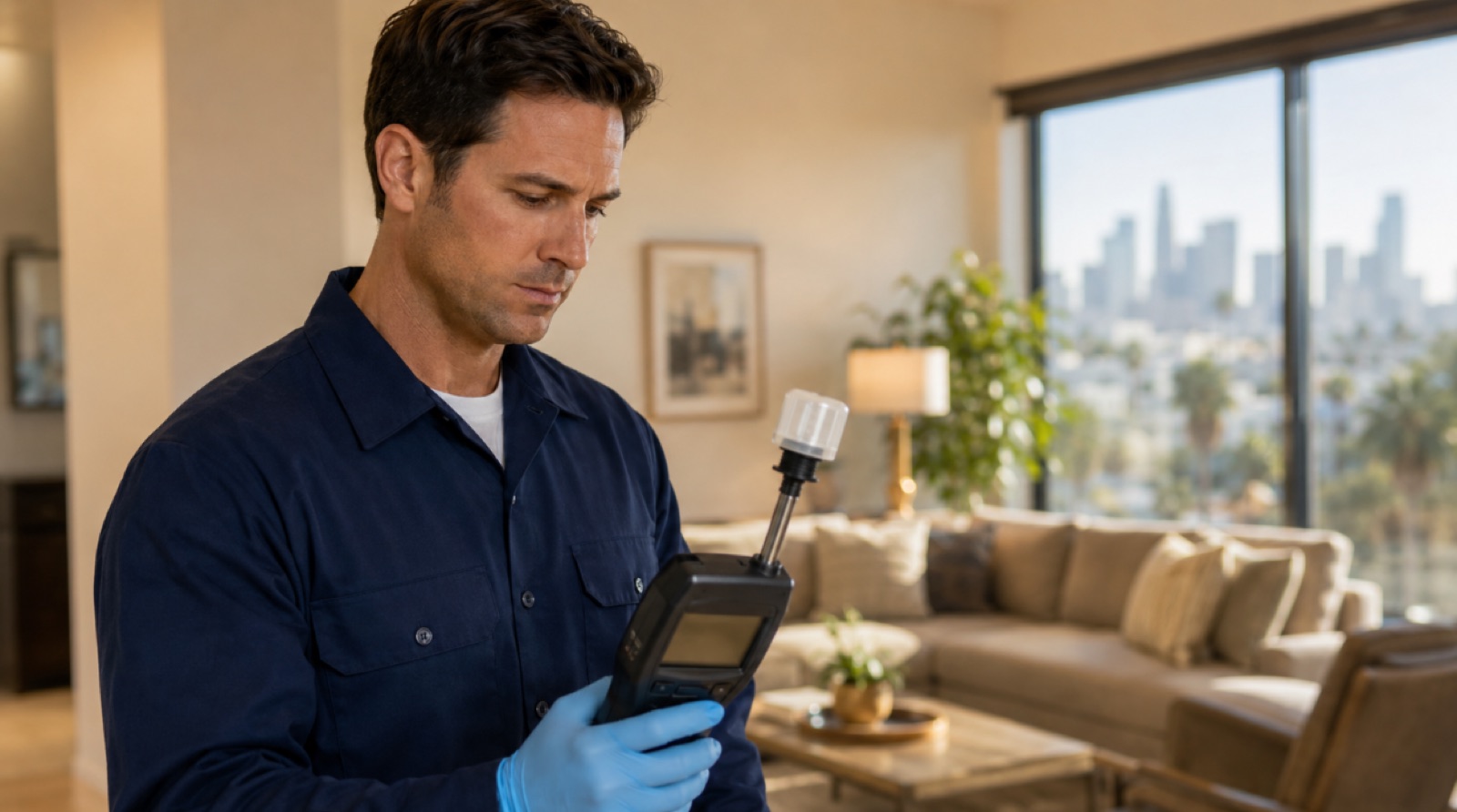
You can’t see most of what’s in your home’s air. You can’t smell most of it either. That’s the part that makes indoor air quality testing worth understanding.
This guide explains what indoor air quality testing services actually do, when they’re worth the cost, and what to look for in a testing company. We’ll keep it honest. No fear tactics. No hype.
What Are Indoor Air Quality Testing Services?
Indoor air quality testing services measure the pollutants inside your home using calibrated equipment and lab analysis. A professional service collects air samples, sends them to an accredited lab, and gives you a written report showing what was found, how much, and what to do about it.
It’s not a single test. A real assessment covers several pollutants at once — because air quality issues rarely come from just one source.
A mold problem shows up as elevated spore counts and higher VOCs. A wildfire smoke event raises PM2.5 and benzene. A poorly vented gas appliance shows elevated carbon monoxide. Seeing the full picture is what makes a report useful.
Why Do You Need Professional Indoor Air Quality Testing?
You need professional indoor air quality testing services when you have ongoing symptoms inside your home, recent renovation work, visible mold, suspected moisture problems, or post-wildfire smoke exposure.
The EPA estimates indoor air is often 2 to 5 times more polluted than outdoor air. That’s true even in cities with outdoor air problems like LA.
The reasons are simple. Modern homes are sealed tighter for energy efficiency. Furniture, flooring, and cleaning products release chemicals indoors. Cooking, combustion appliances, and pets all add to the load. Without testing, you’re guessing about what’s actually in your air.
If you’ve ever wondered whether duct buildup is part of the problem, our guide on whether air duct cleaning is worth it covers that side honestly.
What Does an Indoor Air Quality Test Actually Measure?

A complete indoor air quality test measures these pollutants:
- VOCs (volatile organic compounds) — chemicals from paint, flooring, furniture, and cleaning products
- Formaldehyde — released by engineered wood, cabinets, and adhesives
- PM2.5 and PM10 — fine particles from smoke, dust, and combustion
- Mold spores — airborne mold from hidden moisture sources
- Carbon monoxide (CO) — from gas appliances and poor venting
- Carbon dioxide (CO2) — used to measure ventilation adequacy
- Allergens — dust mite debris, pet dander, and pollen
The most common pollutants tested include VOCs, mold spores, radon, particulate matter (PM2.5 and PM10), formaldehyde, and CO2. Which ones get tested depends on your home, your symptoms, and your concerns.
When Should You Get Indoor Air Quality Testing?
You should get indoor air quality testing when one or more of these apply:
- You or your family have ongoing headaches, fatigue, or allergy symptoms that ease when you leave home
- You’ve recently renovated, painted, or added new furniture
- There’s a musty smell with no visible mold source
- A wildfire smoke event has affected your area
- You’ve just bought a home with unknown history
- A CO detector has alarmed, even briefly
- You’re planning major HVAC or duct work
It’s recommended to test after a move, renovation, or when you notice new health symptoms or odors.
If symptoms get worse indoors and better outside, that’s a clear pattern worth testing.
How Are Professional Tests Different From DIY Air Quality Monitors?
Professional indoor air quality testing services use lab-accredited equipment and identify specific compounds. DIY monitors give real-time readings but can’t tell you exactly what’s in your air.
Here’s the difference:
DIY monitors measure total particle count and broad VOC presence. They can’t tell mold spores from pollen, or formaldehyde from cooking smoke.
Professional services use sorbent tubes, spore traps, and direct-read instruments. Samples go to an accredited lab. Results identify specific compounds and measure exact concentrations.
DIY monitors are useful for daily awareness. Professional testing gives you the data you actually need to fix something.
How Long Does an Indoor Air Quality Test Take?
A standard indoor air quality test takes two to three hours on site. Lab results usually come back within five to ten business days. After that, the written report is prepared and walked through with you.
Larger homes or multi-zone properties may take longer to sample. The lab analysis time is the same regardless of home size.
How Much Do Indoor Air Quality Testing Services Cost?
Pricing for indoor air quality testing services varies for real reasons:
- How many pollutants are being tested
- The size of the home and number of sampling zones
- Whether outdoor comparison samples are taken
- The depth of the written report
Be cautious of flat advertised prices given before anyone sees your home. A real estimate follows an in-home assessment. Suspiciously cheap quotes are often a sign of partial testing or follow-up upsells.
Why Is Indoor Air Quality Testing Important in Los Angeles?
Indoor air quality testing matters in LA because the region faces conditions most of the country doesn’t. Wildfire smoke. Heavy traffic. Older housing stock. Year-round pollen.
Three LA-specific factors raise the stakes:
Wildfire smoke. When regional fires burn, ultra-fine particles infiltrate homes even with windows closed. Indoor PM2.5 typically reaches 50–80% of outdoor levels during active smoke events. Some compounds infiltrate at even higher ratios.
Older housing. Many homes in Pasadena, Eagle Rock, Silver Lake, Burbank, and the San Fernando Valley pre-date 1980. Older building materials still off-gas formaldehyde and other compounds banned in newer construction. Some homes also contain asbestos and lead paint.
Tight new homes. Newer LA homes are sealed tightly for energy efficiency. That conserves energy and traps indoor-generated pollutants.
For LA families with young children, elderly residents, or anyone with respiratory conditions, professional indoor air quality testing services are a practical step — not a luxury.
What Should You Look for in an Indoor Air Quality Testing Services Company?
Look for an indoor air quality testing services company that uses accredited lab analysis, certified technicians, calibrated sampling equipment, and provides a written report with actionable findings. Skip anyone using only consumer-grade devices.
A qualified testing service should:
- Use accredited laboratory analysis (look for California ELAP-compliant labs)
- Employ certified technicians trained in IAQ sampling protocols
- Use calibrated sampling equipment — not just app-based monitors
- Provide a written report with measured concentrations, reference levels, and recommendations
- Stay independent of remediation pressure — they should report findings, not push services
- Walk through the report with you in plain language
Avoid any company that quotes results in the field without lab analysis. Real testing takes lab time. Honest companies are upfront about that.
What Happens After the Test?
After testing, you’ll receive a written report listing every contaminant found, its concentration, the EPA or CARB reference level it’s compared against, and recommended actions where levels are elevated.
The report tells you what’s there and what to do about it. Sometimes the fix is simple — better ventilation, improved filtration, or removing a source. Sometimes it’s larger work like duct cleaning, mold remediation, or repairing damaged ductwork.
If duct system contamination is part of the problem, our air duct cleaning service addresses the buildup directly. If your ducts have leaks, disconnects, or damage, air duct repair is the actual fix — not cleaning.
How Often Should You Test Indoor Air Quality?
You should test indoor air quality every two to three years as a baseline check — or sooner if conditions change. Test sooner after major renovations, new furniture, a wildfire smoke event, or any change in occupant health.
Some events justify immediate testing:
- A confirmed mold problem
- Post-construction or remodel
- After heavy wildfire smoke exposure
- A new home purchase
- Sudden new symptoms in family members
Between tests, replace HVAC filters on schedule (quarterly during smoke and pollen seasons), keep windows closed during smoke events, and service combustion appliances annually.
Why Choose SoCal Green Air & Chimney for Indoor Air Quality Testing in LA?
We’ve served Los Angeles homeowners for over 15 years. Our indoor air quality testing service uses certified technicians, calibrated sampling equipment, and accredited independent lab analysis — never consumer devices or in-house processing.
Every test produces a written report with specific findings and plain-language recommendations. We cover Los Angeles, Pasadena, Burbank, Glendale, Santa Monica, the San Fernando Valley, and most of LA County.
If results show issues we can address — duct cleaning, repair, or chimney service — we document the recommendation and let you decide independently. No pressure. No upsells based on findings we influenced.
Schedule a certified indoor air quality testing service today. Call (888) 280-2285 or visit SoCalGreenAirAndChimney.com to book. Most appointments across LA are available within 48 hours.
Frequently Asked Questions
What is included in indoor air quality testing services?
Professional indoor air quality testing services include a pre-sampling walkthrough, air sampling for VOCs, formaldehyde, mold spores, particulate matter, carbon monoxide, and other relevant pollutants, accredited lab analysis, and a written report with measured concentrations and corrective actions.
Are indoor air quality testing services worth it?
Yes, when there’s a real reason — recent renovation, ongoing symptoms, suspected mold, wildfire smoke exposure, or a new home purchase. For homes without those triggers, testing every two to three years gives a useful baseline.
Who provides expert indoor air quality testing services in Los Angeles?
Look for a local indoor air quality testing services contractor that uses certified technicians, California ELAP-accredited labs, and calibrated sampling equipment. The company should be independent — meaning it reports findings without pressuring remediation services.
How long does it take to get indoor air quality test results?
On-site sampling takes two to three hours. Lab results typically return in five to ten business days. The written report is delivered shortly after.
Can I test my own indoor air quality?
You can use a consumer monitor for general awareness of PM2.5, CO2, and broad VOC levels. But consumer devices can’t identify specific compounds, distinguish mold spores from pollen, or quantify concentrations against health reference levels. For real diagnostic results, professional indoor air quality testing services are the only reliable option.
How often should LA homes test indoor air quality?
Every two to three years as a baseline. Test sooner after a renovation, a wildfire smoke event, a new home purchase, or if family members develop unexplained symptoms.