How to Repair a Chimney Crown: Steps, Materials, and Cost Analysis
Learn how to repair a cracked chimney crown, including repair steps, materials, costs, and when to choose professional chimney crown replacement.
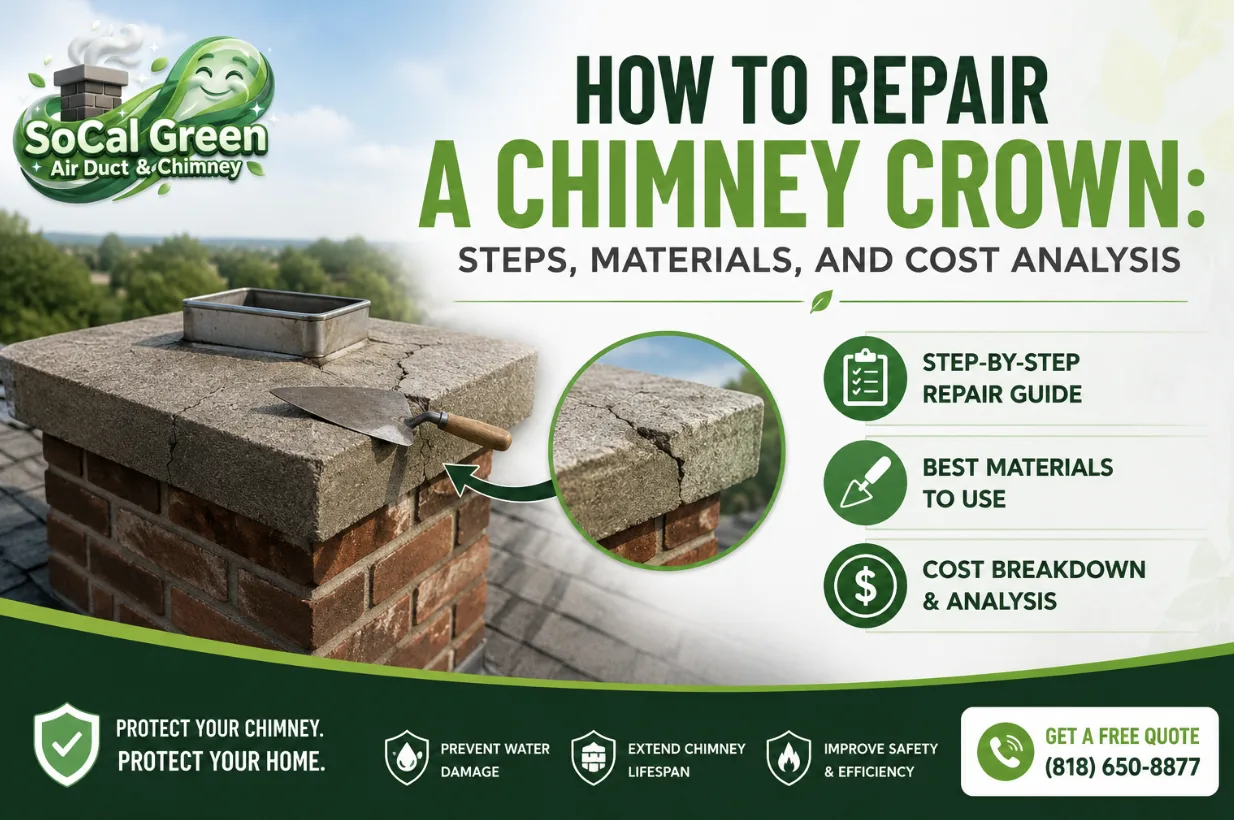
A chimney crown cracks, and water finds a way in. Left alone, that crack turns into a full chimney repair bill. This guide covers the exact repair steps, materials, and costs for fixing a damaged crown.
What is a Chimney Crown and Why Does It Crack?
A chimney crown is the concrete slab on top of a chimney stack. It sits 2 inches (5 cm) thick, slopes away from the flue, and overhangs the brick by 2 inches (5 cm) to shed water.
The crown cracks for a clear reason: water. Rain soaks into the surface. Temperatures drop. Water inside the concrete freezes and expands. This is the freeze-thaw cycle, and it repeats every winter in most of the U.S.
Each freeze-thaw cycle widens existing cracks. Water then follows the crack down through capillary action. It reaches the brick, the flue liner, and eventually the ceiling below. This process is called water penetration, and it causes most chimney damage that homeowners see indoors.
Poor construction speeds up the damage. Builders sometimes use a standard portland cement mix instead of a true crown mix. Portland cement shrinks as it cures. Shrinkage creates hairline cracks within the first year. Those cracks then widen through normal weathering.
Chimney Crown vs. Chimney Cap
Homeowners confuse the crown with the cap. They are two different parts.
The crown is the flat concrete slab covering the top of the chimney. The cap is the metal cover on top of the flue opening. The crown protects the whole chimney top. The cap keeps rain, animals, and debris out of the flue itself.
| Feature | Chimney Crown | Chimney Cap |
|---|---|---|
| Material | Concrete or mortar | Metal (usually stainless steel or copper) |
| Location | Covers entire chimney top | Covers the flue opening only |
| Function | Sheds water off the whole structure | Blocks rain, animals, and debris from the flue |
| Typical repair cost | $150 to $3,000 | $200 to $850 |
A failed crown causes structural damage. A failed cap causes flue and interior damage. Both need attention, but crown damage costs more to ignore. A masonry chimney repair technician checks both during an inspection.
How to Repair Chimney Crown Cracks
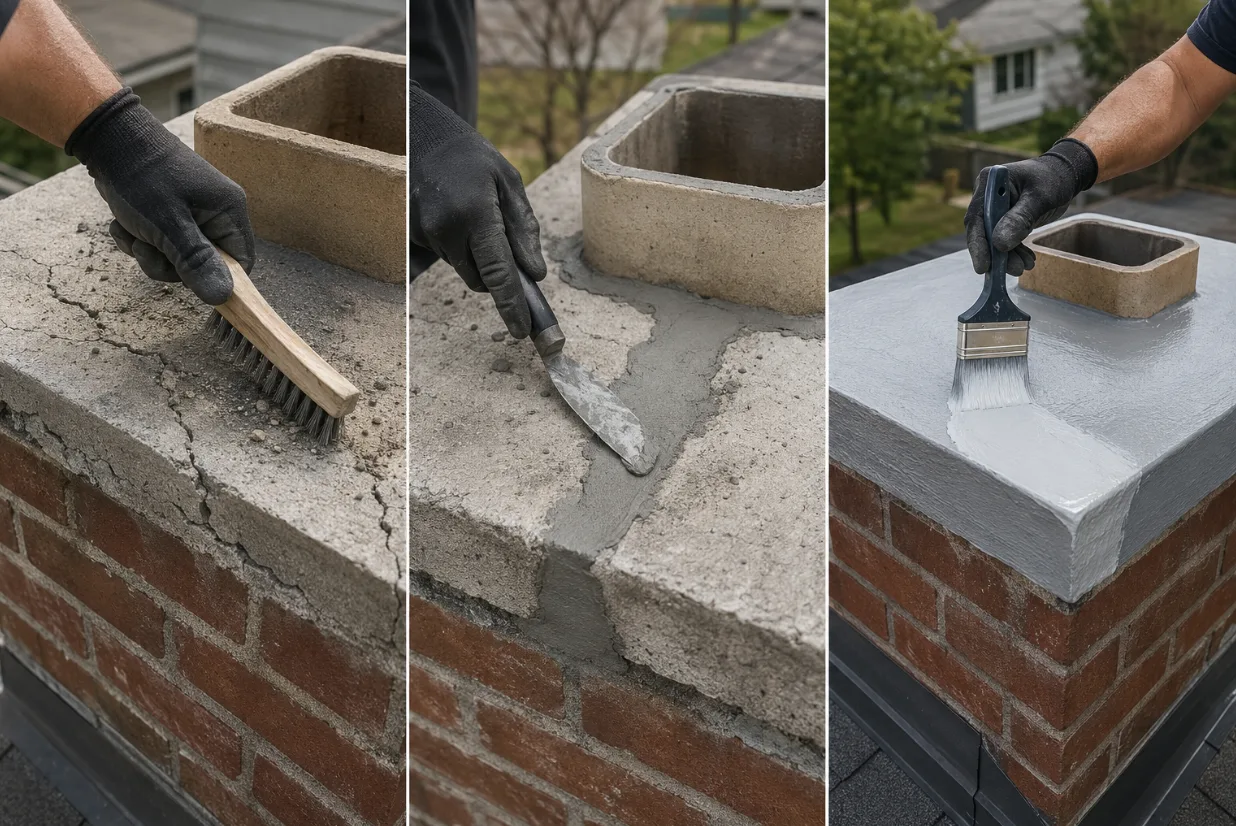
The repair method depends on crack depth. Follow these steps:
- Clear the surface using a wire brush to remove loose debris, moss, and old sealant.
- Fill deep cracks using a hydraulic cement or masonry patching compound.
- Apply a trowelable waterproof chimney crown sealant across the entire surface.
- Smooth the coating to ensure a uniform thickness of 1/8 inch (3 mm).
- Allow the compound to cure for 24 to 48 hours depending on humidity.
Each crack type needs a different fix. Match the method to the damage below.
Repairing Hairline Cracks with Crown Sealant
Hairline cracks stay under 1/8 inch (3 mm) wide. They sit on the surface and don’t reach the brick.
Brush the crown clean first. Dust and moss block adhesion. Apply an elastomer coating or waterproof crown sealant directly over the crack. Elastomer coatings stretch and flex with temperature changes. This flexibility stops new cracks from forming in the same spot.
Spread the sealant with a masonry trowel. Keep the coat even across the whole crown, not just the crack. A full-surface coat blocks future water penetration. Let it cure fully before the next rain.
Repairing Deep Structural Cracks with Mortar Mix
Deep cracks reach past the surface. They often connect to gaps between the crown and the flue.
Chisel out loose or crumbling concrete first. Remove all debris from the crack. Mix hydraulic cement or a proper crown-repair mortar mix. Standard portland cement mix shrinks and cracks again, so avoid it here.
Pack the mortar mix firmly into the crack. Press it down to remove air pockets. Smooth the surface flush with the surrounding crown. Check the flashing around the base while you’re up there. Damaged flashing lets water bypass the crown entirely, even after a perfect repair.
Once the mortar cures, apply a sealant coat over the whole crown. This adds a second layer of water protection.
How Much Does it Cost to Repair a Chimney Crown?
Repairing a chimney crown costs between $150 and $3,000. Minor hairline crack sealing costs $150 to $500. A complete masonry crown replacement and reconstruction costs $1,000 to $3,000.
Cost depends on crack severity, crown size, and roof access. Use the table below to find your likely range.
| Sub-Component | Damage Type | Required Material | Estimated Cost Range |
|---|---|---|---|
| Hairline Cracks | Superficial weathering | Brushable waterproof sealant | $150 to $400 |
| Deep Fractures | Structural separation | Hydraulic mortar plus sealant | $400 to $2,300 |
| Spalling Concrete | Complete delamination | Masonry re-pour and forms | $1,000 to $3,000 |
Average Cost Factors for Chimney Crown Reconstruction
Four factors set your final price:
- Crown size. A larger crown needs more material and more labor hours.
- Roof access. Steep roofs and tall chimneys need extra safety equipment. This raises labor cost.
- Damage severity. Surface sealant costs far less than a full concrete re-pour.
- Material choice. Standard concrete costs less than reinforced or precast crown systems.
Labor makes up most of this bill. Masonry crews spend hours on prep, forming, and curing time, not just the pour itself. This is why two crowns of the same size can cost very differently based on condition alone.
DIY Repair Cost vs. Professional Masonry Cost
A DIY sealant repair may work for minor surface cracks, but it does not address hidden structural issues or water damage beneath the crown surface. Without a proper inspection, small cracks can continue allowing moisture into the chimney system.
Professional chimney technicians evaluate the full condition of the crown, identify the cause of the damage, use the correct repair materials, and check for related issues such as damaged flashing, deteriorated mortar joints, or moisture intrusion.
DIY repair carries real risk. Chimney work happens at roof height. A missed structural crack leads to water damage inside the home, plus a much larger repair bill later. A chimney leak repair job that starts as a small crown crack often ends up costing far more than early professional repair would have.
Professional repair also catches related problems early. A technician checks the flue liner, the flashing, and mortar joints during the same visit. Regular chimney cleaning and annual inspection catch crown cracks before they reach the expensive chimney repair range.
Frequently Asked Questions
Should I repair or replace my chimney crown?
Repair the crown if it has hairline cracks or small chips. Replace it if it has deep structural cracks or spots that hold standing water.
How long does a chimney crown repair last?
A quality sealant repair lasts 5 to 10 years. A full crown rebuild lasts 15 to 20 years or longer with annual inspections.
Can I seal a chimney crown myself?
Small hairline cracks allow a DIY sealant fix. Roof height still creates real risk, so hire a pro for steep or tall chimneys.
What sealant should I use on a chimney crown?
Use a vapor-permeable waterproof sealant. This blocks rain but still lets trapped moisture escape from the masonry below.
How often should a chimney crown get inspected?
Schedule a Level 1 inspection every year. The National Fire Protection Association recommends annual checks even for chimneys used rarely.
Does insurance cover chimney crown repair?
Insurance sometimes covers damage from a sudden event, like a storm. Normal wear and freeze-thaw cracking is rarely covered.
Notice a crack on your chimney crown? Contact SoCal Green Air Duct & Chimney for a free, upfront quote on crown repair, and check our chimney crown repair service page for full details on how we handle every job across Los Angeles County.
Ready to book? Call (888) 280-2285.