How Often Should a Furnace Be Cleaned? The Complete Maintenance Guide
How often a furnace needs cleaning: the once-a-year rule, what a pro cleaning includes, DIY vs. professional, and when furnace ducts need it too.

A furnace requires professional cleaning and inspection at least once a year, ideally in late summer or early fall before the heating season starts. Annual maintenance keeps the heat exchanger, burners, and blower running safely and efficiently through winter. This guide explains why yearly cleaning matters, how often each home needs it, what a professional service covers, and where the ductwork fits in. Regular maintenance prevents the mid-winter breakdown that strikes when a neglected furnace runs its hardest, and it protects the safety of everyone in the home.
Is Furnace Cleaning Really Necessary?
Yes. Furnace cleaning is necessary for safety, efficiency, and warranty protection. A furnace burns fuel and moves heat, and both processes create hazards when the system runs dirty.
Safety leads the case. A gas, oil, or propane furnace produces carbon monoxide, a colorless and odorless gas. The heat exchanger contains that gas and vents it outside until the metal cracks. A cracked heat exchanger leaks carbon monoxide into the home’s air. Annual inspection finds that crack before it endangers the household. Dirty burners compound the risk, because incomplete combustion produces more carbon monoxide and soot.
Efficiency follows safety. Dust coats the burners, the blower, and the internal components, which restricts airflow and forces the HVAC system to work harder for the same heat. That strain raises fuel bills and shortens the furnace’s service life.
Warranty protection closes the case. Most furnace manufacturers require documented annual maintenance to keep the warranty valid. Skipping the yearly service voids the coverage and leaves the homeowner paying full price for repairs the manufacturer would otherwise fund. Furnace cleaning is worth it on every measure that matters.
How Often Should a Furnace Be Serviced and Cleaned?
A furnace requires service once a year at minimum. Homes with pets, recent construction, or heavy dust require cleaning more often. The annual baseline matches nearly every manufacturer’s recommendation, and the ideal window is late summer or early fall, before the first cold night.
The home’s environment sets the exact frequency:
| Household Environment | Recommended Cleaning Frequency | Reason |
|---|---|---|
| Standard home | Once a year | Baseline manufacturer recommendation |
| Multiple pets | Every 6 to 9 months | High dander and hair accumulation |
| Recent remodeling | Immediately after completion | Drywall dust clogging the system |
Fuel type also affects the schedule. A gas furnace needs cleaning once a year. An oil furnace needs the same annual service, because oil burns dirtier and leaves more soot on the burners and heat exchanger. A propane furnace follows the annual gas-furnace standard. Whatever the fuel, the rule holds: schedule the service before the heating season, not during it. A furnace cleaned every year starts the winter ready, while a neglected furnace fails on the coldest night.
What Does a Professional Furnace Cleaning Consist Of?
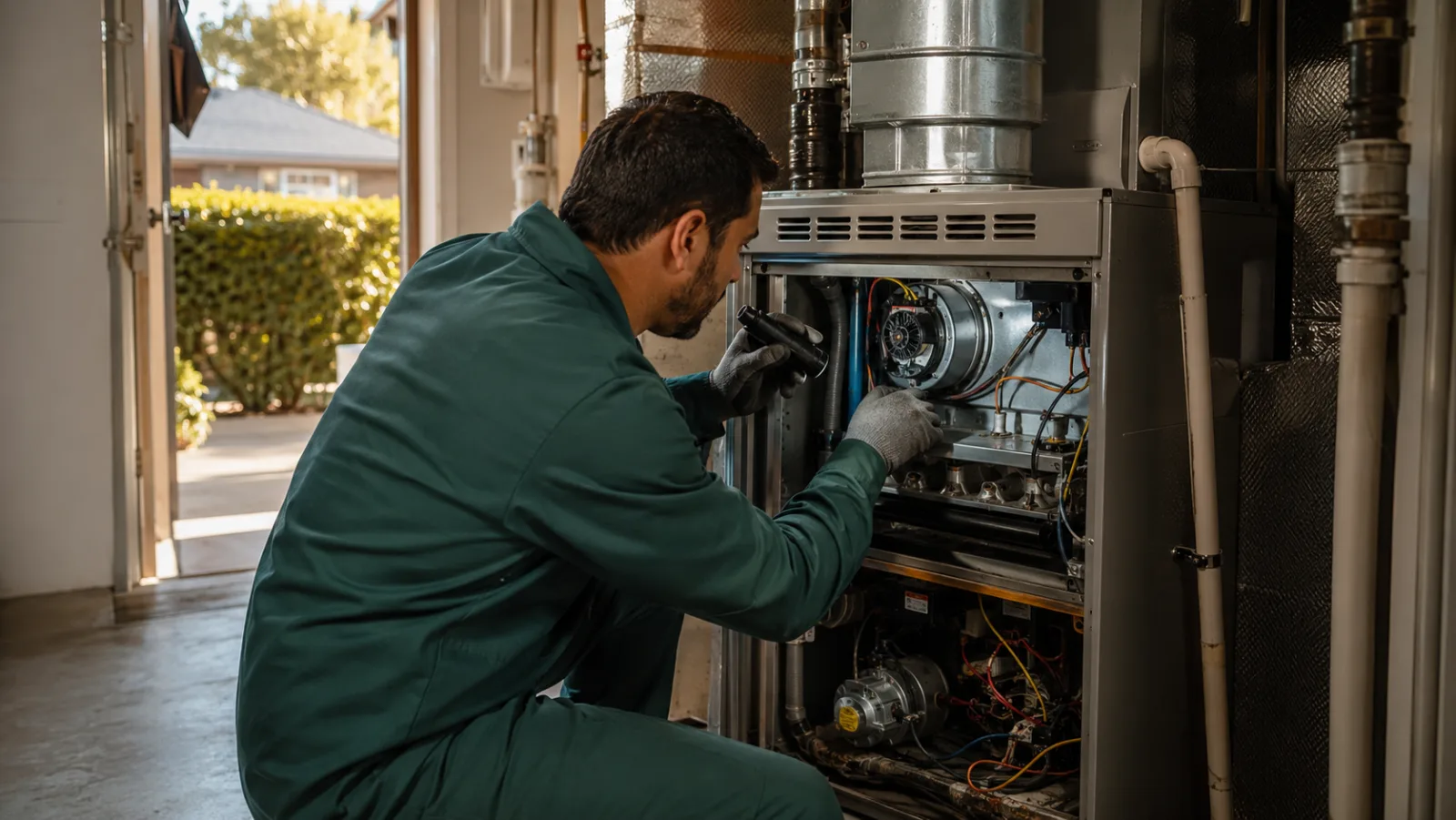
A professional furnace cleaning inspects, cleans, and tests every major component of the furnace, and the full service takes 1 to 2 hours for a standard system. The technician works through the burners, the ignitor, the heat exchanger, the blower, the condensate drain, the flue, and the filter in sequence. Each component below is part of a complete service.
Inspecting and Cleaning Furnace Burners & Ignitors
The technician cleans the burners and inspects the ignitor first. Dirty burners cause inefficient fuel combustion, which wastes fuel, produces soot, and raises carbon monoxide output. The technician clears the burner ports so the flame burns clean and even.
The ignitor demands a careful hand. A furnace ignitor accepts light cleaning, but its brittle silicon-carbide element cracks under rough handling. Carbon and dust buildup on the ignitor prevents it from reaching the temperature that lights the burners, so the furnace fails to fire on a cold morning. The technician gently removes that buildup or replaces a worn ignitor before it fails.
Checking the Condensate Drain, Flue, and Chimney
The technician clears the condensate drain and inspects the flue and chimney for blockages. A high-efficiency furnace produces water as it burns fuel, and the condensate drain carries that water away. A clogged drain backs up water and shuts the furnace down.
The flue and chimney route combustion gases out of the home. Those gases include carbon monoxide. A blocked flue or chimney forces the dangerous gases back into the living space instead of outside. A gas furnace chimney needs inspection and cleaning on the annual visit for exactly this reason: a blockage turns the exhaust path into a health hazard.
Furnace Filter Maintenance: Can Filters Be Cleaned and Reused?
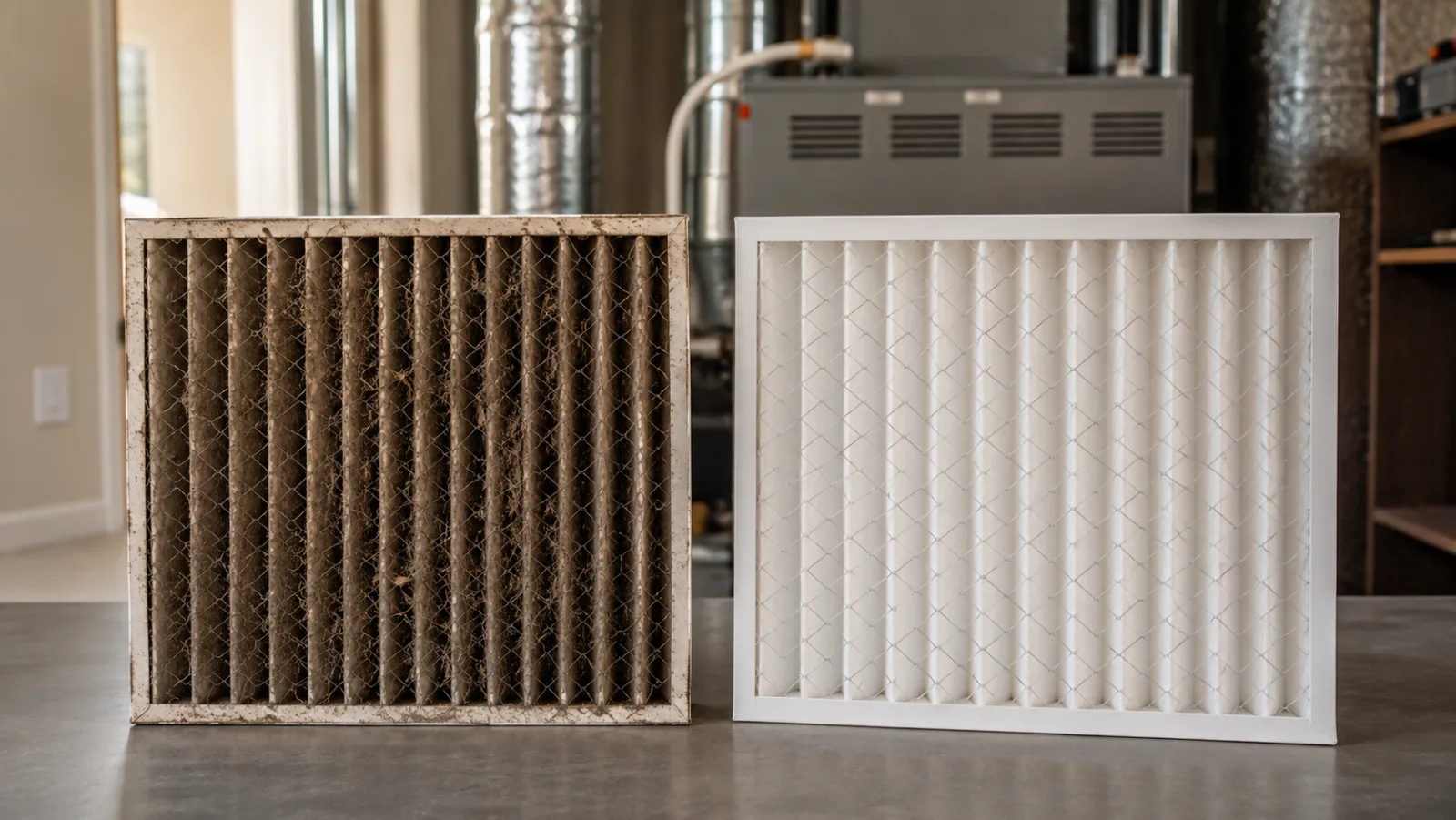
Disposable furnace filters cannot be cleaned and reused; washable electrostatic filters can. Disposable fiberglass and pleated filters trap dust in fibers that tear and lose their seal when washed, so the homeowner replaces them every one to three months. A washed disposable filter no longer filters correctly.
Washable electrostatic and electronic filters are built for reuse. The homeowner rinses the filter, dries it fully, and reinstalls it. Reading the label settles the question: the manufacturer marks a filter as either disposable or washable, and the two are never interchangeable.
How Much Does Furnace Cleaning Cost?
Furnace cleaning cost varies by region, system type, and the condition of the unit. A standard annual tune-up costs less than a service that includes repairs or heavy soot removal.
While standard diagnostic fees apply, our complete breakdown of furnace cleaning costs shows what to expect to pay for your specific unit.
Do Furnace Ducts and Vents Need Cleaning Too?
The furnace and the ductwork are two separate systems on two separate schedules. The furnace is the heat-producing unit and needs cleaning once a year. The ductwork is the distribution system that carries the heated air through the home, and it needs cleaning every 3 to 5 years.
That difference matters. Cleaning the furnace removes soot and combustion residue from the burners and heat exchanger. Cleaning the ducts removes the dust, dander, and debris that collect inside the vents and blow back into the rooms. A homeowner asking how often furnace ducts should be cleaned follows the 3-to-5-year interval in most cases.
Three conditions shorten that interval. Mold growth inside the ducts, a pest infestation, or excessive dust each triggers an earlier cleaning. A professional air duct cleaning clears the distribution system, while the annual furnace service protects the heat-producing unit. Together they keep the whole HVAC system clean.
DIY Furnace Cleaning vs. Hiring a Professional
A homeowner handles the basic furnace upkeep, and a certified technician handles the safety-critical work. Both roles matter, and knowing the line between them protects the home.
| You can do yourself | Leave to a professional |
|---|---|
| Change the furnace filter on schedule | Run a combustion analysis for carbon monoxide |
| Vacuum the exterior housing and vents | Test the electrical draws on motors and controls |
| Keep the area around the furnace clear of debris | Pull and brush the heat exchanger |
| Note unusual noises, smells, or short cycling | Calibrate the thermostat and test safety switches |
The DIY tasks keep the furnace breathing between visits. The professional tasks require training, tools, and instruments a homeowner does not own. A technician pulls and brushes the heat exchanger, tests the electrical draws, runs a combustion analysis, and calibrates the thermostat, the steps that catch a carbon monoxide leak or a failing part before it becomes an emergency.
For homeowners searching who cleans furnaces near me, the answer is a certified technician who performs the full safety inspection, not just a surface wipe-down. Professional service is the safest and most cost-effective long-term choice, because a single missed heat-exchanger crack costs far more than a year of maintenance. Book a professional furnace cleaning service before the heating season, and start winter with a furnace you can trust.
Frequently Asked Questions
How often should a gas furnace be cleaned?
A gas furnace requires professional cleaning and inspection once a year. Homes with multiple pets need service every 6 to 9 months, and any home needs an immediate cleaning after remodeling. The ideal time is late summer or early fall, before the heating season begins.
Do furnaces really need to be cleaned every year?
Yes. Annual cleaning protects three things: safety, efficiency, and the warranty. A yearly inspection catches a cracked heat exchanger before it leaks carbon monoxide, keeps the burners firing efficiently, and satisfies the documented maintenance most manufacturers require to keep coverage valid.
How long does a furnace cleaning take?
A standard professional furnace cleaning takes 1 to 2 hours. The technician cleans the burners, inspects the ignitor and heat exchanger, clears the condensate drain, checks the flue, and tests the system. A heavily soiled furnace or one needing repairs takes longer.
Can furnace filters be cleaned and reused?
Only washable filters. Disposable fiberglass and pleated filters tear when washed and must be replaced every one to three months. Washable electrostatic and electronic filters rinse clean, dry, and reinstall. The manufacturer’s label states which type a filter is.