Why Is My Furnace (Or Heater) Blowing Cold Air? The Complete Troubleshooting Guide
Why your furnace or heater blows cold air: thermostat, dirty filter, flame sensor, lockout resets, and duct leaks, plus when to call a pro.
A furnace blowing cold air feels like a major breakdown, but the most common causes are simple and fixable without tools. Often the culprit is a thermostat setting, a clogged filter, or a safety system that shut the burners off while the fan keeps running. This guide walks through the fixes in order, from a 30-second thermostat check to the duct leaks hiding in your attic, and shows you exactly when the problem crosses the line into a job for a certified HVAC technician.
Work through the sections top to bottom. The early fixes are free and take seconds; the later ones tell you when it is time to call for help.
The Immediate DIY Fix: Check Your Thermostat Settings
The most common reason a furnace blows cold air is a thermostat fan set to “ON” instead of “AUTO.” This is the first thing to check, and it costs nothing to fix.
Here is the difference. On the AUTO setting, the blower fan runs only when the furnace is actively heating, so every bit of air from the vents is warm. On the ON setting, the blower motor runs continuously even between heating cycles. Between those cycles, no combustion is happening, so the fan simply pushes unheated, room-temperature air through your vents. That air feels cold against your skin, even though nothing is broken.
The fix takes seconds: switch the fan setting from ON to AUTO. While you are at the thermostat, confirm two more things: that the mode is set to HEAT, and that the target temperature is set a few degrees above the current room temperature. If the cold air stops, you are done. If it continues, move to the next check.
Overheating Protection: How a Dirty Filter Causes Cold Air
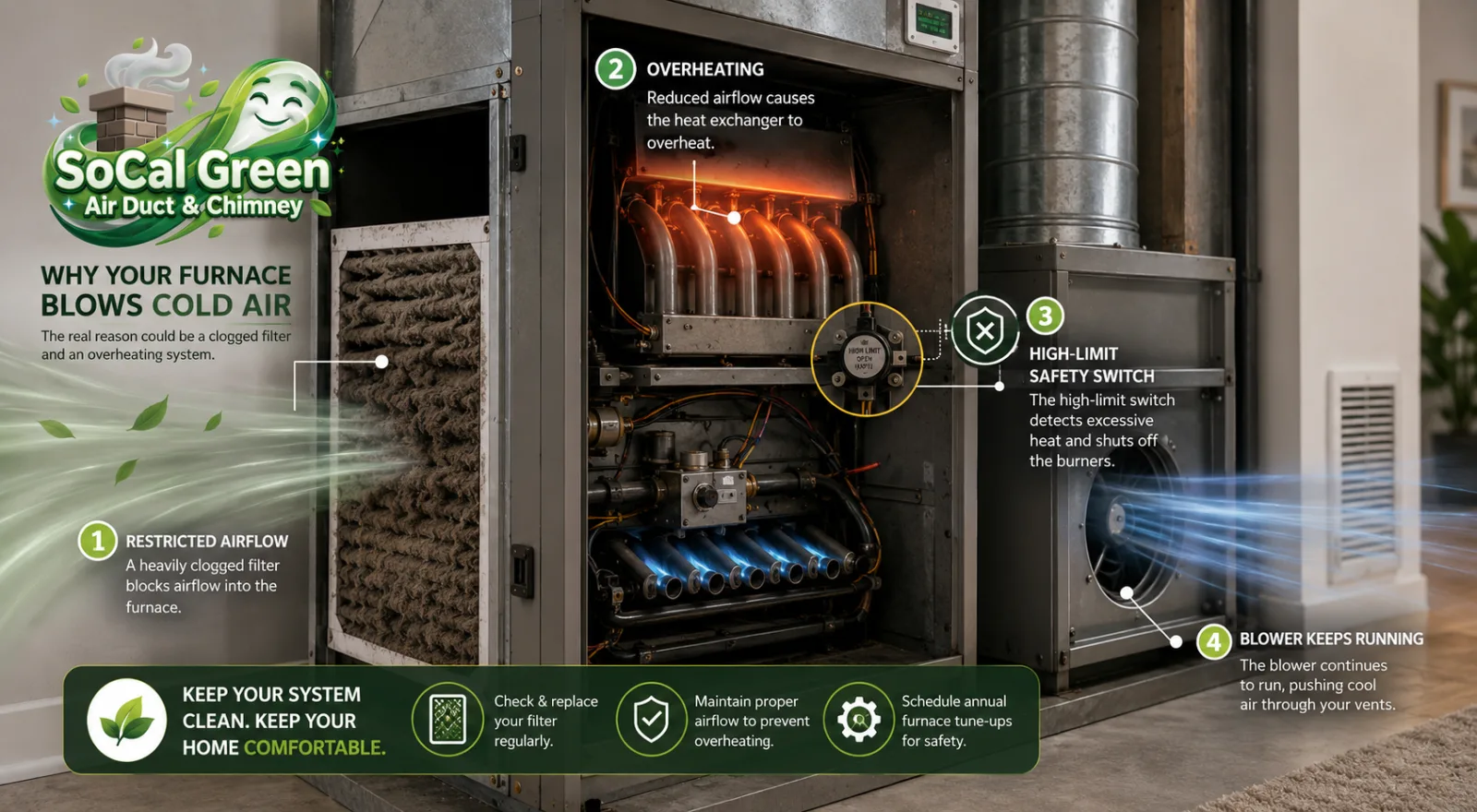
A dirty filter can make your furnace blow cold air by triggering its overheating safety shutoff. It sounds backwards, a clog causing cold air, but the mechanical chain is simple and it is one of the most common service calls in winter.
Here is the sequence. A clogged filter restricts airflow into the furnace. With too little air moving across it, the heat exchanger overheats. A safety device called the high-limit switch senses that overheating and shuts off the gas burners to prevent damage and fire. But the blower fan keeps running to cool the hot system down, so it pushes cold air through your vents until the furnace cools off. Then the cycle repeats.
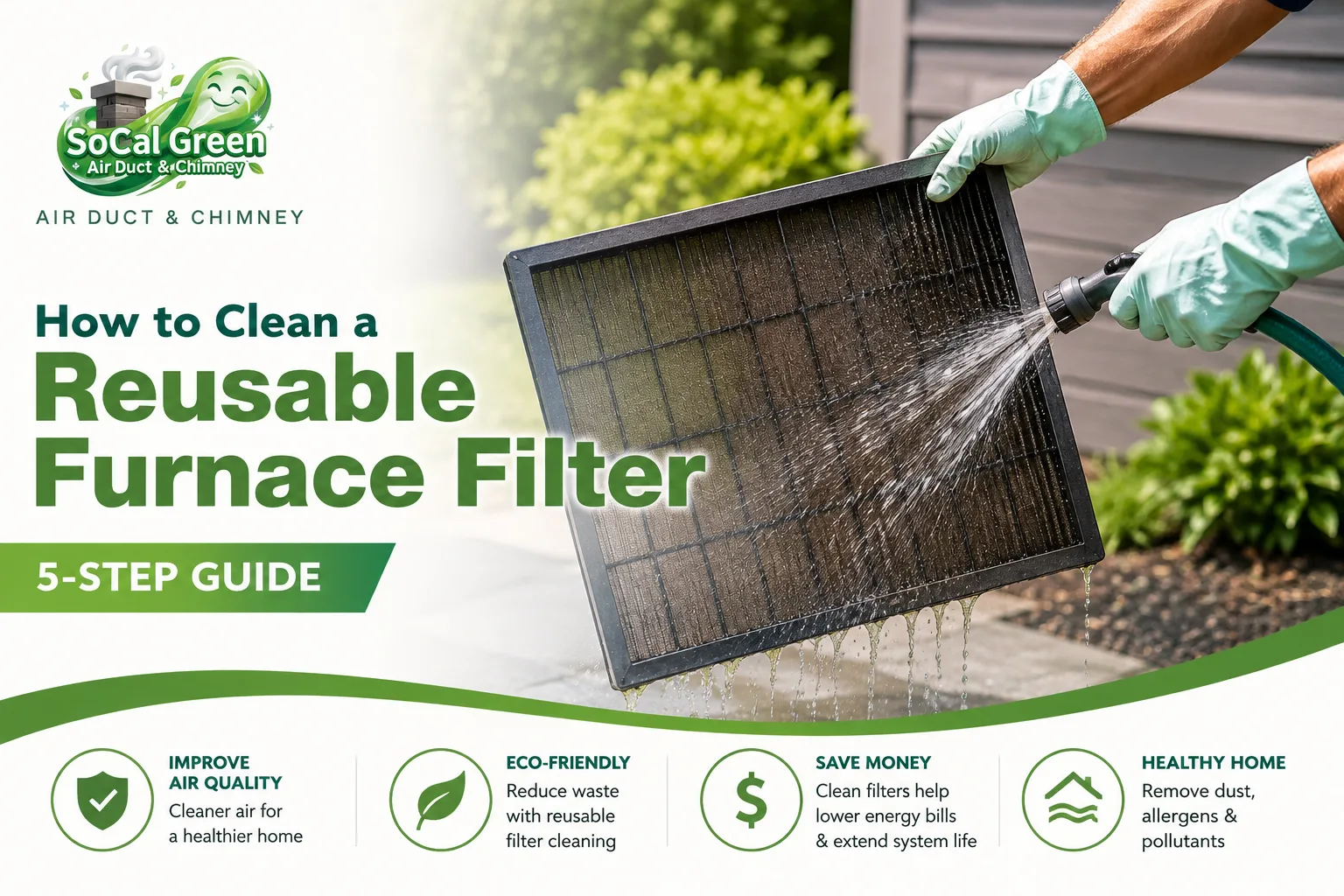
The fix is the filter. Replace a disposable filter or clean a washable one, and restore the airflow the system needs. Our guide on how to clean a reusable furnace filter walks through it. If the cold air returns after a fresh filter, the airflow restriction is deeper in the system, and it needs a professional look.
Fuel-Specific Troubleshooting: Gas vs. Electric Systems
The next step depends on whether you have a gas or an electric furnace, because the two heat your home in completely different ways. Identify your system, then follow the matching section below.
Diagnosing a Gas Furnace (Flame Sensors and Pilot Lights)
On a gas furnace, cold air often means the flame sensor shut the system down. The flame sensor is a safety component that confirms a flame is actually present after the gas valve opens. When the sensor becomes coated in carbon buildup, it can no longer detect the flame, so the control board closes the gas valve to prevent releasing unburned gas into your home. The burners shut off, the fan keeps running, and you get cold air.
Cleaning the carbon off the flame sensor is a common fix, though the gas connection makes many homeowners prefer a professional. Ignition type matters too. A modern furnace uses electronic ignition, which can fail electronically, while an older furnace may use a standing pilot light, a small flame that must stay lit. If a standing pilot light has gone out, the furnace has nothing to ignite the burners, and it blows cold until the pilot is safely relit.
Diagnosing an Electric Furnace (Heating Elements and Sequencers)
An electric furnace has no combustion, so cold air points to a heating element or a sequencer problem. Instead of burning fuel, an electric furnace heats air by passing it over electric heating elements, much like a giant toaster.
Two failures cause cold air here. First, a heating element can burn out, and a dead element produces no heat. Second, the sequencer can fail. The sequencer switches the heating elements on in a staged order, a few seconds apart, so they do not all draw power at once and overload the circuit. When a sequencer fails, it does not turn the elements on, and the blower circulates unheated air. Both the element and the sequencer are electrical components that require a technician to test and replace safely.
How to Reset Your Furnace After a Lockout
If your furnace tried to ignite several times and failed, it enters a safety “lockout” mode, and a simple reset often clears it. Modern furnaces are designed to stop trying after a few failed ignition attempts, so they do not flood the system with gas. The lockout is the furnace protecting your home.
To reset most furnaces, follow these steps:
- Turn off power to the furnace at the breaker or the furnace’s own switch.
- Wait about 30 seconds for the control board to fully reset.
- Restore power. The furnace will run its start-up sequence and attempt ignition again.
This general process works for most modern brands, including Lennox, Carrier, and Trane. One important warning: a reset is a one-time test, not a repair. If your furnace locks out again, or you find yourself resetting it repeatedly, an underlying problem is causing the failed ignition, such as a dirty flame sensor, a failing ignitor, or a gas-supply issue. Repeated lockouts mean it is time for a professional diagnostic, not another reset.
Ductwork Leaks: Is Your Heater Actually Working?
If the air is warm right at the furnace but cold at the vents, your ductwork is the problem, not the furnace. This is the systemic issue homeowners miss, because the unit itself is heating perfectly.
Supply ducts often run through unconditioned spaces like the attic or crawlspace. When those ducts develop large leaks, two things happen at once: the heated air escapes into the attic, and freezing attic or crawlspace air gets pulled into the supply lines. By the time the air reaches your register, it has cooled far below the temperature it left the furnace. You are literally paying to heat your attic.
The fix is sealing and repairing the duct system. Professional air duct repair finds and closes those leaks so the heat your furnace produces actually reaches your rooms. A quick test: if the vents closest to the furnace feel warmer than the ones farthest away, leaky ducts are a likely cause.
When to Call a Certified HVAC Technician
Call a certified HVAC technician the moment a fix involves the combustion chamber, the gas valve, or internal electrical components. There is a hard line between safe DIY maintenance and professional repair, and crossing it puts your home at risk of fire and carbon monoxide exposure.
Safe DIY tasks stop at the thermostat, the filter, a single breaker reset, and, for the confident, a careful flame-sensor cleaning. Everything past that belongs to a professional: opening the combustion chamber, testing or replacing the gas valve, replacing heating elements or sequencers, swapping a control board, or diagnosing repeated lockouts. The U.S. Consumer Product Safety Commission advises consumers not to service their own fuel-burning appliances and to rely on a qualified professional instead, precisely because these components carry carbon monoxide and fire risks.
SoCal Green’s certified technicians diagnose the real cause of cold air safely, from a coated flame sensor to a leaking duct run. If the simple fixes above did not solve it, book a professional furnace duct cleaning and inspection, and if you are not sure how often your system needs attention, see our guide on how often a furnace should be cleaned.
Book a furnace diagnostic with SoCal Green
Frequently Asked Questions
Why is my furnace blowing cold air?
The most common causes are a thermostat fan set to ON instead of AUTO, a dirty filter that tripped the overheating shutoff, a gas furnace’s dirty flame sensor closing the gas valve, or leaky ducts cooling the air before it reaches your vents. Work through each in order.
Why does my heat blow cold air when the fan is on?
On the ON setting, the blower runs nonstop even between heating cycles. Between cycles there is no combustion, so the fan pushes unheated room-temperature air through the vents, which feels cold. Switching the fan setting to AUTO fixes it, so the fan runs only during active heating.
Can a dirty filter really cause cold air?
Yes. A clogged filter restricts airflow, the heat exchanger overheats, and the high-limit switch shuts off the burners for safety while the fan keeps running. The result is cold air from the vents. Replacing or cleaning the filter restores normal heating.
How do I reset my furnace?
Turn off power at the breaker or furnace switch, wait about 30 seconds, then restore power so the furnace restarts its ignition sequence. This works for most brands, including Lennox, Carrier, and Trane. If it locks out again, stop resetting and call a professional.
Why is the air warm at the furnace but cold at the vents?
Leaky ductwork is the usual cause. Supply ducts running through the attic or crawlspace lose heated air and pull in cold air through large leaks, so the air cools before it reaches the register. Sealing and repairing the ducts restores warm airflow.