What Is Air Duct Cleaning? A Complete Guide for Los Angeles Homeowners
Learn what air duct cleaning is, how it works, and why Los Angeles homeowners need it for cleaner air, better airflow, and less dust.
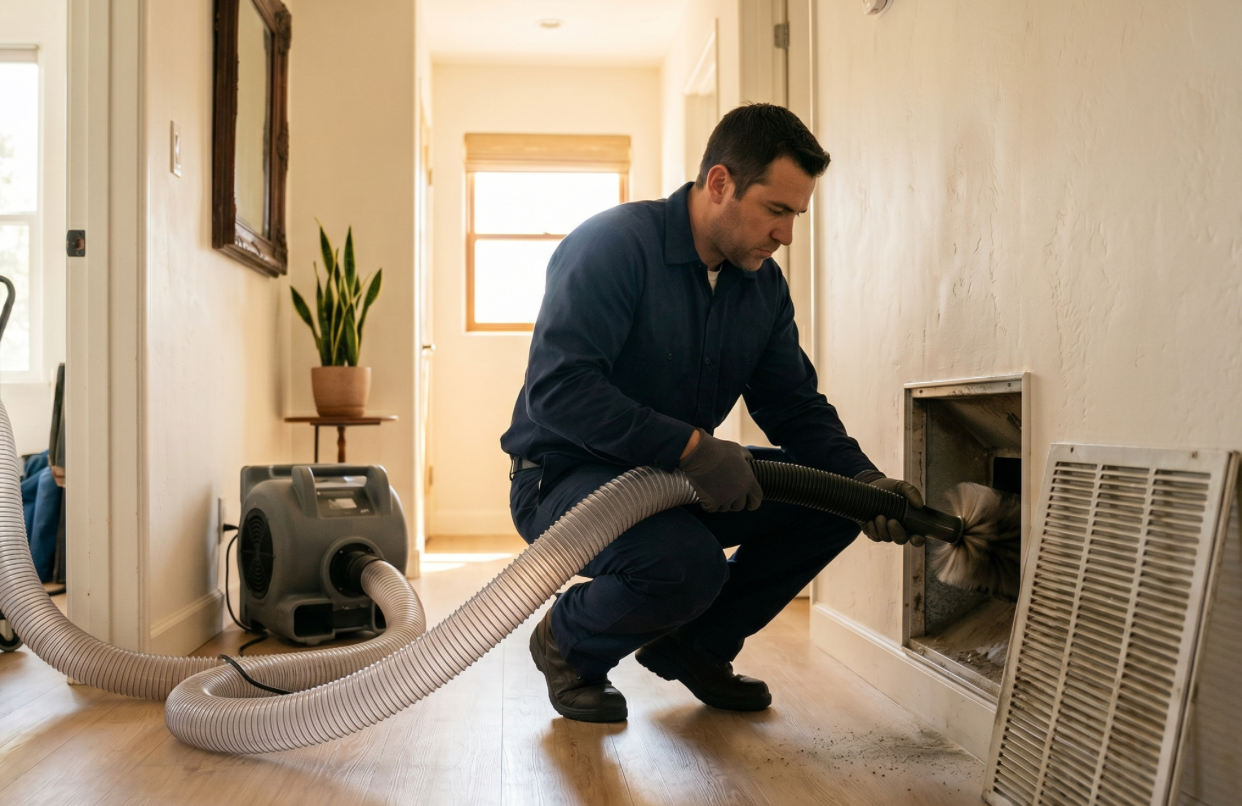
Walk through any home and you’ll see the vents. Small metal grilles on the wall, on the ceiling, sometimes on the floor. Most people don’t think twice about them.
But behind those grilles is a whole network, ducts running through your walls, attic, and crawlspace. Air travels through them every time your HVAC system runs. And whatever is inside those ducts travels with it, straight into the air you breathe.
That’s what makes air duct cleaning worth knowing about. Not a gimmick. Just a real part of how your home works.
What Is Air Duct Cleaning?
Air duct cleaning is the process of removing built-up dust, debris, and contaminants from inside your home’s duct system.
Your ducts carry conditioned air, heated in winter, cooled in summer, from the HVAC unit to every room in the house. Over time, dust settles inside those ducts. Mold spores land and grow if there’s any moisture. Pet dander collects. Pollen drifts in. In Los Angeles, wildfire ash and smog particles add to the mix.
None of that leaves on its own. It just builds up, and your HVAC system keeps pushing air through it, and into your home.
A proper air duct cleaning removes all of that. Not just from the vents you can see. From the entire system.
What Does Air Duct Cleaning Include?
This is where a lot of homeowners get misled. Some companies advertise duct cleaning and only vacuum the registers. That’s surface work. It’s not the same thing.
A real cleaning covers every part of the system that air moves through.
- Supply ducts carry conditioned air from the HVAC unit out to each room. These run through your walls and attic and collect dust over years.
- Return ducts pull room air back to the HVAC unit. They move a lot of air volume, and collect a lot of debris. Pet hair especially ends up here.
- Registers and grilles are the vent covers. Easy to see, easy to clean. But they’re also easy to skip if a company is cutting corners.
- Diffusers spread airflow into each room. They sit at the end of supply ducts and need cleaning too.
- The air handler housing surrounds the blower motor and other internal components. Debris that gets into this part of the system causes real problems.
- The blower motor and fan push air through the entire system. A dirty fan works harder and moves air less efficiently.
- The heat exchanger is where the air picks up heat or loses it depending on the season. Dust here affects how well your system conditions air.
A complete air duct cleaning service touches all of these, not just the first few you can reach from the hallway.
What Does Air Duct Cleaning Consist Of? The Three Phases
Phase 1, Inspection
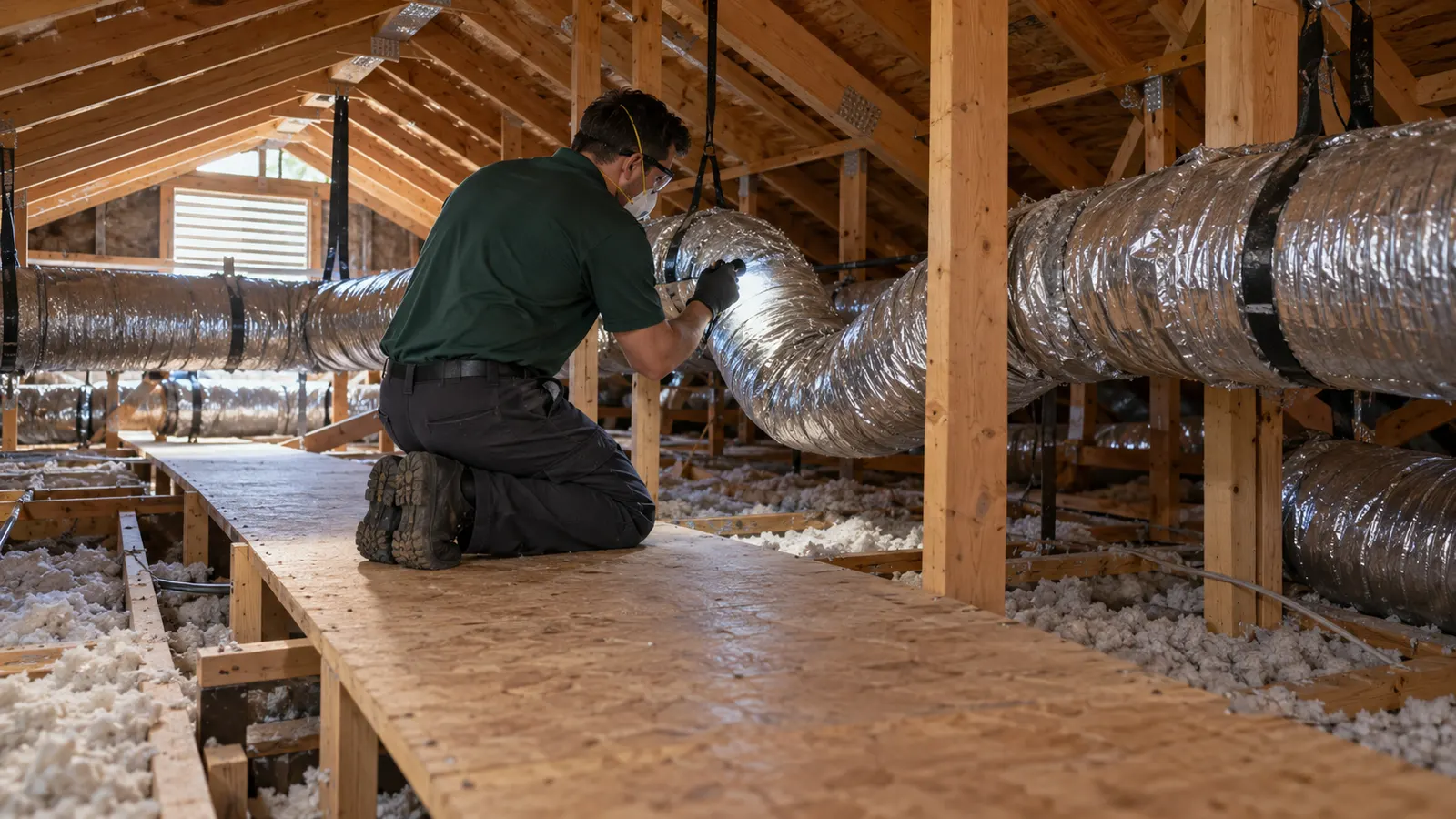
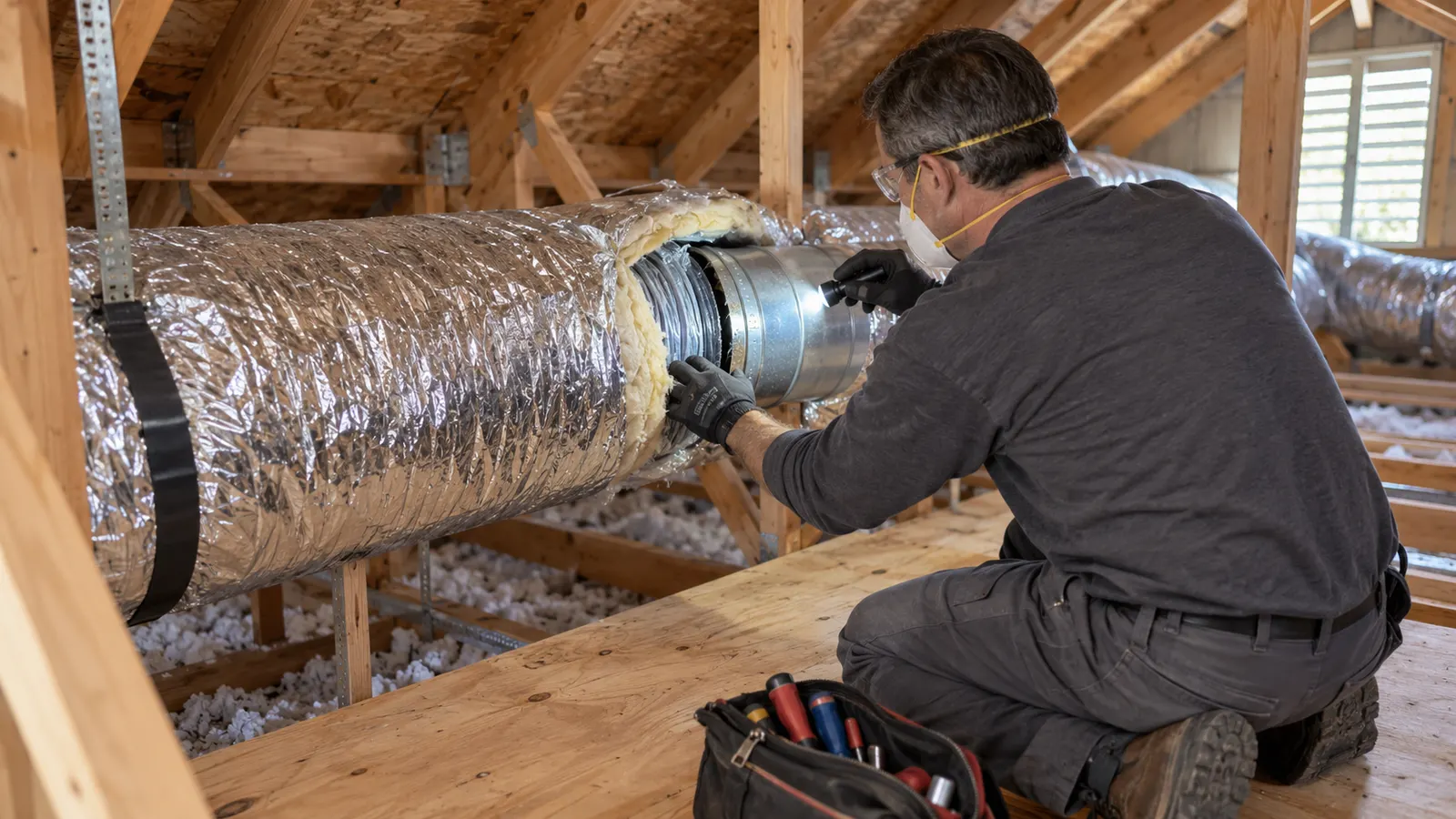
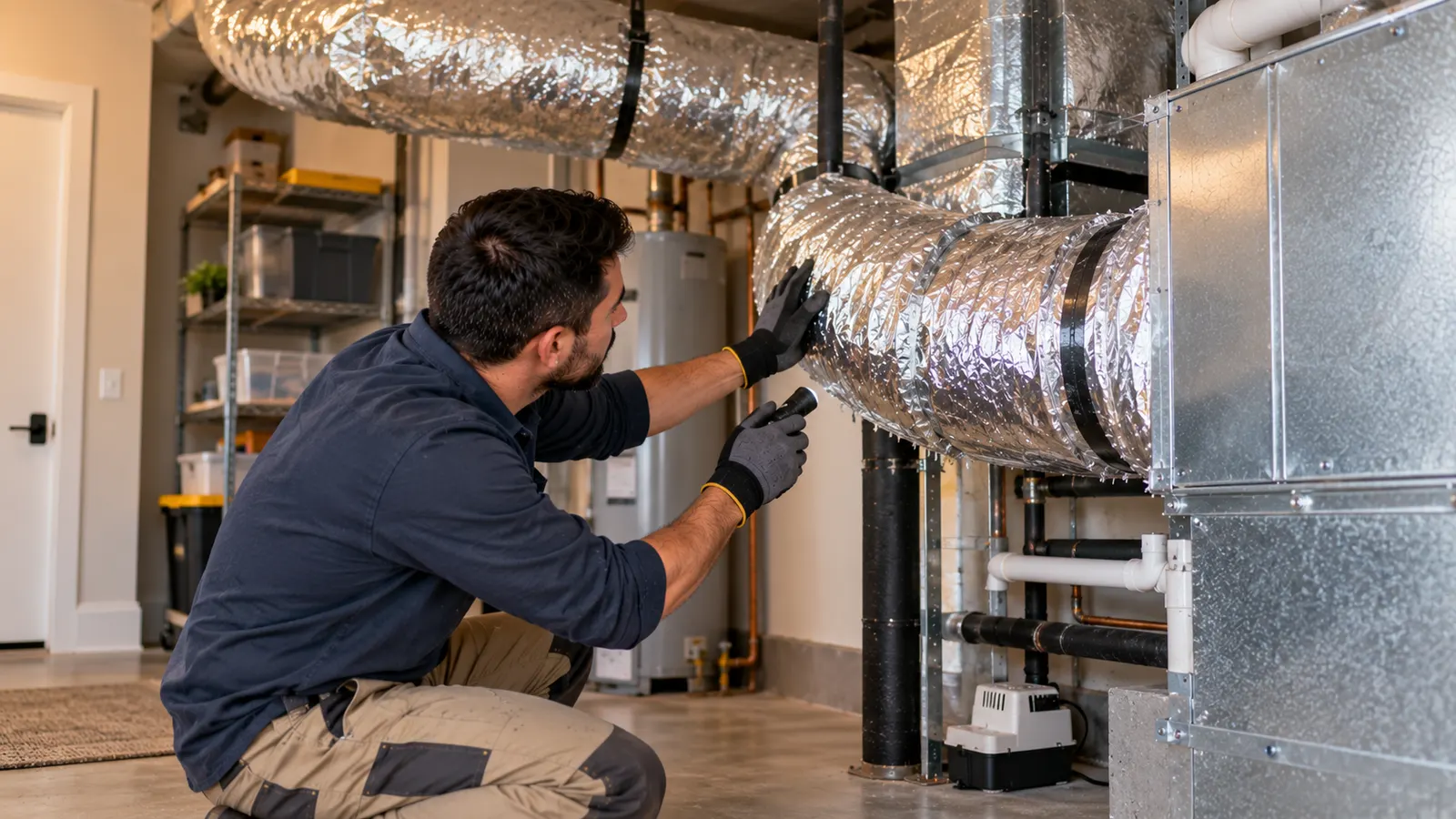
Before any cleaning starts, a technician runs a camera through your duct system. You can see the footage in real time. The camera shows the actual debris inside, how thick it is, whether there’s mold, whether moisture has gotten in.
This step tells you what you’re dealing with before anyone starts working. It also protects you. If there’s physical damage to the ducts, a disconnected joint or crushed flex duct, cleaning won’t fix it. You’d need repairs first. The camera catches that.
Any company that skips inspection and goes straight to cleaning doesn’t know what they’re cleaning. That’s a problem.
Phase 2, The Cleaning
Once inspection is done, the technician connects a HEPA vacuum to the duct system. Usually truck-mounted, these units generate far more suction than portable machines. The vacuum creates negative pressure throughout the system, which means debris moves toward it, not away from it.
That part matters. Without negative pressure, using agitation tools just moves contamination around instead of removing it.
With the vacuum running, the technician inserts agitation tools into each duct run. Rotary brushes spin against the duct walls and scrub off material that’s been building for years. Compressed air whips knock loose debris from corners and joints the brushes can’t fully reach. Everything feeds straight into the vacuum.
Then every register and grille comes off the wall. Each one gets cleaned separately. The buildup on vent covers goes right back into your air the second the system turns on, if you leave it there.
Phase 3, Sanitization
After mechanical cleaning, the technician applies an EPA-registered antimicrobial solution to the duct interior. It kills remaining bacteria and mold spores that survived the brushes. If there are odors, pet smells, smoke residue, that musty smell that usually means past moisture, an odor-neutralizing agent handles the source, not just the surface.
A second camera inspection confirms everything is clean. Before and after, documented.
How Does Air Duct Cleaning Work From Start to Finish?
Here’s the whole job in order.
- The technician arrives and runs a camera through the duct system. You see the interior before anything is touched. Debris load, mold presence, physical condition, all of it documented.
- Next, the truck-mounted HEPA vacuum connects to the system. It runs the entire time cleaning is happening. Negative pressure keeps everything moving toward the collection point.
- Rotary brushes go into each supply and return duct run. The technician works through the system section by section. Compressed air tools follow. All loosened material is captured by the vacuum.
- Registers and grilles come off the wall. Each one cleaned individually, reinstalled when done.
- EPA-registered sanitizer goes into the duct interior. Odor neutralizer follows if needed.
- Final camera inspection. Job closed.
For a full residential system, this takes two to four hours. A job done in under an hour skipped most of these steps.
How Are Air Ducts Cleaned When There’s Mold?
Mold in ductwork requires a specific approach. Standard cleaning is not enough on its own.
If the camera inspection finds visible mold growth inside the ducts, the technician needs to identify where the moisture is coming from. Cleaning mold without fixing the source means it comes back. Usually within months.
Once the moisture source is identified and corrected, the mechanical cleaning removes the physical growth. Then an EPA-registered antimicrobial treatment is applied throughout the affected sections. This kills remaining spores and creates an environment less hospitable to regrowth.
Severe mold contamination, especially in homes with water damage history, may require a separate remediation step before standard duct cleaning begins.
What Does Air Duct Cleaning Do for Your Home?
Four things change in a home after a proper cleaning.
Dust accumulation drops. The layer of dust that settles on your furniture and surfaces comes largely from your duct system. Less contamination cycling through the system means less landing in your rooms.
Airflow improves. Years of buildup inside ducts creates physical resistance. The HVAC system works harder and moves less air. Clean ducts reduce that resistance. Rooms that were always too warm or never cooled right often improve noticeably.
Indoor air quality gets better. The EPA has identified indoor air quality as a significant health concern in part because contaminants in duct systems circulate continuously. Mold spores, pet dander, pollen, and fine particles don’t just settle. They cycle through the air in every room until they’re physically removed from the source.
Odors go away properly. Pet smells and smoke residue embed in duct surfaces. An air freshener sprayed into a vent does nothing to the embedded material. A mechanical cleaning followed by proper sanitization removes what’s causing the odor, not just the smell in the air.
What Is Air Duct Cleaning vs. HVAC Cleaning, Are They the Same?
No. They’re related, but they cover different things.
Air duct cleaning is scoped to the duct network. Supply ducts, return ducts, registers, grilles, and diffusers. That’s what a standard duct cleaning service covers.
Full HVAC cleaning adds the components inside the unit itself. The evaporator coil, which develops biological growth on its own surface. The blower motor assembly. The drain pan, where standing moisture creates mold. The heat exchanger.
If you’re dealing with a mold problem, duct cleaning alone won’t solve it. Mold on the evaporator coil requires coil cleaning, a separate scope. When you’re getting a quote, ask specifically which components are included. The answer tells you what you’re actually buying.
Why Los Angeles Homeowners Need This More Than Most
Los Angeles is not a typical city for air quality. A few specific conditions here make duct contamination worse and faster than most places.
Wildfire smoke. During Santa Ana wind events, smoke from wildfires across Southern California pushes directly into homes throughout the LA Basin. The particles in wildfire smoke are extremely fine, fine enough to pass through standard HVAC filters and settle into ductwork. After the Eaton Fire in January 2025, homes across Pasadena, Altadena, and the San Gabriel Valley had smoke ash inside their duct systems. Homes near fire zones often need cleaning specifically because of this, separate from any normal maintenance schedule.
Smog and particulate matter. The San Gabriel Valley and eastern Los Angeles Basin regularly see poor air quality days. PM2.5, fine particles small enough to reach deep into your lungs, enters homes through HVAC intake points. In a high-pollution environment, ducts collect fine particulate matter much faster than they would in a cleaner-air city.
Desert dust from the Valley. The San Fernando Valley sits adjacent to high-desert terrain. Van Nuys, Chatsworth, Reseda, Granada Hills, these neighborhoods see higher dust infiltration than coastal areas. Registers in these homes coat visibly within weeks of cleaning. The inside of the ducts follows the same pattern.
Older homes in Glendale, Pasadena, and central LA. A large portion of the housing stock in these areas was built in the 1950s and 1960s. Original ductwork from that era, never cleaned, sometimes never even inspected, has had 50 to 60 years to accumulate debris. The material in those systems isn’t loose dust. It’s compressed, sometimes hardened, and in some cases has moisture damage or biological growth that’s been present for decades.
Multi-pet households. Pet dander, tiny particles shed from animal skin, is one of the most common airborne allergens. It’s light enough to stay airborne for hours and small enough to pass basic filters. It builds up in return ducts especially. In homes with multiple pets, this accumulates fast and cycles through the system continuously.
Is Air Duct Cleaning a Scam?
The service itself is legitimate. But the industry has a real scam problem, and Los Angeles homeowners have been targeted by it for years.
The pattern is consistent: very low flat-rate price advertised online. Technician arrives, vacuums a few visible registers, leaves in 45 minutes. Nothing changes. The technician then pitches expensive add-ons, UV systems, chemical coatings, unnecessary treatments.
Here’s how you spot a legitimate service before anyone shows up at your door.
- They perform a camera inspection before cleaning starts. This is not optional for a professional job, it’s the foundation of NADCA’s cleaning standard.
- They use truck-mounted HEPA equipment that creates actual negative pressure. You’ll hear the machine. It’s not a shop vac.
- They use agitation tools, rotary brushes and compressed air whips, inside the duct runs, not just at the registers.
- They remove and individually clean every register and grille.
- They apply EPA-registered sanitizer after mechanical cleaning.
- They show you camera footage before and after.
NADCA, the National Air Duct Cleaners Association, sets the industry standard for professional duct cleaning in the U.S. Ask any provider you’re considering whether they follow NADCA’s ACR protocol. If they don’t know what that means, you have your answer.
Ready to See What’s in Your Ducts?
SoCal Green Air Duct & Chimney serves Los Angeles, Glendale, Burbank, Pasadena, Van Nuys, Sherman Oaks, Studio City, Chatsworth, and communities across the San Fernando Valley.
Every job starts with a camera inspection before any cleaning begins. We use truck-mounted HEPA equipment and follow NADCA standards on every job.
Call (888) 280-2285 or book a free inspection.
Frequently Asked Questions
What is air duct cleaning?
Air duct cleaning is the physical removal of dust, debris, mold spores, allergens, and other contaminants from inside a home’s duct system. A professional cleaning covers the supply ducts, return ducts, registers, grilles, diffusers, and the air handling unit, every component that air moves through.
What does air duct cleaning do?
It removes the built-up contamination inside your ductwork so your HVAC system circulates cleaner air. After cleaning, most homeowners notice less dust settling on surfaces, better airflow to rooms that were previously uneven, and reduced allergens cycling through the air.
What does air duct cleaning include?
A professional cleaning includes camera inspection, negative pressure vacuuming, agitation of duct walls with rotary brushes and compressed air tools, individual cleaning of all registers and grilles, and EPA-registered sanitization. Full HVAC cleaning also covers the coil, blower, and drain pan.
What does air duct cleaning consist of?
Three phases: inspection with a camera, mechanical cleaning using a HEPA vacuum system and agitation tools, and sanitization with an EPA-approved antimicrobial solution. Each phase serves a specific function, inspection identifies problems, cleaning removes contamination, sanitization handles biological material.
How does air duct cleaning work?
A HEPA vacuum creates negative pressure inside the duct system. Agitation tools, rotary brushes and compressed air whips, dislodge built-up material from duct walls. The negative pressure pulls all of that loosened debris into the vacuum. Registers and grilles are removed and cleaned separately. Sanitizer is applied last.
How is air duct cleaning done in a real home?
The technician starts with a camera inspection, connects the vacuum system to create negative pressure, works through each duct run with agitation tools, removes and cleans every register individually, applies sanitizer, then runs a final camera inspection. A full residential job takes two to four hours.
How are air ducts cleaned when they’re badly contaminated?
The same process applies, inspection, negative pressure, agitation tools, sanitizer, but the technician may need to make multiple passes through heavily contaminated duct runs. If there’s mold, the moisture source needs to be identified and fixed first, or the mold returns after cleaning.
What is air duct cleaning vs. HVAC cleaning?
Air duct cleaning covers the duct network only. HVAC cleaning is broader, it adds the evaporator coil, blower motor, drain pan, and heat exchanger. These are different services with different scopes. Ask specifically which components any quote includes.