Does Air Duct Cleaning Really Work? An Honest Answer
Does air duct cleaning actually make a difference or is it a waste of money? An honest look at when it's worth it (and when it isn't). SoCal Green, (888) 280-2285.
If you’ve searched this question, you’ve probably also seen someone call air duct cleaning a scam. You’ve maybe gotten a $59 coupon in the mail and wondered what the catch is. So let’s give you the honest answer, backed by what the EPA and the air duct industry’s own standards actually say — not a sales pitch.
Here’s the short version, and then we’ll explain it.
The Short Answer
Yes, air duct cleaning works — but only when your ducts actually need it, and only when it’s done the right way.
That’s the part most ads leave out. Cleaning removes the dust, debris, mold, or pest mess that has built up inside your ductwork. If there’s a real problem in there, removing it makes a real difference. If your ducts are already clean, paying to “clean” them again does almost nothing.
So the better question isn’t “does it work.” It’s “do my ducts need it.” The rest of this page helps you answer that for your own home.
What the EPA and NADCA Actually Say
There are two trusted sources worth knowing here, and they don’t fully agree — which is actually useful.
The EPA takes a careful, condition-based view. It does not recommend cleaning your air ducts on a routine schedule. Instead, it says to clean them as needed. The EPA also points out that duct cleaning has never been proven to prevent health problems on its own, and that much of the dust inside ducts sticks to the duct walls rather than blowing into your rooms. In plain terms: dirty ducts are one possible source of indoor dust, but they’re not always the main one.
The EPA does, however, name clear cases where cleaning makes sense — substantial mold, a pest infestation, or ducts so clogged with debris that particles are actually being pushed into your home. The EPA also recommends having any fuel-burning fireplace, stove, or furnace inspected before each heating season for safety, which is why an honest chimney cleaning and inspection matters too.
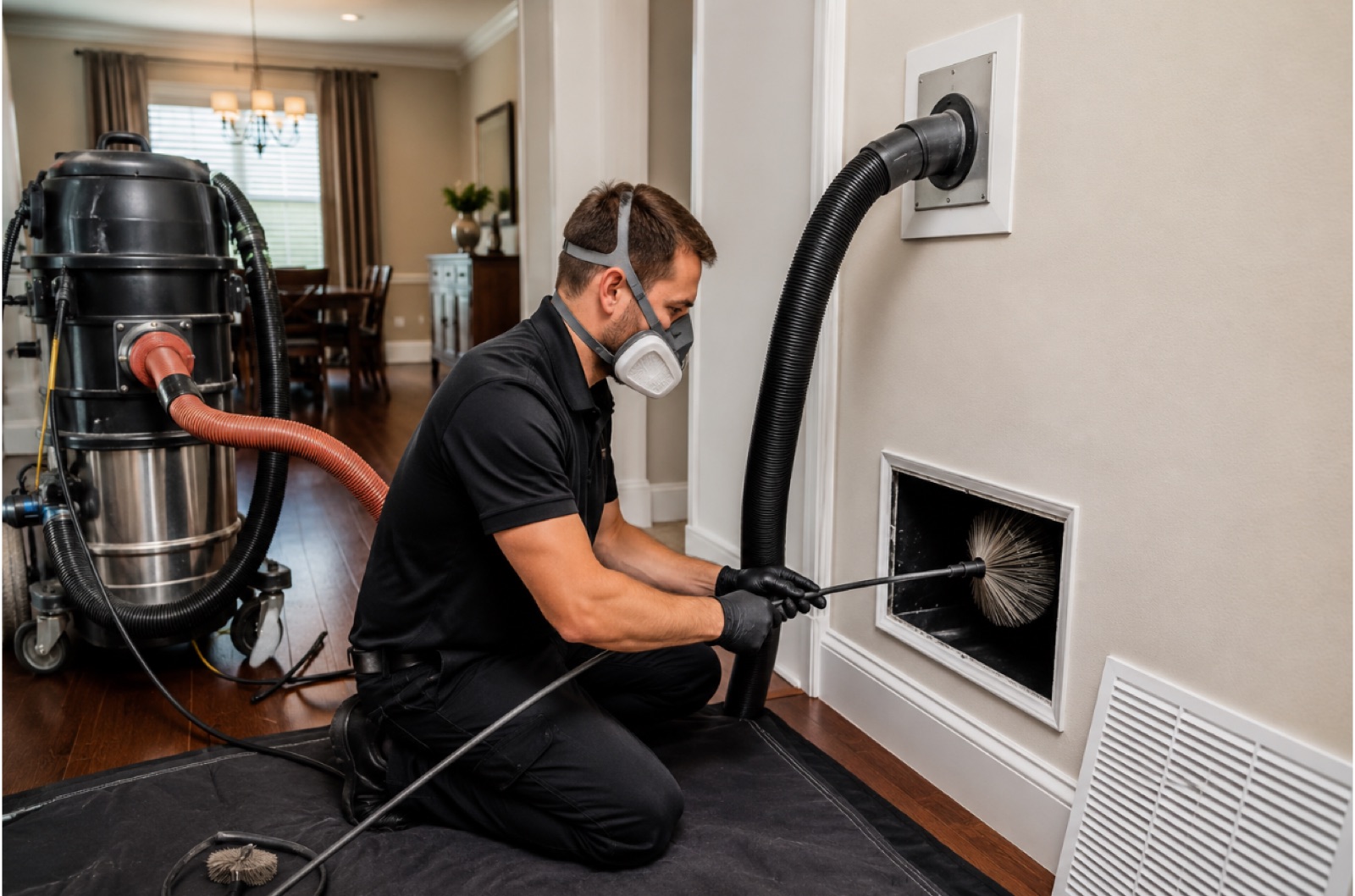
NADCA — the National Air Duct Cleaners Association — is the industry’s own standards body. It takes a more proactive view, with a general guideline of inspecting and cleaning every three to five years based on what an inspection finds. NADCA’s bigger contribution is its ACR Standard, which defines how cleaning should be done: a method called source removal, where a technician physically dislodges the debris and pulls it out under constant vacuum, then verifies the result.
Put both together and you get a sensible rule: don’t clean on a blind schedule, and don’t clean because a flyer told you to. Inspect first, then clean when there’s a real reason — and make sure it’s done properly.
When Air Duct Cleaning IS Worth It
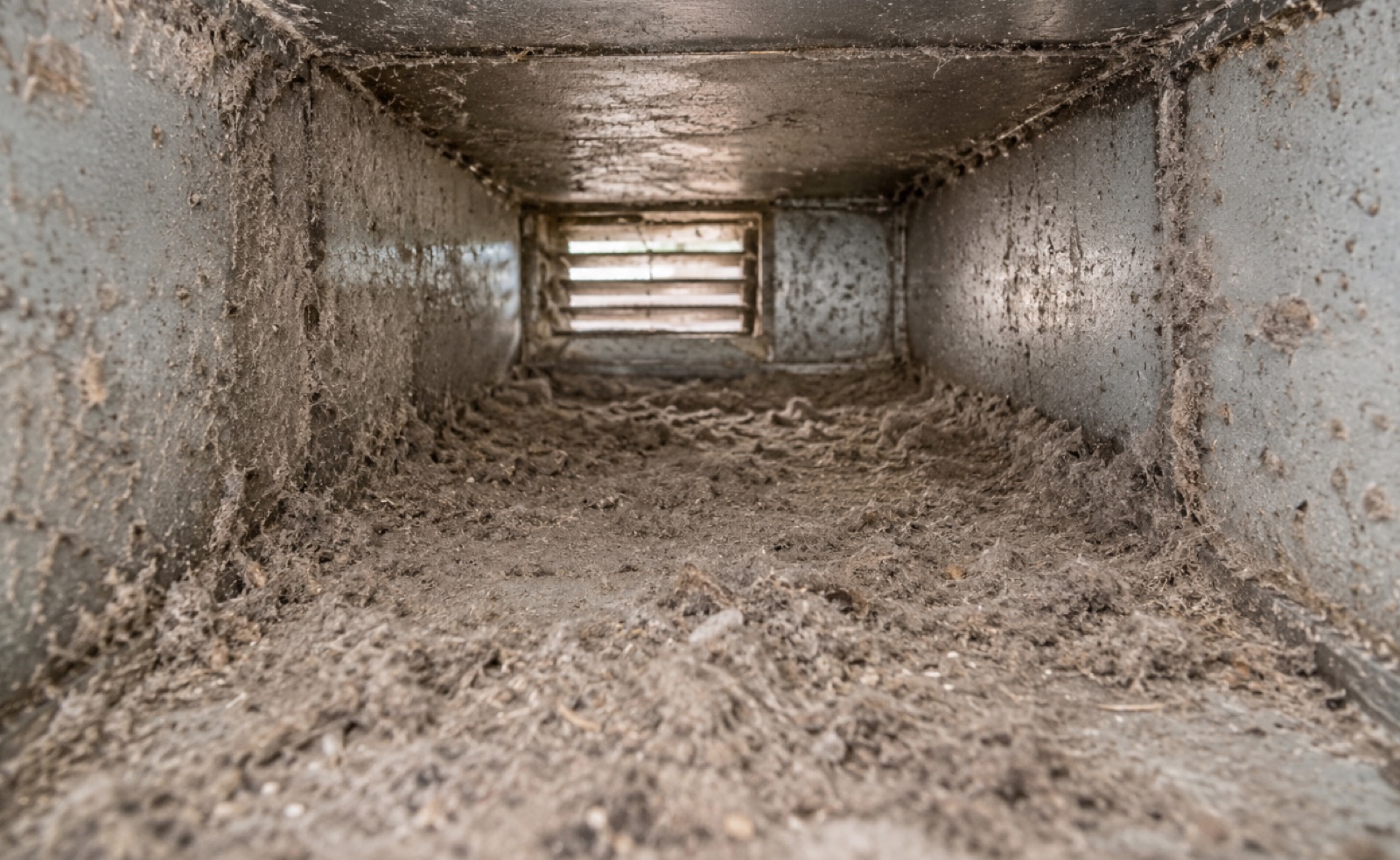
These are the situations where cleaning reliably earns its cost. If one or more of these sounds like your home, it’s probably worth doing.
Visible buildup and debris. If you can see dust caked around your vents, see it puff out when the system kicks on, or pull a register cover and find a gray fur of dust inside, that’s a clear sign. Heavy buildup like this can restrict airflow and does push particles into your living space. Our air duct cleaning service is built to remove exactly this kind of accumulation.
Confirmed mold. A persistent musty smell that gets stronger when the AC or heat runs, or visible dark growth around vents and inside the ductwork, points to mold. This is one of the cases the EPA specifically calls out. Mold in a duct system spreads spores every time the air moves, so removing it at the source genuinely helps. This is its own job, which is why we treat it as mold removal from air ducts rather than a standard clean.
Pest or rodent activity. Droppings, nesting material, a chewed-up look inside the ducts, or a bad smell with no other source can mean rodents or insects have gotten in. Beyond the mess, this is a health issue, and it’s another case the EPA flags as a clear reason to clean. The ducts need to be cleaned and sanitized after the pest problem itself is handled.
After renovations or new construction. Remodeling throws fine drywall dust, sawdust, and grit everywhere, and a surprising amount ends up inside open or unsealed ducts. Running your system afterward spreads it through the whole house. A post-construction air duct cleaning clears that out so you’re not breathing the remodel for months.
Allergy and asthma households. If someone at home has allergies or asthma, reducing the dust, pollen, and dander that recirculate through the ducts can help cut down on triggers. Be realistic, though: cleaning is one piece of a bigger plan, not a cure by itself. It works best alongside good filtration and the kind of fixes covered under indoor air quality and allergen and dust reduction. For many Los Angeles–area homes that deal with canyon pollen, dry-season dust, and wildfire smoke, that combination makes a noticeable difference.
A local note worth adding: after a nearby wildfire, even homes that never caught fire can be left with smoke residue coating the inside of their ducts. The system pulls it in and recirculates it for weeks. Across the LA and Ventura County areas we serve, post-smoke cleaning is one of the most legitimate reasons homeowners call — and one where the benefit is easy to see.
When It’s NOT Worth It
Honesty cuts both ways. Here’s when we’ll tell you to save your money.
Your ducts are already clean. If an inspection shows light, normal dust and no mold, pests, or clogging, routine cleaning “just to be safe” isn’t supported by the evidence. The EPA says as much.
You only want lower energy bills. Cleaning can help airflow if ducts were badly clogged, but it’s not a reliable way to cut your power bill on its own. If efficiency is the goal, sealing leaks or upgrading filtration usually does more.
You have a ductless mini-split system. No ducts means there’s nothing to clean in this sense. These systems need coil and filter care instead, not duct cleaning.
You’re being pushed toward foggers and chemical biocides you didn’t ask about. The EPA urges caution with routine chemical treatments inside ducts. They’re rarely needed in a normal home, and a company leading with them is a red flag.
If a company can’t show you a reason to clean, there usually isn’t one.
What “Working” Looks Like (and What to Realistically Expect)
A proper cleaning should produce results you can actually see and measure:
- Before-and-after proof. Photos or camera footage of the inside of the ducts, showing debris gone.
- Less dust at the registers and, often, a fresher smell if odor was coming from the ducts.
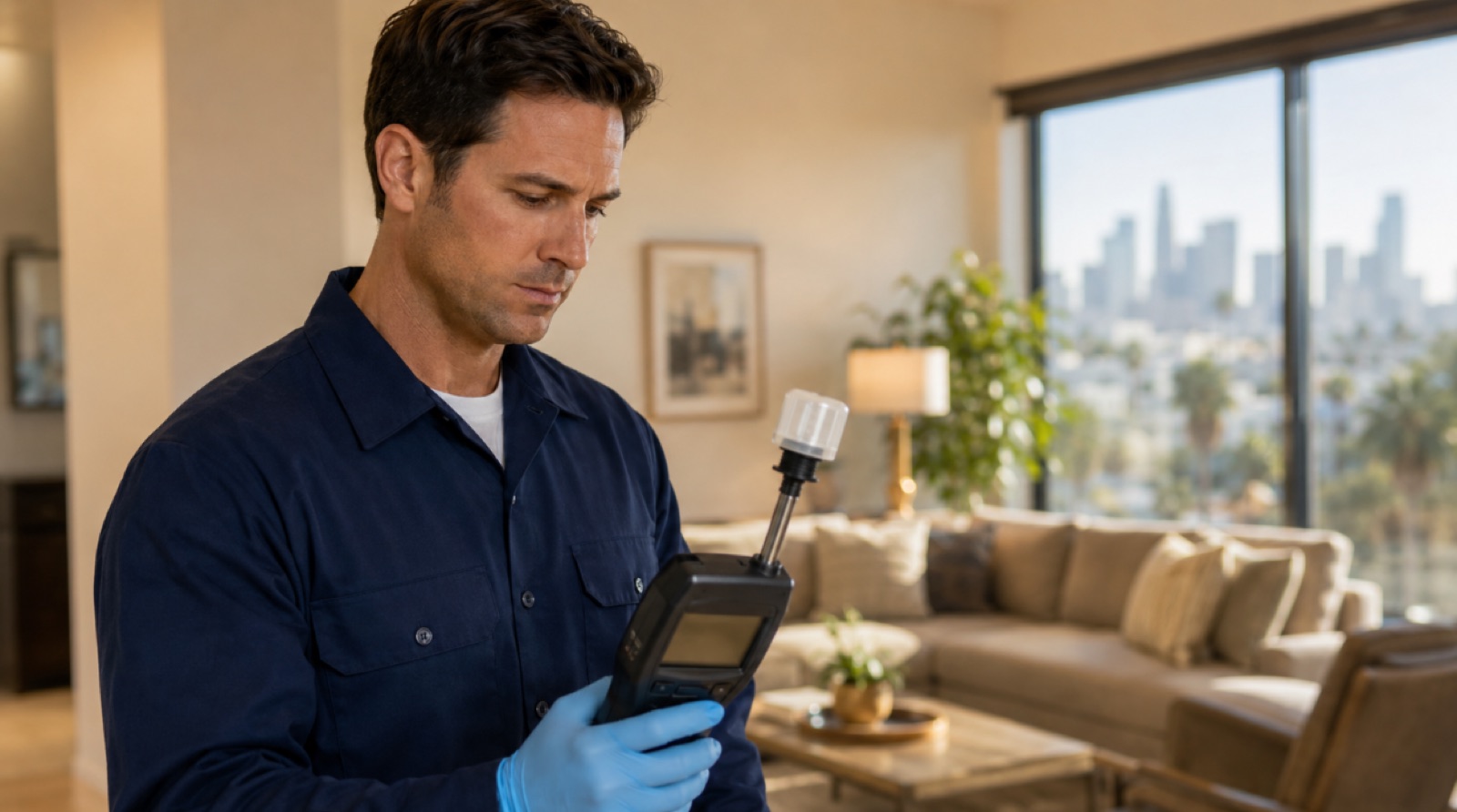
- Better airflow if the ducts had been restricted — something a technician can check with a simple airflow reading before and after.
What it won’t do: it won’t permanently allergy-proof your home, won’t fix a moisture or ventilation problem on its own, and won’t keep ducts spotless forever. If dust keeps returning fast, the real cause is usually something else — a failing filter, a duct leak pulling in attic dust, or an outside source. A good technician will point that out instead of just selling you another cleaning.
How to Make Sure It’s Done Right So It Does Work
This is the part that decides whether cleaning helps or just empties your wallet.
The role of source removal vs. “blow and go.” The cheap-coupon version of duct cleaning is often what the industry calls “blow and go” — someone sticks a shop vac on a couple of vents, spends twenty minutes, and leaves. That doesn’t remove debris stuck to the duct walls, so the system is barely cleaner than before.
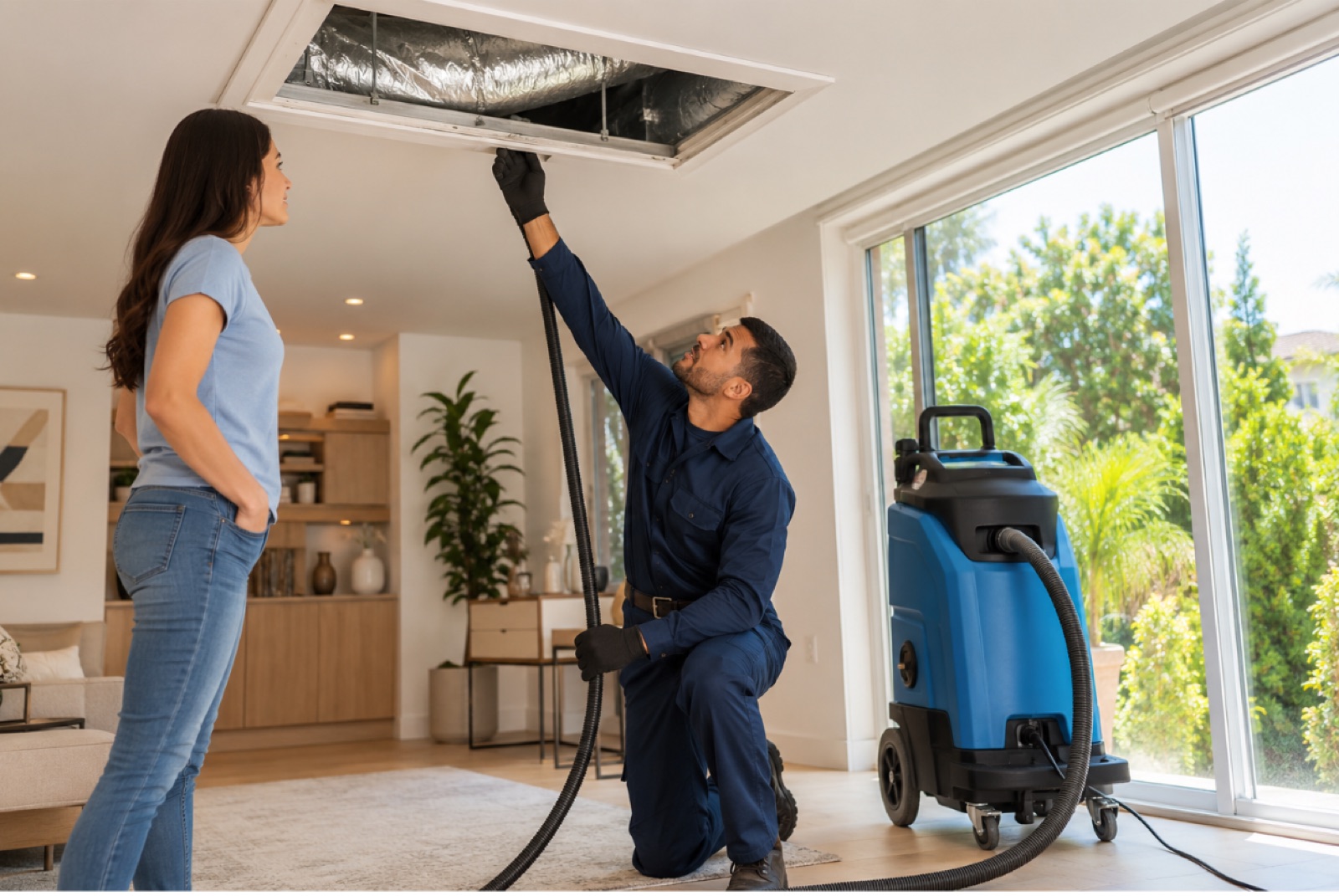
Source removal, the method in NADCA’s standard, is different. The technician physically agitates the debris loose — using brushes or compressed-air whips — while a powerful vacuum under negative pressure captures it and pulls it out of the system entirely. The whole run gets cleaned: supply ducts, return ducts, registers, and the components that need it. That’s the version that actually works.
When you hire someone, look for a NADCA-trained, properly insured company that inspects first, uses source removal, shows you before-and-after results, checks airflow, and gives you written, upfront pricing. Be wary of prices that sound too good to be true — they usually come with surprise add-ons once the crew is in your attic.
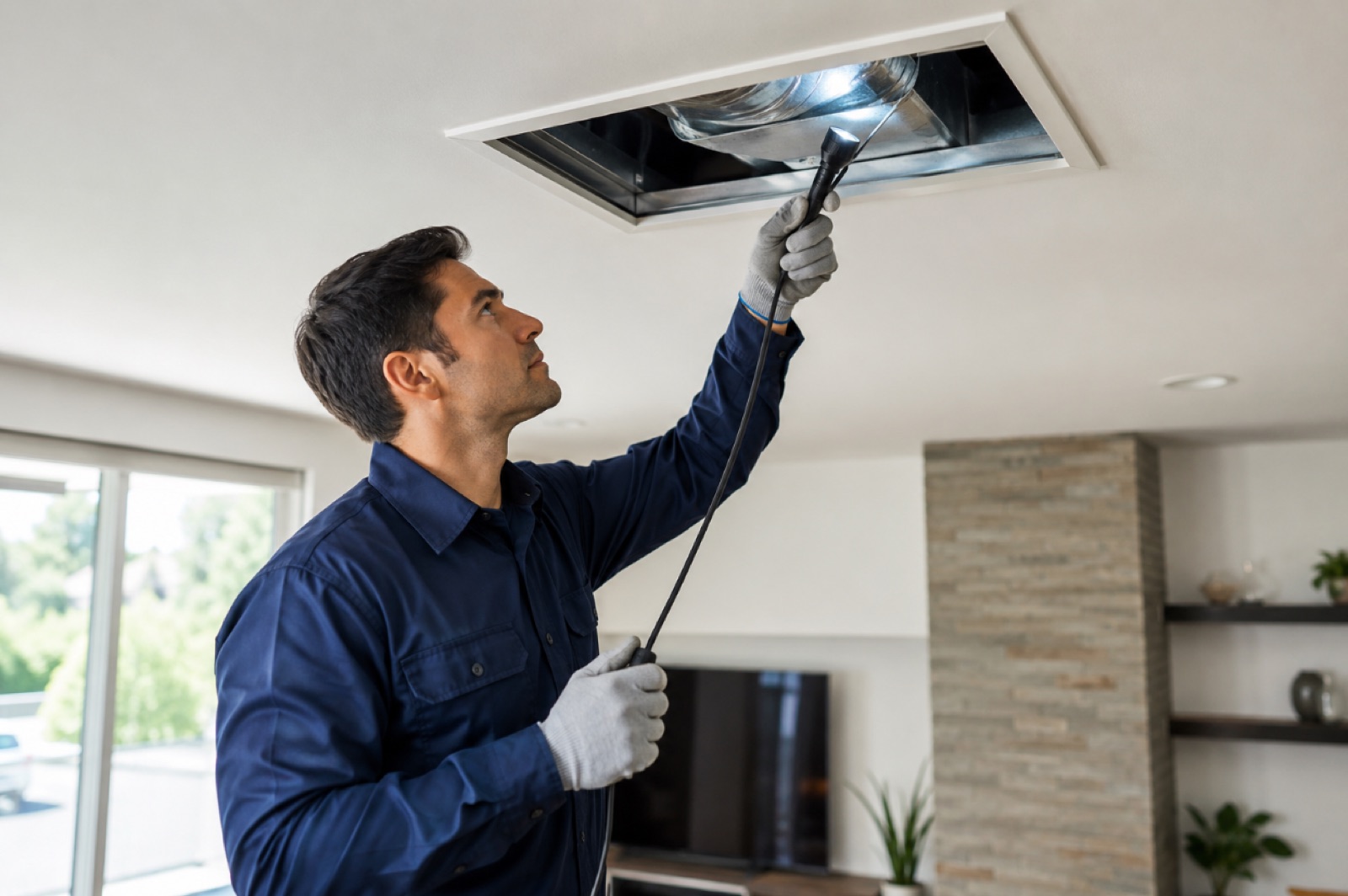
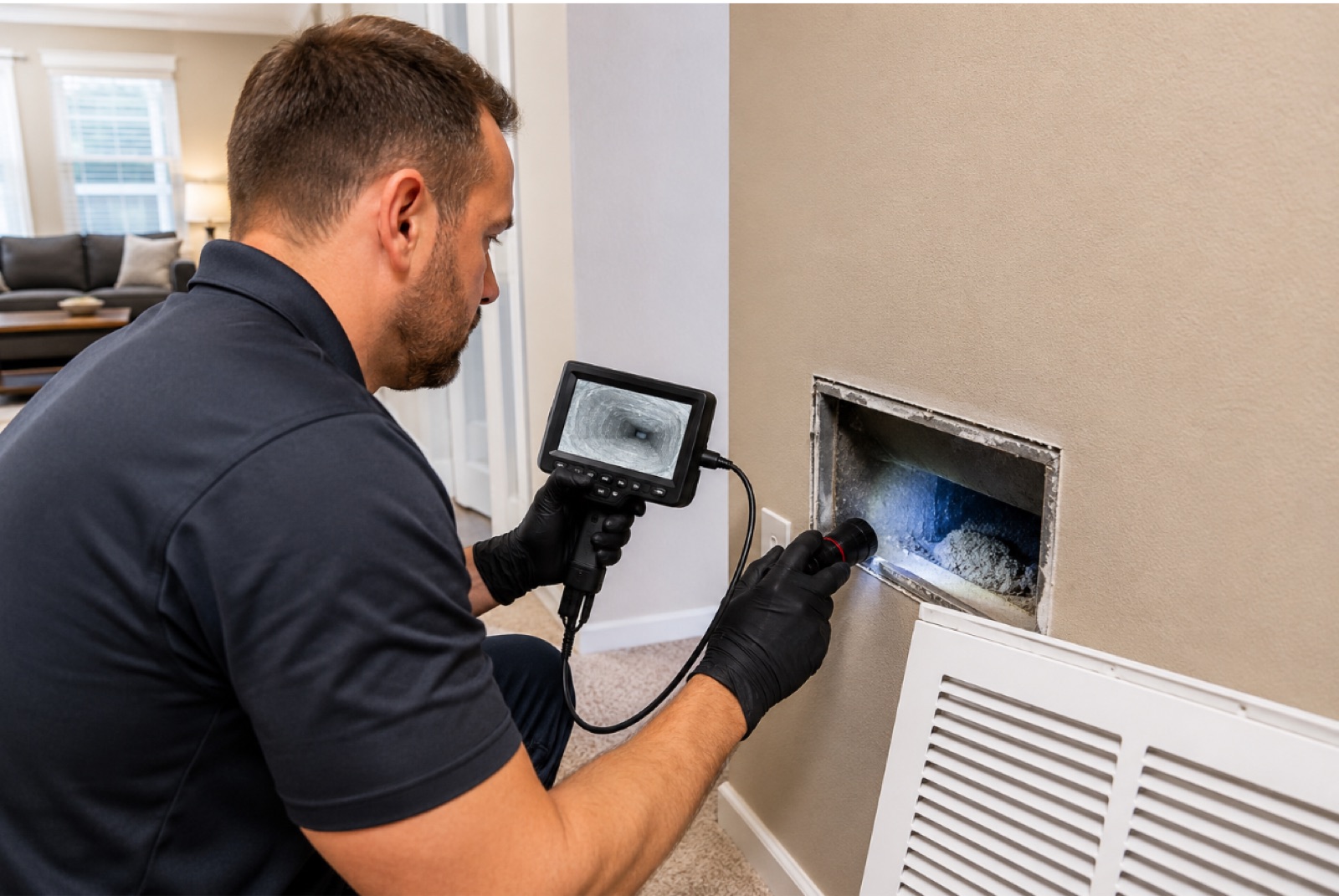
From our technicians: When we inspect a system, we pop the return and a few registers and look inside with a light or camera. We’re checking for matted dust on the duct walls, debris collecting at the boots, any sign of moisture or mold, rodent droppings or nesting, and leftover construction dust. We also note the airflow. If the ducts genuinely look clean, we say so — telling you that you don’t need the service is part of doing the job right.
Frequently Asked Questions
Is air duct cleaning a scam?
The service isn’t a scam, but some companies run it like one. The honest version — inspect, clean only when there’s a real reason, use source removal, and prove the result — delivers real value. The scammy version is the $39 coupon that turns into a high-pressure upsell for treatments you don’t need. Knowing the difference protects you.
Will I notice a difference right away?
Often, yes — especially if your ducts were dirty. People commonly report less dust settling on furniture, a fresher-smelling home, and better airflow soon after. If your ducts were already clean, you won’t notice much, which is exactly why a good company inspects before recommending the work.
How often does it actually need doing?
There’s no one-size answer. NADCA’s general guideline is every three to five years, but the real trigger is need: visible buildup, mold, pests, a remodel, or smoke. Homes with pets, allergy sufferers, or heavy local dust may need it sooner; a clean, lightly used system may go longer. When in doubt, inspect rather than assume.
Does it really help with allergies?
It can help reduce the dust, pollen, and dander that recirculate through your home, which lowers triggers — but it works best as part of a broader plan that includes good filters and addressing other sources. On its own, it’s a help, not a cure. Pairing it with the right indoor air quality steps gives allergy and asthma households the best result.
Not Sure If You Actually Need It?
That’s the right instinct — and it’s the whole point of this page. The smartest move isn’t to book a cleaning blindly or to write it off as a waste. It’s to have someone look first and tell you the truth.
We’ll inspect your system, show you what’s actually inside your ducts, and give you a straight answer — including “you don’t need this right now” when that’s the case.
Or call us directly at (888) 280-2285. Same-day appointments are available most weekdays across the Los Angeles and Ventura County areas.