How Does Air Duct Cleaning Work? Process Explained Step by Step
Learn how professional air duct cleaning works using HEPA vacuums, negative pressure, and rotary brushes to remove dust safely and improve airflow.
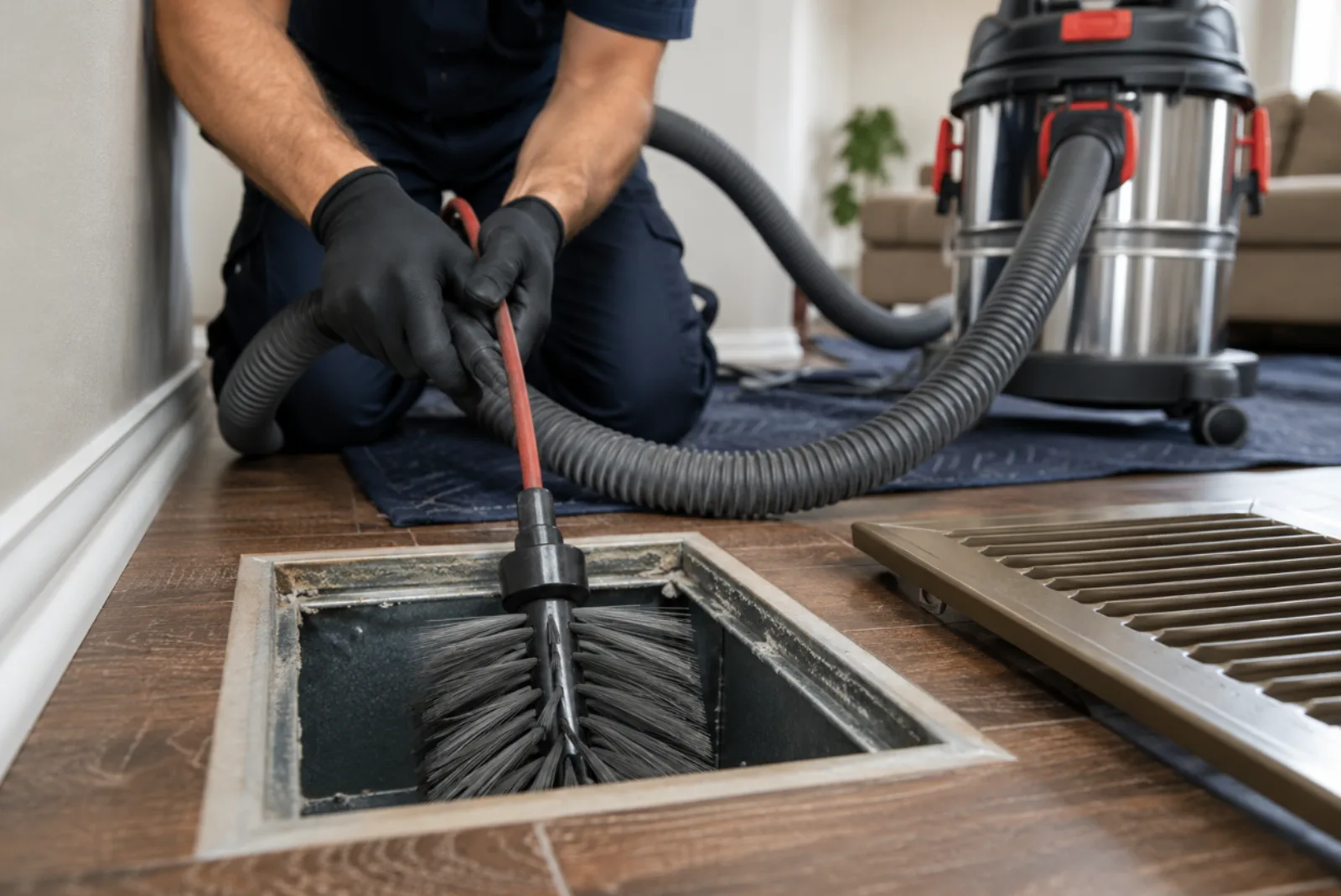
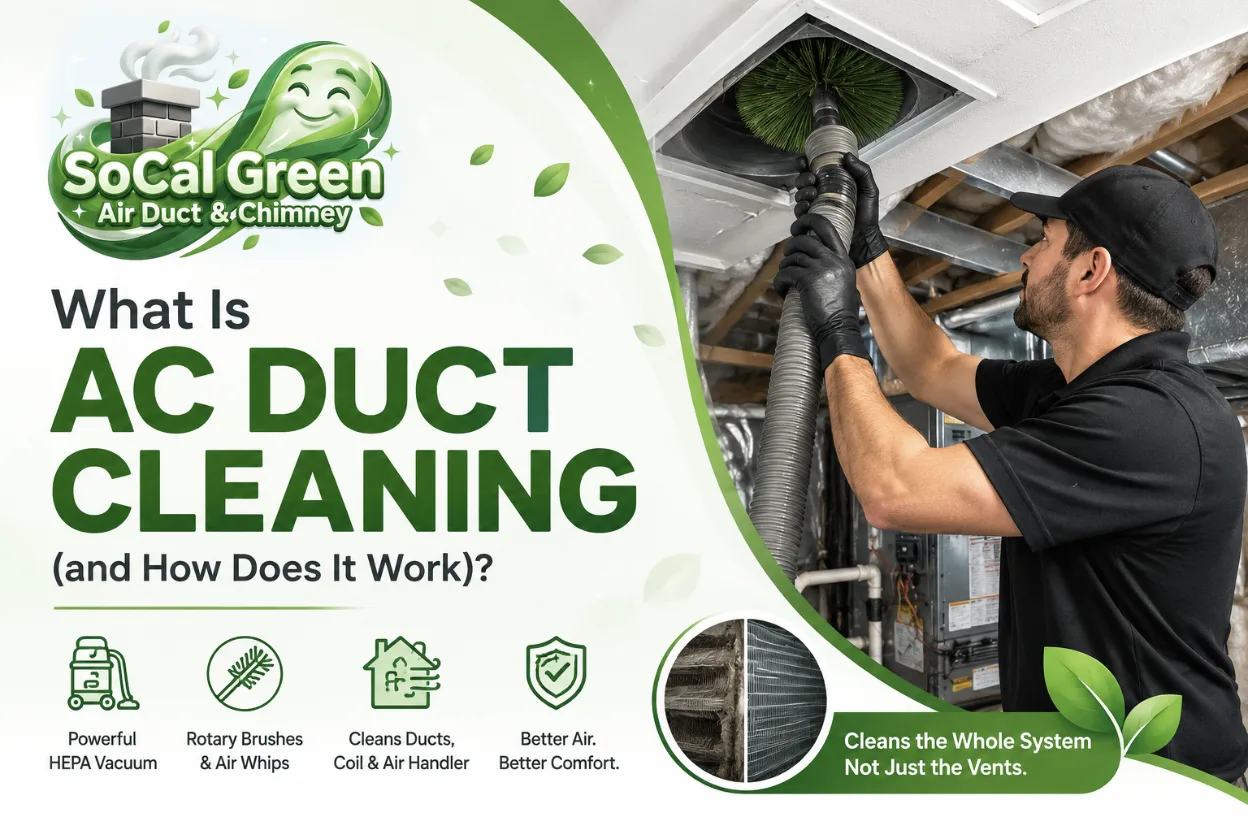
Professional air duct cleaning works by pulling the entire dust problem out of your HVAC system at the source. A technician hooks a powerful, HEPA-filtered vacuum to your ductwork and puts the whole system under negative pressuremeaning air gets pulled toward the machine, not pushed into your rooms. Then they use rotary brushes and air tools to knock loose the dust stuck to the duct walls. The vacuum carries it all away. This “source removal” method is the standard set by NADCA, the industry’s main group, and it’s why a real cleaning takes hours, not minutes.
That’s the whole idea in one paragraph. Below, we break down each step, explain negative pressure and CFM in plain English, and show you how to tell a real cleaning from a fake one.
The Goal: Source Removal, Not Surface Dusting
The point of duct cleaning is to remove the source of the dustnot just tidy the parts you can see. NADCA calls this source removal, and it’s the difference between a clean system and a clean-looking vent cover.
Here’s why it matters. Your HVAC system moves air in a loop through your whole home. If a company only wipes the vents but leaves the dust packed inside the main lines, that dust gets blown right back into your rooms the next time the system runs. Cleaning half the system isn’t cleaningit just resets the clock for a few days.
Real source removal does two jobs at once: it breaks the dust loose from the duct walls, and it collects that dust before it can escape. Miss either one, and the job fails. For a full list of what should be cleaned, see what’s included in air duct cleaning.
The Professional Process, Step by Step
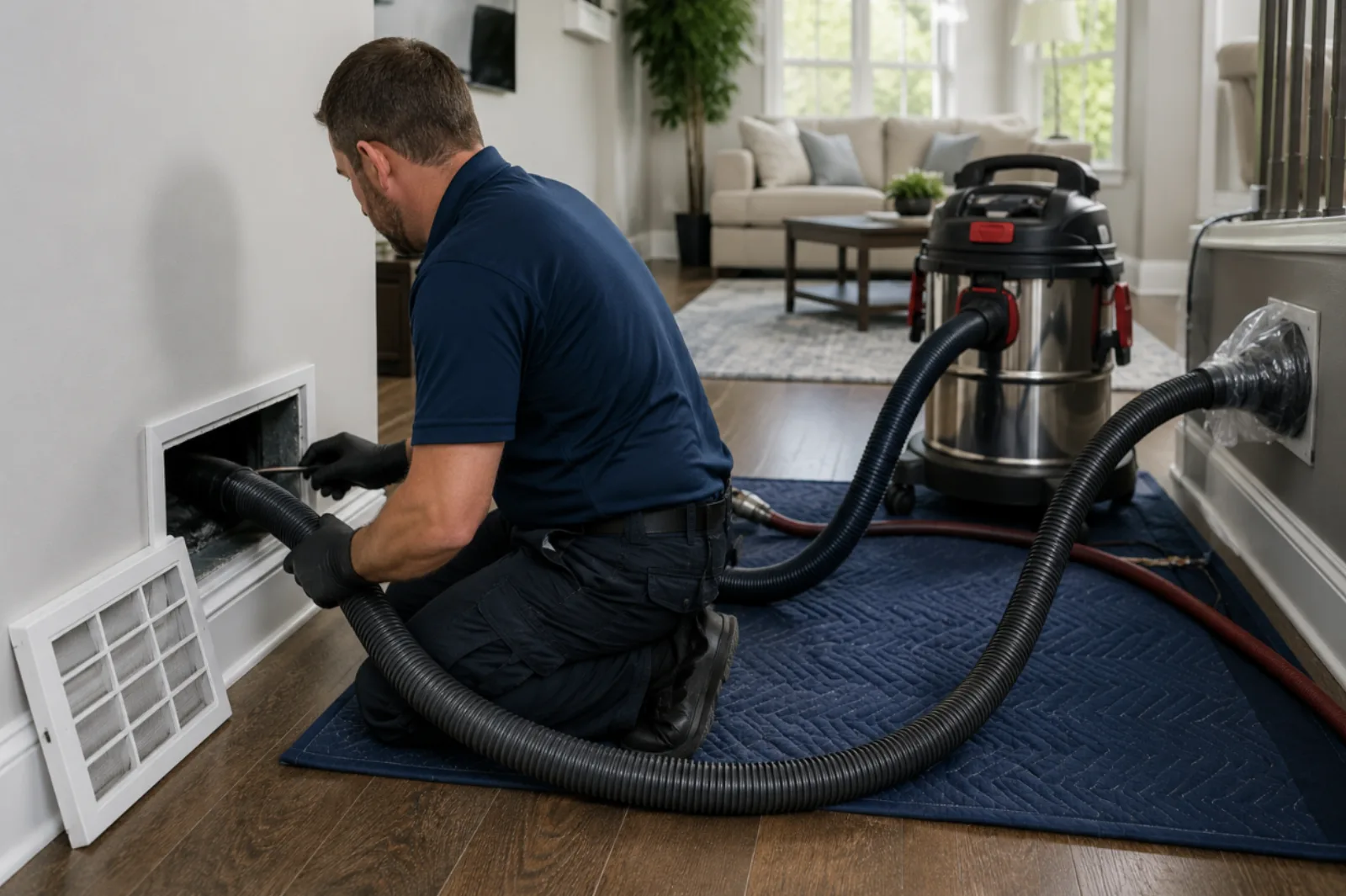
A proper cleaning follows the same clear order every time. Here’s what happens in your home.
1. Inspection and Setup
The technician starts by looking at your system. They check your ducts, your air handler (the main unit that pushes air), and how the ductwork is laid out. Then they protect your floors and plan the safest path through the house. A good tech confirms the work and the price before they start.
2. Negative-Pressure Vacuum Connection
Next, they connect a large, HEPA-filtered vacuum to your duct system, usually near the furnace or air handler. This is the heart of the job. Once it’s running, the whole system is under negative pressure, so loosened dust has only one place to gointo the vacuum.
3. Rotary Brush Agitation of Every Run
Now the cleaning really happens. The tech feeds rotary brushes and air tools through each duct “run”every branch of the system. These tools scrub and blast the dust off the duct walls. As the dust comes loose, the vacuum pulls it away in real time. Every supply line and every return line gets this treatment.
4. Register and Grille Cleaning
The registers (the covers that blow air out) and grilles (the covers that pull air in) get removed and cleaned too. Dust builds up on the slats and just inside the opening, so this step keeps both the air and your walls clean.
5. Air Handler and Final Airflow Check
Finally, the tech cleans the parts of the air handler they can safely reach, then turns your system back on and checks the airflow at the vents. This last step proves the work is done. Want to know how long all of this takes? See our guide on how long air duct cleaning takes.
What Negative Pressure Actually Does
Negative pressure is the part most people have never heard ofand it’s what keeps your home clean during the job.
Here’s the plain-English version. The vacuum sucks so hard that the inside of your ducts becomes lower pressure than the air in your rooms. Air always moves from high pressure to low pressure. So instead of dust drifting out of the vents and into your home, it gets pulled the other waytoward the vacuum and out of your house.
That’s why a real cleaning isn’t messy. The dust never gets the chance to float into your living space. Without negative pressure, brushing the ducts would just stir dust into the air you breathe. With it, the same brushing pulls everything safely away.
Why Suction Power (CFM) Matters
You’ll see companies brag about CFM. It’s worth understanding, because it’s a real measure of cleaning powernot just marketing.
CFM means cubic feet per minute. It’s how much air the vacuum moves every minute. More CFM means stronger suction, which means more dust pulled out of the deep parts of your system.
The gap between real equipment and fake equipment is huge:
- A household shop vac moves about 100 to 200 CFM.
- A professional truck-mounted system moves 10,000 to 17,000 CFM.
That’s not a small differenceit’s the difference between picking up a cup of surface dust and pulling pounds of packed debris out of your ducts. So when you see a number like “14,000 CFM,” that’s the company telling you they brought the real thing. If a crew shows up with a shop vac, no amount of effort will reach the dust deep in your trunk lines.
Rotary Brushing and Agitation
Suction alone isn’t enough. This is the point honest companies want you to understand.
Most of the dust in your ducts is stuck to the walls. It doesn’t just fall off because a vacuum is running nearby. You have to knock it loose first. That’s what agitation doesrotary brushes, air whips, and compressed-air tools scrub and blast the buildup free.
A technician’s take: agitation and suction work as a team. Brushing without suction just throws dust into the air. Suction without brushing leaves the stuck-on dust right where it is. Only when you do bothloosen and collect at the same timedo the ducts actually get clean. Any method that skips the brushing is leaving most of the problem behind.
HEPA Containment (Why There’s No Mess)
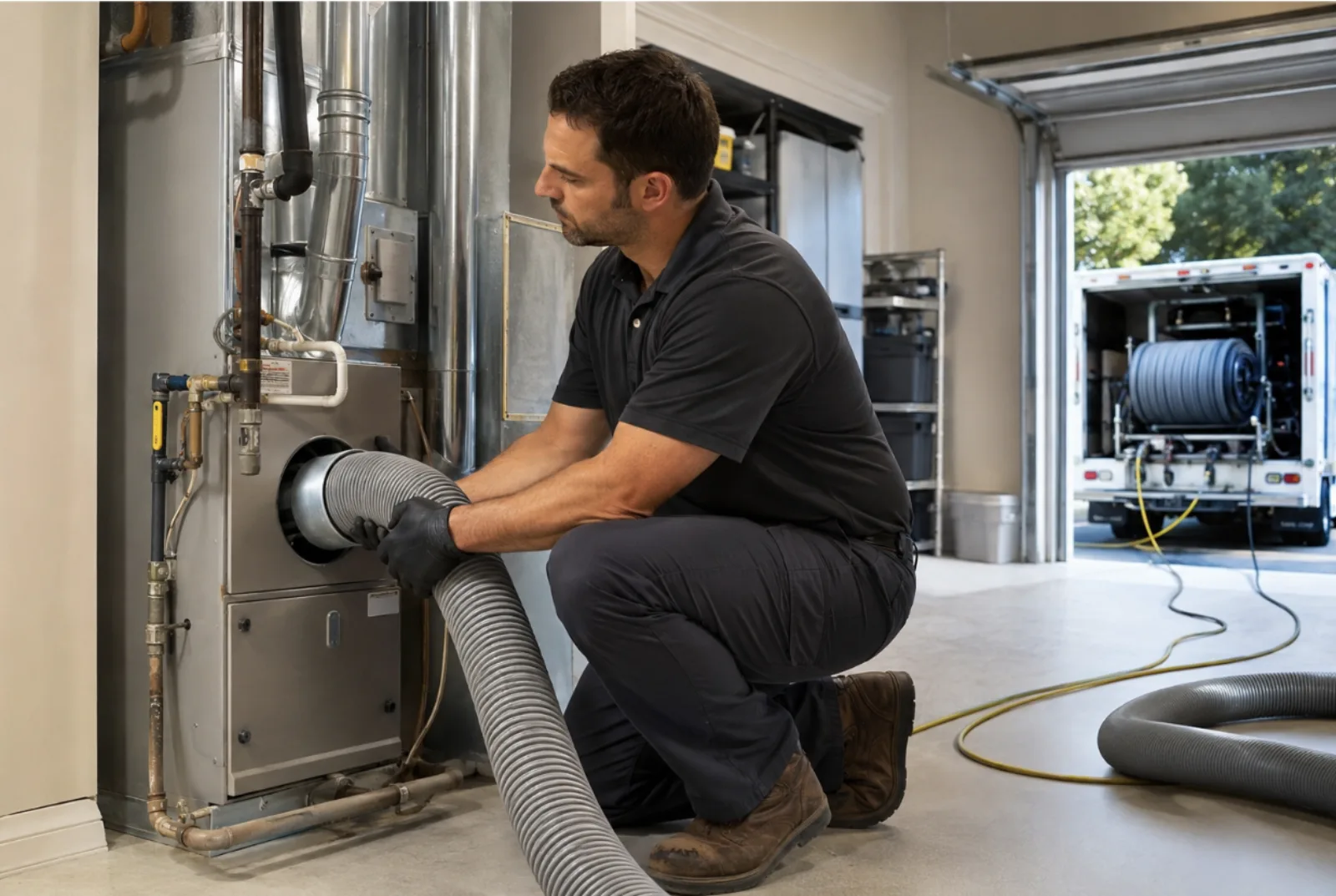
A lot of people expect a dusty disaster. A proper cleaning is the oppositeyour home should be as clean as you left it, or cleaner.
The secret is the HEPA filter on the vacuum. HEPA is a special filter that traps even tiny dust particles. So the dust the vacuum pulls out of your ducts gets caught for goodit doesn’t blow back into your air through the machine’s exhaust.
Put it together and you have a sealed loop: negative pressure pulls the dust in, the brushes loosen it, and the HEPA filter traps it. Nothing escapes into your rooms. If a company’s method does leave a mess, that’s a sign their equipment isn’t up to standard.
Good Method vs. “Blow and Go”
Not every “cleaning” is real. The cheap ads you see often use a method called “blow and go”a quick pass with weak equipment that mostly just moves dust around. Here’s how the two compare.
If a price looks too good and the visit is over in half an hour, you didn’t get a real cleaning. We cover more of these warning signs in our guide on whether air duct cleaning is worth it.
See the Process Done Right in Your Home
The method matters more than the price tag. Done properly, air duct cleaning removes the dust at its source and leaves your home cleaner and your air fresher. Done cheaply, it just resets for a few days.
At SoCal Green, our certified technicians use HEPA, negative-pressure equipment and the full source-removal method on every joband we’ll show you the difference. Learn more about our air duct cleaning service.
Book a proper, source-removal cleaning →
Frequently Asked Questions
Does negative pressure cleaning really work?
Yesit’s the core of professional cleaning. Negative pressure makes the inside of your ducts lower pressure than your rooms, so loosened dust gets pulled into the vacuum instead of into your home. It’s how a real cleaning stays mess-free and reaches deep buildup.
How powerful does the vacuum need to be?
Strong. Pro truck-mounted systems move 10,000 to 17,000 CFM of suction, while a household shop vac manages only 100 to 200 CFM. That gap is the difference between pulling pounds of packed debris from your ducts and barely lifting surface dust.
Is one method better than another?
Yes. The standard is source removalagitating the dust loose with brushes while a HEPA vacuum collects it under negative pressure. Methods that skip the brushing, or use weak “blow and go” equipment, leave most of the dust behind and don’t last.
How is the mess prevented?
Two things: negative pressure pulls dust toward the vacuum and away from your rooms, and a HEPA filter traps the fine particles so they can’t blow back out. Together they keep your home clean. A messy job means the equipment isn’t up to standard.
Does agitation and suction really beat suction alone?
Yes. Most duct dust is stuck to the walls and won’t release on its own. Brushes and air tools knock it loose, and the vacuum collects it at the same moment. Suction alone leaves the stuck-on buildup right where it is.