How Much Does Furnace and Duct Cleaning Cost?
What furnace and duct cleaning includes, how the ducts are cleaned, the factors that determine the cost, and the real pros and cons. SoCal Green, LA.
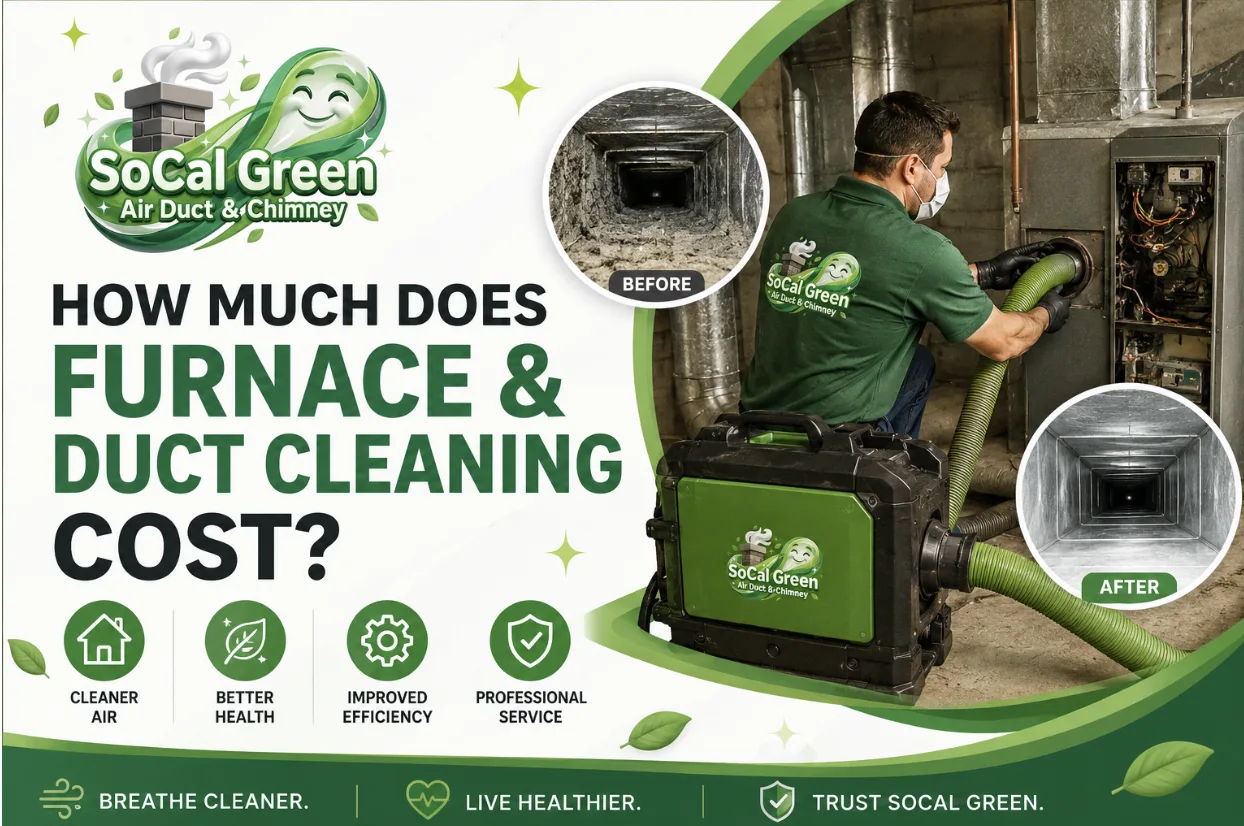
Furnace and duct cleaning is the professional removal of dust, debris, and contaminants from a home’s heating system and connected ductwork, and its cost depends on home size, vent count, furnace number, duct material, and contamination level.
This guide defines the service, explains how the cleaning works, breaks down every factor that sets the price, and lays out the honest pros and cons so a homeowner makes a confident decision.
What Is Furnace and Duct Cleaning?
Furnace and duct cleaning is the deep cleaning of a forced-air heating system and the ducts that carry its warm air. The service covers the furnace components (the blower, the heat exchanger, and the air handler cabinet) along with the supply ducts, the return ducts, the registers, and the grilles.
The purpose of furnace and duct cleaning is source removal. A NADCA-certified technician physically removes contaminants such as dust, pollen, pet dander, and mold spores from inside the system, then verifies the result. This differs from surface dusting, which only wipes the vent covers a homeowner can see.
The EPA defines duct cleaning as the cleaning of forced-air system components, including the supply and return ducts, the registers, the grilles and diffusers, the heat exchangers, and the heating and cooling coils. A complete furnace service cleans all of these parts. For the full scope of a professional job, see furnace duct cleaning.
How Are Furnace Ducts Cleaned?
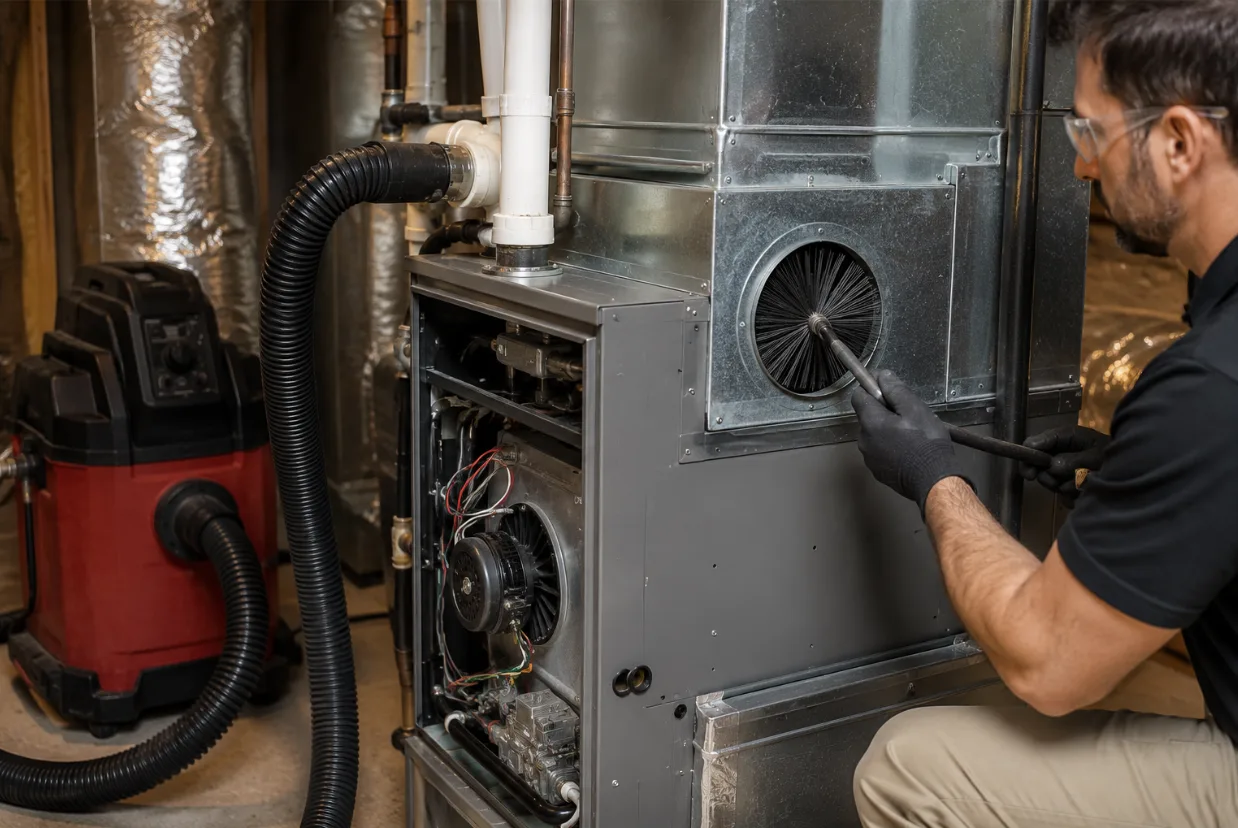
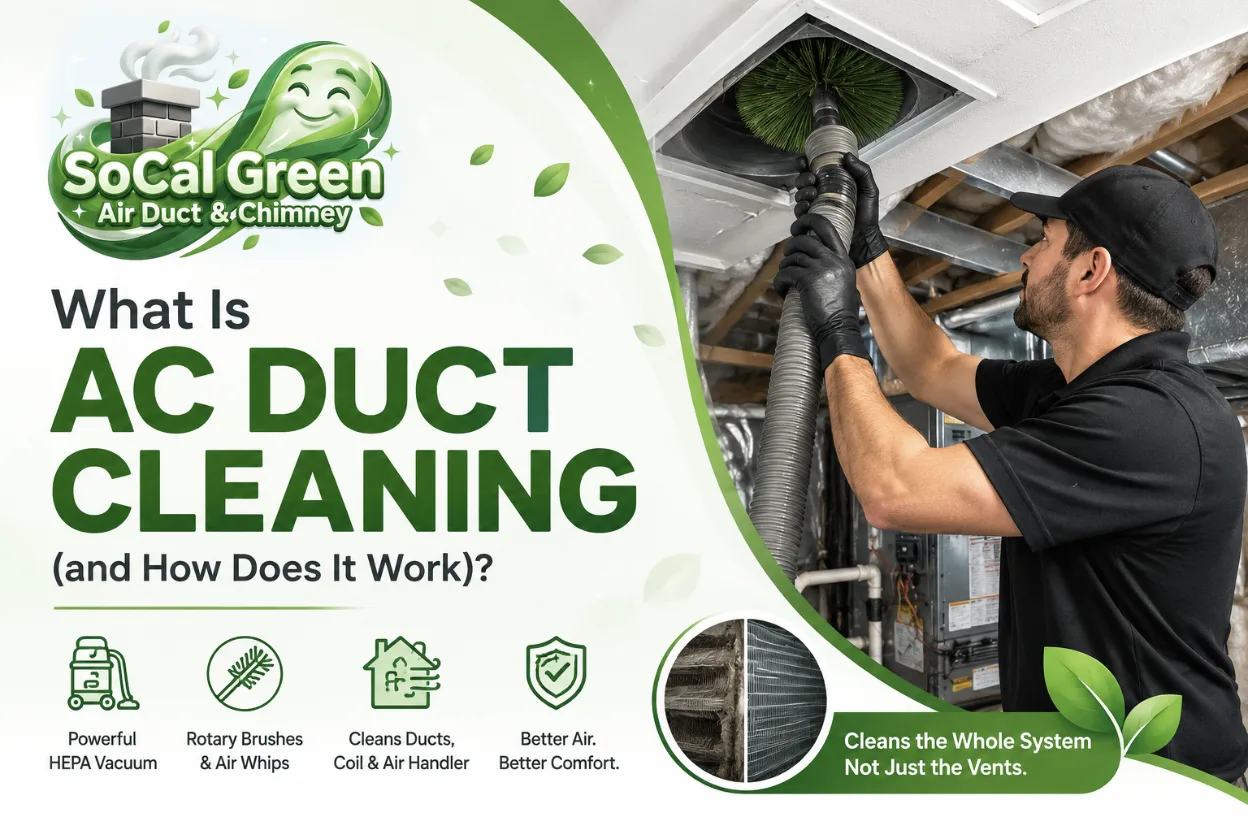
A technician cleans furnace ducts with a high-powered vacuum and mechanical agitation tools in a fixed sequence. The vacuum creates negative pressure inside the ductwork, and the tools loosen the debris stuck to the duct walls.
The professional process follows five steps:
- Inspection. The technician inspects the furnace, the blower, the heat exchanger, and the ductwork, then identifies contamination such as dust layers, soot, mold, or pest debris.
- Vacuum connection. The technician connects a HEPA-filtered negative-air machine near the furnace, which places the entire system under negative pressure and pulls loosened debris toward the vacuum.
- Agitation. The technician runs rotary brushes and air whips through each duct run, which scrub and dislodge buildup from the interior surfaces.
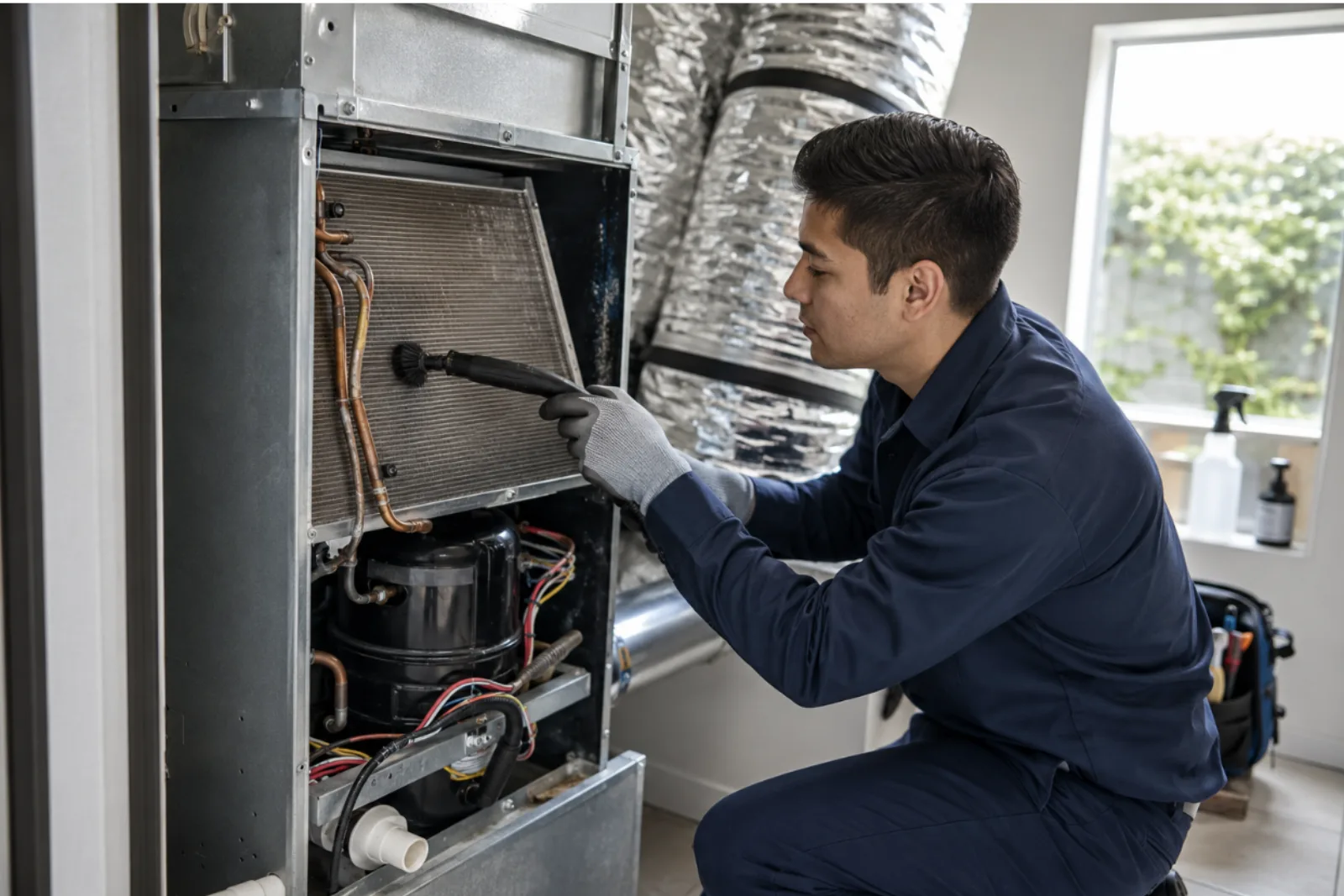
- Component cleaning. The technician cleans the furnace parts (the blower wheel, the heat exchanger, and the registers) because these components collect the heaviest debris.
- Verification. The technician reassembles the system, checks the airflow, and documents the finished result.
A negative-air machine and rotary brushes remove contaminants that a household vacuum leaves behind.
What Contaminants Does Furnace Duct Cleaning Remove?
Furnace duct cleaning removes the airborne and settled contaminants that a forced-air system circulates through a home. The heating system pulls these particles from every room and deposits them on the duct walls, the blower, and the heat exchanger.
A professional cleaning removes contaminants such as:
- Household dust and dead skin cells, which feed dust mites inside the ductwork.
- Allergens such as pollen, pet dander, and dust-mite debris, which trigger allergy and asthma symptoms.
- Mold spores, which grow on damp surfaces such as the coil and the drain pan and spread through the vents.
- Pest debris such as rodent droppings, nests, and insect parts, which carry health risks.
- Construction residue such as drywall dust and sawdust, which settle deep in the system after a renovation.
- Soot and combustion residue, which collect around a fuel-burning furnace’s heat exchanger.
The furnace spreads each of these contaminants into the home’s air every time the system runs. Source removal eliminates the contaminant at its origin inside the ducts, which stops the recirculation. A homeowner with pets, allergies, or a recent renovation carries the heaviest contaminant load and gains the most from the cleaning.
What Factors Determine Furnace and Duct Cleaning Costs?
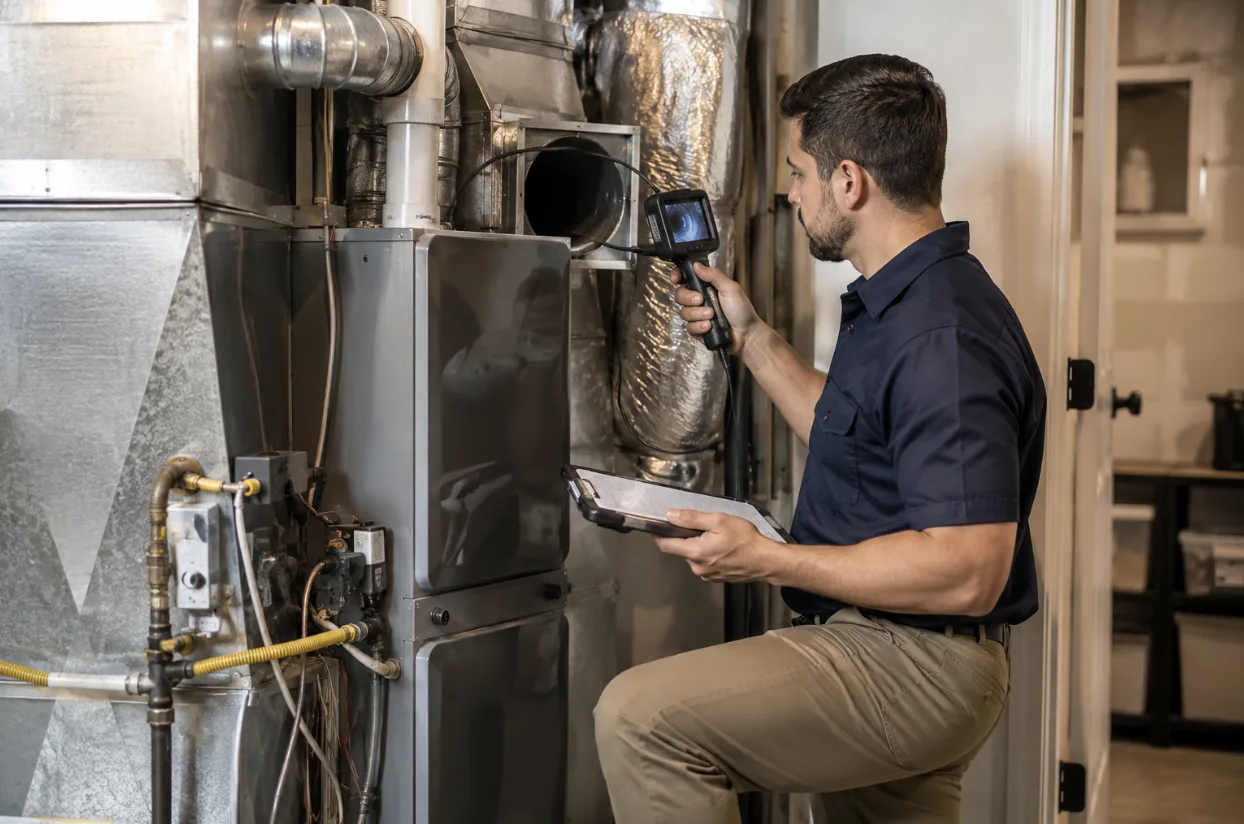
Furnace and duct cleaning costs rise or fall based on measurable features of the home and the heating system. Six factors set the final price, and each factor changes the amount of labor and equipment the job requires.
| Cost factor | Effect on the total | Reason |
|---|---|---|
| Home size (square footage) | A larger home raises the cost | More ductwork and more vents require more labor time |
| Number of vents and registers | More vents raise the cost | The technician cleans each supply and return opening individually |
| Number of furnaces or systems | Each extra system raises the cost | Every system contains its own ducts, blower, and heat exchanger |
| Duct material | Fiberboard and flexible duct raise the cost | Porous and ribbed materials require specialized tools and extra care |
| Contamination level | Heavy mold, pests, or debris raises the cost | Remediation and removal add extra steps and labor |
| Accessibility | Attic and crawl-space ducts raise the cost | Hard-to-reach components increase the technician’s working time |
Duct material deserves extra attention. Sheet-metal ducts clean quickly because the smooth, non-porous surface releases debris. Flexible ducts trap more dust in their ribbed lining and damage easily, and fiberboard ducts hold moisture that grows mold. Both materials raise the labor and the care the job demands.
Add-on services also change the total. A homeowner who bundles a dryer-vent cleaning or a coil cleaning adds separate work to the visit. Heavy contamination such as mold requires dedicated mold removal from air ducts, which is a distinct service from routine cleaning. SoCal Green provides an upfront written quote after an inspection, so the homeowner sees the exact figure before the work begins.
What Are the Pros and Cons of Furnace Duct Cleaning?
Furnace duct cleaning delivers clear benefits and carries real trade-offs. A homeowner weighs both before booking the service.
The pros of furnace duct cleaning:
- Cleaner indoor air. The cleaning removes contaminants such as pollen, pet dander, dust mites, and mold spores from the heating system.
- Better airflow and efficiency. A clean blower, heat exchanger, and duct system move warm air with less strain, which reduces the furnace’s workload.
- Longer equipment life. Less debris reduces wear on the furnace blower and motor, which extends the system’s operating life.
- Odor removal. The cleaning removes odor sources such as musty mold, smoke residue, and pet smells from inside the ducts.
- A safety check. The technician inspects the furnace for problems such as cracks, soot buildup, and blocked vents during the visit.
The cons of furnace duct cleaning:
- The cost. The service requires trained technicians and specialized equipment such as negative-air machines and rotary brushes, which sets a real price.
- The risk of an uncertified contractor. A careless company using incorrect equipment such as a household shop vacuum damages duct walls, creates leaks, and leaves contaminants behind.
- Temporary disruption. The heating system stays off during the service, which lasts several hours.
- Limited benefit for newer systems. A new, well-filtered system with clean ducts gains little from a cleaning.
- Chemical caution. Some companies apply chemical biocides or ozone, and the EPA advises homeowners to fully understand these treatments before approving them.
The uncertified-contractor risk stands out as the most important con. A NADCA-certified technician using correct equipment protects the ductwork, while a low-cost operator using a shop vacuum threatens it. The certification separates a safe service from a damaging one.
Does Furnace Duct Cleaning Improve Heating Efficiency and Safety?
Furnace duct cleaning improves heating efficiency and supports safe furnace operation. Clean components move warm air more freely, and a professional inspection catches safety problems early.
Efficiency comes from clean parts, not clean ducts alone. Cleaning dirty furnace components such as the blower, the heat exchanger, and the coil improves system efficiency, because a clean component transfers heat and moves air with less resistance. The EPA states that little evidence connects cleaning the ducts alone to efficiency gains, which is exactly why a complete service cleans the furnace components, not only the ducts.
Safety is a furnace-specific benefit that cooling systems do not share. The EPA recommends that homeowners inspect and service a fuel-burning furnace before each heating season to protect against carbon monoxide poisoning. A furnace cleaning visit pairs naturally with this inspection, because the technician examines the heat exchanger and the burners, the parts that produce carbon monoxide when they crack or clog. This safety check gives furnace duct cleaning a value that reaches beyond clean air.
How Do You Choose a Furnace Duct Cleaning Company?
A qualified furnace duct cleaning company holds NADCA certification, cleans every system component, and shows the homeowner the contamination before the work starts. The right company protects both the ductwork and the homeowner’s money.
Follow these steps to choose a trustworthy provider:
- Confirm the certification. A NADCA-certified company follows the source-removal standard and uses correct equipment such as negative-air machines and rotary brushes.
- Get written estimates. The EPA recommends that homeowners collect at least three written estimates before choosing a provider.
- Ask to see the contamination. A reputable technician shows the homeowner the dust, mold, or debris that justifies the cleaning.
- Reject sweeping health claims. The EPA warns that companies making broad health-benefit promises make unsubstantiated claims.
- Question chemical treatments. A homeowner approves biocides or ozone only after understanding the treatment, per EPA guidance.
One warning protects a homeowner from a common scam: the EPA neither certifies nor endorses duct cleaning companies, so any company claiming “EPA certification” states a falsehood. A real certification comes from NADCA, not the EPA. SoCal Green’s certified technicians clean the full system, show the contamination, and quote the price upfront.
Ready to book? Call (888) 280-2285 or book a certified furnace duct cleaning.
Frequently Asked Questions
What is included in furnace and duct cleaning?
Furnace and duct cleaning includes the supply ducts, the return ducts, the registers, the grilles, the blower, the heat exchanger, and the air handler cabinet. A NADCA-certified technician removes contaminants such as dust, mold spores, and pet dander from each component and verifies the result.
How long does furnace duct cleaning take?
Furnace duct cleaning takes several hours for most homes. The exact time depends on the home’s size, the number of furnaces, the vent count, and the accessibility of the ductwork. A single-system home with open access finishes on the shorter end, and a large or heavily contaminated home takes longer.
Does furnace duct cleaning improve heating efficiency?
Furnace duct cleaning improves heating efficiency when the service cleans the furnace components. A clean blower, heat exchanger, and coil transfer heat and move air with less resistance, which reduces the furnace’s workload. The EPA notes that cleaning the ducts alone produces limited efficiency gains.
How often does a furnace need duct cleaning?
A furnace needs duct cleaning every three to five years for most homes. Homes with pets, allergies, smokers, or recent construction need cleaning sooner. The EPA recommends cleaning based on visible contamination rather than a fixed schedule, so an annual inspection sets the right timing.
Is furnace duct cleaning worth it?
Furnace duct cleaning is worth it when the system shows contamination such as visible mold, pest activity, heavy dust, or musty odors. The service removes those contaminants, improves airflow, and includes a furnace safety check. A newer, well-maintained system with clean ducts gains little and waits longer.